That green, fuzzy growth or those dark, streaky stains on your roof can be unsettling. For many San Diego homeowners, it’s unclear if this is a minor cosmetic issue or a sign of serious damage. Deciding whether to act, and what action to take, is critical for protecting your roof’s lifespan.

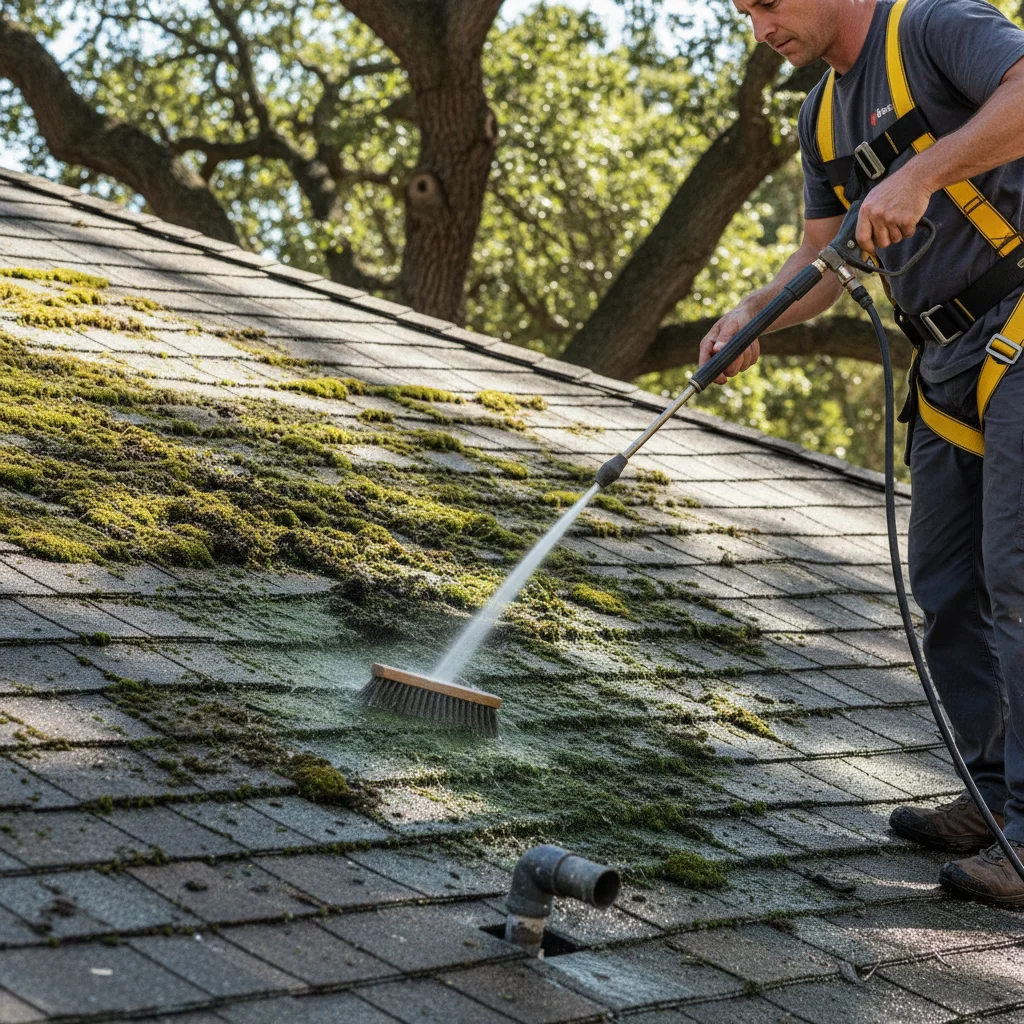
Close-up of green moss and dark algae growing along the north-facing slope of a San Diego shingle roof.

Why coastal and shaded San Diego roofs grow moss and algae

While we enjoy a generally dry, sunny climate, San Diego County has perfect microclimates for roof growth. The marine layer that blankets coastal communities like La Jolla and Point Loma provides consistent moisture. Even inland, in areas like Poway or Escondido, homes with significant tree cover or north-facing roof slopes create the ideal shady, damp environment.

These organisms don’t need much to get started. Spores are carried by wind or animals and land on your roof. All they need is:

  1. Moisture: Morning dew, coastal fog, and our winter rainy season provide plenty of it.
  2. Shade: North-facing slopes or areas under large trees receive less direct sunlight, preventing moisture from evaporating quickly.
  3. A food source: The limestone filler in older asphalt shingles and the organic debris (dust, pollen, leaves) that collects on any roof surface are a feast for algae and moss.

Once established, these growths trap even more moisture, creating a self-sustaining cycle that can accelerate wear and tear on your roofing materials. What starts as a small patch can spread across an entire roof slope in just a few seasons.

Moss vs algae vs lichen: how to tell them apart

Not all roof growth is created equal. Identifying what you’re dealing with helps determine the urgency and proper method for removal.

Algae (Gloeocapsa magma)

This is the most common culprit behind those dark, black streaks you see running down roofs. It’s a type of bacteria that feeds on the calcium carbonate (limestone) used as a filler in many asphalt shingles. While it looks bad, it’s primarily a cosmetic issue. It doesn’t have roots and doesn’t directly damage the shingles themselves, though it can indicate a moisture-prone area. Some roofing brands are more susceptible to this than others; we’ve covered this in detail in our post on algae streaks on Federal Pacific roofing.

Moss

Moss is a more serious threat. It appears as green, thick, clumpy patches that look like a carpet. Unlike algae, moss has shallow, root-like structures called rhizoids. These rhizoids can work their way under shingle edges, lifting them up. This creates a pathway for water to get underneath, leading to rot in the roof decking. The thick mat of moss also acts like a sponge, holding a significant amount of water directly against your roof surface for long periods. This constant moisture is the enemy of any roofing system. Effective roof moss removal is crucial to prevent long-term structural damage.

Lichen

Lichen is a composite organism, a combination of algae and fungus living together. It shows up as flat, crusty, or leafy patches and can be green, gray, orange, or yellow. Lichen attaches itself more firmly to shingle surfaces than algae. Its acidic byproducts can slowly eat away at the protective granules on asphalt shingles. Like moss, it also traps moisture, though typically less of it. Removing lichen can be tricky, as scraping it off can also remove the shingle granules it’s clinging to.

Pressure washing is wrecking your roof — here’s why

When homeowners see growth on their roof, their first instinct is often to hire a general-purpose pressure washing company. This is one of the worst things you can do for your roof. Asphalt shingle and tile roofs are designed to shed falling water, not to withstand a high-pressure blast from below.

Here’s why it’s so damaging:

  • It strips away granules: The sandpaper-like granules on asphalt shingles are their primary line of defense against UV rays and weathering. A pressure washer acts like a sandblaster, stripping these granules away and exposing the underlying asphalt to the sun. This drastically shortens the life of your shingles.
  • It forces water underneath: The high-pressure stream can easily lift the edges of shingles or tiles, driving water directly onto the underlayment. This can saturate the wood decking, leading to mold and rot that you won’t see until it causes a major leak.
  • It can break materials: The force is often enough to crack or shatter clay and concrete tiles, or to dislodge and tear shingles right off the roof.
  • It voids your warranty: Nearly every roofing material manufacturer explicitly states that pressure washing will void the product warranty. If you have a problem down the road, you’ll be on your own.

Professional roofers and organizations like the National Roofing Contractors Association (NRCA) strongly advise against using high-pressure methods for any kind of roof cleaning in San Diego.

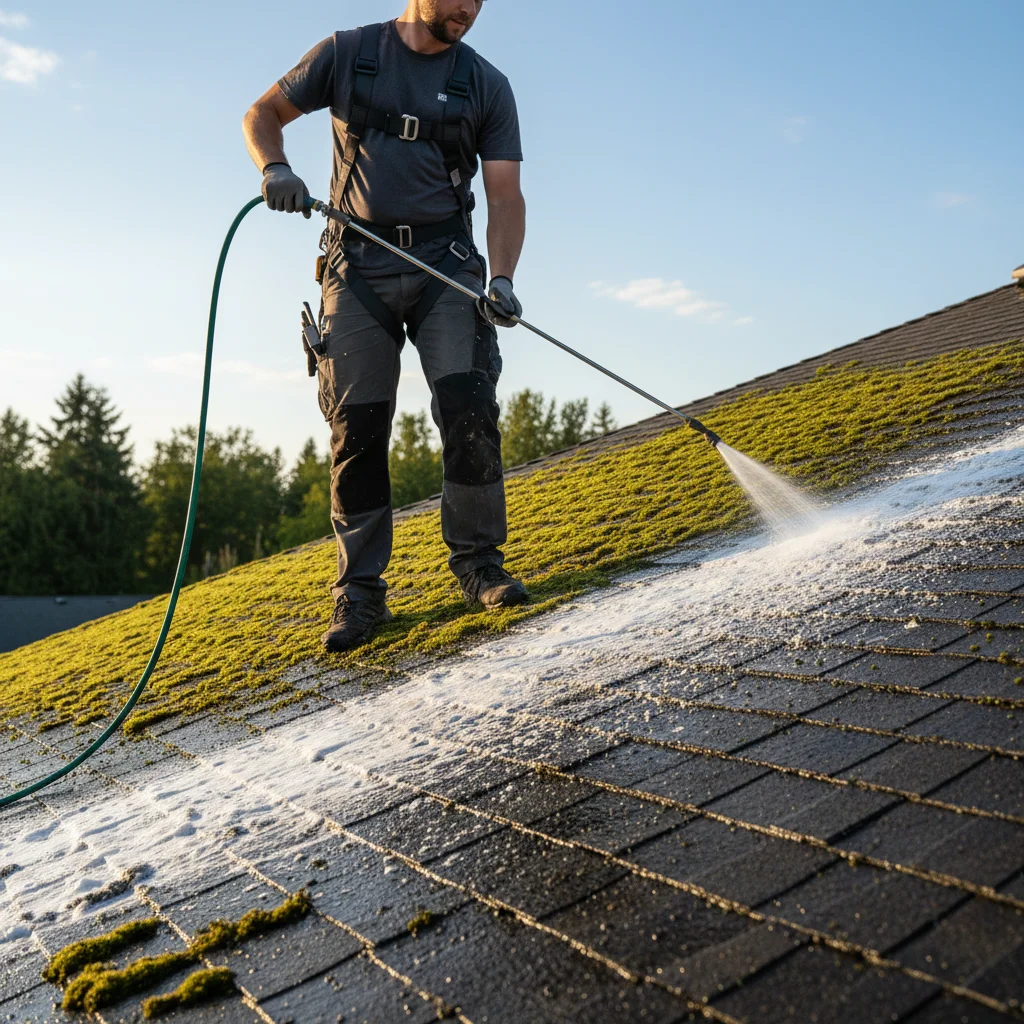
A roofing professional using a low-pressure soft wash sprayer to treat roof moss.

Safe removal methods that won’t void your warranty

The correct way to handle roof algae removal and moss treatment is a process called soft washing. This method focuses on killing the organism at its root, not just blasting away the surface growth.

A professional soft wash involves a few key steps:

  1. Assessment: A roofer first identifies the type and extent of the growth and checks for any underlying roof damage.
  2. Application: A specialized, biodegradable cleaning solution is applied to the roof using a low-pressure system. The pressure is no stronger than that of a standard garden hose. This solution is formulated to kill moss, algae, and lichen without harming the roofing materials, gutters, or surrounding landscape.
  3. Dwell Time: The solution is left to sit on the roof for a specific period, allowing it to penetrate and kill the organisms completely.
  4. Rinsing: The roof is then gently rinsed with low-pressure water to wash away the solution and some of the dead growth. For thick moss, some gentle, manual brushing with a soft-bristle brush may be required before the rinse.

Much of the dead algae and lichen will be washed away by subsequent rainfall over the following weeks and months. The result is a truly clean roof without any of the collateral damage caused by high pressure. This is the only method approved by most shingle manufacturers and the only one we recommend.

When growth means it’s time for a reroof, not a cleaning

Sometimes, moss or algae is a symptom of a much larger problem. If growth has been present for many years, the damage may already be done. Cleaning a roof that is already at the end of its life is a waste of money.

You might need a replacement instead of a cleaning if you see:

  • Widespread curling or lifting shingles: This indicates that moss has compromised the shingle seals and the roof is no longer shedding water effectively.
  • Significant granule loss: If you see large bare patches on your shingles or a heavy accumulation of granules in your gutters, the shingles have lost their UV protection and are failing.
  • Soft or spongy spots: When walking on the roof (which should only be done by a professional), soft spots are a clear sign of rotted roof decking underneath.
  • Water stains on your ceiling: This is the most obvious sign that the problem has moved beyond the surface and your roof system’s integrity is compromised.

The only way to know for sure is to get a professional opinion. Before you book a cleaning service, it’s wise to schedule a comprehensive roof inspection. A trained roofer can assess the condition of not just the surface, but also the underlayment, decking, and flashing to determine if a cleaning is a viable solution or if you’d be better served by investing in a long-term fix like a replacement.

When to call us

Figuring out if roof growth is just an eyesore or a roof-killer can be tough from the ground. If you see significant moss, notice shingles lifting, or suspect the problem has been there for years, don’t guess. Our team can properly diagnose the health of your roof and recommend the right approach, whether it’s a safe soft wash or a necessary repair.

Call us at (858) 925-5546 for a same-day estimate.