Roof vent, flashing, and pipe boot repair.
Many roof leaks start at a flashing or pipe boot, not in the field of the roofing material. Pipe boots often fail when the rubber gasket cracks. Step flashing at walls can corrode. Chimney saddles fail. The useful fix is targeted: replace the failed detail without disturbing the rest of the roof.
What's included in this service?
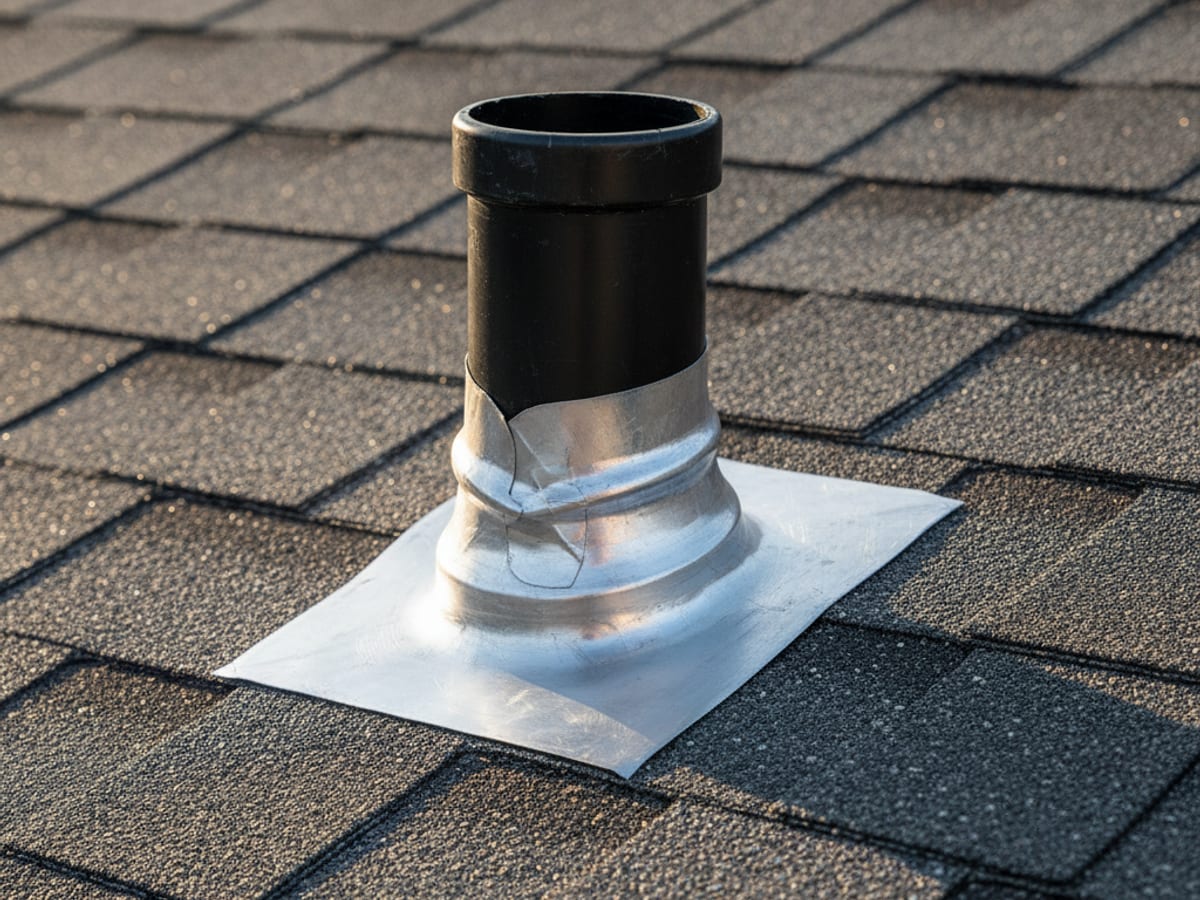
- Pipe boot / plumbing vent boot replacement (the most common roof leak)
- Chimney flashing, step flashing, counter flashing, cricket, saddle
- Skylight flashing replacement and re-sealing
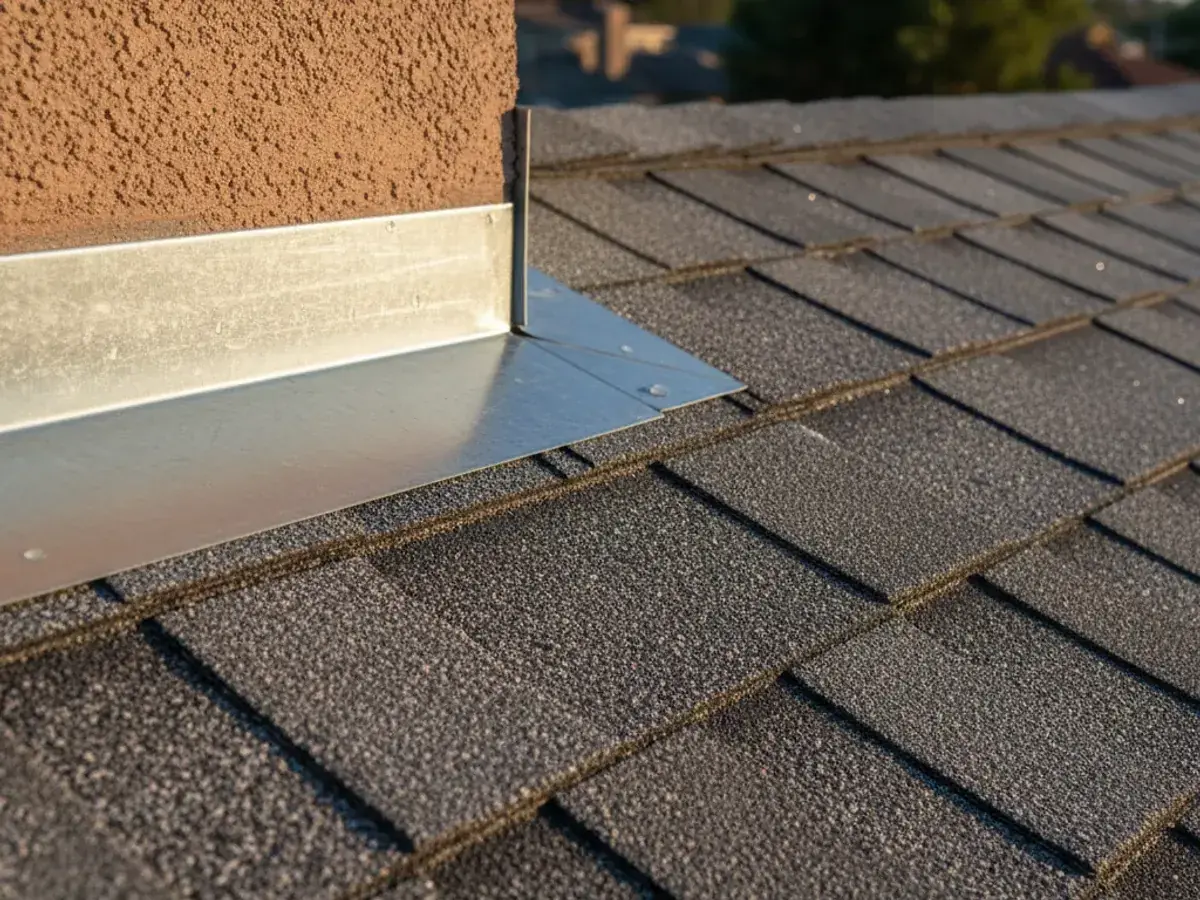
- Wall-to-roof step flashing (where a single-story roof meets a two-story wall)
- Valley metal replacement
- Roof-to-gutter and drip edge detail
- Roof vent repair and replacement, static box, ridge, turbine, and low-profile tile vents
- Dryer vent, bathroom vent, and range hood roof cap installation
- Plumbing stack flashing with upgraded long-life boot (EPDM or lead)
When do you need this service?
- Active leak traced to a specific penetration area
- Pipe boot showing visible cracks, tears, or daylight
- Rust staining on shingles or tile downhill from a flashing
- Chimney leaking during heavy rain
- Skylight with water spots on the interior trim
- Pre-purchase inspection flagged flashing issues
- Roof is 12+ years old and pipe boots have not been replaced
Why flashing fails first: the roof leak source most homeowners don't see
Why the vent base is the leak, not the cap
A roof vent is a penetration through the deck, a hole cut so attic air, exhaust, or a plumbing stack can leave the house. Flashing is what waterproofs that opening where the vent passes through. When the flashing at the vent base fails, water finds a path that bypasses the roofing material entirely. Rubber collars and gaskets on these penetrations crack from UV and heat cycling, and they fail sooner on south and west facing slopes. The cap can still look intact while the base is already letting water in. We match you with a licensed independent roofer. Ask them to inspect the base, not just the cap, and to put the repair method in writing.
The vents actually sitting on a San Diego roof
San Diego roofs carry several kinds of vents, and each one is a deck penetration with its own flashing. Static box vents and ridge vents move attic air. Turbine vents spin with the wind, and low-profile tile vents sit closer to the tile. Dryer vents, bathroom fans, and range hoods need their own roof caps, and plumbing stacks sit in a boot at the deck. Ask the matched licensed independent roofer whether they will replace the appliance cap and the stack flashing with an upgraded boot (EPDM or lead), and get that method, plus permit and warranty if the work needs it, in writing. We do not install the vents ourselves.
Why the ceiling stain sits down-slope of the vent
A vent leak doesn't announce itself as a drip straight under the vent. Water travels along the deck and then appears on the ceiling down-slope of the actual entry point. The stain is a clue, not a map of where to patch. Diagnosis starts at the nearest uphill penetration and works back, not at the wet drywall. Patching the ceiling alone leaves the vent feeding the same path.
What roof vent repair actually replaces
A real repair removes the failed flashing, collar, or cap and installs new material properly integrated with the roofing above it. Sealant smeared over a cracked boot or a rusted flange only covers the failure. The work is targeted, replacing the failed detail without disturbing the rest of the roof. Coastal salt air corrodes galvanized steel vent hardware faster than inland air, starting at fastener heads where the zinc coating is penetrated, so coastal homes do better with aluminum, stainless, or lead components. What the repair costs depends on which detail failed and how accessible it is, and the matched roofer diagnoses the vent and quotes the job.
Flashing failure is the #1 source of San Diego roof leaks
Many San Diego roof leaks start at a flashing or vent boot, not in the field of the roofing material itself. Tiles shed water. Shingles shed water. Both are designed to fail gracefully when individual pieces age. Flashing is what waterproofs the transitions and penetrations: where the roof meets a wall, a chimney, a skylight, a vent pipe, or a valley. When flashing fails, water finds a path that bypasses everything else. The leak shows up on the ceiling 6 to 12 feet down-slope of the actual entry point, which is why DIY repairs miss it constantly. A good roofer doesn't start with the ceiling stain; they start with the nearest uphill penetration and work back from there. See what causes roof leaks in San Diego and how to find a roof leak in San Diego for the diagnostic process.
Chimney flashing: the most expensive flashing to do wrong
Chimney flashing is a four-piece system: step flashing (along the sides), apron flashing (downhill face), back flashing or cricket (uphill face, diverts water around the chimney), and counter-flashing (the L-shaped metal embedded in the mortar that overlaps everything else). All four pieces have to be correctly sized, properly lapped, and integrated with the roofing material above. Cheap repairs use roofing cement smeared over the existing flashing. That delay often lasts one or two rainy seasons, then the leak returns. Proper repair removes the failed counter-flashing, grinds new reglet (groove) into the mortar, installs new counter-flashing with proper mortar embed, and replaces step and apron flashing as needed. A new cricket is a separate scope when the uphill face has no saddle. See chimney flashing repair in San Diego. Ask the matched licensed independent roofer to name each of those pieces on the bid. A quote that only mentions sealant is selling a delay, not flashing.
Skylights and pipe boots: the two penetrations that fail on every roof
Every roof past 12 years has these two issues building. Pipe boots are the rubber or metal collars where plumbing vent pipes exit the roof. The rubber gasket cracks from UV exposure at year 10 to 15, and on a south or west-facing slope, sometimes year 8. When the gasket cracks, water runs straight down the vent pipe into the attic. Symptom: ceiling stain directly below a bathroom or kitchen. Ask whether the quote is one boot or every stack on the roof, and whether they will upgrade to lead pipe boots while they are already on that slope. Lead lasts far longer than cracked rubber; get the material and pipe count in writing. See pipe boot leak in San Diego. Skylight flashing typically fails at year 15 to 20. The original Velux or other manufacturer flashing kit was correct at install, but the integration with the roofing courses above degrades. Compare two scopes: re-flashing only (keeping the unit) versus full skylight replacement with a new flashing kit. See skylight leak repair in San Diego.
Valley flashing and roof transitions: the slow-failure category
Roof valleys (where two roof slopes meet) take the most water of any part of the roof. Valley failure is usually slow: the underlying metal corrodes or develops pinhole rust, and water seeps through rather than pouring. Valley metal options: galvanized steel (cheapest, shorter coastal life), aluminum (salt-tolerant, the common modern spec), copper (longest life, the usual estate choice). Ask the bid to name the metal, the valley length, and whether surrounding roofing has to be lifted and re-laid. Wall-to-roof step flashing (where a single-story roof meets a two-story wall) is the other common transition failure point. Original step flashing should be lapped into each course of siding above; over time the siding shifts, water finds a path behind, and the leak shows up at an interior wall corner downstairs. Ask whether siding has to come off, how long the transition runs, and which metal they will use. See step flashing repair in San Diego and roof valley repair in San Diego.
Coastal corrosion and the material upgrade that's worth paying for
For any San Diego home within 2 miles of the Pacific, flashing material selection determines whether the repair lasts a few seasons or decades. Galvanized steel is the cheapest option and what many contractors install by default. In coastal salt air it starts visible rust first, especially at fastener heads where the zinc coating gets penetrated. Aluminum is the practical coastal upgrade: naturally corrosion-resistant, and the usual spec when you do not want to redo the detail in a few years. Stainless steel is the long-life option for valleys and counter-flashing on high-value homes. Lead is unmatched for pipe boots and complex flashings: it forms around odd shapes and does not corrode the way galvanized does. Ask the bid to name the metal for each detail. Paying for marine-grade metal on a coastal house is a comparison you make on the written scope, not a percentage this referral brand can invent. See roof flashing leak repair in San Diego and roof flashing repair cost in San Diego for how to read a flashing quote.
What do homeowners ask about Flashing Repair?
Why isn't the water stain right under the roof vent?
Water enters at the vent and then travels along the deck, so the stain shows up on the ceiling down-slope of the real entry point. Diagnosis starts at the nearest uphill penetration and works back, not at the stain.
Can sealant fix a cracked vent boot?
No. A real roof vent repair removes the failed flashing, collar, or cap and installs new material properly integrated with the roofing above it. Sealant smeared over the failure only covers it. The fix is targeted, so the rest of the roof stays in place.
How much does flashing repair cost?
It depends on which detail failed, its size, and access. Ask for a quote that names the failed piece: pipe boot, chimney step and counter flashing, skylight flashing, or valley metal. Compare that scope, not a single number.
What is a pipe boot and why does it fail?
A pipe boot, also called a vent boot, is the rubber or metal collar where a plumbing vent pipe exits your roof. UV and heat can crack a rubber gasket. When it fails, water can run down the pipe into the attic. A ceiling stain under a bathroom or kitchen is a reason to inspect the nearest boot, not a diagnosis by itself.
My chimney leaks when it rains hard. What is the issue?
Two details to have checked: counter-flashing embedded in the chimney mortar that overlaps the step flashing, and the cricket or saddle uphill of the chimney that should deflect water. Ask the matched roofer to inspect both and put the repair method in the quote.
How long should flashing last?
It depends on the metal, the exposure, and the install. Coastal salt air is harder on galvanized steel than inland air. Ask the bid to name the metal and how it is fastened. This brand does not guarantee a lifespan.
Can you upgrade standard pipe boots to lead?
Ask. Some roofers offer lead or other long-life boots during a replacement or a targeted repair. Get the material, count of pipes, and price difference in writing before you choose.
Where do we offer Flashing Repair in San Diego County?
We connect homeowners with flashing repair pros in every city and community in San Diego County. Pick your city for local climate notes and service specifics.
See flashing in all 67 cities
Need flashing in San Diego County?
Call and we'll match you with an independent local roofer.