A ceiling stain under a San Diego flat roof is a diagnosis problem before it is a price problem. Puncture, open seam, clogged drain, and wet insulation are different jobs. We will not invent repair brackets or claim we tracked hundreds of local invoices.
Top Pro Roofing SD is a referral service. We do not patch roofs, we do not hold a C-39, and we do not warrant repairs. Call (760) 750-5557. Ask the matched independent roofer to name the membrane, the failure, and whether the insulation is dry before they quote a patch.
Replacement without fake per-foot tables: flat roof replacement cost. Repair vs replace: roof repair vs replace. Service: flat roof repair.
What actually drives a repair bid
Access (ladders vs interior hatches vs a two-story parapet), membrane type, how many leaks, and whether they must cut out wet insulation all move labor more than the patch material. Hidden wet deck shows up after they open the roof. A bid that only says “fix leak” is not a bid you can compare.
| Failure | Typical honest scope | When a patch is the wrong product |
|---|---|---|
| Puncture, dry insulation | Clean, prime if required, heat-weld or torch a patch per the system | Field is brittle, shrunk, or already coated into a mess |
| Split seam | Prep a wide strip, re-weld or torch a cover strip, probe | Seams failed across a whole slope |
| Ponding | Find why water sits: drain, sag, missing cricket | Patching the stain and leaving the pond |
| Wet insulation / soft deck | Cut-out, dry or replace insulation, new membrane tie-in | Coating over wet sandwich |
National “average repair” blogs skip San Diego ponding on North Park and Hillcrest bungalows, salt on coastal edge metal, and Title 24 if the “repair” is actually a recover. Those belong in the walkthrough, not in a printed county rate.
TPO, modified bitumen, and BUR repair differently
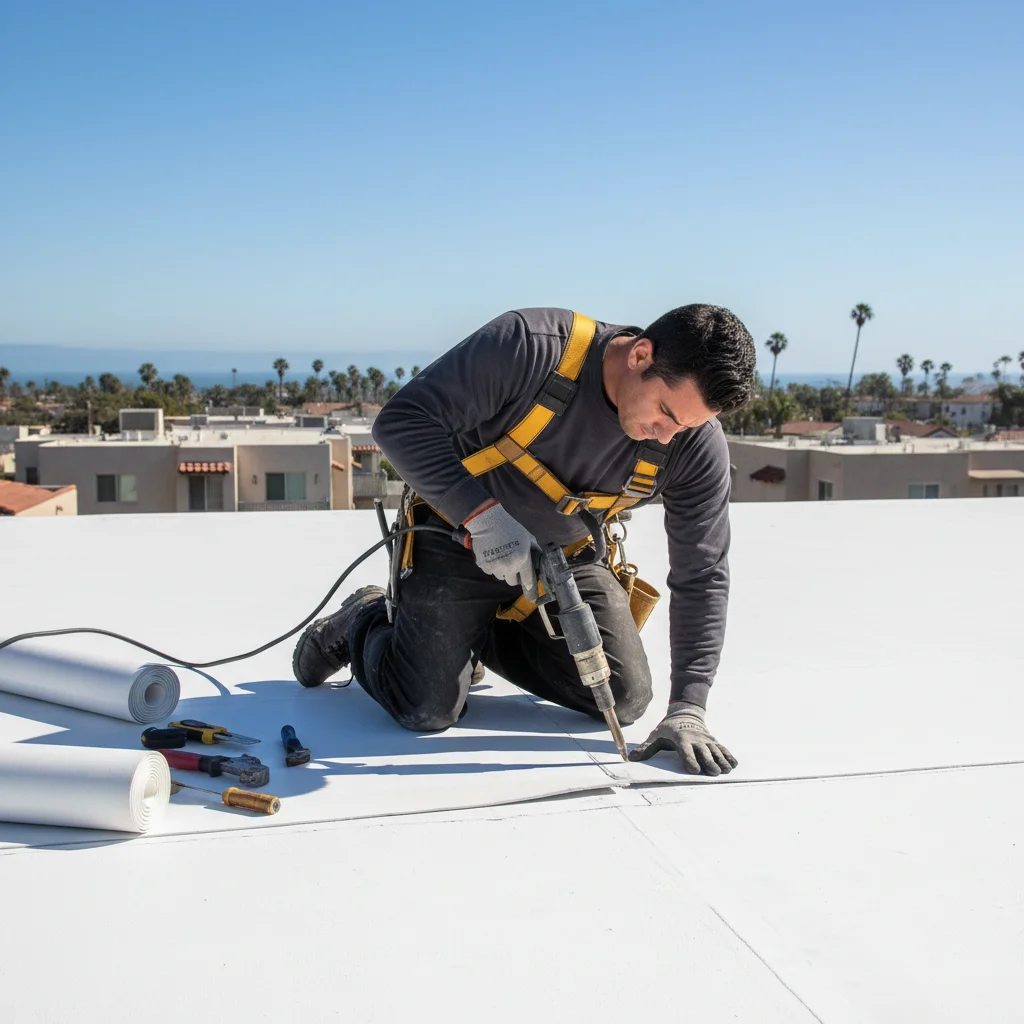
TPO. White or gray single-ply. Repairs are hot-air welds. Done right, the patch is part of the sheet. Probe the weld after it cools. Open flame is the wrong tool. Crew skill matters more than the logo on the roll. More on the system: flat and low-slope.
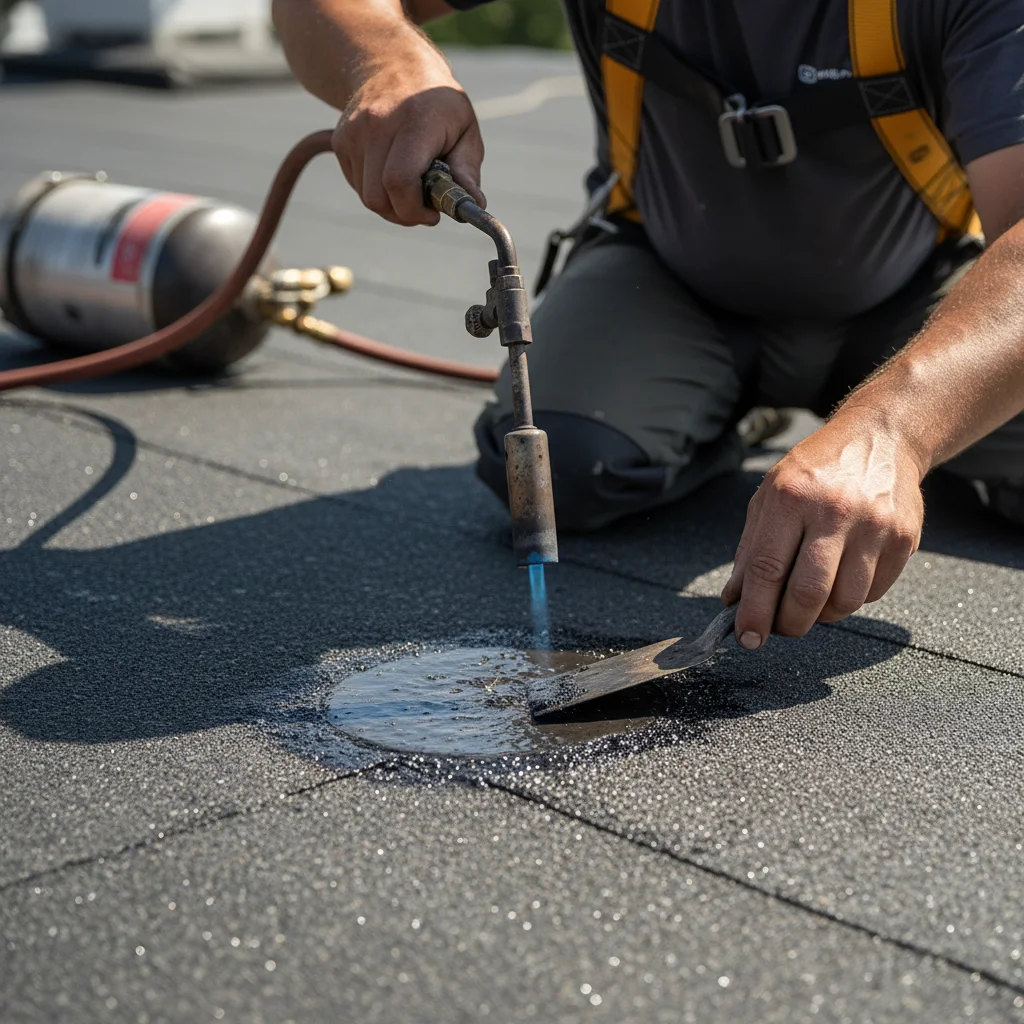
Modified bitumen. Asphalt cap, torch or cold-process. Torch work over occupied space is an operations and insurance conversation. Ask how they isolate flame and what the building’s insurer requires.
Built-up (tar and gravel). Gravel has to come off before anyone can see the felts. Repair is mop or mastic, new felts, gravel back. Messy, slow, and easy to under-scope if the leak is a drain sump, not a “hole.”
PVC grease-resistant sheets and EPDM taped seams are their own kits. Do not let a TPO patch spec land on an EPDM roof. Membrane choice on a full replace: PVC vs TPO.
Punctures, seams, ponding
Punctures. Tools, Santa Ana debris, HVAC techs. If the foam is dry, a specified patch is usually the job. If the foam is wet, you are buying a cut-out. Foot-traffic pads around units prevent the next puncture. Wind-rated shingles are a pitched-roof product and do not belong in this scope.
Seams. Building movement and UV open laps. The repair area is larger than the split you can see. Ask how far they will strip back and how they will test.
Ponding. A puddle that is gone when you check the next day is not the same as water that is still there midweek. The leak is often at a seam or fastener in the pond. Patching without slope or drain work buys another stain. Tapered insulation, crickets, and drain rebuilds are replacement-adjacent work. Guide: flat roof ponding.
Patch vs coat vs replace
Patch when the field is young enough, insulation is dry, and the failures are countable. A good weld or torch patch can last with the remaining sheet. This brand does not guarantee that.
Coat when the membrane is worn on the surface, still attached, and dry underneath. Silicone vs acrylic is a different page: silicone vs acrylic coatings. Coating over open seams, wet polyiso, or ponding is a short job. We will not invent a per-foot coating price or a “years added” figure. Ask for core cuts or infrared before anyone rolls a coating.
Replace when leaks are many, the sheet has shrunk, the gravel BUR is cooked, or the carrier has already flagged the roof. Then read the replacement article, not this one.
What property managers should demand
- Scope, not “fix leak.” Location, prep (how many square feet cleaned), product name and mil, weld or torch method, probe or test.
- Diagnosis. Core or moisture scan when the leak is not obvious. A guess from the parapet is not a diagnosis.
- Photos. Before, open, and close-out on the invoice.
- Workmanship warranty on that repair. Read the term and what voids it. Manufacturer sheet warranties often exclude repairs they did not authorize.
- CSLB C-39, GL, and workers’ comp on the proposal. Verify at CSLB.
When to call
Active leak, standing water that does not leave, or a tenant file you need to document: call (760) 750-5557. We match you with a San Diego low-slope roofer. You still verify the license. For a full reroof conversation, use flat roof replacement cost.