Top Pro Roofing SD is a referral marketplace. We connect San Diego County homeowners with CSLB-licensed roofers. We do not install drip edge and we do not publish a 2026 per-linear-foot rate card. Call (760) 750-5557.
Homeowners watch shingles and tile. Water still ruins the fascia if it crawls back under the cover at the eave. Drip edge is the metal that breaks that drip and aims water into the gutter. Skipping it, or installing it backwards with the underlayment, is a common reason eaves fail a few winters after a reroof.
We will not invent a drip-edge adder, a fascia-repair total, or a “cheap insurance” dollar figure.
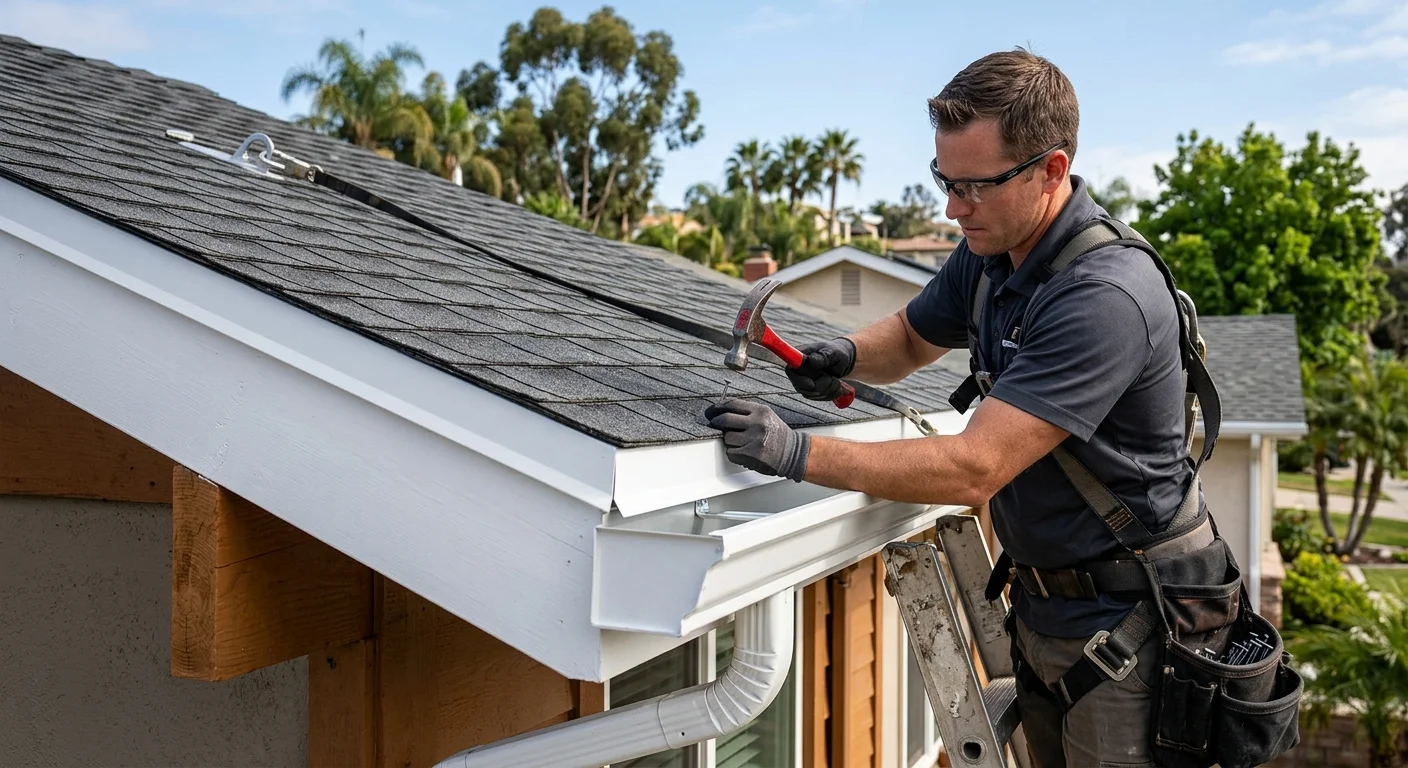
What drip edge is and where it goes
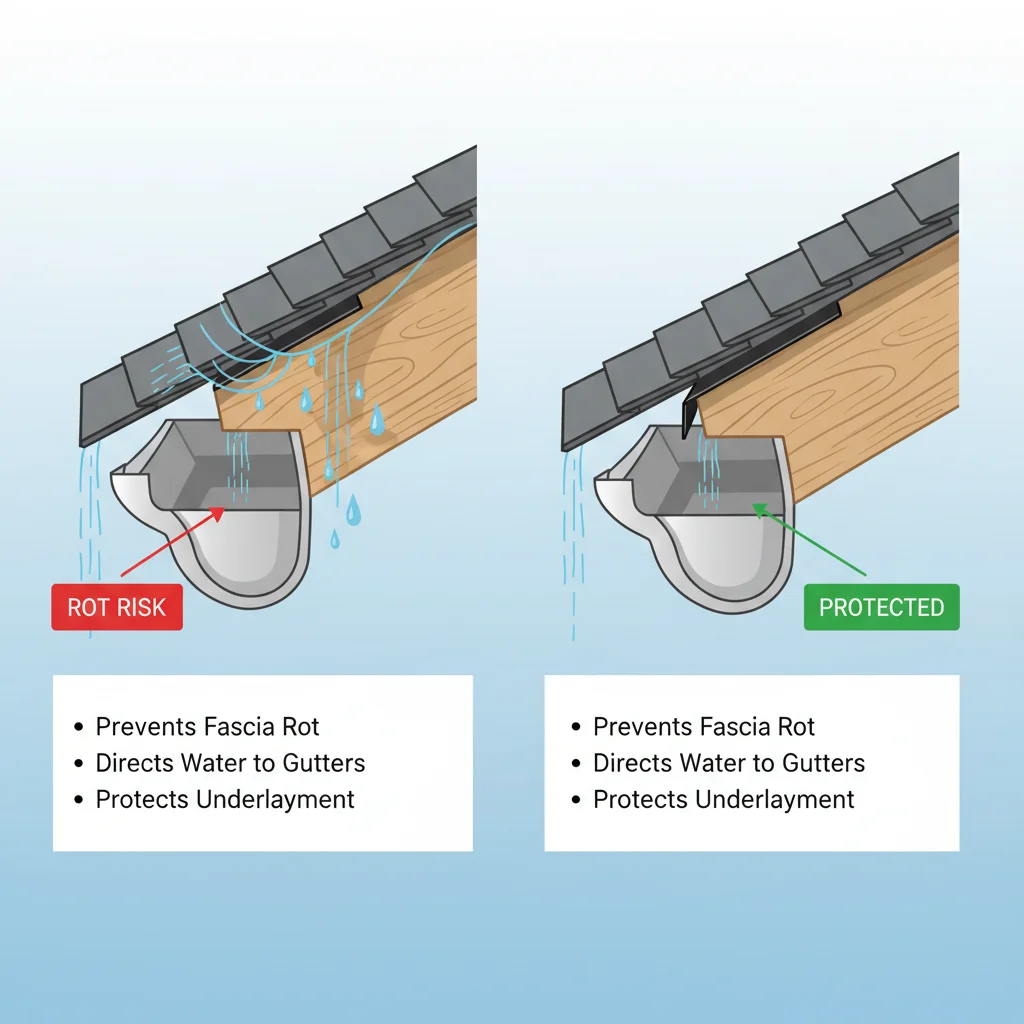
Drip edge is a thin, non-corrosive metal flashing at the roof edge. Aluminum, galvanized steel, and copper are the usual mill finishes. Its job is to kick water off the deck edge and into the gutter, instead of letting it cling and run behind the fascia.
It belongs in two places:
- Eaves (horizontal edges): a small overhang past the fascia so water cannot wick back
- Rakes (sloped gable edges): a finished edge and a stop for wind-driven rain
Profiles vary (L-style, T-style, and metal-roof-specific pieces). The matched system has to fit the cover. A standing-seam edge is not a shingle L-metal. Wrong profile, or a gap at the gutter, is how you still get staining. Gutter replacement is the trough side of the same eave. Flat and low-slope edges are their own details; do not copy a steep-shingle sketch onto a torch-down. Flat roof replacement cost is a bid-reading guide for that cover, not a drip-edge price.
Why missing drip edge shows up as fascia rot here
San Diego does not rain often. When it does, the eave sees a full day’s runoff. Without drip edge, water follows the underside of the shingle or tile and lands on the fascia instead of in the trough.
That board stays damp. Paint peels. Wood softens. Mold shows. Termites and rodents use the soft wood. Gutters hang on that same board, so hangers pull out once the fascia is gone. Stains on the fascia after rain, or water behind the gutter, are the usual ground-level tells. Fascia and soffit repair.
Code: shingle eaves and rakes
This is not a style upgrade on a composition reroof. Read the current California Residential Code drip-edge section for shingle roofs. Ask the matched C-39 to name how they will run metal at eaves and rakes on this assembly. We will not paraphrase overlap, extension, or fastener spacing.
Confirm the edition your city has adopted (2022 vs 2025 CRC) with the building department. Tile and metal have their own listed edge details. Do not assume the shingle section is the whole story for those covers.
Older houses, and rushed reroofs, still show up with no metal at the eave. Ask for drip edge on the written scope before anyone starts. Local check: City of San Diego Development Services or County PDS building.
How to spot bad or missing drip edge from the ground
You do not need a ladder for a first look.
- Peeling paint, dark stains, or cupped fascia after rain
- Water running down the face of the fascia instead of into the gutter
- Water dripping behind the gutter
- Shingles or tiles that stop at the wood with no metal kick-out
- On metal, gaps where the panel edge does not meet a listed drip or gutter apron
Those signs can also mean failed gutters or reverse pitch. A C-39 should pull the story apart. Persistent eave moisture is a roof leak risk, not only a paint problem.
Adding drip edge on a reroof (no rate card)
If the existing roof has no drip edge, the clean time to add it is during roof replacement, when the eave is already open. Metal and labor are a line on that bid. They are not a number we will invent. Compare that line to fascia replacement after the board has already failed.
Sequence with gutters: drip edge, then troughs, so the gutter sits under the kick-out. Manufacturers often want a working eave detail for the covering warranty. Read the PDF.
If the fascia is already soft, replacing only the metal on rotten wood does not finish the job. The board (and sometimes rafter tails) has to come first.
When to call
If you see stains behind the gutter, missing metal at the eave, or a reroof quote that never mentions drip edge, get a licensed look. Call (760) 750-5557. We will connect you with a vetted local roofer for a written recommendation. We do not install the metal.