Over a long stay, metal and shingles are different purchases. Shingles usually win the first check. Metal usually wins if you are still in the house when a shingle roof would be due again. That is the comparison. It is not a printed lifespan contest, and it is not a blog inventing a 30-year spreadsheet for your address.
If you will sell inside a short window, shingles are usually the cheaper honest roof. If this is the house you keep, ask for both systems on the same walk. Top Pro Roofing SD will match you with an independent C-39 roofer. We do not install either product. Call (760) 750-5557.
For climate wear on asphalt, see what deteriorates asphalt shingles in San Diego. For the material comparison beyond bid structure, see metal vs shingle roof in San Diego.
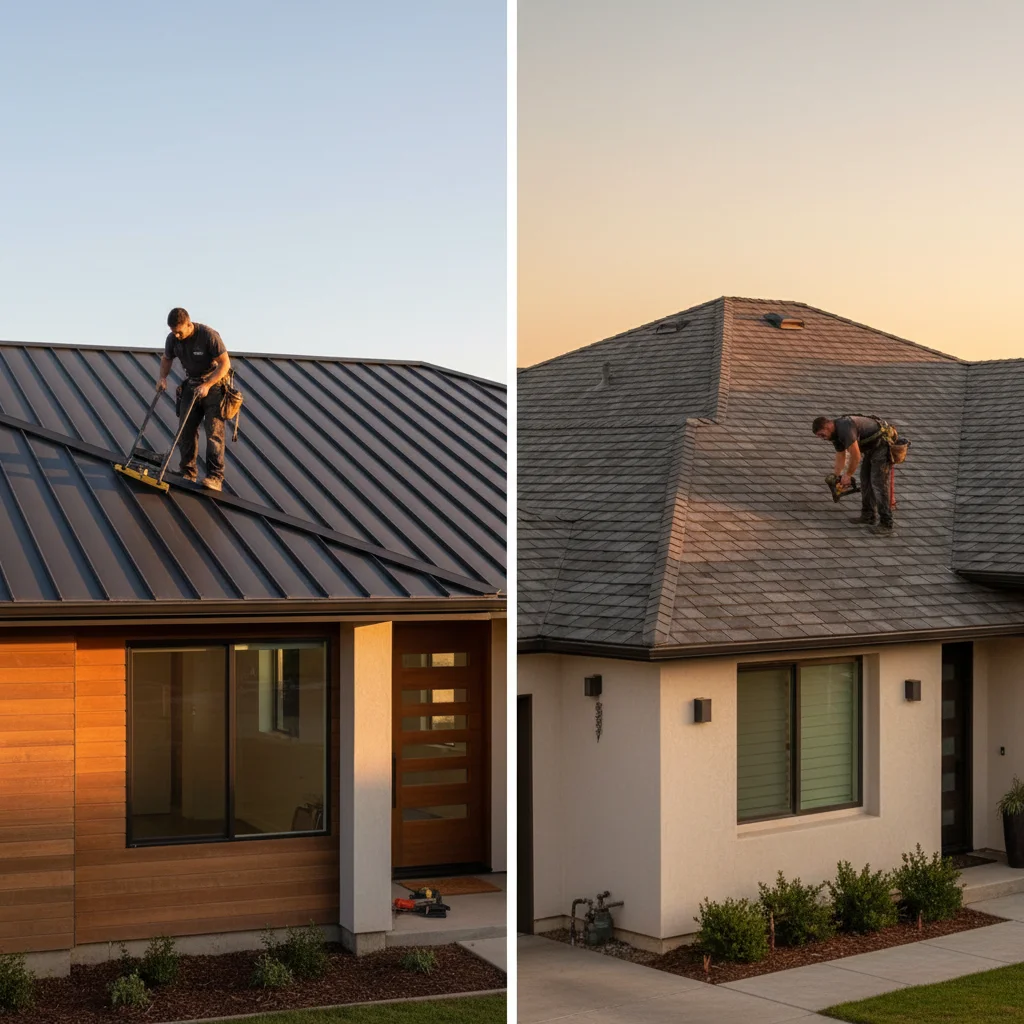
Use a 30-year ownership window as a thinking tool, the same way a mortgage is a thinking tool. Ask the matched roofer to price this roof, tear-off included, both ways.
Upfront cost: two different products
The first quote is where metal and shingles look furthest apart. Use a typical San Diego house as the conversation starter, then let measurement replace the guess.
Architectural asphalt shingles
This is still the common U.S. residential roof: laminated, dimensional, faster for most crews than standing seam. A complete bid should include tear-off, underlayment, shingles, flashing, ventilation, and cleanup. Ask for brand, line, and color. “Architectural shingles” is a category, not a spec.
Ask the matched roofer:
- Tear-off or overlay, and why
- Underlayment product at the field and at valleys
- Ventilation plan (intake and exhaust)
- Wind rating of the exact product and the nailing pattern required to honor it
Standing-seam metal
Standing seam is a formed-panel system. The material costs more. The crew has to be trained on that system. Clips, seams, and coatings are the job, not a shingle nail pattern. Ask for panel type (steel vs aluminum if both are on the table), coating system, and how penetrations will be flashed.
Ask the matched roofer:
- Panel gauge and coating (including coastal exposure if you are near the water)
- Concealed-fastener vs other profiles, and why this roof gets this one
- Who details chimneys, skylights, and solar later
- Oil-canning and noise: what the spec does about both
Shingles will almost always be the lower day-one bid. Metal will almost always be the higher day-one bid. If two bids reverse that, they are probably not the same roof.
Ownership math without fake year counts
Do not treat “30-year shingle” or “50-year metal” as a calendar. Labels are warranty classes and marketing. UV, ventilation, salt, and installation decide when you write the next check.
What you can compare without inventing a lifespan:
| Question | Shingles | Standing-seam metal |
|---|---|---|
| First check | Usually lower | Usually higher |
| Later reroof in a long stay | Often in play | Often not, if the system is sound |
| Repair style | Field patches, boots, tabs | Mostly flashings, fasteners, coatings, penetrations |
| Fire | Class A products exist | Non-combustible panel, assembly still has to be listed |
| Heat | Dark asphalt holds more solar heat | Cool colors and coatings can shed more sun |
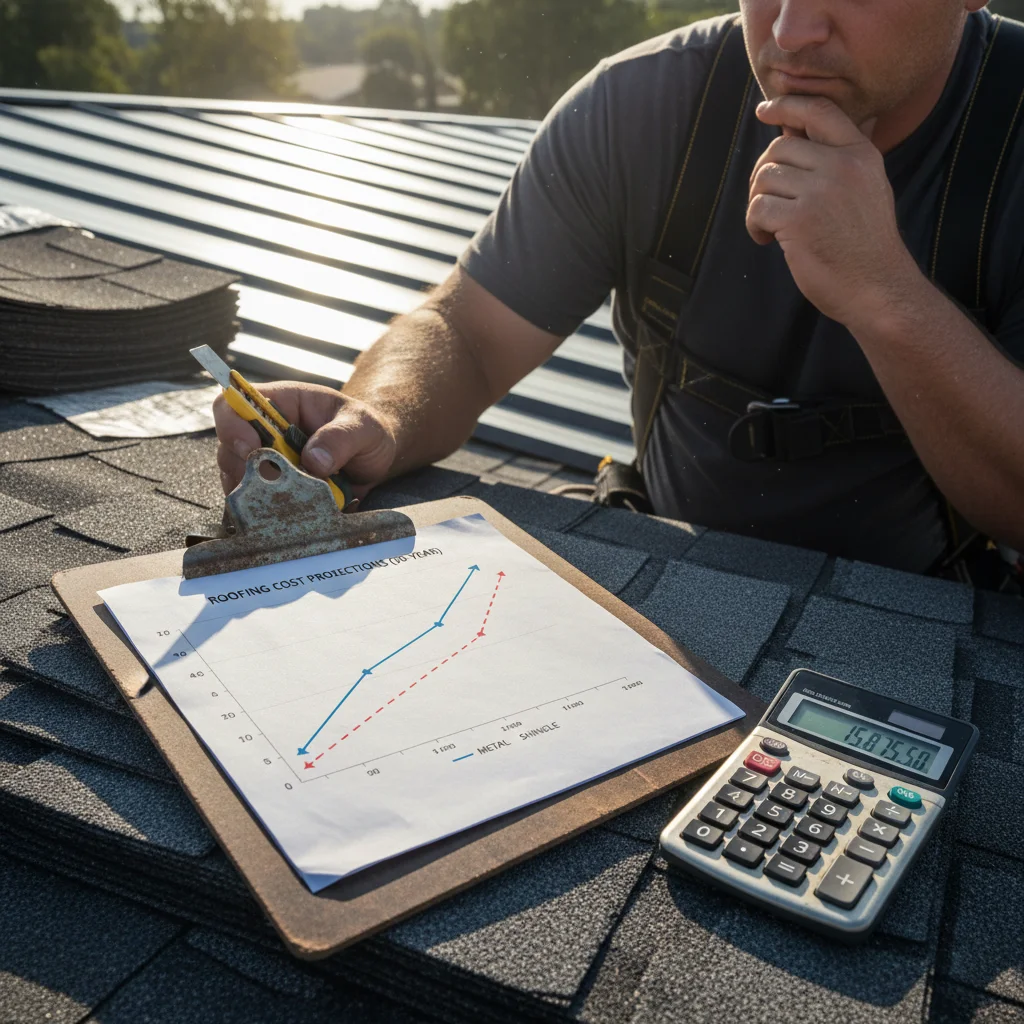
Ask the matched roofer to put both 30-year stories on one page: install now, likely maintenance, and whether a second shingle cycle is in your plans. If they fill that page with guaranteed year counts, ask for the product warranty PDF instead.
Insurance, energy, and resale
Insurance. California carriers care about fire. Metal is non-combustible. Class A shingle assemblies also exist. Do not assume a discount. Ask your carrier what they credit, then ask the roofer for the assembly documents that match.
Cooling. Dark shingles soak sun. Lighter metal can reflect more of it. ENERGY STAR publishes cool-roof research. California Title 24 also speaks to roofing in new work and some alterations. Treat bill savings as house-specific: attic air, insulation, color, and shade matter. Ask the matched roofer whether a cool color is in the spec, and whether it is required for your permit.
Resale. A tired shingle roof is a buyer deduction. A sound metal roof is easier to explain. We will not invent a recoup percentage. Ask your agent how roofs are showing up in your neighborhood’s inspections.
Coastal vs inland: where the spec changes
San Diego is not one climate. La Jolla is not Alpine.
Coast (La Jolla, Del Mar, Oceanside, Encinitas)
Salt and damp. Shingles can hold moisture and show algae streaking. Granules and sealant strips take weather. Metal needs a coating and fastener system meant for marine air. Bare or cheaply coated panels stain and corrode. Ask for the coating warranty’s coastal terms, not a brochure photo. More: best roof material for coastal climates.
Inland valleys and East County (Escondido, Poway, El Cajon, Ramona)
UV and ember risk. Asphalt binders age in hard sun. Metal is less bothered by UV at the panel, and it does not burn. Wind-blown embers still care about vents, eaves, and the whole assembly. For fire-minded specs, start with metal roofing and ask the matched roofer which listed assembly they will use.
Neither climate “awards a winner” by itself. The bid has to name the exposure.
Which one fits this house
Architectural shingles if the first check is the constraint, you may sell before another cycle, or the house wants that look and the HOA does too.
Standing-seam metal if you are staying, you want fewer reroof cycles, you care about reflected heat, or you are on the coast or in a fire-exposed setting and the spec is built for that.
Shingles are a complete, legitimate roof when they are specified and installed as a system. Metal is a different system with a different first price. For county-wide replacement context, see the San Diego roof replacement cost guide.
Frequently asked questions
Are metal roofs more expensive than shingles?
Usually on day one. Ask for both quotes on the same measured roof. If metal comes in cheaper, read the spec. Something was probably left out of one of them.
What is the cost of metal vs shingles over 30 years?
It depends on whether you pay for a second shingle roof in that window, and on maintenance of flashings on both systems. We will not invent a 30-year total. Ask the matched roofer to walk that timeline for your pitch, access, and material grade.
Is shingle or metal cheaper in San Diego?
Shingles are usually cheaper to install. Metal can be cheaper to own if you stay through a shingle replacement cycle. Your answer is almost entirely how long you will own the house.
Why does metal cost more per square foot?
Panels, coatings, and a specialist crew. In this market, labor skill is a large share of the gap. Ask what is roll-formed on site vs delivered.
Does a metal roof lower cooling bills here?
It can, especially in a reflective color with a working attic. Treat it as a bonus, not the reason to buy. Ask for the color’s solar reflectance in the submittal.
When to call
If you want both systems priced on the same walk, call (760) 750-5557. We connect San Diego County homeowners with an independent roofer. You compare the two written scopes. Verify the C-39 at cslb.ca.gov.