Budgeting a Chula Vista reroof means reading neighborhood stock, HOA rules, and South Bay climate, not a published city rate card. Top Pro Roofing SD is a referral marketplace. We connect South Bay homeowners with CSLB-licensed C-39 roofers. We do not install roofs and we do not have a 2026 network price survey. Call (760) 750-5557.
We will not invent per-square-foot rates, 2,000 sq ft package totals, or named “Project 1” invoices. Ask the matched roofer to measure this roof. Related: roof repair in Chula Vista. County method: new roof cost in San Diego.
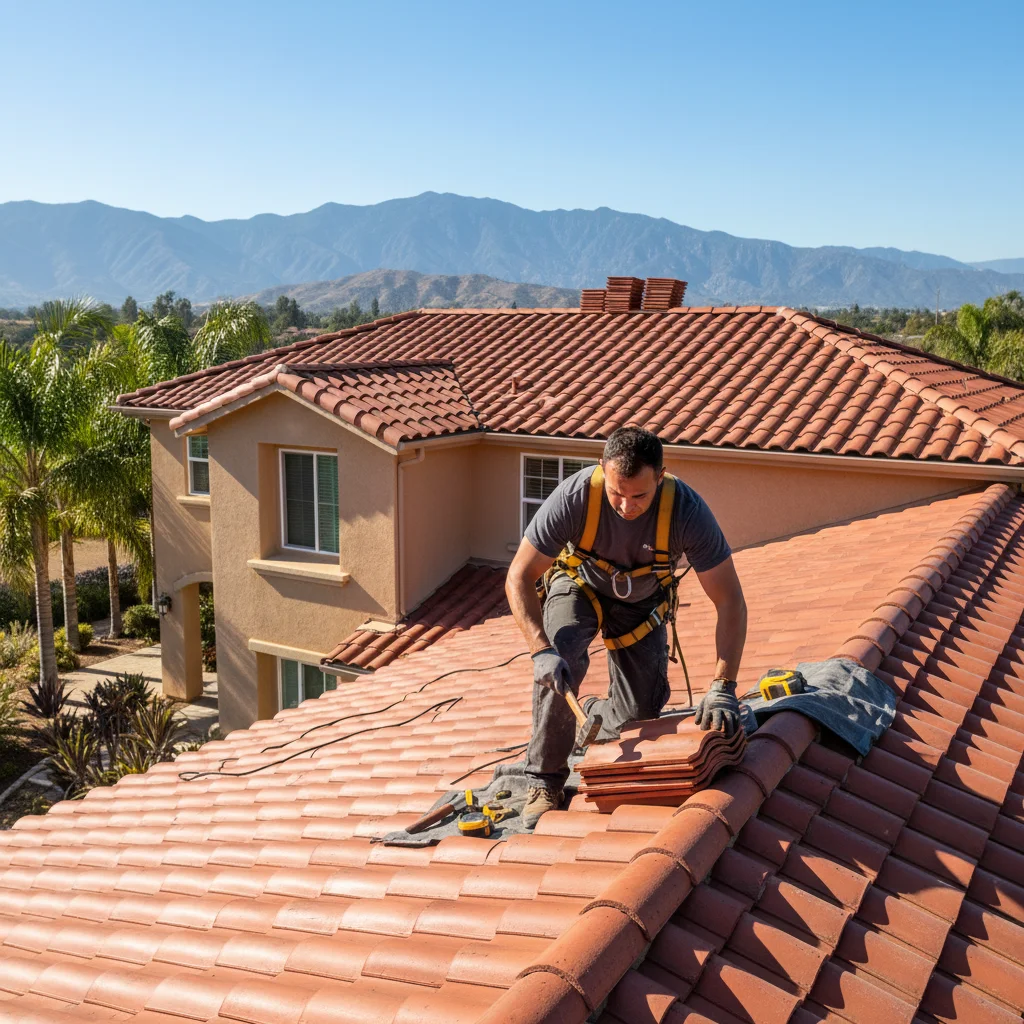
What to compare by material (not a Chula Vista price list)
The material family still sets the conversation. Labor, underlayment, tear-off, and deck repair sit in the same bid. The product is not the only driver.
Asphalt composition shingles
Architectural shingle is the usual lower-upfront conversation on older west-of-805 stock. Compare named SKU, nail pattern, underlayment, flashing, and a deck sheet allowance. A 2,000-square-foot roof (not living area) is a measurement, not a published package. Stay-or-replace: roof repair vs replace.
Concrete and clay tile
Tile is the Eastlake, Otay Ranch, and Rolling Hills Ranch look. Longevity and fire listing are why HOAs keep it. New tile vs lift-and-relay is the real fork when existing tiles are sound. County tile method: 2026 tile roof replacement cost. Lift-and-relay: tile roof lift-and-relay. We will not invent a 2,000 sq ft tile total or a “full replacement would have been over $X” note.
Standing seam metal
Metal is a durability and cool-roof conversation, more common as a modernization on mixed west Chula Vista streets than as an Eastlake HOA default. Gauge, finish (PVDF vs a lighter paint system), and coastal fasteners matter west of I-805. Metal vs shingle: metal vs shingle.
How South Bay marine layer changes spec
Chula Vista runs from San Diego Bay to inland foothills. West of I-805 sees more marine layer, moisture, and salt. That is a fastener and finish question, not a ZIP premium we can print.
On metal, ask for a coastal-grade finish (often specified as a PVDF system such as Kynar 500) and corrosion-resistant fasteners. Salt eats the wrong clips. Coastal pattern: coastal salt air and roofing.
Moisture also feeds algae streaks on older asphalt. Copper-bearing granules on current architectural lines are the usual algae conversation. Ask for the named product, not a “coastal shingle” nickname.
Clay and concrete tile handle salt and moisture on the field. The underlayment under them does not. A named synthetic sheet is the secondary barrier against wind-driven rain that gets under tile.
Eastlake tile vs west of the 805
Walk the city and the stock splits.
In Eastlake, Otay Ranch, and Rolling Hills Ranch, tile is the HOA default. Most production homes were built in concrete or clay tile. Architectural review usually wants a similar profile and color. The conversation is tile quality, underlayment, and whether you lift-and-relay or buy new, not a free choice of shingle.
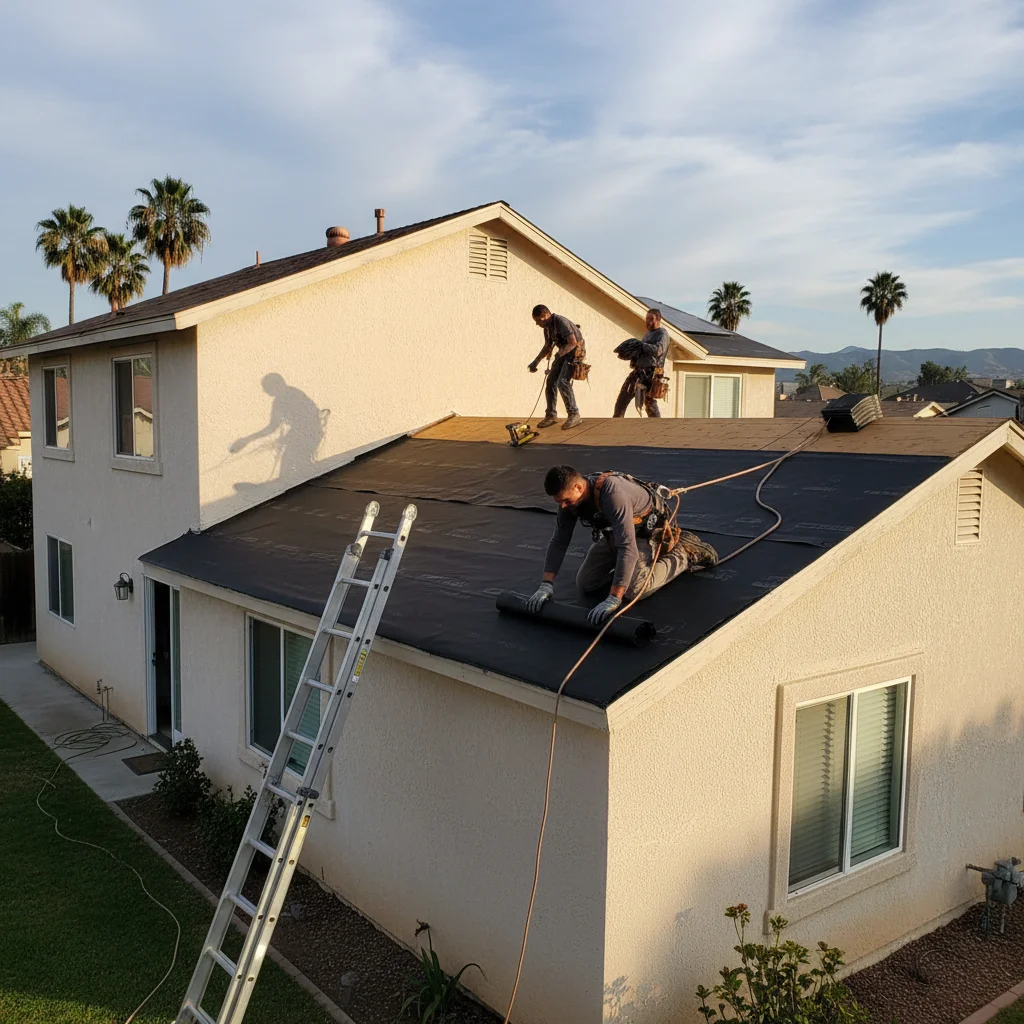
West of I-805 the housing is older and mixed: mid-century ranch, 1970s tract, some custom. Architectural shingle is the common reroof. Standing seam shows up when the owner wants a different look and a longer assembly. It still has to pass the City permit and, if you have one, HOA review.
Permits and HOA in Chula Vista
A roof replacement should be confirmed with the City of Chula Vista building counter. Plans name materials, attachment, and the Title 24 cool-roof path where the job triggers it. Do not treat Title 24 as a default. The licensed contractor should pull any required permit. Verify the license at CSLB. Processing time is the City’s current clock. We will not invent a two-to-four-week stamp.
If you are in Eastlake, San Miguel Ranch, Windingwalk, or another HOA, architectural review is a second track. Submit material, profile, and color before work. Written approval before the contract. Skipping it can mean stop-work or a redo.
How to compare three Chula Vista bids
Ask for the same columns on every quote:
| Line | Why it matters here |
|---|---|
| Measured roof squares | Listing square footage is not the roof |
| Tear-off vs overlay, existing layers | Ask the AHJ for current covering limits |
| Named shingle, tile, or metal | HOA match in Eastlake; algae and salt west of 805 |
| Underlayment product | The waterproofing under tile |
| Flashing and penetration count | Valleys, pipes, skylights |
| Deck sheet allowance and per-sheet price | Termite and moisture show up at tear-off |
| Who pulls the City permit | Not the homeowner |
| HOA: who files | Eastlake and similar |
| Warranty: manufacturer vs workmanship | Separate papers |
We will not invent a central Chula Vista shingle invoice, an Eastlake lift-and-relay total, or a Bonita metal-plus-TPO package. Get those numbers from three C-39s on this address.
Local routing: roofing in Chula Vista. County-wide: San Diego roof replacement cost.
When to call us
Widespread granule loss, cracked tile, or leaks that keep coming back are replacement conversations, not another tube of mastic. If you want an on-roof inspection and a written line-item bid for a Chula Vista home, we match you with a licensed independent C-39. Call (760) 750-5557.