Replacing the roof on a home in Rancho Santa Fe is unlike a roofing project anywhere else in San Diego County. It’s a significant investment in a landmark property, governed by a unique set of rules designed to preserve the community’s character. Understanding the process, the materials, and the costs is the first step toward a successful outcome.

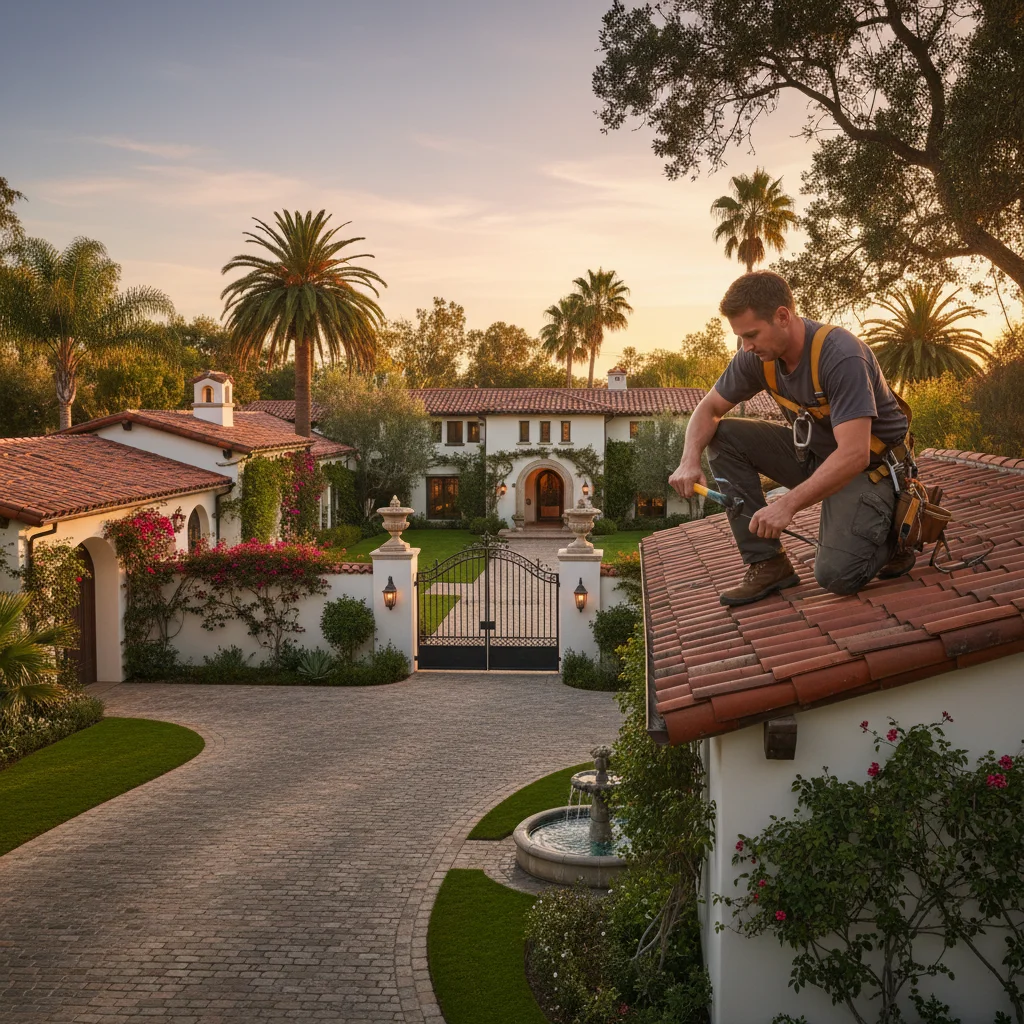
A large Rancho Santa Fe estate home with a red Spanish tile roof, mature landscaping, and golden hour light.

Why Rancho Santa Fe roofs are different

The primary reason Rancho Santa Fe roofing is a specialized field comes down to three factors: the scale of the properties, the architectural guidelines of the HOA, and the authority of the Rancho Santa Fe Covenant. Most homes here are not standard suburban residences; they are sprawling estates with complex, multi-faceted roof systems. A roof that might be 2,500 square feet in another neighborhood could easily be 8,000 or 12,000 square feet here, involving steep pitches, turrets, and numerous valleys.

Beyond size, there’s the Covenant. Established in the 1920s, the Rancho Santa Fe Covenant is a master plan that governs land use and architecture to maintain the area’s rural, agrarian character. It’s enforced by the Rancho Santa Fe Association and its Art Jury, now known as the Covenant Design Review Committee (CDRC). This is not a typical HOA that simply dictates paint colors. The CDRC has binding authority over major exterior changes, especially a full roof replacement.

This means every material choice, color palette, and profile must align with a pre-approved aesthetic. The goal is harmony, authenticity, and consistency with the Spanish, Mediterranean, and Ranch styles that define the community. A contractor who doesn’t understand these nuances can cause significant delays and costly revisions. The rules aren’t suggestions; they are foundational requirements for any exterior work.

Tile, slate, and metal: what fits the architectural review board

The Covenant Design Review Committee has specific expectations for roofing materials. The overarching theme is natural materials, earthy color palettes, and profiles that complement the established architecture. Forget about standard asphalt shingles; they are almost never approved for primary residences here.

Clay and concrete tile

This is the quintessential look of Rancho Santa Fe. Spanish and Mission S-tiles in natural red, terracotta, and earth-tone blends dominate the landscape for good reason. They are authentic to the architectural style, exceptionally durable, and carry a Class A fire rating, which is critical in this high-risk fire area. We specialize in high-quality tile roofing, using materials from trusted manufacturers like Boral and MCA that offer the profiles and colorways the CDRC approves. Both clay and concrete are viable, with true clay offering unparalleled color longevity and authenticity, while high-end concrete provides a durable and cost-effective alternative.

Natural slate

For certain estate styles, nothing compares to the timeless elegance of natural slate. A slate roof is a lifetime investment, often lasting over 100 years. It’s the most premium roofing material available, offering unmatched durability and a natural beauty that cannot be replicated. However, it’s also the heaviest and most expensive option. A structural engineering review is often necessary to ensure the home’s framing can support the immense weight of a full slate roof system. Its use is typically reserved for French Country, Tudor, or other European-inspired estate homes within the Covenant.

High-end metal roofing

While less common, certain metal roofing profiles can gain approval from the CDRC. This is not the corrugated metal you see on barns. We’re talking about heavy-gauge standing seam panels in dark bronze or charcoal matte finishes, or stone-coated steel profiles that expertly mimic the look of Spanish tile or wood shake. These systems offer excellent longevity, energy efficiency, and superior fire resistance. Approval hinges on a profile and color that blends with the natural environment and doesn’t create excessive glare.

What an estate-grade reroof actually costs in 2026

Providing a precise cost for a Rancho Santa Fe reroof is impossible without a detailed inspection, but it’s important for homeowners to have a realistic budget in mind. These are among the most complex and materials-intensive residential roofing projects in the country. The final price is driven by a few key variables that go far beyond simple square footage.

The most significant factors include:

  • Total Roof Area and Complexity: An 8,000-square-foot roof with a steep pitch, multiple turrets, and dozens of hips and valleys requires exponentially more labor and material than a simple gable roof half its size.
  • Material Selection: The price hierarchy is clear. Natural slate is the most expensive, followed by premium clay tile, high-end concrete tile, and then architectural metal systems. Slate can easily cost twice as much as a premium tile roof.
  • Underlayment and Decking: An estate-grade roof demands a superior support system. This means, at minimum, a double layer of high-temperature synthetic underlayment. In many cases, a full reroof involves removing the old skip sheathing and installing new, solid plywood decking across the entire roof to meet modern codes—a substantial added cost.
  • Component Quality: Details matter. Using premium components like copper flashing in valleys and around chimneys, custom-fabricated drip edges, and high-performance ventilation systems adds to the cost but is essential for the roof’s longevity.
  • Access and Site Protection: Maneuvering equipment and materials around mature, multi-million-dollar landscaping requires careful planning and extensive site protection, adding to the labor budget.

Considering these factors, a complete roof replacement on a sizable Rancho Santa Fe estate in 2026 can range from $120,000 to over $350,000. While this is a significant investment, it reflects the quality of materials, level of craftsmanship, and administrative navigation required to do the job correctly.

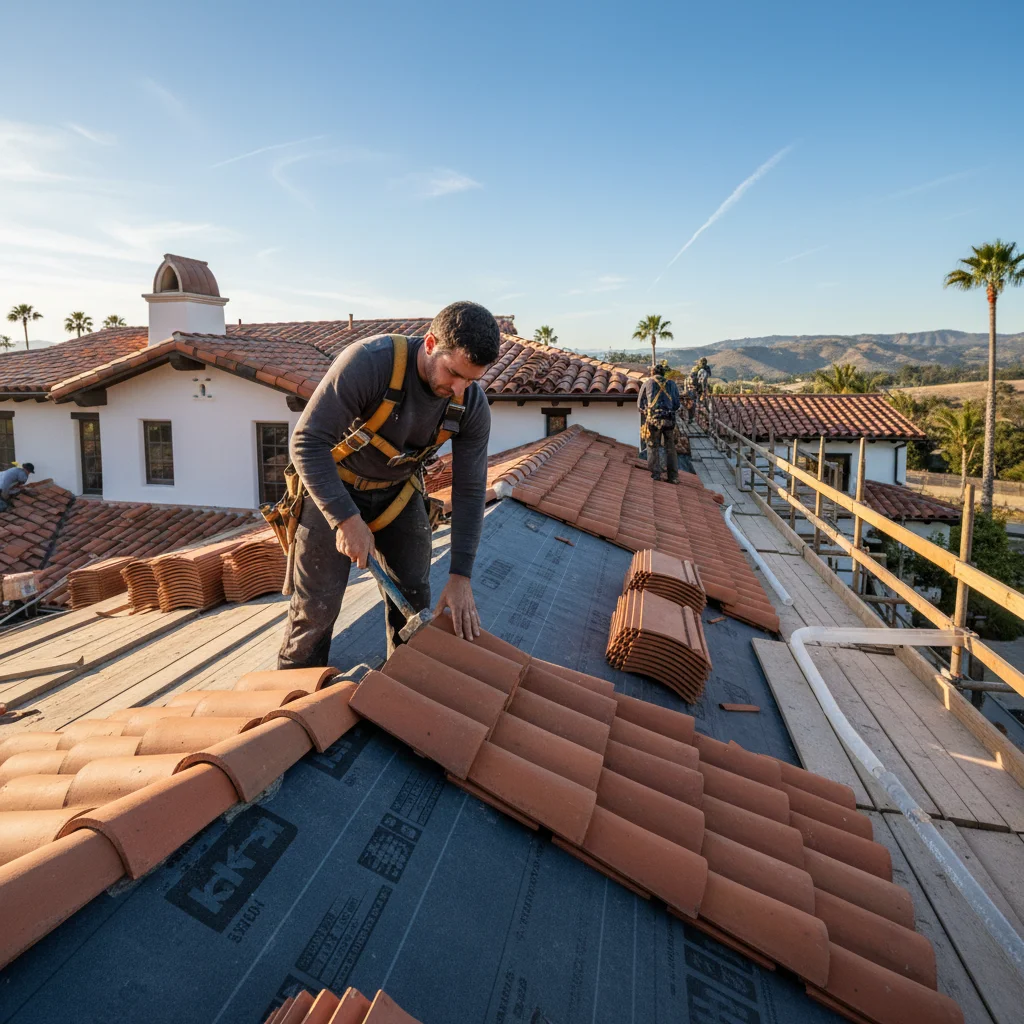
Professional roofing crew installing high-end clay tiles on a large estate in Rancho Santa Fe.

Permits, the Covenant Design Review Committee, and timing

The process for getting a new roof approved and installed in Rancho Santa Fe is more involved than in other communities. It’s a two-track approval system, and understanding the sequence is key to avoiding frustration and delays.

First, any reroofing project requires a building permit from the County of San Diego. This is the standard process for ensuring the work meets California Building Code. A county inspector will visit the site at several key stages, typically to verify the new roof decking is properly installed, to check the underlayment and flashing before tile is loaded, and for a final inspection upon completion. This is the technical side of the approval.

However, before you can even apply for the county permit, you must secure approval from the Covenant Design Review Committee (CDRC). This is the aesthetic side of the approval. Your contractor must prepare a comprehensive submission package for the committee. This package typically includes architectural drawings, a site plan, detailed specifications of all materials to be used, and physical samples of the proposed roofing material and color. The CDRC meets regularly to review these applications, and they will either approve the project as submitted, request modifications, or deny it if it doesn’t align with Covenant standards.

This dual-approval process adds significant time to the project. While a standard reroof might go from contract to completion in a few weeks, the CDRC review process alone can add 30 to 60 days to the front end of the timeline. A contractor experienced in the Covenant will know how to prepare a thorough package to minimize the chance of delays or rejection.

Picking a contractor who’s worked inside the Covenant before

Given the complexities, hiring the right roofer in Rancho Santa Fe is the single most important decision you’ll make. This is not a job for a generalist roofer who primarily works on asphalt shingle homes in other parts of the county. You need a contractor with a proven track record of successfully completing projects specifically within the Covenant.

When vetting potential contractors, ask for a portfolio of homes they have reroofed in Rancho Santa Fe proper. Ask for addresses you can drive by. An experienced local contractor will have a deep understanding of the CDRC’s expectations and can guide you through the material selection and submission process. They should be able to articulate the entire approval timeline from the outset.

Be wary of any bid that seems significantly lower than others. This is often a red flag that the contractor has underestimated the scope, plans to use substandard materials, or lacks the proper insurance for a project of this value. Ensure any roofer you consider has a valid C-39 Roofing license from the California Contractors State License Board, which you can verify online at the CSLB website. They must also carry substantial general liability and workers’ compensation insurance to protect you and your property.

Ultimately, you are not just hiring a crew to install a roof. You are hiring a project manager who can navigate a complex administrative process, a logistics expert who can work on a sensitive site, and a team of craftsmen who can execute a high-end installation that will protect your home for decades to come.

When to call us

If you’re considering a roof replacement for your Rancho Santa Fe estate and need a contractor who understands the process from CDRC approval to final inspection, we can help. We have the experience, portfolio, and expertise required for projects of this scale and distinction.

Call us at (858) 925-5546 for a same-day estimate.