A TPO proposal is a capital project and a tenant disruption, not a one-line bid. This page walks the install sequence so you can compare written scopes. Top Pro Roofing SD is a referral service. We do not install TPO, hold a C-39 license, or issue manufacturer warranties. Call (760) 750-5557 if you want a match with a licensed independent commercial roofer.
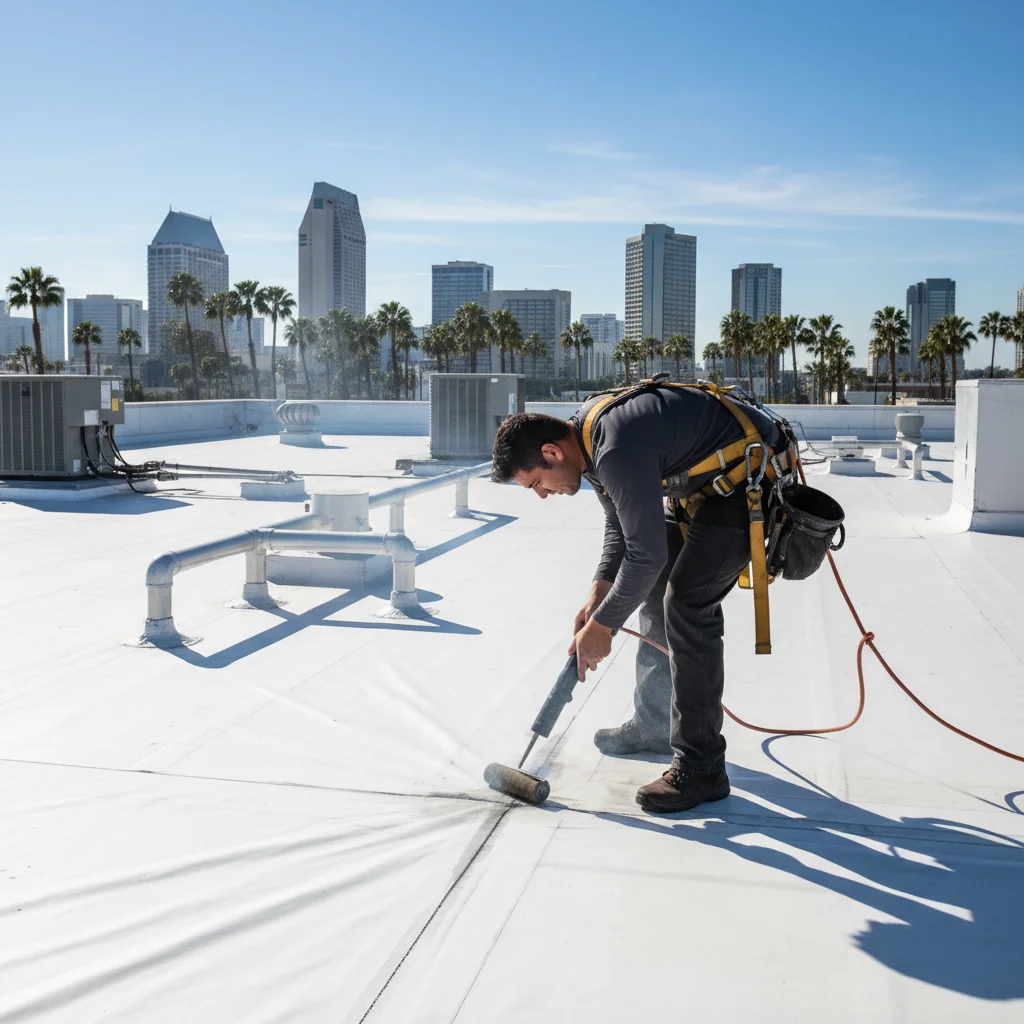
What gets installed (and what gets torn off) on day one
Day one is staging and demolition, not rolling white membrane.
The crew should set a secure perimeter, a dumpster location you approved, and protection for landscaping, windows, and walkways. Parking and tenant access belong in writing before the first dumpster arrives.
Tear-off depends on the existing assembly and the building official. Inside the City of San Diego, start with Information Bulletin 123. Read the current live bulletin. This page will not restate exemption classes, layer limits, or fee tables. Other cities and unincorporated county areas set their own rules. Ask the bidder which AHJ they expect, and whether this roof is a recover or a full tear-off.
A recover that hides wet insulation or a rotten deck is a future leak. Ask the proposal to say how the deck will be inspected after tear-off, how damaged plywood, OSB, or metal deck is documented, and how added deck work is priced before it proceeds. Covering a weak deck is a common shortcut. It is also a reason to walk away.
Insulation, fasteners, and the seam-welding step that matters most
After a clean, dry substrate, the TPO assembly is insulation, attachment, membrane, and details.
Polyiso boards are a common insulation choice on San Diego commercial roofs because they carry a high R-value per inch. Ask for the product name, thickness, and whether the layout is staggered. The California Energy Commission publishes Title 24, Part 6. Read the current live standards for this address, slope, and project type. Look up the climate zone on the CEC site. This page will not restate a zone number. Do not treat Title 24 cool-roof rules as a default. The contractor should show which product data they are using for aged solar reflectance and emittance, not a verbal “Title 24 compliant.”
Attachment is a design choice, not a default. Mechanically attached systems use plates and screws in a pattern meant to meet wind uplift for that deck and building height. Fully adhered systems use bonding adhesive, often on concrete decks or where a specified manufacturer assembly requires it. The proposal should name the attachment method. “TPO roof” is not a wind design.
The membrane is thermoplastic polyolefin. Field seams are fused with hot air, typically with an automatic welder on long runs and a hand welder at details. The controlling temperature, speed, and overlap come from the membrane manufacturer’s current instructions for that thickness and that day’s weather. We will not invent a weld-temperature range here. Ask the crew to show the data sheet they are following.
A heat-welded seam is a different joint than tape or adhesive on other membranes. It still fails if it is cold, scorched, dirty, or wet. Compare this sequence with the TPO vs modified bitumen page when you are choosing chemistry, and with the TPO proposal guide when you are comparing bids.
How long a TPO install takes
Ask for a written schedule tied to measured roof area, number of penetrations, and whether the job is tear-off or recover. We do not publish day counts by square footage. Access, HVAC curbs, skylights, Santa Ana wind shutdowns, rain, and hidden deck repairs change the calendar more than a brochure timeline.
Factors that belong on the schedule:
- Tear-off versus recover, including debris removal
- Deck repairs discovered after opening
- Count of HVAC units, pipes, skylights, and walls that need flashing
- Weather holds the contractor will actually stop for
- How materials get to the roof and how debris leaves the site
Daily written updates beat a verbal “on track.”
Common install mistakes that void a manufacturer warranty
A manufacturer warranty, if one is offered, follows that manufacturer’s registered installer rules and the installed assembly. This referral brand cannot enroll you in a warranty. Ask the contractor which program they can currently register, and to attach the terms.
Problems that show up on failed TPO jobs:
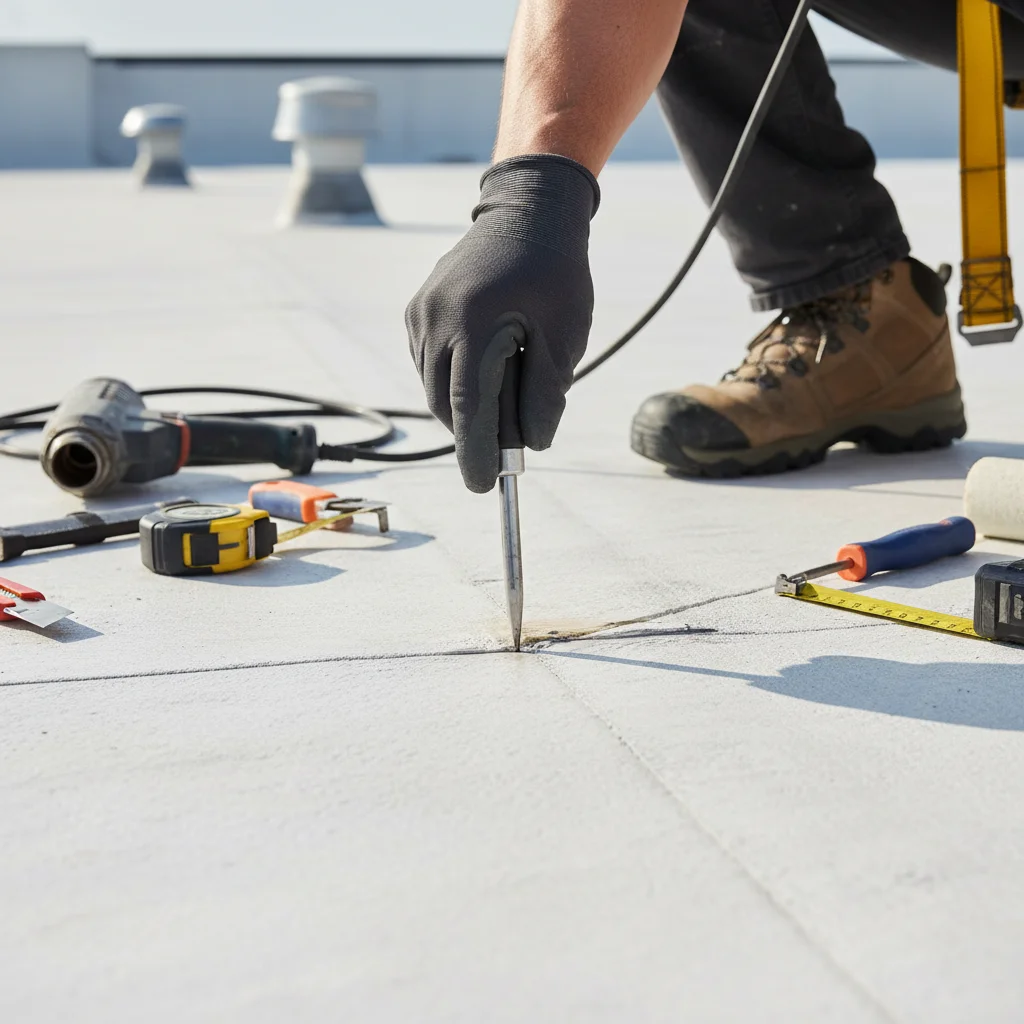
- Improper seam welds. A cold weld peels. An overheated weld scorches and later cracks. Probe testing is how crews catch this during the day, not after the first rain.
- Incorrect fasteners. Over-driven plates crush insulation. Under-driven plates leave a nub that can wear the sheet. The pattern still has to match the uplift layout on the proposal.
- Poor flashing. Leaks start at pipes, curbs, and walls. Corner welds and termination bars are the tell.
- Contamination. Dirt or moisture in the overlap prevents fusion. A crew that does not clean ahead of the welder is not following the sheet.
Verify the contractor’s California license on the CSLB license lookup. For the service page, see flat roof TPO. Line-item cost questions belong on a written bid, not on a blog table. Related: 2026 flat roof replacement cost in San Diego.
What property managers should be on-site to verify
You do not need to run the welder. You can still see whether the job matches the proposal.
Watch site organization. Materials should be stored covered and dry. A daily cleanup that leaves fasteners in the parking lot is a tenant complaint waiting to happen.
Ask for the day’s completed areas and the next day’s plan. Ask to watch a seam probe: a dull-pointed tool run along a finished weld, looking for voids. A crew that never probes is asking you to trust an invisible joint.
A finished TPO field should look uniform, with details at walls and equipment that match the drawings. Compare that to older tar-and-gravel or modified bitumen surfaces on the same campus only after you know which system you actually bought.
When to call us
If you need a licensed independent C-39 roofer to walk a low-slope building and write a TPO scope, call (760) 750-5557. Bring the address, approximate roof area if you have it, and whether tenants stay in place during work.