Top Pro Roofing SD is a referral marketplace. We connect San Diego County homeowners with CSLB-licensed roofers. We are not the nearest truck, we do not dispatch our own crew, and we do not publish leak prices. Call (760) 750-5557. You pay the contractor.
Water on the ceiling is a same-day problem. “Near me” is who can assess and, if needed, tarp today, with a license you can check. Replacement shopping is a different search: roof replacement near me.
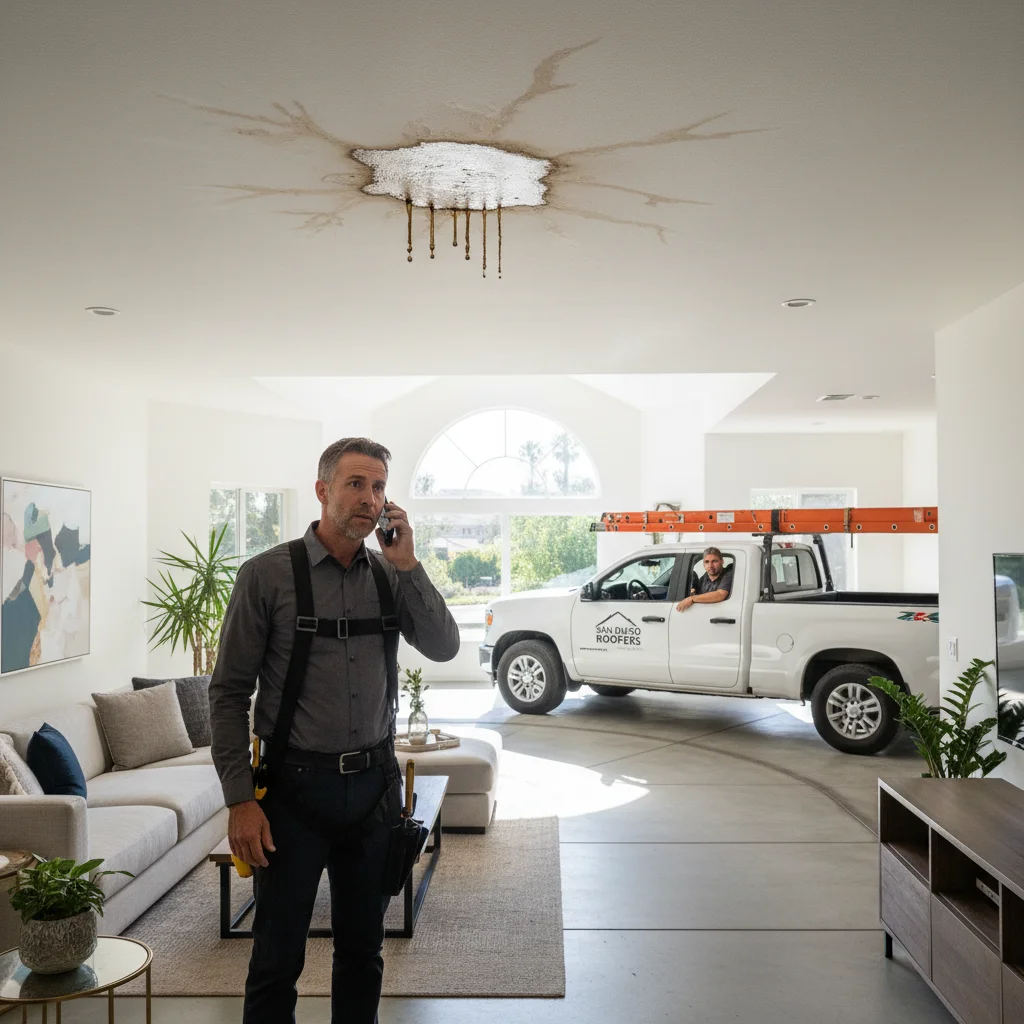
What “near me” means during a leak
Miles are a weak filter. A company two miles away with no slot until Thursday loses to a crew across the county that can be on the roof this afternoon.
Ask immediately:
- Can someone come today while it is still wet, or only after the storm?
- Will that person be able to diagnose and, if conditions allow, start a repair, or is this only a sales visit?
A direct answer is the baseline. A vague one is a reason to keep calling. Roof repair.
Microclimate still matters once they arrive. Ocean Beach and La Jolla fail flashing to salt. El Cajon and Santee see heat and occasional hail. A C-39 who works both will not treat every stain as the same boot.
Same-day response is the expectation for an active leak. If the first company is days out, call the next. Contain the water while you do.
Vet a roofer in about ten minutes
1. CSLB. License lookup. Active C-39. No number before a visit is a stop.
2. Workers’ comp and liability. Ask. A real company can produce a certificate. An injury on your roof without coverage can land on you.
3. Recent reviews, including the bad ones. One outlier is noise. A pattern of “never came back” is the signal.
4. Permits. Ask City of San Diego Development Services or County PDS whether this scope needs a permit. For City covering work, read current Information Bulletin 123. We will not paraphrase its exemption classes. Waving the counter off is waving off your paper trail.
Four checks. If those pass, you are talking to a professional, not a pin on a map.
Storm chasers, unlicensed crews, door-knockers
After a hard rain or Santa Ana, out-of-area crews flood neighborhoods. Cheap deposit, weak work, gone when the leak returns.
Red flags:
- Unsolicited door knock: “we saw damage from the street.” Local companies with enough work do not need that as their only pipeline.
- No street address, only a PO box or a voice number.
- Pressure to sign today and pay a large deposit before a written scope.
- Offer to waive your insurance deductible. That is fraud in California.
- “We work under a B license.” Confirm on CSLB whether a B-only bidder can take this roof as a standalone job. Do not take that from this page.
NRCA is a national practice benchmark, not a substitute for a California license.
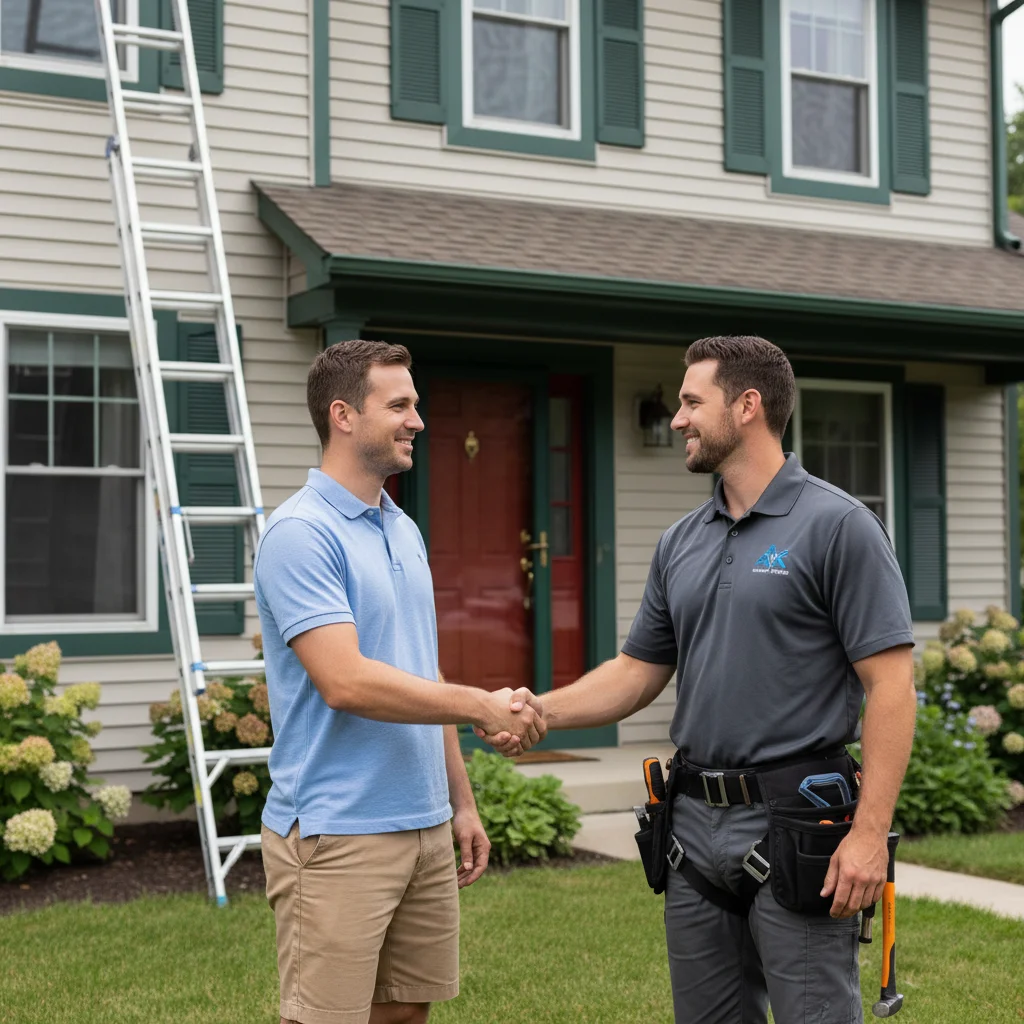
What a fair leak quote looks like (no dollar bands)
Written. Specific. No demand that you commit before you read it.
- Scope that names the source. Example: replace the deteriorated pipe boot at the 3-inch stack, new EPDM boot, reseal, inspect nearby field. Not “fix the leak.”
- Labor and materials separated enough that you can see both.
- Warranty in writing on the repair workmanship. Material warranties are the manufacturer’s. Ask if the paper is silent.
- Photos of the entry and the wet attic or deck.
We will not invent a typical single-point price, a “too cheap” cutoff, or a “too high” cutoff. Those numbers only exist on bids for your access, cover, and whether the deck is sound. Cost factors: roof leak repair cost in San Diego.
Pause if the paper has no source, no license, or a demand for a large deposit before diagnosis.
Tarp first, repair second
In active rain, a permanent repair is often the wrong same-day job. Wet deck and wet covering do not seal. A reputable C-39 will say so and install a tarp until the surface can take a real detail.
Also tarp-first when:
- The opening is larger than the stain suggested and needs daylight
- Soft deck is likely and an adjuster still has to see it
- The only same-day crew is not who you want on the permanent metal
A tarp is days to a short stretch of weeks, not a season. Follow with roof repair. Process: emergency tarping. Adjuster language: what not to say to a roof insurance adjuster.
When to call
An active leak is when license, same-day honesty, and a written source matter most. Interior drywall after the roof is tight is a separate trade. One example of that work outside this marketplace: drywall after water.
Call (760) 750-5557. We connect you with a licensed independent local roofer.