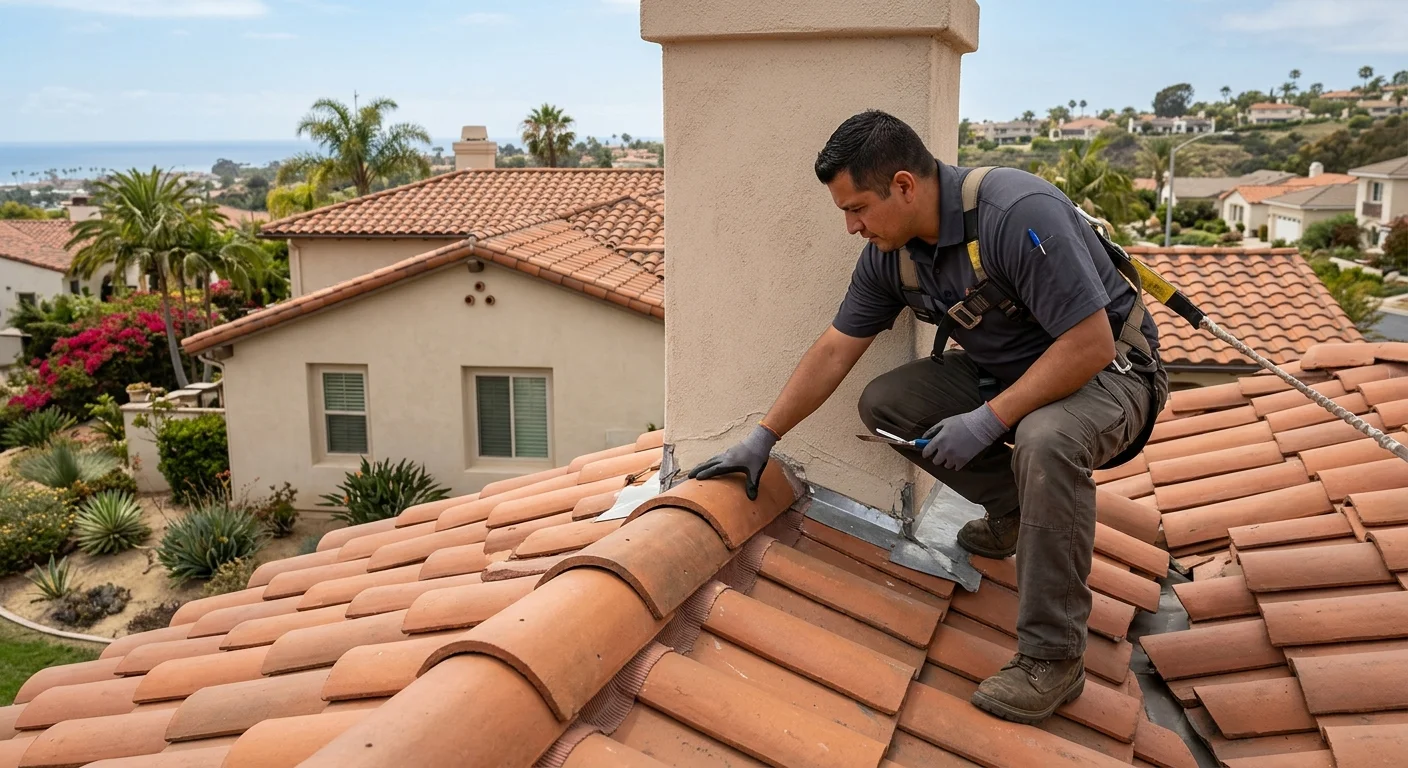
Even in sunny San Diego, your roof isn’t invincible. It faces unique challenges from the coastal climate, and without regular attention, small issues can quickly become expensive repairs. Following a diligent roof maintenance checklist throughout the year helps you protect your investment and keep your home safe.

A clean, realistic photograph illustrating 'a seasonal roof maintenance checklis

Why San Diego roofs need maintenance even without harsh winters

When people think of roof damage, they often picture heavy snow loads or icy conditions. San Diego, however, trades those for its own set of environmental stressors. Our intense sun exposure leads to significant UV degradation, which can bake shingles, tiles, and flat roofing materials, making them brittle and prone to cracking. The marine layer brings consistent moisture, especially in spring and early summer, creating prime conditions for algae, moss, and mildew growth that can compromise your roof’s integrity and trap moisture against roofing materials.

Furthermore, strong Santa Ana winds, though infrequent, can whip through, lifting shingles, dislodging tiles, and sending debris crashing onto your roof. Even our mild rainy season, typically from November to March, tests your roof’s ability to shed water efficiently. A clogged gutter or a tiny crack can quickly turn into a leak, causing interior water damage and mold growth. Regular maintenance isn’t about bracing for blizzards; it’s about proactively safeguarding against the specific wear and tear our beautiful, yet challenging, San Diego climate dishes out. You’re ensuring your roof stays sound, extending its lifespan, and avoiding costly emergency repairs down the line.

Spring: clear debris, check flashing, inspect after marine layer season

Spring in San Diego brings beautiful weather, but it also signals the time for your first major roof check-up of the year. The primary focus here is to assess and recover from any residual effects of winter rains and to prepare for the upcoming marine layer season. Start by safely clearing any accumulated debris from your roof. This includes leaves, twigs, and dirt that might have settled in valleys, around chimneys, or near skylights. Even small piles of debris can trap moisture, encouraging rot or the growth of mold and algae, which can seriously compromise your roof’s surface, especially on asphalt shingles or certain types of tile. A gentle leaf blower or a soft-bristled brush from a safe vantage point on the ground can help.

Next, you’ll want to inspect your flashing. Flashing—the metal strips around chimneys, vents, skylights, and where roof sections meet—is critical for preventing leaks. Look for any signs of bending, rusting, or separation. If flashing is lifting or looks corroded, it creates a direct pathway for water to enter your home. You should also take a look at your gutters. After the winter rains, they might be clogged with sediment or loose granules from your shingles. Ensure they’re clear and securely attached to direct water away from your foundation. Finally, as our famous “May Gray” and “June Gloom” marine layer starts to recede, take another look. The consistent dampness can sometimes reveal slow leaks or areas where moisture is lingering. This is a great time to schedule a professional roof inspection to catch anything you might have missed before the dry, hot summer kicks in.

A visual summary of seasonal roof maintenance tasks for San Diego homeowners, including cleaning, inspections, and professional checks.

Summer: watch for UV damage, check attic ventilation

San Diego summers are glorious, but they deliver intense sunshine that can be brutal on your roof. This season’s maintenance centers on mitigating the effects of prolonged UV exposure and ensuring proper attic ventilation. The sun’s powerful ultraviolet rays can degrade roofing materials, especially asphalt shingles, causing them to dry out, crack, and shed granules. For tile roofs, extreme heat can sometimes cause tiles to expand and contract, leading to stress fractures or shifting. From the ground, use binoculars to carefully scan your roof for any areas where shingles look faded, curled, or where there are visible cracks. For tile roofs, check for chipped or broken tiles that might have become brittle.

Another critical summer task is checking your attic ventilation. Good ventilation helps hot air escape your attic, preventing it from baking your roof deck and shingles from underneath. Poor ventilation can shorten your roof’s lifespan, increase your energy bills, and even lead to mold issues in your attic. If you can safely access your attic, check for any signs of excessive heat or moisture build-up. Ensure that attic vents (ridge vents, soffit vents, gable vents) aren’t blocked by insulation or debris. A well-ventilated attic helps your home stay cooler and protects your roof from premature aging caused by heat accumulation. This proactive approach during the hottest months will help your roof withstand the elements and keep your home more comfortable.

Fall: prep for the rainy season, clean gutters and valleys

As San Diego transitions from the long, dry summer to the milder fall, your roof’s primary concern shifts to preparing for the upcoming rainy season. Even though our winters aren’t severe, any rainfall can exploit vulnerabilities if your roof isn’t ready. The most crucial task in fall is ensuring your gutters and downspouts are impeccably clean. After months of dry weather, they can accumulate a surprising amount of dust, leaves, and other debris that can lead to clogs. Clogged gutters can’t effectively channel rainwater away from your home, causing it to overflow, pool around your foundation, or even back up under your roof’s edge, leading to serious water damage. A professional gutter installation or cleaning service can ensure they’re functioning perfectly.

Beyond gutters, pay close attention to roof valleys. These are the sloped channels where two roof sections meet, designed to direct water flow. Debris often collects here, and if not cleared, it can impede drainage, creating standing water that can eventually penetrate your roof. From the ground, use binoculars to check for any visible blockages. Additionally, inspect for any loose or missing shingles or tiles that might have been overlooked during your summer check or damaged by late-season winds. Making these repairs now, before the first significant rains, is far more efficient and cost-effective than dealing with leaks in the middle of a storm. A thorough fall clean-up and inspection provide your roof with the best defense against the wet months ahead.

After a storm: a quick safe-from-the-ground check

While San Diego isn’t known for hurricanes or blizzards, we do experience occasional heavy rains, strong winds, and even localized hail. After any significant weather event, it’s a smart practice to perform a quick, safe-from-the-ground check of your roof. Your priority is safety, so never climb onto a wet or potentially damaged roof yourself. Instead, use binoculars to scan your roof from different angles around your home. Look for any obvious signs of distress:

  • Missing or damaged shingles/tiles: High winds can lift or blow off roofing materials. Look for bare spots or pieces of roofing on your lawn.
  • Dented or compromised flashing: Strong winds can bend or dislodge the critical metal flashing around chimneys, vents, and skylights.
  • Clogged gutters: Heavy rain can flush a lot of debris into your gutters, potentially causing new blockages.
  • Debris on the roof: Look for fallen branches or other wind-blown items that could cause impact damage or block drainage.
  • Water stains: If you notice new water stains on your ceilings or walls indoors, it’s a clear sign your roof may have been compromised during the storm.

Even if you don’t see immediate damage, water can sometimes seep into the roofing system over time. If you spot anything concerning or suspect damage, don’t delay. What seems like a minor issue can quickly escalate. Taking a few minutes to check after a storm can save you from more extensive and expensive repairs later on.

When to stop DIYing and call a roofer

While a seasonal roof maintenance checklist empowers you to stay proactive, there are definitive moments when it’s time to put away the binoculars and call a professional. Any task that requires you to climb onto your roof, especially if you’re not trained or properly equipped, should be left to the experts. Roof work is inherently dangerous, and a misstep can lead to serious injury. Similarly, if your ground-level inspections reveal clear signs of damage like widespread missing shingles, broken tiles, significant flashing damage, or obvious leaks inside your home, a DIY fix is likely insufficient and could void warranties or cause further issues.

You should also call a professional if you notice persistent issues like recurring algae or moss growth, signs of widespread granule loss, or if you’re unsure about the extent or cause of a problem. Roofing professionals have the experience, tools, and safety equipment to thoroughly inspect your roof, accurately diagnose issues, and perform lasting repairs. They can identify subtle problems that aren’t visible from the ground and provide an honest assessment of your roof’s overall condition and lifespan. Don’t gamble with your home’s most important protective barrier. Call us at (858) 808-6055 for a same-day estimate.