When it’s time for a new roof, one of the first questions San Diego homeowners ask is, “How long does a roof replacement take?” It’s a valid concern; you’re planning a major project that affects your home and daily routine. You want to understand the timeline, minimize disruption, and know what to expect.

We’re here to set realistic expectations for your reroofing project. While every home is unique, most standard residential roof replacements in San Diego County move along quite quickly once work begins.

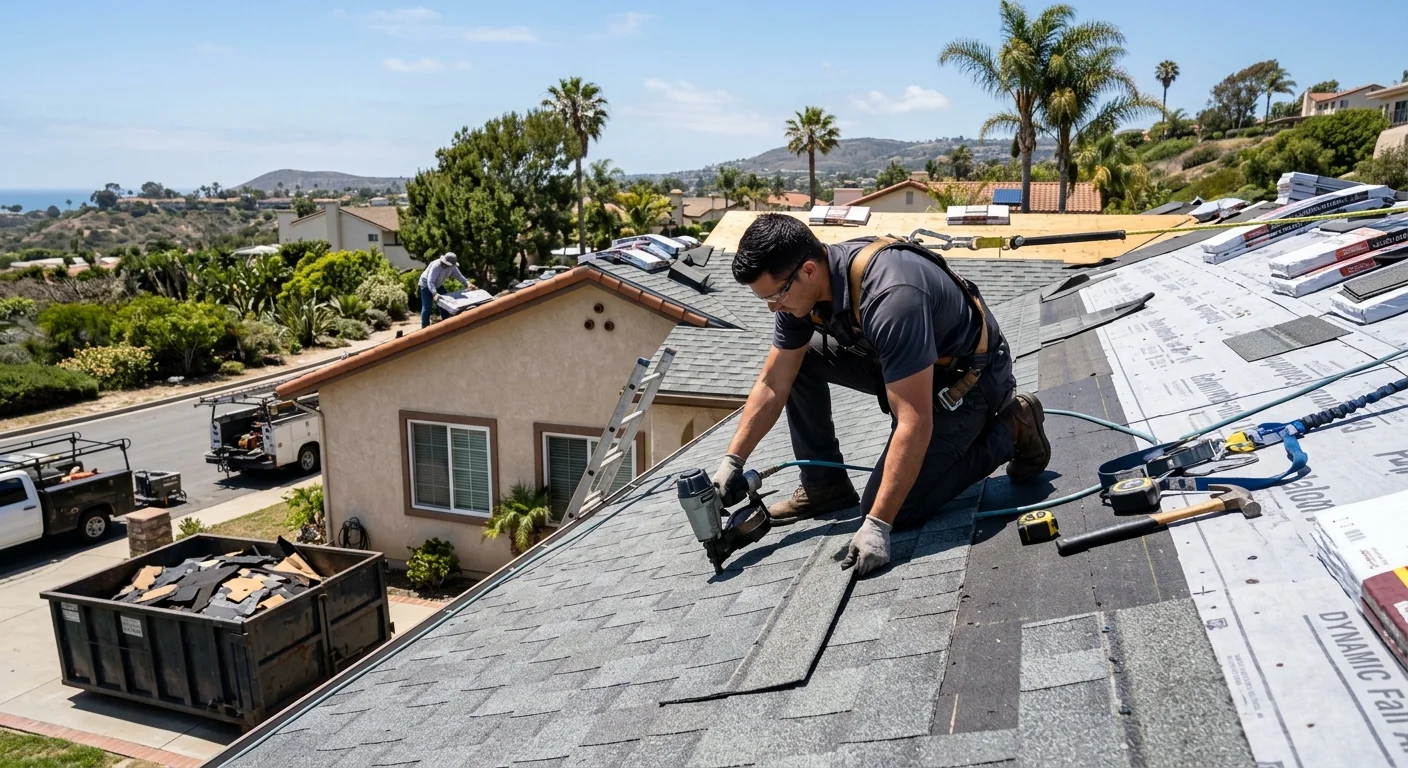
A clean, realistic photograph illustrating 'how long does a roof replacement tak

The short answer: most San Diego homes in 1-3 days

For the majority of single-family homes in San Diego, a complete roof replacement can often be finished within one to three days. This might sound surprisingly fast, but it’s a testament to the efficiency of experienced roofing crews, readily available materials, and San Diego’s generally favorable weather conditions.

Smaller or simpler homes with asphalt shingle roofs can sometimes be completed in a single day. Larger homes or those with more complex rooflines, multiple layers of old roofing material, or specialized materials like tile might take two to three days.

This timeline refers to the actual on-site work. The overall process, from initial estimate to final inspection, will naturally take longer, encompassing permitting, material delivery, and scheduling. Our goal at Top Pro Roofing San Diego is always to complete your project efficiently without sacrificing quality or safety. We understand that having a construction crew at your home can be disruptive, so we plan every step to be as smooth and quick as possible. We also make sure to prepare for any unexpected issues that could arise, keeping you informed every step of the way.

What happens day by day: tear-off, deck inspection, dry-in, install

A roof replacement project follows a well-defined sequence. While some projects might merge steps or extend over additional days, this general breakdown gives you a good idea of what happens on your property.

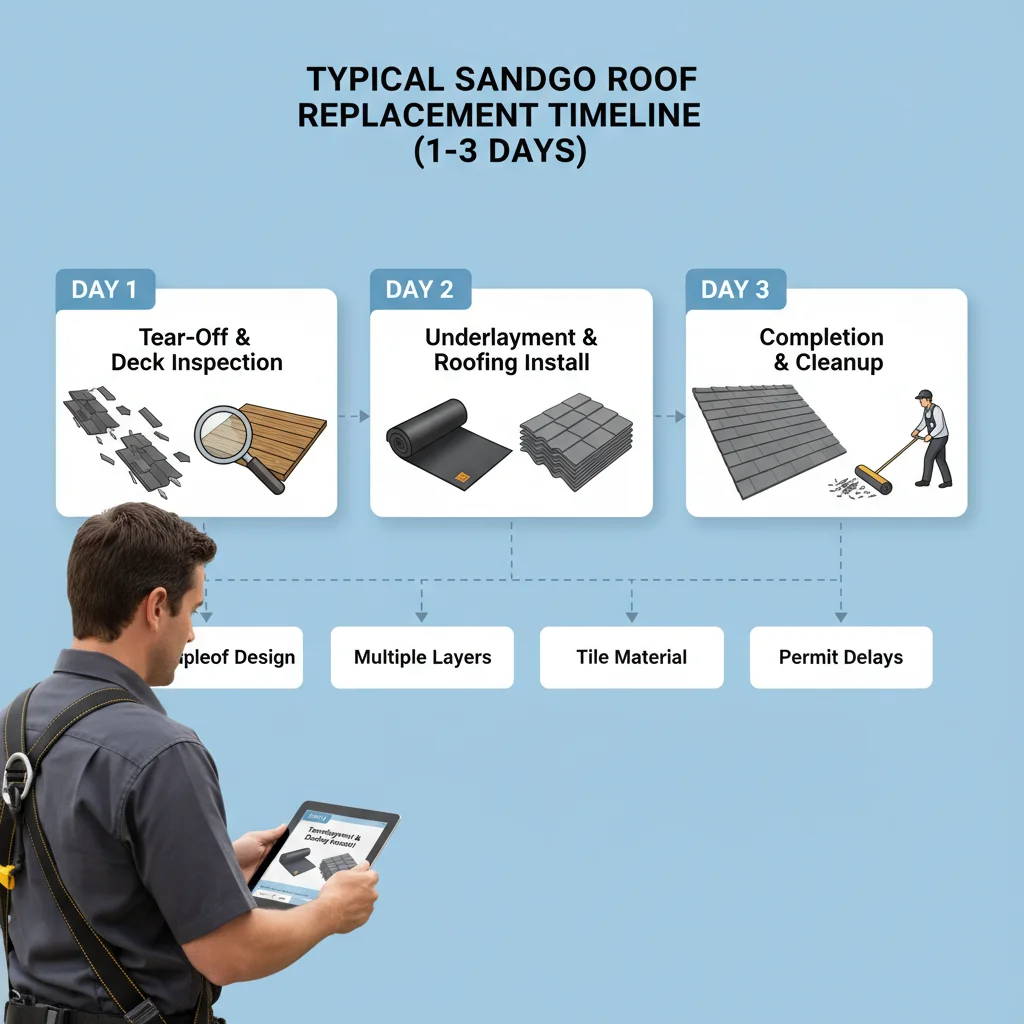
Day 1: Site prep, tear-off, and deck inspection

The first day typically starts early. Our crew arrives, sets up safety equipment, and meticulously protects your property. This includes covering landscaping, driveways, and any outdoor furniture with tarps to catch debris and nails. We take immense care to shield your home and yard from damage during the process.

Once the site is secured, the tear-off begins. This is when we remove all existing roofing materials – shingles, tiles, underlayment, and flashing – right down to the roof deck. This can be a noisy process, so it’s a good day to plan errands or activities away from home if sensitive to noise. After the old roofing is off, we perform a thorough roof deck inspection. This critical step allows us to check for any rotten or damaged plywood and make necessary repairs or replacements. A solid roof deck is essential for the integrity of your new roof.

If we find unexpected damage, we’ll consult with you before proceeding. Depending on the weather forecast and project size, we might also begin installing a protective underlayment, commonly known as “dry-in,” on a portion of the roof by the end of day one. This helps weatherproof your home overnight.

Day 2: Dry-in and primary roofing installation

With the deck sound and secure, day two is usually focused on the “dry-in” process and beginning the installation of your new roofing material. The entire roof deck receives a high-quality underlayment, which acts as an additional barrier against moisture. We’ll also install new flashing around chimneys, skylights, and valleys, ensuring these critical areas are watertight.

Then, the primary roofing material goes on. For asphalt shingle roofs, this means laying down courses of shingles. For tile roofs, tiles are carefully placed and secured. Our team works systematically across the roof, ensuring proper alignment, secure fastening, and adherence to manufacturer specifications and local building codes. This stage involves skilled craftsmanship to create a durable, attractive, and long-lasting roof.

Day 3: Completion, final details, and initial cleanup

By day three, most of the major roofing components are in place. The crew focuses on completing the installation, including ridge caps, hip caps, and any necessary ventilation systems. They’ll ensure all edges are neat, all vents are properly sealed, and every detail meets our stringent quality standards.

Once the roof itself is finished, a significant portion of day three is dedicated to a comprehensive cleanup of your property. We remove all roofing debris, excess materials, and tools. Our crews use powerful magnetic sweepers to find and collect stray nails, doing several passes to ensure your yard is as clean as possible. We aim to leave your property tidier than we found it.

It’s important to remember that this day-by-day breakdown is a general guide. Factors like roof size, material, and unexpected issues can shift the timeline slightly. At Top Pro Roofing San Diego, we provide a detailed project plan and keep you updated on progress every step of the way, including when we anticipate the project to be completed. Learn more about our comprehensive approach to Roof Replacement & Reroofing.

Infographic detailing the typical stages and duration of a roof replacement project in San Diego, from initial tear-off to final cleanup and inspection.

What slows it down: roof size, pitch, layers, tile vs shingle

Several factors can influence how long your San Diego roof replacement takes. Understanding these elements can help you anticipate the project’s duration more accurately.

Roof size and complexity

It’s simple math: a larger roof requires more time to tear off and install. Similarly, a roof with a complex design—think multiple peaks, valleys, dormers, or turrets—will take longer than a simple gable or hip roof. These intricate areas require more precise cutting, flashing, and installation, which adds to the labor time.

Roof pitch (steepness)

The steeper your roof’s pitch, the more challenging and time-consuming the work becomes. Steep roofs require additional safety measures, specialized equipment, and a slower pace to ensure the safety of our crew and the quality of the installation. A low-slope roof allows for quicker movement and material handling.

Number of existing roof layers

If your home has multiple layers of old roofing materials, the tear-off process will take considerably longer. Removing one layer is standard, but some older homes might have two or even three layers of shingles that need to be completely stripped before the new roof can go on. Each additional layer means more debris to remove and more time spent exposing the roof deck.

Roofing material choice

The type of roofing material you choose significantly impacts the timeline.

  • Asphalt shingles: These are generally the quickest to install. Once the underlayment is down, shingles can be laid relatively fast, especially on straightforward roofs. We specialize in quality Asphalt Shingle Roofing installations.
  • Tile roofs (clay or concrete): Installing Clay & Spanish Tile Roofing is a more labor-intensive process. Each tile must be individually placed and secured, requiring precision and more time per square foot. While beautiful and durable, expect a tile roof replacement to take longer than a shingle roof.
  • Metal roofs: The installation time for metal roofing can vary. Standing seam metal roofs, for instance, involve large panels that go up quickly, but require careful handling and sealing. Stone-coated metal tiles, however, are installed more like individual shingles and can take more time. Read our comparison of [/blog/metal-vs-shingle-roof-san-diego/] for more insight.

Unexpected repairs

Sometimes, during the tear-off and roof deck inspection, we uncover hidden issues like significant wood rot, damaged rafters, or deteriorated fascia. These structural repairs are crucial for the longevity and safety of your new roof but will add to the project timeline. We’ll always communicate clearly with you about any unexpected findings and proposed solutions, such as Roof Decking Replacement. Our experienced team handles these situations efficiently to minimize delays.

Weather and permit timing in San Diego County

Even in sunny San Diego, external factors like weather and permitting requirements play a big role in your roof replacement timeline.

San Diego weather considerations

San Diego is famous for its mild, sunny climate, which is ideal for roofing projects. Unlike regions with harsh winters or extended rainy seasons, we rarely face long weather delays. However, even here, we do encounter:

  • Rain: Primarily in the winter and early spring, rain can halt work. We can’t install a roof on a wet deck or during active precipitation due to safety concerns and material integrity. If rain is forecast, we ensure your roof is properly sealed or “dried-in” to protect your home overnight.
  • High winds: Strong winds, especially those accompanying Santa Ana conditions, can make it unsafe to work on a roof, particularly during tear-off when debris can become airborne. High winds can also affect the proper adhesion of certain roofing materials.
  • Extreme heat: While less common, excessively hot days can slow down work for crew safety and can impact the handling and installation of some materials.

We monitor local forecasts closely to schedule work optimally and minimize weather-related interruptions.

Permit timing in San Diego County

Every major roof replacement in San Diego County requires a permit from your local municipality (City of San Diego, Chula Vista, Oceanside, etc.). This isn’t just bureaucracy; it ensures your new roof meets all safety and structural codes. Here’s what that entails:

  1. Application: Top Pro Roofing San Diego handles the permit application on your behalf. This includes submitting detailed plans and scope of work to the relevant building department.
  2. Review and Approval: The city or county then reviews the application. This process can take anywhere from a few days to a few weeks, depending on the municipality’s workload and the complexity of your project. We cannot begin work until the permit is officially approved and issued.
  3. Inspections: Once the roof is completed, a city or county inspector will visit your home to ensure the work complies with all local building codes. This final inspection is mandatory for project closure.

We streamline the permitting process as much as possible, but it’s an external factor outside our direct control. It’s important to factor this administrative time into your overall project timeline, as it usually occurs before any physical work begins on your roof. We always make sure to operate with proper licensing, which you can verify through the Contractors State License Board (CSLB) at cslb.ca.gov.

How to prep your home and yard

Preparing your home and yard before a roof replacement starts can help the project run smoothly and prevent potential damage. A little foresight goes a long way in ensuring a stress-free experience for you and our crew.

Inside your home

  • Secure valuables: The tear-off phase can create significant vibrations throughout your home. Remove any fragile items, pictures, or decorations from walls and shelves, especially on the top floor and in the attic.
  • Cover attic items: If you have an attic, cover any stored items with old sheets or tarps. Debris and dust can easily fall through cracks during the tear-off.
  • Noise expectation: Expect considerable noise, particularly during the tear-off. You might want to plan activities outside the home for the first day or wear ear protection if you need to be present.

Outside your home

  • Clear the perimeter: Move anything valuable or fragile away from your home’s exterior walls. This includes patio furniture, grills, planters, garden decorations, and children’s toys.
  • Protect landscaping: While our crew will place tarps over vulnerable plants, it’s wise to trim back any low-hanging branches that might interfere with work or be at risk of damage. If you have delicate plants, consider temporarily relocating them if possible.
  • Driveway access: Keep your driveway clear. Our team will need unimpeded access for equipment, material delivery, and debris removal vehicles. Park your cars on the street if necessary.
  • Pets and children: For their safety, keep pets and children away from the work area. The site can have sharp debris and active equipment.

Taking these steps will help ensure a safer environment for everyone and allow our roofing professionals to focus on doing their best work. Your preparation, combined with our careful site management, contributes to an efficient and successful roof replacement.

What to expect for cleanup and final inspection

Once the physical work on your new roof is complete, the project isn’t truly finished until your property is meticulously cleaned and the final inspection passed. This closing phase is just as important as the installation itself.

Thorough cleanup

Our commitment to your satisfaction extends to leaving your property spotless. After the last shingle is laid or tile set, our crew undertakes a comprehensive cleanup. This involves:

  • Debris removal: All old roofing materials, packaging, and discarded scraps are collected and hauled away. We use special containers or trucks designed for construction debris.
  • Magnet sweeps: One of the most critical cleanup steps is using powerful magnetic rollers across your lawn, flowerbeds, and driveway. This helps collect any stray nails or metal fragments that might have fallen during the tear-off or installation. We usually perform multiple passes to ensure we’ve caught as much as possible, as a single missed nail can cause a flat tire or injure bare feet.
  • Property walk-through: Before we leave, our project manager will conduct a final walk-through of your property to ensure everything is clean and tidy. We’ll remove all tarps and protection, restoring your yard to its original state, save for your beautiful new roof.

Final inspection

The last hurdle for your roof replacement is the final inspection by your local San Diego County building department. This is a mandatory step to verify that the work performed complies with all applicable building codes and safety standards.

  • Scheduling: Top Pro Roofing San Diego will schedule this inspection once the roof is fully complete and cleaned.
  • Inspector’s review: A city or county inspector will visit your property to examine the installed roof. They’ll check for proper flashing, adequate ventilation, correct fastening of materials, and overall adherence to the permitted plans.
  • Approval: Once the inspector is satisfied, they’ll issue a final approval, officially closing out your permit. This provides you with peace of mind and formal documentation that your new roof meets all regulatory requirements.
  • Our internal quality check: In addition to the municipal inspection, our own team performs a rigorous final Roof Inspection & Certification to ensure every aspect of our work meets Top Pro Roofing San Diego’s high standards of quality and craftsmanship. We want you to be absolutely thrilled with your new roof for years to come.

When to call us

Understanding “how long does a roof replacement take” is an important first step. If your San Diego home needs a new roof, relying on a licensed and experienced roofing professional ensures the job is done right, efficiently, and to code. We handle everything from permitting to final cleanup, providing a clear timeline for your specific project. Call us at (858) 808-6055 for a same-day estimate and a detailed, written timeline tailored to your home.