After wind or rain, order matters: stay off the wet roof, photograph from the ground, contain interior water, then call a licensed independent roofer before anyone makes permanent repairs. Top Pro Roofing SD is a referral service. We do not tarp roofs, file claims, or guarantee what an insurer will pay. Call (760) 750-5557 if you want a match.
Read the current live California Department of Insurance Residential Property Claims Guide and your policy. This page will not restate notice windows, photo duties, or other claim holdings.
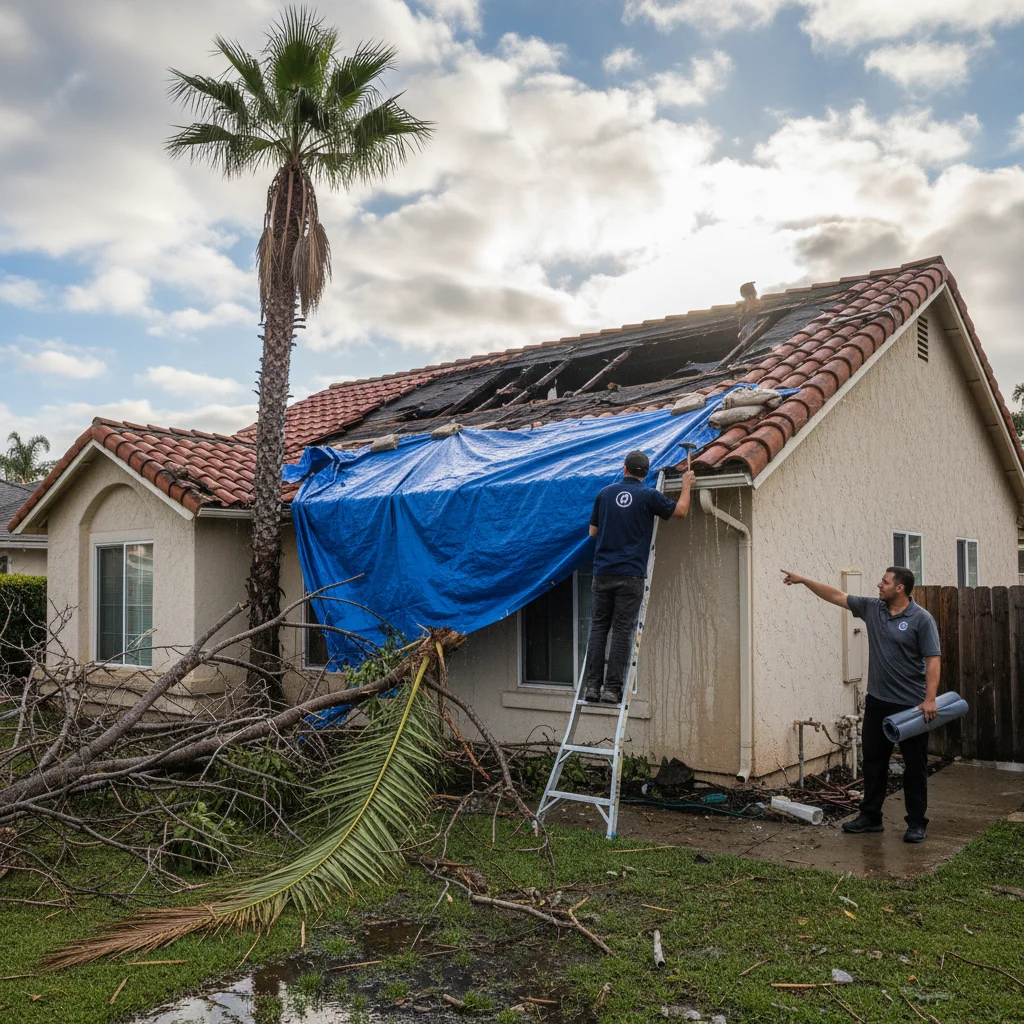
Storm damage roof repair: your immediate action checklist
- Stay off the roof. Wet decking and displaced tiles are slip hazards. Inspect from the ground until a licensed contractor is on site.
- Document from the driveway. Photograph every visible roof section, gutters, the yard, and debris. Keep the phone timestamps.
- Check inside. Ceilings, walls, attic. Photograph stains or drips when you first see them.
- Pull the policy. Read covered perils, the deductible, and the duties-after-loss section. Do not guess a deadline from a blog.
- Stop active water if you can do it safely. A properly installed tarp is mitigation, not a repair. Keep the invoice and photos from before the tarp went on.
- Call a licensed roofer before permanent work. An adjuster needs to see original damage. Cleaning up too fast can erase evidence.
- Report the claim. You do not need a full scope to open a claim. Read the current live CDI guide and your policy for how and when to notify the company.
- Do not sign an Assignment of Benefits at the door. Read any assignment with a lawyer or your insurer before you give away control of the claim.
First 48 hours: documenting damage before it gets worse
Adjusters work from evidence. More photos, fewer arguments. Related: what not to say to a roof insurance adjuster.
From the ground, photograph and video:
- Missing, cracked, or lifted shingles; displaced tiles; buckled flashing
- Debris on the roof: branches, palm fronds, fence pieces
- Gutters bent, separated, or packed with granules
- Interior stains in ceilings, walls, or the attic
- Yard, driveway, and other property damage
Stay on the ground. Wet roofs after wind are unpredictable. Let a licensed C-39 contractor get on the slope.
Inside and on paper:
- Confirm timestamps on photos
- Write the date and time you first noticed damage
- Save National Weather Service alerts or local storm reports for that event if you have them
Temporary mitigation is allowed. Permanent shingle or deck replacement before the inspection can hurt the claim. Read your policy; do not treat a “60-day” rumor as the rule.
When to call for an emergency tarp vs. a repair
A tarp is damage control while you wait for a written scope. It is not a finished roof.
Ask for emergency tarping when:
- Water is actively entering (dripping ceiling, wet insulation, water on walls)
- There is a hole or a large missing area of shingles or tiles
- The deck itself looks broken from the ground
- More rain is in the forecast and the roof is already open
A tarp that is only draped can flap and tear more material. The emergency roof tarping in San Diego page covers what a secured install should look like.
A contained repair may be enough when:
- Damage is a few shingles or a small flashing failure
- There is no active leak and the forecast is dry
- A licensed roofer has inspected and written a limited scope
Widespread tile shift, wet living space, or broken decking belongs on emergency roof repair, not on a tarp-only plan. Keep the tarp invoice. Insurers often treat reasonable mitigation as part of a claim, but that is the company’s decision, not a promise from this site.
How to handle the insurance adjuster’s first visit
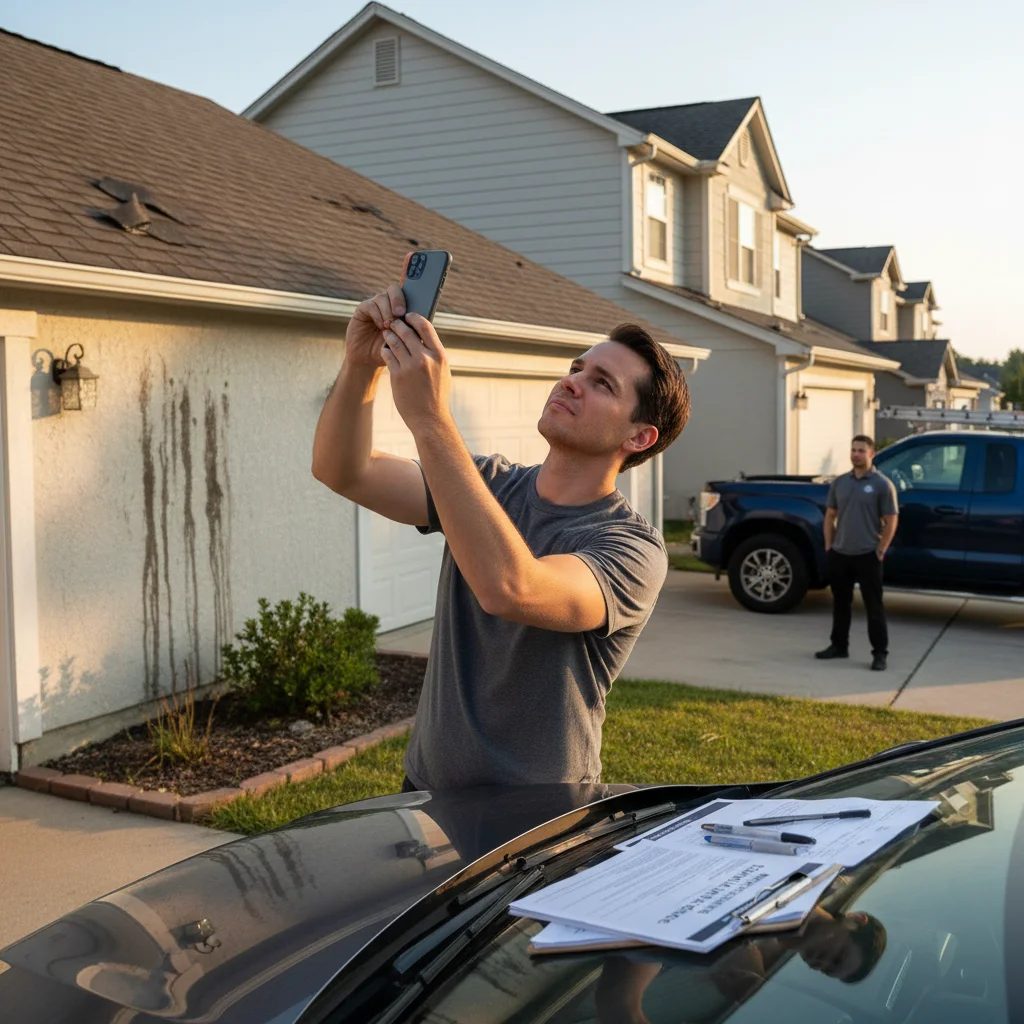
Before:
- Have photos, notes, and the claim number ready
- Ask whether a licensed roofer can be present, or inspect first and give you a written scope
- Limit contractor paperwork before the visit to emergency mitigation, not a full rebuild contract
During:
- Walk the adjuster through every photo
- Point out granule in gutters, lifted flashing, and interior stains
- Get the adjuster’s name, company, and claim number in writing
After:
- Read the estimate when it arrives
- If it does not match the written roofing scope, you can dispute it and ask for a re-inspection
- For consumer rights and how to complain, use insurance.ca.gov or the CDI consumer line 1-800-927-4357
Deeper process: roof storm damage insurance claim.
Common damage types after San Diego wind and rain
San Diego’s wet season is short. Wind and the first hard rain still find deferred flashing and brittle shingles. For product questions, see 150 mph wind-rated shingles. We will not invent Santa Ana miles-per-hour here.
Santa Ana wind damage
Santa Ana winds are dry, offshore events that commonly lift or crack shingles at ridges and rakes and shift tiles where hip and ridge mortar has dried. One missing tile is a water path. Damage that looks fine from the street can still be open under the tab or tile.
Hail damage
Hail is less common on the coast than inland. El Cajon, Santee, and Alpine still see convective hail in some winter storms. Bruised shingles can lose granules without a clean hole. If hail fell, read hail damage roof repair before you treat the roof as “just wind.”
Rain and flashing failures
Months of dry weather move metal. Pipe boots, skylight frames, and chimney step flashing are the usual first leaks. Flat roofs pond when drains clog with storm debris.
Gutter and fascia damage
Debris can pull gutters off the fascia. Water then dumps at the eave instead of away from the foundation.
Red flags that mean storm chasers, not local contractors
- Unprompted door knocks the morning after a storm
- A demand that you assign insurance benefits on the spot
- No California contractor license number you can look up on the CSLB license lookup
- A quote that expires before you can get a second written bid
- A bid far below the others with no named materials
- A deposit that looks larger than the live home-improvement cap: stop and read current CSLB and LegInfo text rather than this page. Read the current live text. This page will not restate the dollar cap.
A C-39 (roofing) license is the classification for roof work. Confirm the number matches the name on the proposal. Permits exist for a reason. Skipping them can follow you into a later claim or a sale.
Frequently asked questions
How quickly do I need to report storm damage in California?
Report as your policy and the current live CDI guide require. Read the duties-after-loss section. This page will not restate a day count. If you are unsure, call the agent when you notice damage, even while you are still photographing.
Does homeowners insurance cover storm damage roof repair in San Diego?
Sudden wind, rain, and falling-object damage is often covered on a standard policy. Wear, age, and deferred maintenance often are not. A licensed roofer’s written scope that separates storm openings from pre-existing wear is evidence. It is not a coverage decision.
Can I put a tarp on before the adjuster comes?
Yes if water is entering. Read the current live CDI guide and your policy for temporary-repair language. Photograph before and after, and keep the invoice. This page will not restate Insurance Code holdings. Do not replace the field until the original condition is documented.
How do I tell Santa Ana wind damage from normal wear?
Wind often concentrates on the windward slope, ridges, and hips. Wear is more even granule loss. Only a licensed roofer on the roof can write that distinction for a claim.
What if the adjuster’s estimate seems low?
Ask for a re-inspection with a licensed roofer and a written scope. A public adjuster is a separate hire with its own fee. See public adjuster roof claim in California.
How long does storm damage roof repair take?
Ask the contractor for a written duration after they see the roof and after the insurer has responded. We do not publish day or week averages. Material lead times, tile matching, and claim disputes all move the calendar.
When to call us
If water is in the house, material is missing, or you cannot tell what you are looking at, a licensed independent roofer should inspect before the next rain. Call (760) 750-5557. We match you. We do not dispatch a crew.