A ceiling stain under a tile roof in San Diego is rarely “the tile failed.” Clay and concrete tile are the weathering layer. The waterproofing is the underlayment, flashing, and how water leaves the valleys. Intact tile from the street does not prove the roof is dry.
Do not climb the roof to confirm it. Tile is slick, brittle under a foot, and easy to crack. Photograph stains inside, and any slipped or broken tile you can see from the ground. Then get a C-39 roofer on the field. For replacement math after diagnosis, see 2026 tile roof replacement cost in San Diego.
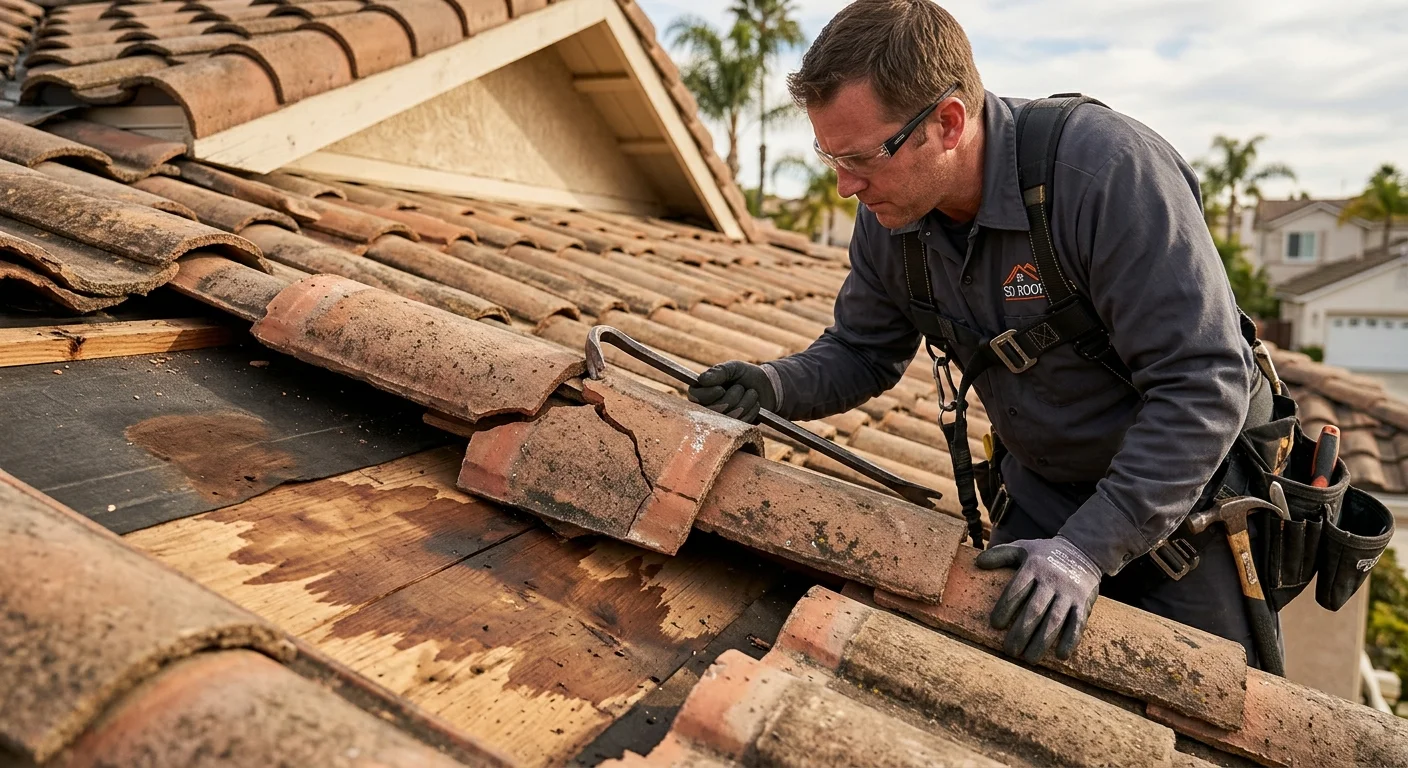
The five leak paths that show up most on local tile
San Diego tile leaks usually fall into five groups. Failed underlayment is the most common. Flashing at vents, pipes, chimneys, and walls is next. Then cracked or slipped tile. Then debris that dams valleys. Salt air on coastal metal parts is last, and it is slower.
The first two are often invisible from the sidewalk. That is why Mira Mesa, Clairemont, and La Mesa homes can leak for months while the field still looks “fine.” Each path below has a ground-level clue and a next step that does not involve you walking the roof.
It’s usually not the tile: underlayment is the waterproof layer
Tile sheds sun, wind, and most rain. Water that gets past the laps is supposed to hit felt or synthetic underlayment on the deck, then run to the eaves. When that sheet is brittle, torn, or missing at a lap, water reaches plywood.
San Diego’s long sun season cooks underlayment even when yearly rain is modest. Wet winters and long dry stretches still load every gap. Confirm current climate normals on NOAA’s published tables if you need a number. If the tile is original and the underlayment has never been replaced, a stain after the first atmospheric river is a system problem, not a one-tile defect.
A roofer diagnoses this by lifting tile in a small area, not by you probing from a ladder. Ask for tile roofing only after someone has looked under the field.
Cracked, slipped, or broken tiles
A cracked tile is still a problem. It dumps extra UV and water onto the underlayment and can channel rain into a seam. Common local causes include old foot traffic, eucalyptus or palm fronds, and tiles that walked during a small shake.
One hairline crack does not always mean an active leak. Overlapping courses and intact underlayment still shed a lot of water. A slipped barrel near a valley, or a cluster of breaks on the same slope, is a different story. Photograph it from the yard. Do not step on adjacent tiles to “just swap that one.” Walking the field is how one crack becomes three. See can you fix a cracked roof tile yourself.
Flashing at vents, pipes, chimneys, and walls
Flashing is the metal or membrane at every roof interruption. Tile field can look perfect while a dried pipe boot, open chimney cricket, or failed wall counterflashing is the actual hole. The stain inside can sit far downhill of the entry.
Coastal zip codes add salt. Flashings and fasteners pit faster in Ocean Beach, Pacific Beach, and Point Loma than they do inland. Pinholes and lifted edges do not show from the street. A roof repair visit should include those penetrations, not only the obvious cracked tile. Salt on metal is covered in whether salt will damage a metal roof.

Valley debris that turns into a water dam
Valleys concentrate runoff from two slopes. Pine needles, palm fiber, and dirt stack there on older Clairemont and El Cajon tile even when the field looks clean. Standing water then finds any weak lap, old mastic, or tired underlayment.
You can see a stuffed valley from the ground with binoculars or phone zoom. You cannot safely rake it yourself from the roof. Ask the crew to clear valleys as part of diagnosis, and keep trees off the eaves so the next storm does not reload them.
Coastal salt on metal parts, not the clay itself
Clay and concrete tile handle salt better than the metals around them. Flashings, nails, and pipe jacks rust and loosen. That is a coastal-maintenance issue from Imperial Beach up through Encinitas, not a reason to assume inland Escondido tile is immune. Inland sun still ages underlayment.
Regular roof inspection is how a C-39 catches fastener and flashing wear before the next wet week. Stay off the roof. Let the person with fall protection and tile-walking habits do the field work.
What to do the hour you see a leak
Stay inside first. Put a bucket under the drip. If a ceiling bulge is holding water, a small hole at the lowest point into a bucket can keep a larger collapse from happening. Photograph the stain, the attic if you can reach it from a floor hatch without walking joists you cannot see, and the exterior from the yard.
Do not get on the roof. Wet tile is a fall. Dry tile still cracks under a shoe. A temporary tarp belongs to someone with proper access gear, not a homeowner in sneakers. Document, then call.
When to call us
Tile leak work is diagnosis plus careful handling of a brittle field. Top Pro Roofing SD is a referral service. We do not install or repair roofs. We connect San Diego County homeowners with independent C-39 roofers. Verify any license at cslb.ca.gov before work starts. Call (760) 750-5557 and we will connect you with a vetted local roofer for roof repair.