San Diego averages a little over 9 inches of rain between November and April, out of roughly 10 inches for the whole year. In an El Niño year, most of that falls in a tighter window, typically January through March, when storms arrive back to back instead of spread out.
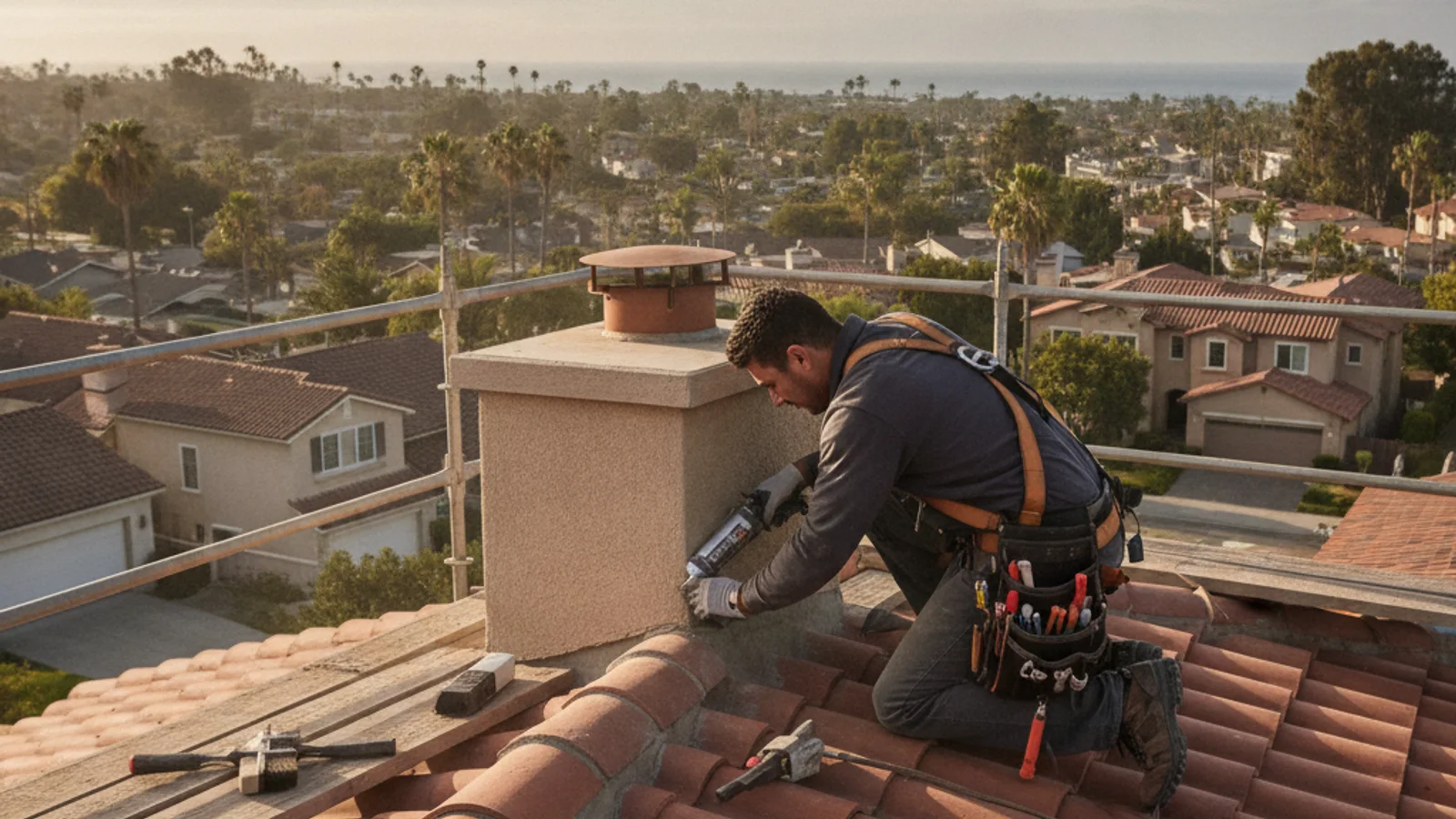
Roofs that sit dry for eight or nine months a year don’t get tested until that rain shows up. Small, deferred problems, a lifted tile, a gap in flashing, a clogged section of gutter, stay invisible until sustained rain finds them. Prepping before the season starts is the difference between a quick fix and interior water damage.
Why El Niño years catch San Diego roofs off guard
Most San Diego roofs go long stretches without meaningful rain, so minor damage doesn’t show itself day to day. An El Niño winter compresses several storms into a short window, giving water more chances to find every weak point at once. Homes that would have been fine with the county’s typical light rainfall get exposed when storms stack up back to back.
Start with a pre-rain inspection
The best time to inspect a roof is before the first real storm, not after it. A full walk of the roof surface, flashing, and attic catches lifted material, cracked seals, and early signs of wear while they’re still cheap to fix. A roof inspection before November gives you a clear picture of what needs attention, and our annual roof maintenance schedule breaks down what to check throughout the year, not just before rain.
Check flashing and sealant around every penetration
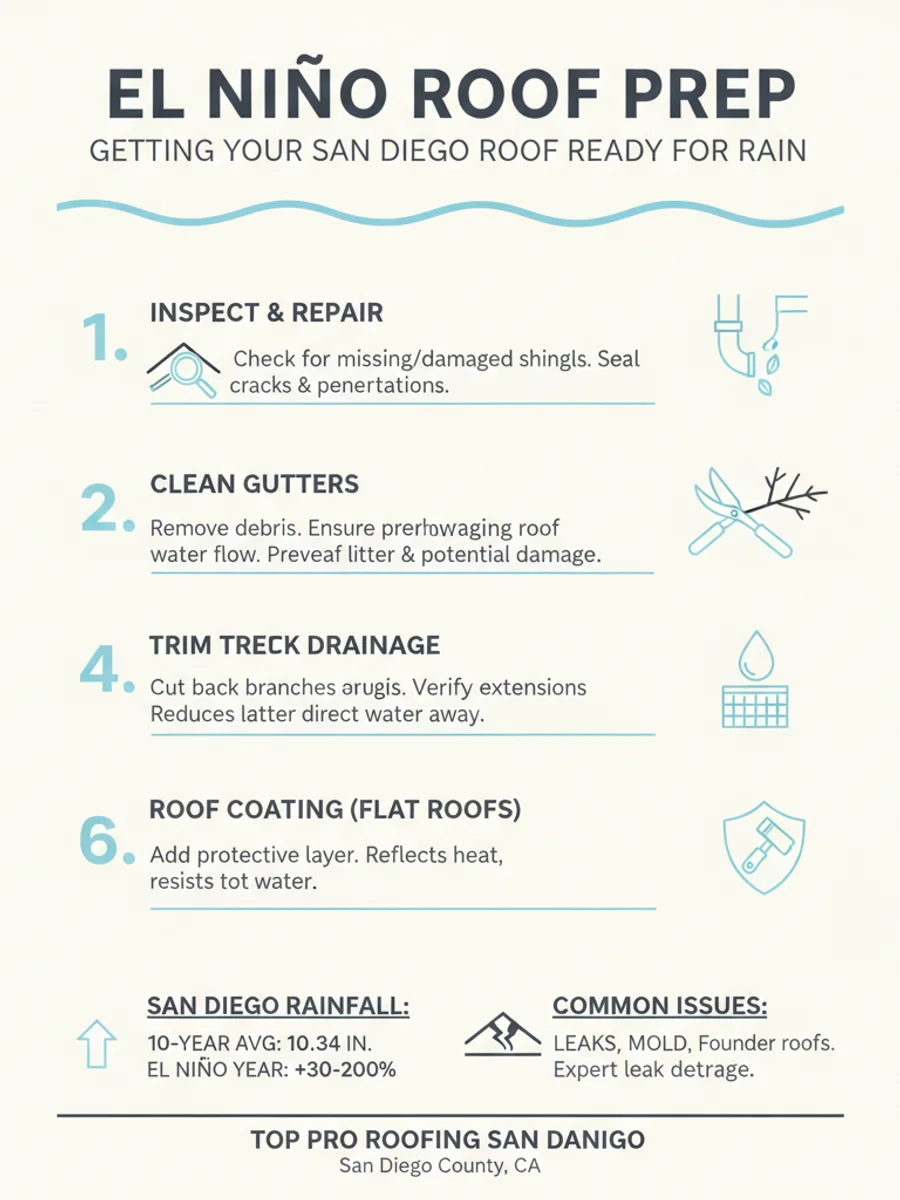
Flashing around chimneys, vents, skylights, and wall-to-roof transitions is where most roof leaks actually start, not in the middle of an open roof field. Sun exposure over a long San Diego summer dries out sealant and can loosen flashing edges. Checking each penetration point before the rainy season starts catches gaps while they’re still a caulk job, not a leak repair.
Clear gutters and confirm drainage paths
Gutters packed with leaves and debris can’t move water fast enough during a heavy storm, and overflow backs up under the roof edge instead of draining away from the house. Clear gutters and downspouts before the season starts, and confirm water is actually draining away from the foundation once it leaves the downspout, not pooling against it.
Watch for ponding on flat and low-slope sections
Flat roofs and low-slope sections over patios, additions, or garages should drain fully within about 48 hours of a storm. Water sitting longer than that usually points to a slope or drainage problem, not just heavy rain. Ponding water left unaddressed through an El Niño winter accelerates membrane wear and increases leak risk with every storm that follows.
Catch small leaks now, not during the first storm
A small ceiling stain or an occasional drip in the attic during light rain is a warning sign, not a wait-and-see situation. Fixing it before the season’s heavier storms arrive is a straightforward repair. Waiting until a January storm turns it into an emergency call and often means real interior damage. Our roof repair team handles these fixes fast, before or during the season.
Frequently Asked Questions
When does rainy season start in San Diego? San Diego’s rainy season typically runs from November through March or April, with rainfall concentrated in the cooler months.
Does El Niño mean more rain in San Diego? El Niño increases the odds of a wetter than normal winter, with the biggest impact usually between January and March, though it isn’t a guarantee every year.
How do I know if my flat roof has a drainage problem? Water that sits for more than about 48 hours after a storm usually signals a slope or drainage issue that needs attention.
What roof problems show up first during winter storms? Flashing gaps, clogged gutters, and ponding on flat sections are usually the first weak points to leak once sustained rain arrives.
Should I get my roof inspected before or after the first rain? Before. Inspecting after damage has already appeared means you’re fixing a leak instead of preventing one.
Get ahead of this winter’s storms
An El Niño winter doesn’t leave much room to catch up once the storms start stacking. Call Top Pro Roofing SD at (760) 750-5557 for a pre-rain inspection, and we’ll flag anything that needs attention before the season’s first real storm.