San Diego’s fire season runs roughly May through November, and the roof is usually the first part of a home that catches, not the walls. Embers travel far ahead of an actual flame front, landing in valleys, gutters, and vents long before any wall of fire arrives nearby.
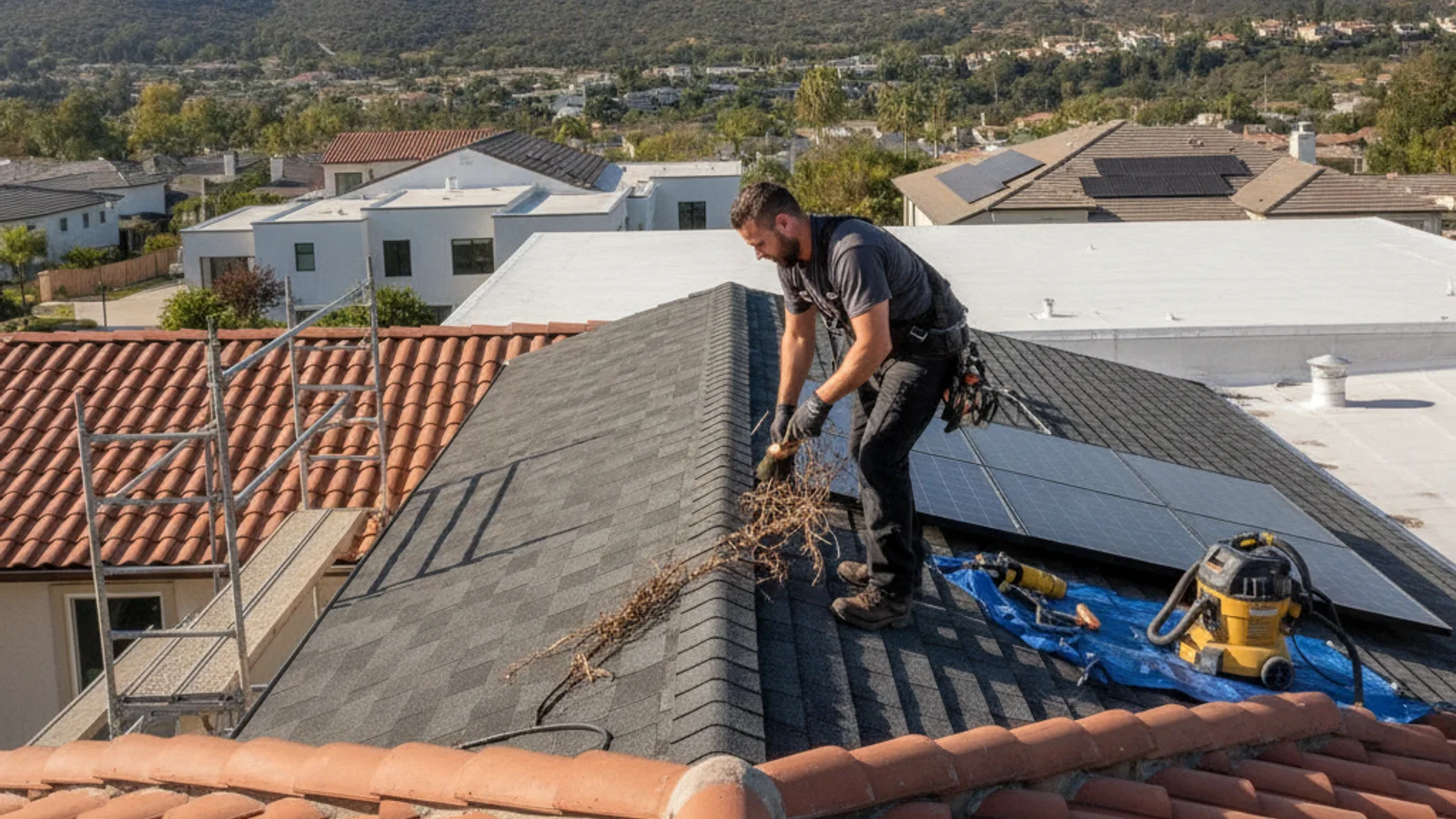
Running through this checklist before fire season starts takes an afternoon. Skipping it turns small, fixable problems into the reason a home doesn’t survive an ember shower.
Clear debris from valleys and gutters before June
Pine needles, dry leaves, and dead vegetation collect in roof valleys and gutters year-round, but they turn dangerous once fire season starts. A single ember landing in a valley packed with dry debris can ignite it directly, regardless of what your roofing material is rated for. Clear valleys and gutters at the start of the season, then again mid-season if you’re near mature trees.
Check your attic and eave vents
Older homes often still have open or coarsely screened attic and eave vents, which let embers pass straight into the attic space. Homes in Wildland Urban Interface zones are required to use ember-resistant vents, tested to standards like ASTM E2886, with mesh screening around 1/8-inch or smaller to block ember intrusion. If your vents are original to an older home, this is one of the highest-value upgrades you can make before fire season.
Confirm your roof assembly is still Class A rated
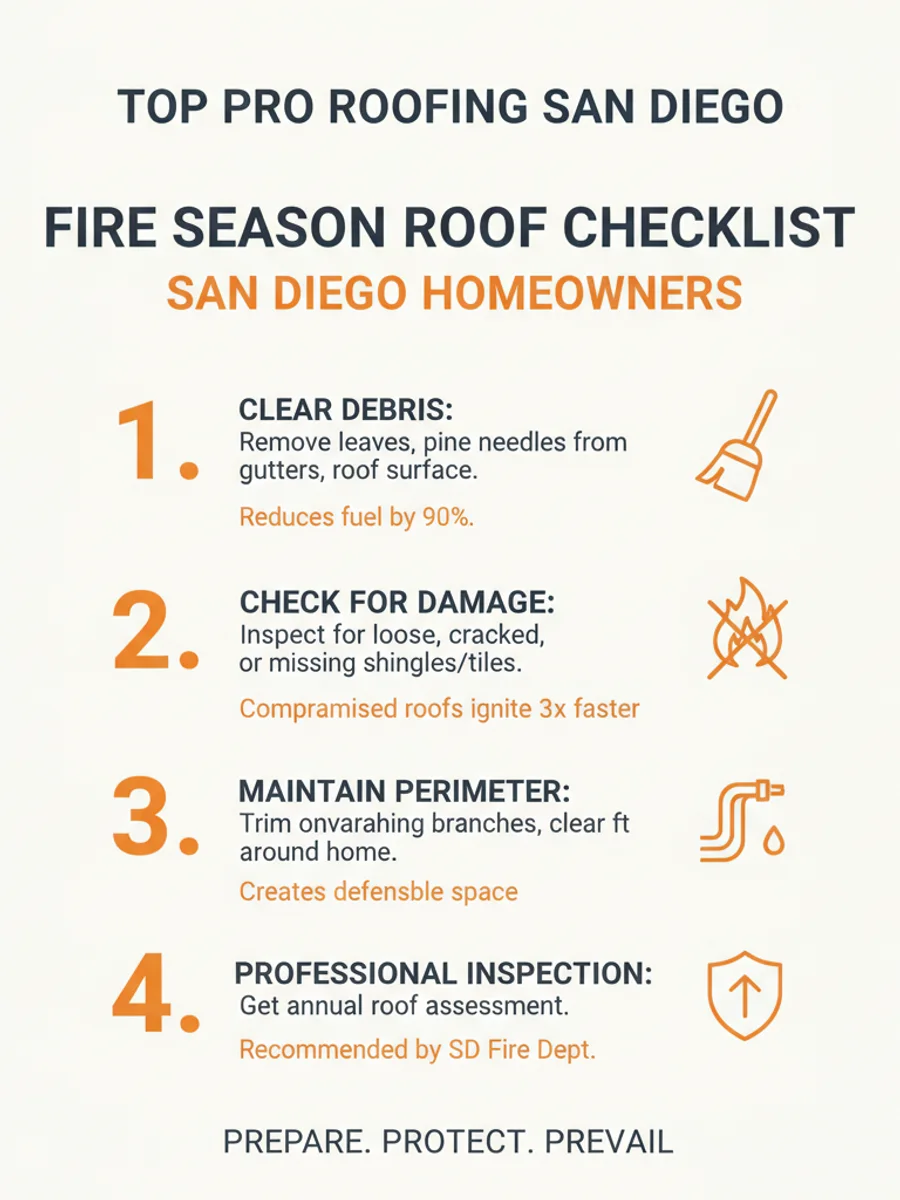
A Class A fire rating covers the entire roof assembly, not just the visible covering. That includes the roofing material, the underlayment, and the decking underneath, tested together against flame spread and burning brand exposure. Cracked or missing tiles, exposed underlayment, or damaged decking can compromise that rating even if the roof looked fine from the ground last year. A pre-season walk of the roof surface catches this before fire season, not during it.
Know whether you’re in a WUI or Very High Fire Hazard Severity Zone
San Diego County maps a significant number of neighborhoods into Wildland Urban Interface or Very High Fire Hazard Severity Zones, which carry stricter roofing and vent requirements than the rest of the county. If you’re near open hillside, canyon, or brush, assume stricter rules apply and confirm your roof meets them. We break down exactly what those requirements cover in San Diego fire code roof requirements.
Get ahead of fire season, not behind it
Most roof damage that becomes a fire risk starts small: a lifted tile, a gap in flashing, a section of underlayment exposed to sun for too long. A roof inspection before May catches these while they’re still a repair, not a replacement. If your roof already needs work, get it done before peak season rather than during it, when contractors are booked solid across the county. Our roof repair team handles everything from vent upgrades to flashing and material replacement.
Choosing materials that actually hold up
If your roof is due for replacement anyway, fire season is a good reason to prioritize materials built for it. We cover the options that perform best in San Diego’s fire-prone areas in wildfire-resistant roofing materials.
Frequently Asked Questions
When is fire season in San Diego? Fire season generally runs from May through November, though dry conditions and Santa Ana winds can extend risk earlier or later in a given year.
What is a Class A roof rating? It’s the highest fire rating for a roof assembly, covering the roofing material, underlayment, and decking together against flame spread and ember exposure.
Do I need ember-resistant vents in San Diego? Homes in Wildland Urban Interface and Very High Fire Hazard Severity Zones are required to use ember-resistant vents. Many homeowners outside those zones upgrade anyway for the added protection.
How do I know what zone requirements apply to my home? San Diego County and city fire departments publish hazard severity zone maps. Your roofer or local fire marshal’s office can confirm which requirements apply to your address.
How often should I clear roof debris during fire season? Clear valleys and gutters before the season starts in spring, then check again mid-season if your property has mature trees or heavy leaf drop nearby.
Get your roof fire-season ready
A working afternoon now beats an emergency call during a red flag warning. Call Top Pro Roofing SD at (760) 750-5557 for a pre-season inspection, and we’ll flag anything that needs attention before fire season peaks.