Choosing a roof shape feels like a purely aesthetic decision, but it has a huge impact on your home’s performance, cost, and even energy bills. In San Diego, two shapes dominate the landscape: the classic, triangular gable roof and the sturdy, four-sided hip roof. Deciding between a hip vs gable roof involves weighing factors from wind resistance to attic space, and the right choice depends on your priorities and budget.

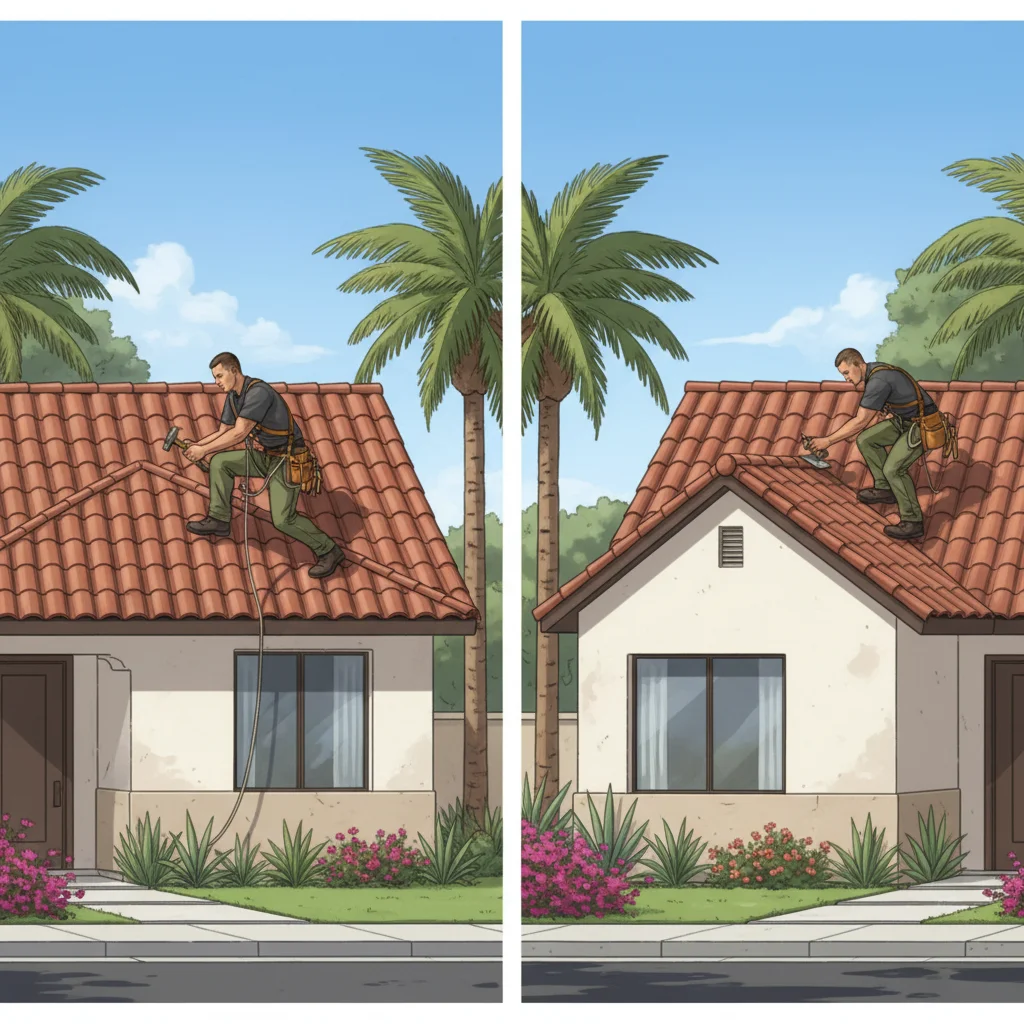
Side-by-side architectural illustration of a hip roof and a gable roof on similar San Diego homes.

What hip and gable roofs actually are

At first glance, the difference is simple. But the structural and functional implications are significant.

The Gable Roof

A gable roof is the shape most of us draw as kids: two sloping sides that meet at a ridge, forming a triangle on the ends. Think of a classic A-frame or the simple roof on many Ranch-style homes common in neighborhoods like Clairemont and La Mesa.

  • Key Features: Two sloped planes, one central ridge, and two vertical gable walls.
  • Pros: Simple construction, less expensive materials, excellent water runoff, and a large, open attic space.
  • Common In: Craftsman, Colonial, and modern Farmhouse styles.

The Hip Roof

A hip roof has slopes on all four sides. All sides come up from the walls at an angle to meet at a single peak (on a square building) or at a ridge (on a rectangular one). You’ll see them on many Spanish and Mediterranean-style homes throughout San Diego County.

  • Key Features: Four (or more) sloped planes, no vertical ends (gables), and self-bracing.
  • Pros: Superior wind performance, eaves on all sides for better shade, and a cohesive, solid appearance.
  • Common In: Mediterranean, Ranch, and Prairie-style architecture.

The choice isn’t just about looks. It’s a foundational decision that affects how your home interacts with our specific Southern California climate.

How each handles San Diego wind, sun, and rain

Our weather isn’t extreme, but it has unique challenges. Santa Ana winds, intense sun, and occasional heavy winter rains all put different stresses on a roof.

Wind Performance

This is where the hip roof has a clear advantage. Its four-sided, sloped design is inherently more aerodynamic and stable. When strong Santa Ana winds blow, they flow up and over the hip roof from any direction. The structure is self-bracing, making it much more resistant to uplift forces.

A gable roof, on the other hand, can act like a sail. A strong gust hitting the large, flat gable end can create immense pressure, potentially leading to catastrophic failure if the framing isn’t properly braced and secured to the walls. While modern building codes in San Diego mitigate this risk, the fundamental physics remain: a hip roof is structurally better equipped for high-wind events.

Sun and Heat

In sunny San Diego, managing solar heat gain is crucial. A hip roof provides a continuous eave or overhang around the entire perimeter of the house. This offers more consistent shade for windows and walls throughout the day, helping to keep the interior cooler and reducing A/C costs.

Gable roofs only provide overhangs on two sides. The gable ends have no protection from the sun, which can lead to more heat transfer through those walls, especially if they face east or west.

Rain and Drainage

Both roof shapes are effective at shedding water. A gable roof’s simple design channels all water in two directions, making gutter systems straightforward and minimizing the risk of leaks at valleys or complex joints.

A hip roof has a more complex structure with multiple hips and valleys where roof planes meet. While perfectly functional when installed correctly, these areas require expert flashing and sealing. An improperly installed valley on a hip roof is a common source of leaks. The shape itself isn’t the problem, but it does leave less room for installation error. The complexity of the roof design is one factor that determines how long a roof lasts in San Diego, as simpler designs have fewer potential points of failure.

Cost difference to build and to reroof

Cost is often a deciding factor for homeowners, and there’s a clear difference between hip and gable roofs.

A gable roof is significantly less expensive to build and to reroof. Here’s why:

  1. Simpler Framing: The trusses and framing for a gable roof are uniform and easy to manufacture and install. It’s a straightforward, repetitive process.
  2. Less Material: A gable roof has less surface area than a hip roof on a building with the same footprint. It also requires less complex flashing and fewer specialized cuts for shingles or tiles.
  3. Faster Labor: The simplicity translates to fewer labor hours. Roofers can lay down materials much faster on two large, simple planes than they can on four smaller, angled ones with hips and valleys to navigate.

A hip roof is more complex and therefore more expensive. The increase in cost comes from:

  1. Complex Framing: It requires a more intricate system of jacks, rafters, and supports. This takes more time and skill to design and build.
  2. More Materials: Besides the greater surface area, a hip roof needs more ridge capping, specialized hip shingles, and extensive flashing in the valleys.
  3. Slower Labor: Every shingle or tile that meets a hip or valley needs to be cut at an angle. This meticulous work takes significantly more time, increasing labor costs for a full roof replacement.

On average, you can expect a hip roof to cost 15-30% more than a gable roof for the same square footage. The final price depends on the specific materials and the complexity of your home’s layout.

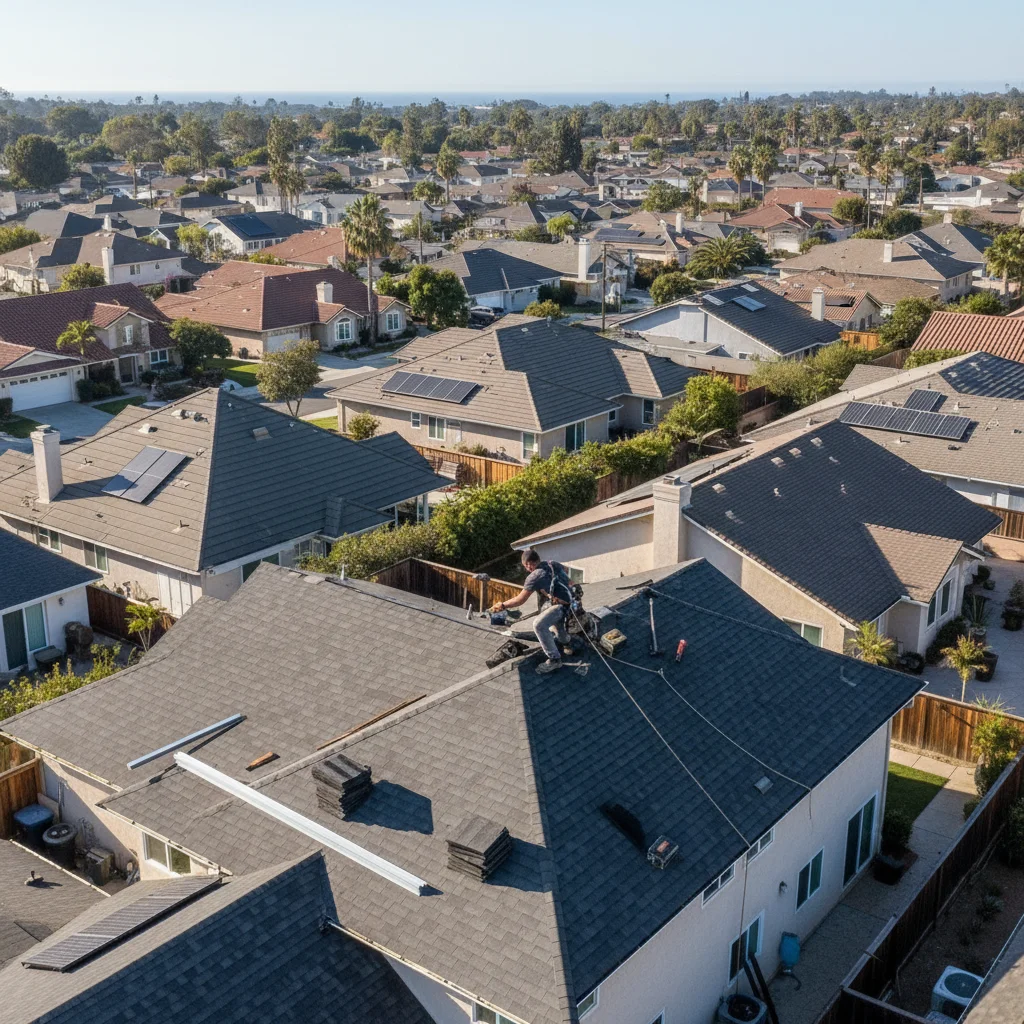
Aerial view of a San Diego neighborhood showing a clear mix of hip and gable roof shapes.

Attic space, ventilation, and energy implications

What happens under the roof is just as important as what’s on top. The shape dramatically affects attic space and how well your home breathes.

Attic Space

This is a huge win for the gable roof. The high, triangular ends create a large, open, and easily accessible attic. This space is ideal for storage or can even be finished into a bonus room, office, or loft. The vertical gable ends also provide a perfect spot for installing large attic windows for natural light.

A hip roof severely limits usable attic space. Because the roof slopes down on all four sides, the headroom quickly disappears as you move away from the center. The space that does exist is often cramped and difficult to access, making it unsuitable for much more than housing ductwork and insulation.

Ventilation

Proper attic ventilation is non-negotiable in San Diego. It prevents heat buildup in the summer, which can cook your shingles from below, and it helps control moisture in the winter.

Gable roofs are the easiest to ventilate. You can install large, simple gable-end vents on the triangular walls, which work with soffit vents to create highly effective cross-ventilation.

Hip roofs are more challenging. With no vertical walls, you can’t use gable vents. Ventilation relies entirely on a balanced system of soffit vents (for intake) and ridge vents or box vents (for exhaust). It’s a perfectly effective system when designed and installed by a professional, but it requires more careful planning to ensure proper airflow across the entire roof deck.

Energy Implications

The roof shape’s impact on energy use is tied to both ventilation and sun exposure. A well-ventilated attic, regardless of roof type, reduces the load on your HVAC system.

However, the choice of materials and adherence to California’s energy code often has a bigger impact than the roof shape. California’s Title 24 energy standards often require “cool roofs” with materials that reflect more sunlight and absorb less heat. A cool roof on a gable design can easily outperform a standard roof on a hip design, even with the hip’s shading advantages.

When converting from one to the other makes sense

Changing your home’s fundamental roof shape is a massive undertaking, far more involved than a typical reroofing project. It’s a full-scale structural remodel.

Converting a gable roof to a hip roof is sometimes done to improve wind resistance or for a major aesthetic overhaul, perhaps as part of a second-story addition. However, it involves completely removing the old roof structure and engineering and building a new, more complex one. This is extremely expensive and requires architectural plans, engineering calculations, and permits from the city or county.

Going from a hip to a gable roof is less common but might be done to gain attic or living space. Like the reverse process, it’s a major structural change that requires a complete teardown and rebuild of the roof framing.

For most homeowners, converting roof styles isn’t practical or cost-effective. The decision between a hip and gable roof is best made during the initial design of a new home or when planning a major addition. If you’re simply replacing your existing roof, it’s almost always best to stick with the shape you already have.

When to call us

Deciding on the details of a new roof, or assessing the condition of your current one, requires professional expertise. If you’re weighing the pros and cons of different materials for your existing hip or gable roof, or if you’re planning a major renovation and need to understand the roofing implications, our team can help. We provide clear, honest advice tailored to San Diego homes.

Call us at (858) 925-5546 for a same-day estimate.