TL;DR
- A San Diego attic without a working intake-exhaust loop holds heat against the underside of the deck. Shingles then age from both sides, not just from UV on top.
- The loop is soffit intake plus high exhaust (ridge, boxes, or a specified fan). Extra hoods on a roof with painted-shut eaves do not fix it.
- Code math is net free vent area, commonly 1:150 of attic area, or 1:300 when the IRC / CRC path conditions are met. The permit set and product labels win. We will not invent a city amendment.
- Shingle warranties usually require ventilation that matches the instructions. Undersized venting is a claim problem, not a cosmetic miss.
- Exhaust hardware choice is a separate page: ridge vent vs box vent vs solar fan.
Top Pro Roofing SD refers licensed C-39 roofers. We do not install vents. Call (760) 750-5557.
Inland heat in Escondido, El Cajon, and Ramona is the hard case. Coastal marine layer still needs the moisture half of the same loop. This page is why the attic matters. It is not a catalog of vent SKUs.
Why San Diego attics overheat
The sun loads the shingle. That heat moves through the deck into a closed attic. Without a path out, the underside of the deck stays hot after the street has cooled. We will not invent a peak attic temperature. What you can check: on a hot afternoon the hatch should not hit you like an oven, and the C-39 can compare deck conditions to the shingle maker’s ventilation rules.
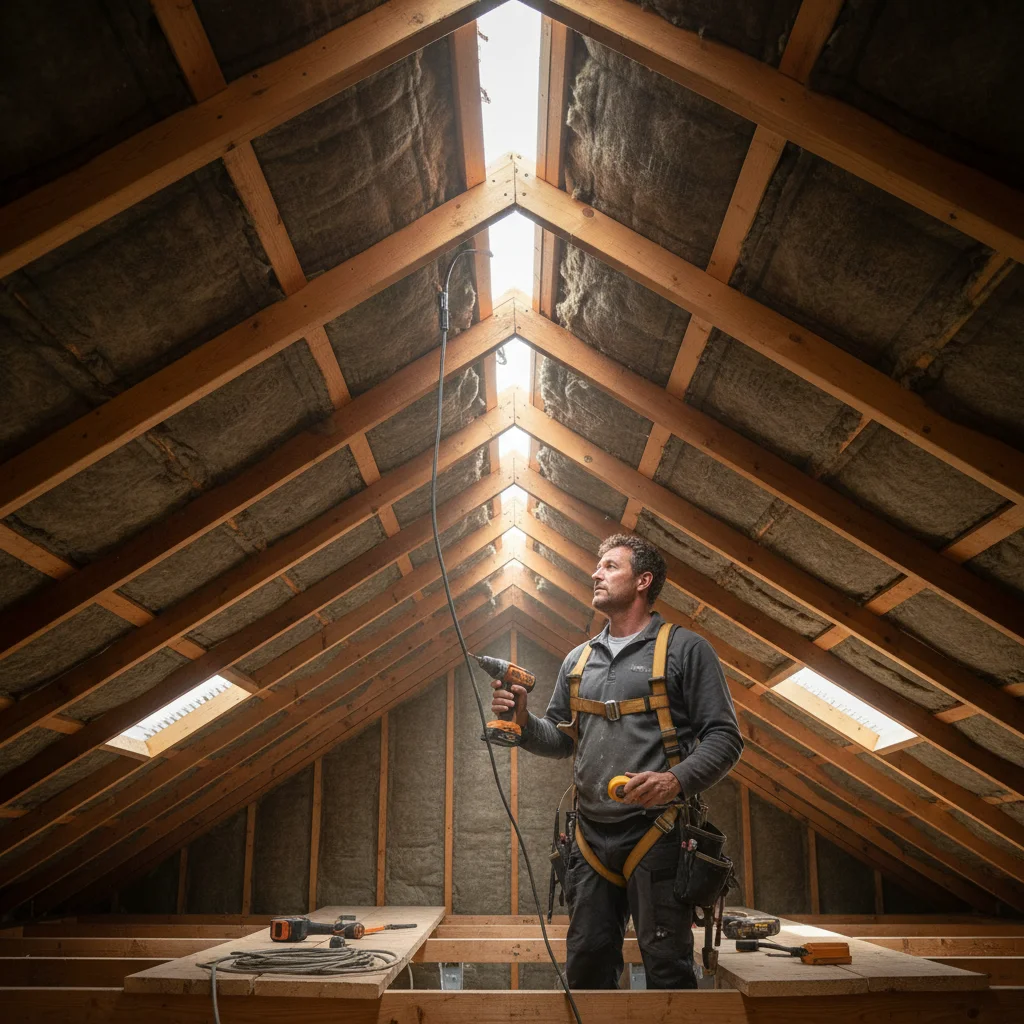
What the ventilation loop actually does
It is not “a few holes at the peak.” Cooler air enters low. It warms, rises, and leaves high. That stack only works if both sides exist.
Summer. Flushing hot attic air reduces the bake on the deck and the load into upstairs rooms. Your AC is not supposed to fight a closed box over the ceiling.
Winter, even a mild San Diego winter. Showers, cooking, and laundry put moisture into the house. It rises. Trapped vapor can condense on a cool deck. That is mildew and, over time, wet sheathing. The same loop that dumps heat in August is what dries the attic in January.
Exhaust without intake pulls from the house through can lights and hatches. You then vent conditioned air. Mixing exhaust at different heights short-circuits the loop.
Soffit intake, ridge exhaust, and balance
Intake. Screened soffit strips or individual under-eave vents. Cooler air at the lowest attic point. Stucco eaves in older tracts were often built with no intake, or the slots were painted shut. Blown insulation stuffed into the soffit is the other usual miss. Baffles at rafter bays keep insulation off the intake.
Exhaust. A baffled ridge vent along the peak is the even, low-profile option on a long ridge. Box (turtle) vents are point openings for hips and short ridges. Fans add active pull when passive NFVA cannot keep up inland. Gable louvers on older homes can fight a new ridge. Details and when each exhaust type fits: ridge vs box vs solar fan.
Balance. Aim near half intake, half exhaust, sometimes a little extra intake. The IRC Chapter 8 attic ventilation path uses NFVA ratios of 1:150, or 1:300 when the high/low split and vapor-retarder conditions in the code are met. California adopts a version with state amendments. Ask the C-39 to show the calc on your attic floor area and the labels they intend to use.
Example of the 1:150 path: a 1,500 sq ft attic needs 10 sq ft of NFVA total (1,440 sq in), about 720 per side. A 2,200 sq ft attic needs 2,112 sq in total. That is labeled product, not “we always put four turtles.”
How heat from below ages shingles
Asphalt is meant to take sun, not a second oven under the deck. Heat drives off the oils that keep the mat flexible. Granules shed faster. Sealant strips that lock courses can soften. Edges curl. Wind then gets under a shingle that still looked “fine” from the street. That is premature aging, not a 30-year product turning into a 15-year product as a rule of thumb. See what deteriorates asphalt shingles here and how long a roof lasts in San Diego.

Signs the attic is not venting
- Upstairs rooms stay stuffy while the thermostat is already working hard.
- Top-floor ceilings feel hot on a still inland afternoon.
- Shingles curling, cracking, or showing bare mat earlier than the rest of the block.
- In the rainy months: damp insulation, a musty attic, or wet sheathing.
- Hatch test: stifling blast on a sunny afternoon. Warm is normal. Oven is not.
Moisture signs in a San Diego winter are easy to ignore because we do not get long freezes. The first atmospheric river is when a wet deck shows up.
Adding ventilation during a reroof
The cheap time to cut a ridge slot and open soffits is when the deck is already bare. Retrofit on a living roof is possible and usually more labor: tile or shingle around new openings, flashing, interior baffles. Pair the venting plan with attic insulation at replacement. Age of the roof: is a 20-year roof too old.
We will not invent a dollar add-on or a percent of the reroof. Ask for ridge NFVA, soffit NFVA, and any fan as separate lines on the roof replacement quote.
Manufacturer instructions for architectural shingles typically require ventilation that meets their table and the code path. Skip it and you can lose the shingle warranty while the roof is still new. Cool-roof products are a separate Title 24 conversation: ENERGY STAR roof listings.
When to call us
Cutting a ridge and opening eaves is structural roof work at height. If the hatch feels wrong, shingles are curling early, or you are already bidding a reroof, get a C-39 to run the NFVA on your attic, not a vent-count guess from the street.
Call (760) 750-5557 and we will connect you with a vetted local roofer.