Top Pro Roofing SD is a referral marketplace. We connect San Diego County homeowners with CSLB-licensed roofers. We do not tarp roofs, we do not warranty a DIY patch, and we do not publish leak-repair prices. Call (760) 750-5557. You pay the contractor.
A roof leak here usually comes down to one sequence: contain it safely now, then find the real source. You can DIY a temporary tarp or a tiny dab of the right sealant on a nail pop if you can reach it without walking a wet or steep roof. Flashing, multiple shingles or tiles, and anything on a steep roof need a C-39. A failed DIY attempt often becomes extra labor: scraping the wrong product and replacing neighboring pieces you cracked.
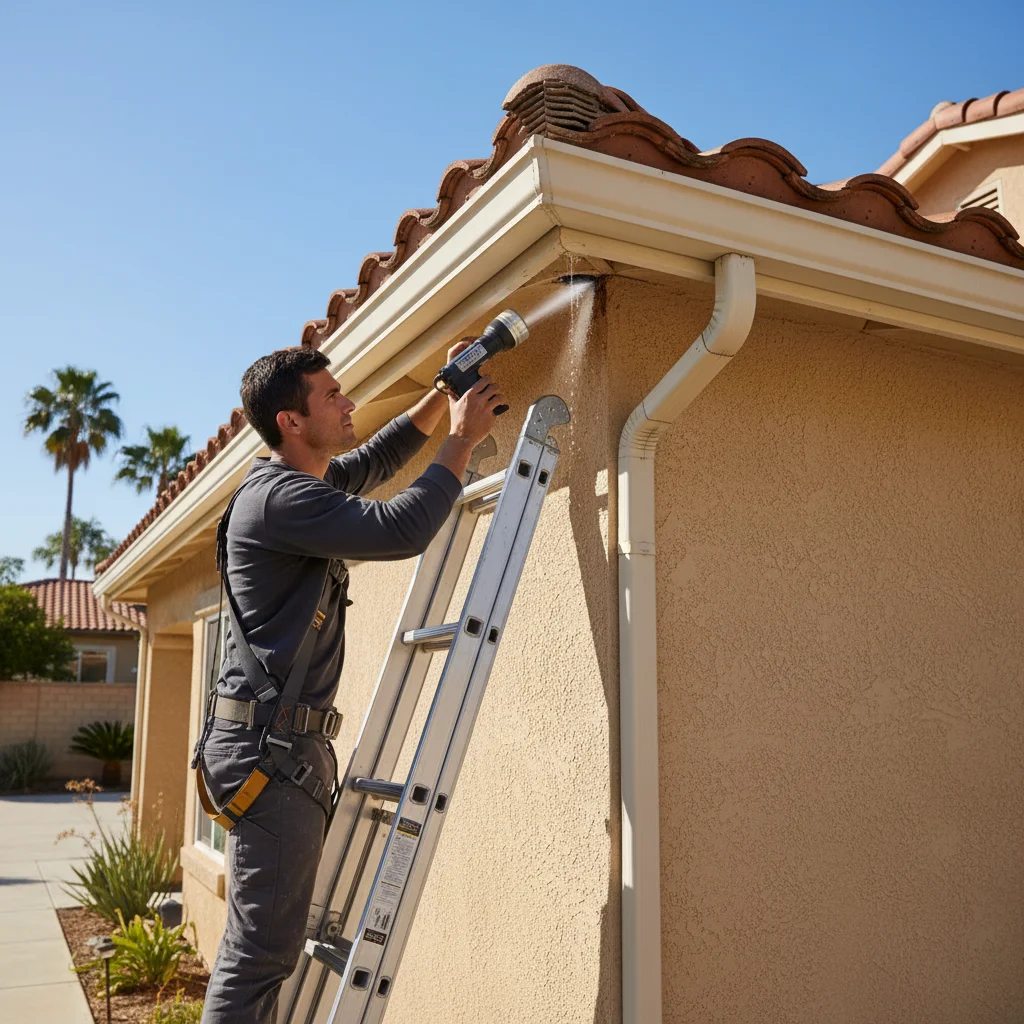
The temporary fixes that actually work in a downpour
When rain is coming down and water is getting in, the goal is not a permanent repair. It is damage control. Stop the water now and buy time for a proper fix.
The California Department of Insurance tells homeowners to make temporary repairs that prevent further damage (cover openings with plastic sheeting or plywood) and to photograph before and after. That is claim hygiene, not a license to rebuild flashing. Residential claims guide.
The most reliable temporary roof leak fix is a heavy-duty tarp. Cover the suspected leak area and extend the tarp over the ridge so water sheds over the damaged section into the gutters.
A basic approach for a standard sloped roof:
- Safety first. Never get on a wet roof, especially during a storm. Wait for a break. Wear non-slip shoes. If the roof is steep, do not go up.
- Locate the source (roughly). From the attic, try to trace the water stain up the sheathing. The hole is almost always higher than the stain on the ceiling.
- Tarp placement. Unroll the tarp starting at least four feet below the suspected leak. Run it up and over the peak by several feet so wind cannot get underneath.
- Secure it. Use 2x4 boards. Roll the edges around the boards and screw the boards into the deck with gasketed roofing screws. One board at the bottom edge, one on the far side of the peak. Bricks and rocks slide off.
This is a stopgap. A tarp can keep water out of the rooms. It is not a long-term roof. It gives you room to call for a permanent roof repair. We do not promise same-day dispatch from this number.
Tools and sealants that won’t void your warranty
If you have identified a very small, obvious issue (a nail that has backed out, a tiny crack in sealant around a vent) and you can reach it safely on a low slope, a small DIY touch-up might be possible. The wrong product can void the material warranty and make the professional repair harder.
Your roof’s manufacturer warranty is a legal document. It often specifies that repairs must be done by an approved installer using compatible materials. A tube of all-purpose silicone from a big-box store can void that protection and fail under San Diego UV.
Guidelines for a warranty-friendly DIY dab:
- Check the warranty first. Find the paperwork. It lists restrictions and may name sealant types compatible with the shingle or tile.
- Choose a roofing sealant, not generic silicone. Generic silicone does not adhere well to asphalt and breaks down in UV. Look for a polyurethane or elastomeric roofing sealant made for the covering. Product names belong on the tube and in the warranty, not as an endorsement from this referral brand.
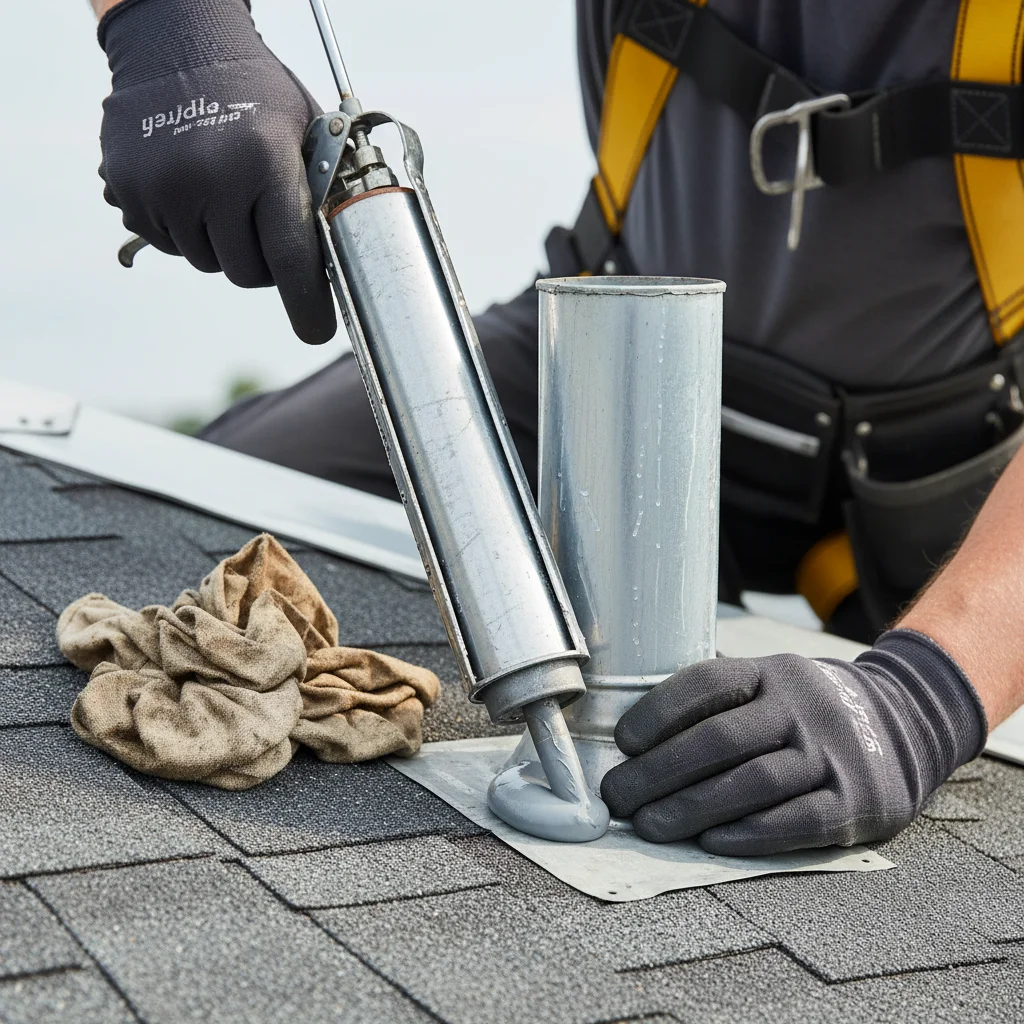
- Minimalist application. Seal the specific entry, do not coat a large area. Lift the shingle or tile gently, apply a small bead to the crack or nail head, press it back. A globby mess is a flag that DIY was done, and it often traps water.
This is only for minor, easily accessible issues on a low-slope roof. If you are unsure, stop. Flat roof replacement is a different conversation if the membrane is the problem.
Three repairs you should never DIY (and why)
Some roofing tasks look simple on a video. They are not.
1. Flashing and pipe boot replacement
Flashing is the metal that seals transitions: wall, chimney, skylight. A leaking pipe boot is one of the most common San Diego leak sources. Replacing it is not prying off the old gasket and sticking on a new one. The new piece has to integrate into the shingle or tile layers in the overlapping sequence. Getting it wrong traps water under the covering.
2. Replacing multiple shingles or tiles
Swapping one damaged shingle looks straightforward. Each shingle is sealed to the ones around it. You have to break those seals without tearing neighbors, nail the new piece in the hidden spot, and reseal. Clay or concrete tiles are heavy, brittle, and often interlocking. Breaking one can compromise the row. An improperly seated tile is a direct entry. Tile context: tile roof replacement cost.
3. Anything on a steep or multi-story roof
The National Roofing Contractors Association and OSHA treat falls as a leading cause of death in construction. Professionals use harnesses, anchors, and footwear meant for the slope. A household ladder and sneakers are not that kit. If you cannot walk comfortably on the roof, you should not be on it.
When a small leak means structural rot underneath
The discolored spot on drywall is the endpoint of a longer trip.
Water rarely drips straight down. Once it gets through a shingle or flashing, it hits the deck (plywood or OSB). From there it can travel sideways along a rafter until it finds a seam or a nail. A leak over the living room can start ten feet away near a dormer or vent.
By the time you see evidence inside, that water may have been soaking the structure through more than one storm. Consequences:
- Sheathing rot. The wood gets soft and spongy. It will not hold nails or wind the same way.
- Mold. Dark, damp attic space grows it. Remediation is a different trade.
- Saturated insulation. Wet batts compress, lose R-value, and hold moisture against joists.
- Framing. In long-term cases, rafters and trusses can rot. That is not a tube of sealant.
A qualified roofer does not just patch the symptom. They trace the leak to the source and check decking, underlayment, and framing around it.
What a failed DIY does to the professional job
The usual problem is the wrong product over a large area. Silicone, tar, or a flex spray has to be scraped and cleaned before professional-grade materials will bond. That is extra labor on the invoice.
Collateral damage is next. Prying sealed shingles without the right tools tears neighbors. Walking a tile roof on the wrong path cracks tiles. One puncture becomes a field of them.
We will not invent a “DIY doubles the bill” number. Ask the C-39 what they have to remove before they can start. Roof leak repair and the leak cost guide cover process without a fake menu.
How a pro actually finds the leak
The hard part is not the patch. It is finding where water gets in. The ceiling stain is rarely under the hole.
- Interior trace. Flashlight in the attic, follow the trail up the sheathing to the highest wet point. Daylight through the deck is a giveaway.
- Visual roof inspection. Cracked pipe boots, lifted flashing, slipped tiles, failed sealant around penetrations.
- Water test. When the source is not obvious, a hose over sections, low to high, while someone watches inside. That isolates the entry instead of soaking the whole roof.
- Moisture meter. Maps how far water spread and catches hidden wet deck before it becomes a structural repair.
DIY almost always skips this step, which is why sealant on the wrong spot does not hold. Attic method: how to find a roof leak in San Diego.
Coastal vs inland: why your ZIP changes the repair
A leak in Oceanside often has a different cause than the same-looking leak in El Cajon.
Near the coast, salt air is the slow killer. Encinitas, Carlsbad, Pacific Beach, and Coronado: salt corrodes nails, staples, and flashing. Fasteners back out, flashing rusts thin. A coastal repair often means replacing corroded metal, not resealing rust. Resealing rusted flashing is a patch that fails by next winter.
Inland, in Santee, El Cajon, Escondido, and Ramona, heat and UV do the damage. Asphalt dries and cracks, sealant gets brittle, tile underlayment bakes until it splits. These leaks tend to show on the first heavy rain after a long dry summer. If the roof only drips in heavy rain, that pattern points to worn underlayment or flashing rather than a single hole.
Generic big-box sealant fails fast in both climates. Matching the repair to the microclimate is the difference between a fix that lasts and one that lasts a season.
Do you need a permit to fix a roof leak in San Diego?
Confirm with the building department that covers the address. Do not treat a blog as a permit-free patch size. The City of San Diego’s IB 123 is a starting document for that city, not a county-wide leak-patch rule. Read the current bulletin. We will not paraphrase its exemption classes. energy-code cool-roof rules can apply on qualifying replacements. Look up the CEC zone. Do not treat typical steep-slope work as a cool-roof default. A roof that needs leaks fixed every winter is usually telling you the system is near the end of its life. Permit process.
When to call
A temporary tarp or a tiny dab of the right sealant on a nail pop are reasonable DIY tasks if you can do them safely. For flashing, more than one shingle or tile, or a steep roof, the risks to the house and to you are too high.
Call (760) 750-5557. We connect you with a licensed independent local C-39. That roofer finds the source and checks for hidden damage. We do not climb the ladder for you.