Top Pro Roofing SD is a referral service. We connect San Diego County homeowners with licensed local roofers. We do not install fascia, and we do not invent a price per linear foot. Call (760) 750-5557.
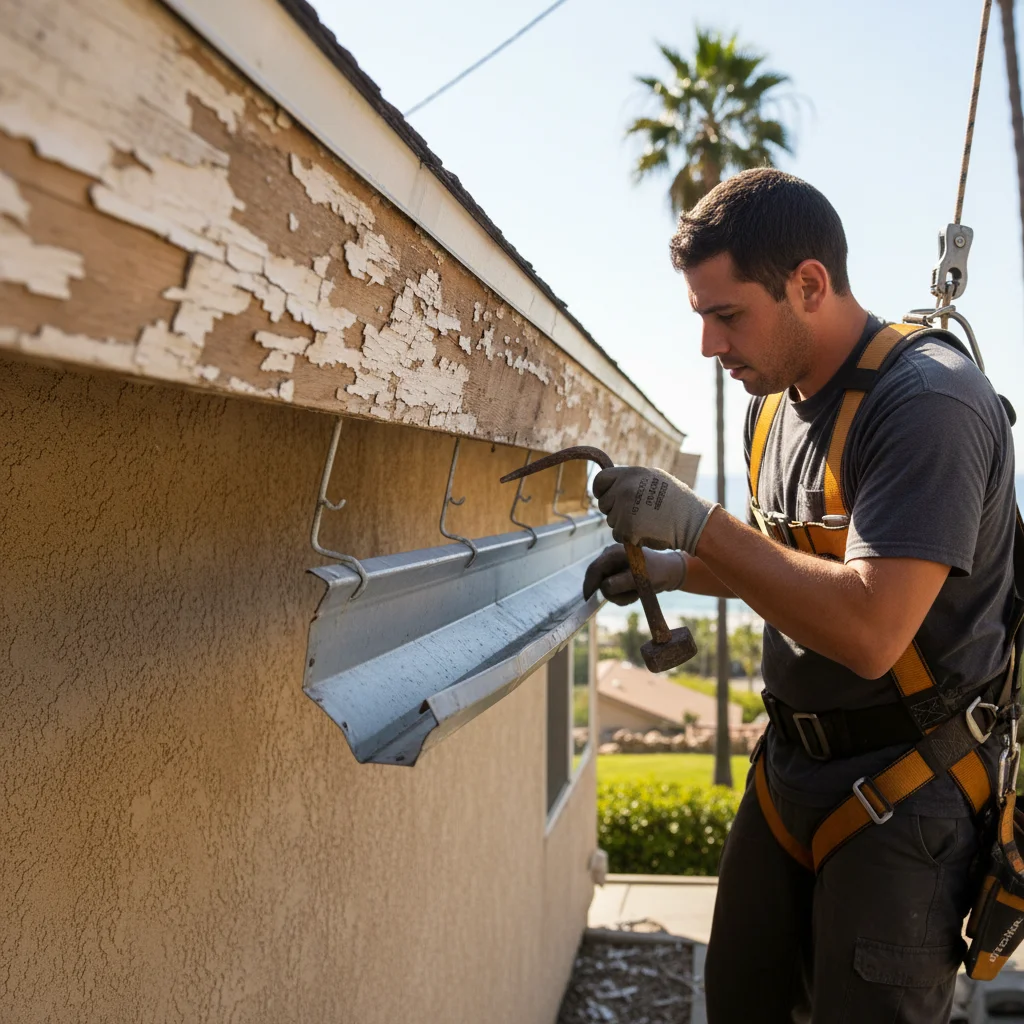
The boards at the roof edge do more than finish the look from the street. Fascia and soffit keep water and pests out of the rafter tails and the attic. Peeling paint or dark stains on that edge are often a gutter or flashing problem that has already reached the wood. Catch it while the rot is local. Wait, and you are into rafter tails, not just trim.
What is fascia vs soffit?
The fascia is the vertical board behind the gutters. The soffit is the underside of the overhang. They fail together because gutter overflow and blocked vents wet the same edge. Repair the pair, and the leak that caused it. Painting the face alone leaves the wet wood in place.
What fascia and soffit do (and why they fail together)
The fascia is the long board along the lower roof edge, right behind the gutters.
- It carries the gutters. A winter atmospheric river fills those troughs. That load hangs on fasteners in the fascia, not on the stucco.
- It covers the rafter tails. Those lumber ends sit in salt air in La Jolla and Del Mar, and in inland heat in El Cajon. Bare tails check, split, and take water.
- It is the finished line at the eave. That is cosmetic until the wood is soft.
The soffit is the panel you see looking up at the overhang, from siding to roofline.
- Vented soffits feed attic air. Cooler air in, hot moist air out at the ridge or roof vents. Block that path and you get attic moisture, not just a hot upstairs.
- It is a pest barrier. Birds, bees, and rodents use a soft or open soffit as a door.
The shared enemy is water at the back of the gutter. Overflow saturates the fascia. Rot moves behind the board into the soffit and, later, the rafter tails. A clogged downspout at a Mission Hills bungalow or a pulled hanger on a two-story Chula Vista eave is the same sequence. Fix the gutter path when you replace the wood, or you pay for the same edge twice. Gutter context: gutter installation. Edge leaks often start at failed flashing.
Signs of rot, pest damage, and water staining
You can screen a lot from the ground. Binoculars or a phone zoom beat a wobbly ladder on a steep tile roof.
Peeling or flaking paint. Paint is a film. Bubbles and flakes mean moisture in the wood. Salt air on the coast cooks that film faster than inland, but inland UV still splits it.
Dark stains. Streaks on the fascia near joints and downspouts. Yellow or brown spots on the soffit. Those mark a repeating leak, not one storm.
Soft or crumbling wood. If a qualified pro can reach it safely, a screwdriver that sinks is rot. That board is no longer a gutter support.
Holes or nests. Carpenter bees cut round holes. Woodpeckers open larger ones. Wasps like the soffit-to-wall corner. Rodents chew a soft panel and use the attic.
Sagging or detached gutters. Gutters should sit straight. If they pull away, the fasteners have lost wood. That is a fascia problem, not a “new hanger” only.
None of this is a DIY roof-walk on clay tile. If you see it, get a licensed roofer to confirm how far the rot travels.
Repair vs full replacement: how to tell
The call is extent and whether the rafter tails are still sound. A pretty splice over a wet tail fails at the next rainy season.
When a repair might be enough
- Short, local rot. A few feet of board, one overflow point, wood on either side still solid. Cut out, splice, prime, paint, and fix the gutter.
- A few bee holes in otherwise hard wood. Fill, prime, paint, and close the nest path.
- Paint only, if probing shows the wood is still hard and the moisture source is already stopped.
The repair is only as good as the dry wood behind it and a working gutter.
When a full replacement is necessary
- Rot in several places, or a long run that is all the same wet pattern. That is a system moisture problem.
- Rafter-tail damage. Fascia screws into those tails. Long-term rot usually has already moved into the framing. Sistering or replacing tails is carpentry plus roof-edge work, not a trim patch. Framing terms: rafters vs trusses.
- Infestation in the board. Termites and carpenter ants often occupy more than the painted face. The board comes off so the infestation can be seen.
- A material change (wood to a rot-resistant trim product). That is a full run, not a splice.
What a San Diego bid should name (not a price we invent)
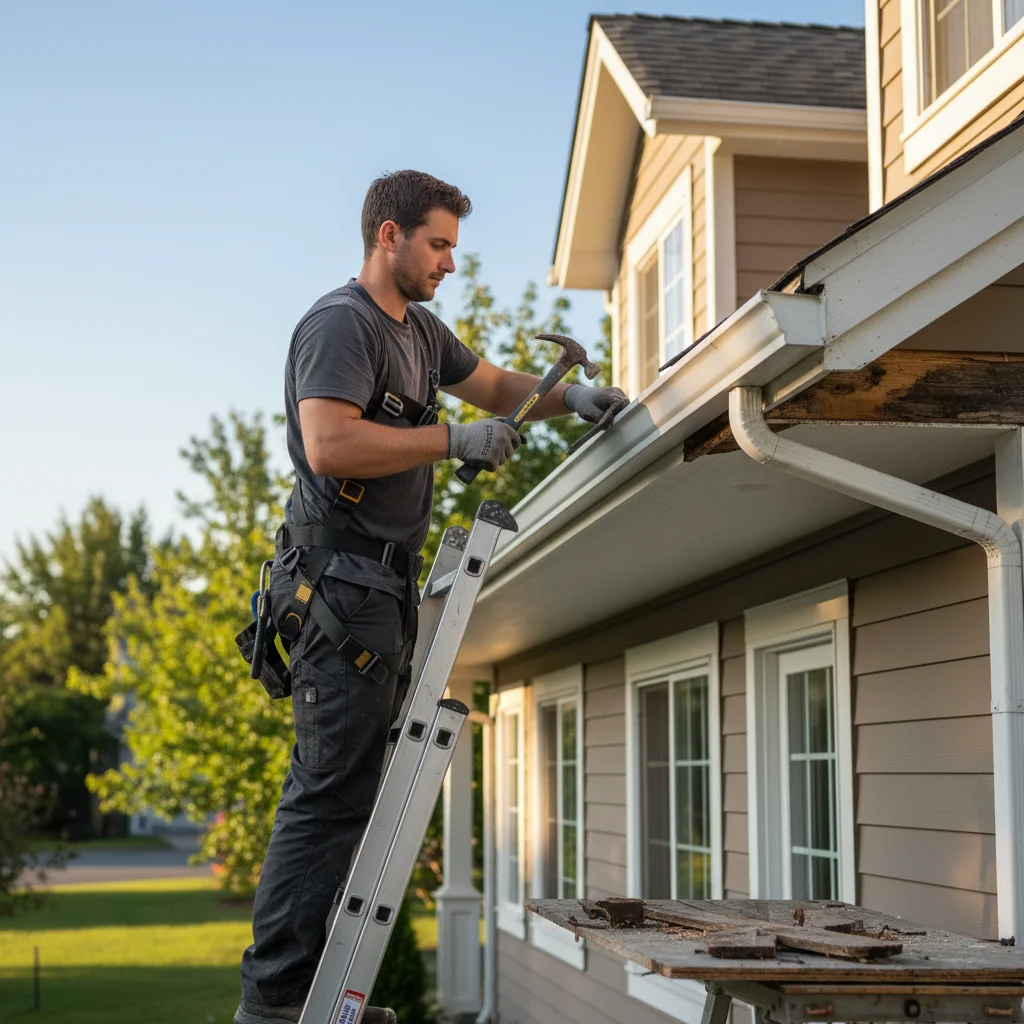
Fascia and soffit work is often quoted by the linear foot, then adjusted for access and hidden framing. We will not print a county rate. Ask the matched C-39 to separate:
- Paint-only vs section splice vs full run replacement
- Soffit panels: wood, vinyl, or aluminum, vented vs solid, and whether attic baffles stay clear
- Material: primed wood vs a composite or PVC trim. Wood is common. Composites cost more up front and resist rot better. Ask for the product name, not “Hardie-style.”
- Height and access. One-story vs two-story, steep tile, dense landscaping, and whether scaffolding is in the bid
- Rafter tails found after tear-off. That line item should be a unit price or an allowance in the contract, not a surprise verbal. Permits: significant framing repairs may need the city or San Diego County. Ask the jurisdiction for this address.
Gutter hangers into rotten fascia are wasted. Roof-edge metal (drip edge) and the first course of roof covering may have to come off to do the wood honestly. That is why the same visit often includes gutter or roof-edge scope.
Why the same crew as gutters or a reroof is usually cleaner
The expensive part of eave work is access: ladders, protection, and getting onto a tile or two-story eave without breaking the roof. If a gutter crew is already there, the old trough comes off and the fascia is visible. Adding the wood then is one setup.
During a roof replacement, the eave is open. That is the honest time to replace fascia, soffit, and any bad tails. Doing it later means cutting into a new roof or new gutters to reach the same boards.
We do not invent a “bundle discount.” Ask for one written scope that names wood, gutters, and roof edge together so you are not paying two mobilizations for one eave.
When to call us
Peeling paint, soffit stains, or gutters pulling away on a San Diego house are a roof-edge inspection, not a weekend scraper job if the wood is soft. Call (760) 750-5557. We will connect you with a vetted local roofer. You contract with that roofer. Verify the license at CSLB. Related: gutter repair cost context (we still will not invent fascia dollars here).