When you look at your roof, you probably see shingles or tiles. What you don’t often see is the complex structure underneath, quietly bearing the weight and keeping everything stable. This unseen framework is crucial for your home’s integrity, and understanding whether you have roof rafters or trusses can make a big difference when it comes to repairs, renovations, or even knowing what to expect during a reroof.

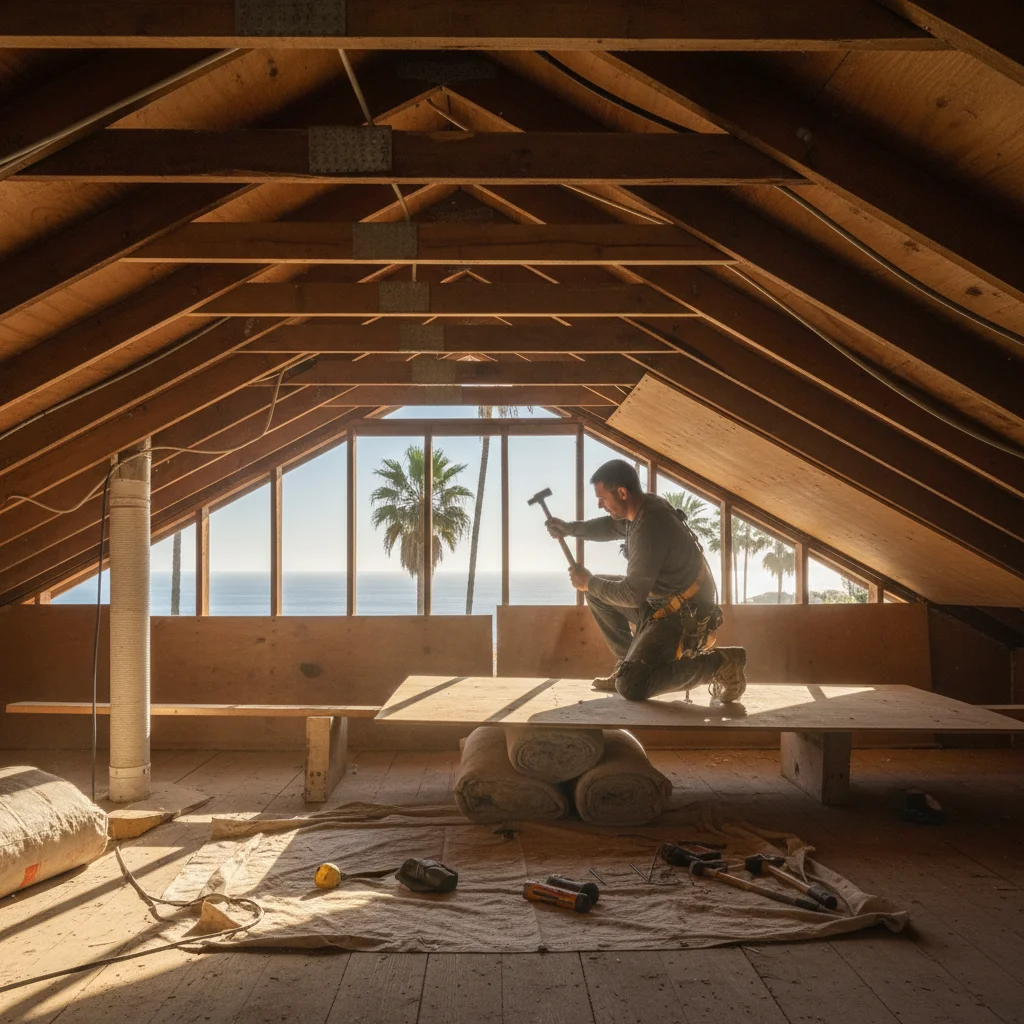
Interior attic view of exposed wooden roof rafters with sunlight streaming throu

What rafters and trusses are and how they differ

Rafters and trusses are the two primary types of framing that support your roof, but they’re built and function quite differently. Think of them as the skeleton that gives your roof its shape and strength.

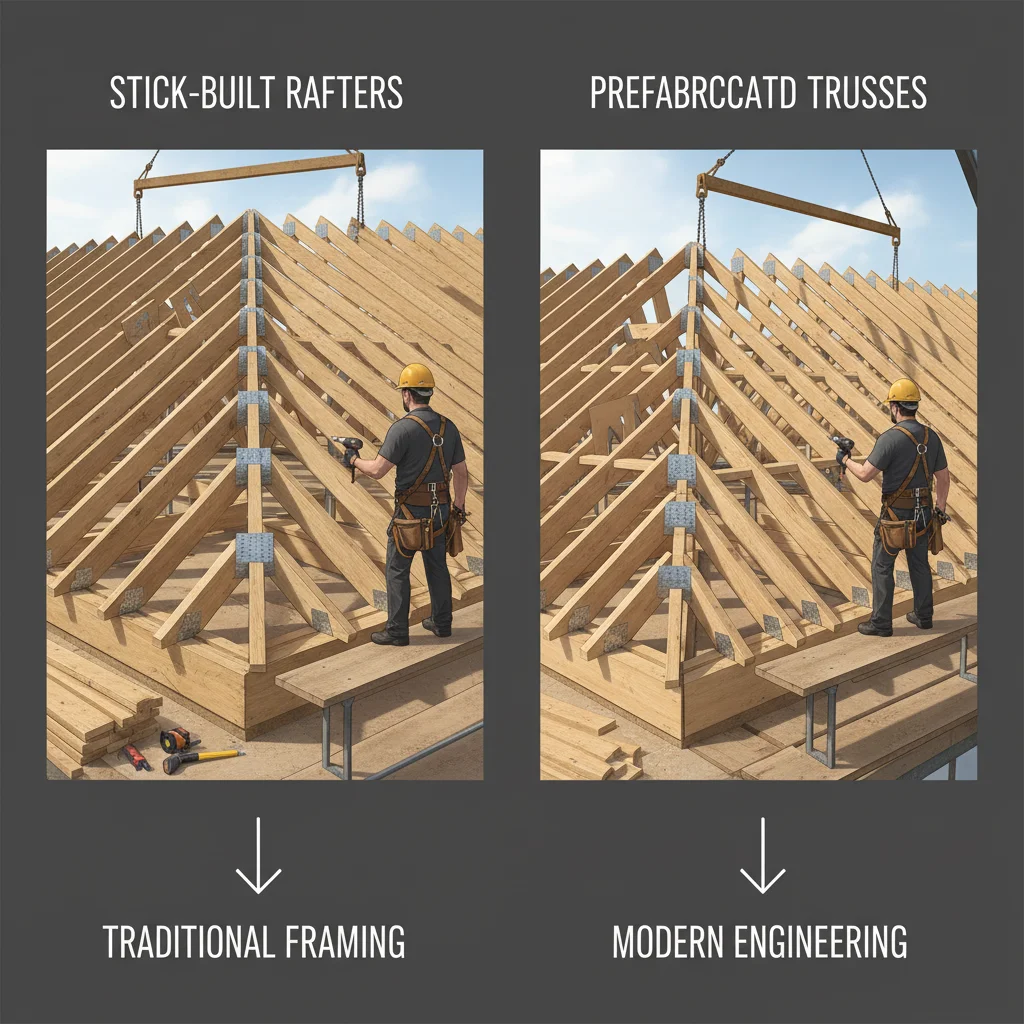
Roof rafters are typically individual, angled pieces of lumber that extend from the ridge (the peak of the roof) down to the wall plates. Carpenters cut and assemble them stick by stick on site, fitting them together with ridge boards, collar ties, and ceiling joists to create a series of triangular frames. This “stick-built” method often results in an open attic space because the load-bearing elements are primarily along the perimeter, leaving the central area clear. This traditional construction method has been around for centuries, offering a robust and adaptable framework. Each rafter acts as a beam, transferring the roof’s weight down through the walls to the foundation.

Roof trusses, on the other hand, are prefabricated, engineered structures. They arrive on site as complete units, already assembled in a factory. A truss consists of several smaller wooden members, often 2x4s, connected together to form a rigid, triangulated web. This web-like design distributes weight very efficiently across multiple points, making them incredibly strong for their material usage. Because they’re engineered for specific spans and loads, trusses can often cover wider areas with less material than traditional rafters. However, their internal webbing usually fills the attic space, making it difficult or impossible to use for storage or conversion. They’re designed to be a complete, non-modifiable unit.

The key differences boil down to their construction process, material efficiency, and impact on attic space. Rafters are custom-built on site, often leaving open attics, while trusses are factory-made, highly efficient, and typically obstruct attic usability with their intricate internal structure. Both are vital for your roof’s stability, but their inherent design affects a variety of homeowner considerations.

Which one’s in your San Diego home (by build era)

The type of roof framing in your San Diego home often directly correlates with its age. If you’re curious what’s holding up your roof, a quick trip to the attic can usually tell you a lot.

Older San Diego homes, generally those built before the 1970s or 1980s, are more likely to feature stick-built rafters. During these periods, on-site carpentry was the standard, and the flexibility of custom-cut lumber made rafters an ideal choice for the varied architectural styles popular in San Diego, from Craftsman bungalows to Spanish Colonial Revival homes. If you have an older home in areas like North Park, South Park, or Coronado, there’s a good chance you’ll see large, individual lumber pieces forming clear, open triangular spaces in your attic. This traditional approach allowed for more custom roof designs and often provided generous attic storage or future conversion potential.

Newer San Diego constructions, particularly those built from the 1980s onward in developing neighborhoods like Carmel Valley, 4S Ranch, or parts of Chula Vista, overwhelmingly use prefabricated roof trusses. The rise of mass production, advances in engineering, and the desire for cost-effective and efficient construction led builders to favor trusses. Trusses can be installed quickly, reduce labor costs, and are engineered to exact specifications, ensuring structural integrity with optimized material use. If you venture into the attic of a more modern home, you’ll likely see a dense network of smaller wood members forming “W” or “K” patterns, crisscrossing the entire space. This web is a tell-tale sign of trusses.

Of course, there are exceptions. Custom homes, major renovations, or additions might diverge from these general timelines. The easiest way to confirm is to simply look up in your attic. If you see open, triangular spaces with clear flooring or plenty of headroom, you’re likely looking at rafters. If the space is filled with a dense grid of interconnected wooden beams, leaving little room to maneuver, you have trusses. Knowing which you have is important for future planning, especially if you’re considering major home improvements or a roof replacement.

How each affects reroof options and attic conversions

Understanding whether your San Diego home uses rafters or trusses is more than just a piece of trivia; it directly impacts significant home projects like reroofing and attic conversions. Each framing type presents its own set of challenges and opportunities.

For a reroof project, both rafters and trusses are designed to support the weight of a standard roofing system. However, if you’re planning to significantly change your roofing material – for example, switching from lightweight asphalt shingles to much heavier clay tiles or a stone-coated metal roof – the structural implications can differ. Rafter systems, while sturdy, might require additional reinforcement if the new material adds substantial weight, particularly if the original rafters were sized for a lighter load. With trusses, any change in roof material weight requires careful consideration. Trusses are engineered for specific loads; modifying them or exceeding their design capacity is a serious structural concern that often necessitates a structural engineer’s assessment. This can add complexity and cost to your roof replacement. It’s also worth noting that regardless of your framing, your roof’s foundation, the decking, might also need attention. We often inspect the condition of the plywood or OSB sheathing during a reroof, and sometimes a full roof decking replacement is necessary to ensure a solid base for your new roof.

Attic conversions are where the differences between rafters and trusses become most apparent. If your home has traditional rafters, your attic space often has a relatively open floor plan, making it a prime candidate for conversion into a usable living area, an extra bedroom, or a home office. While it still requires permits, insulation, flooring, and often stair installation, the structural framework itself usually allows for modification and reinforcement to support a floor and finishes. This adaptability is one of the main advantages of rafter construction.

Side-by-side illustration: stick-built rafters on the left, prefabricated trusse

Conversely, attic conversions in homes with roof trusses are significantly more challenging, and often cost-prohibitive. The intricate web of interconnected wood members that makes a truss so strong also completely obstructs the open space needed for a habitable room. To convert a truss attic, you’d typically need to completely remove the existing trusses and replace them with new rafters or highly customized, clear-span trusses. This is a massive structural undertaking, akin to rebuilding the top story of your house, and it involves extensive engineering, significant costs, and a lengthy construction period. For most San Diego homeowners, a truss attic simply isn’t a viable option for conversion.

Sagging, cracking, and signs of structural trouble

Your roof’s framing is designed to withstand significant stress, but like any part of your home, it can show signs of structural trouble over time. Catching these issues early is key to preventing more serious, expensive damage.

One of the most visible external signs of a problem is a sagging roofline. Stand across the street from your home and look at the roofline against the horizon. If you notice any dips or bows that aren’t part of the original design (like a low-slope section meeting a higher one), it could indicate issues with your rafters or trusses. This sagging suggests a loss of structural integrity, often due to excessive weight, moisture damage, or age.

Inside your attic, you can look for more specific clues. Visible sagging or bowing in individual rafters or truss members is a major red flag. They should generally appear straight and true. Pay close attention to the bottom chords (the horizontal members) of trusses, as these sometimes show deflection. Cracks in the wood, particularly large or deep ones, are also concerning. Small stress cracks are common, but significant cracks, especially at joints or where pieces are connected, compromise the wood’s ability to bear its load.

Look for separation at connections. For rafters, check where they meet the ridge board or wall plates. For trusses, inspect the metal connector plates (often called “gang-nail plates”) that join the individual wood members. If these plates are pulling away from the wood, are bent, or if the wood itself is splitting around them, it indicates a structural failure.

Finally, keep an eye out for water damage, rot, or pest infestations. Any part of the roof framing that has been consistently exposed to moisture will soften, rot, and lose its strength. Similarly, termites or other wood-boring insects can tunnel through and weaken the wood from the inside out. Signs of water stains, mold, crumbling wood, or pest droppings in the attic are all indicators that the structural components might be compromised. Addressing these issues quickly helps maintain the long-term stability of your roof and home.

When a structural engineer needs to look before the roofer does

While our team at Top Pro Roofing San Diego has extensive experience with all types of roofs and understands structural elements, there are specific situations where a licensed structural engineer’s assessment is absolutely essential before any roofing work begins. Think of it as calling in a specialist for the deepest diagnostic work.

You should bring in a structural engineer if you observe any of the severe signs of trouble we just discussed: significant sagging of the roofline, major cracks in rafters or trusses, or widespread separation at joints. If these issues are present, a roofer can’t simply lay new materials over them; the underlying structure must first be evaluated and repaired by someone qualified to assess load-bearing capacity and structural integrity.

Another critical scenario is when you plan to make major changes to your roofing material that will significantly alter its weight. For example, if your home was built with lightweight asphalt shingles and you dream of upgrading to a heavier material like traditional concrete or clay tiles, an engineer needs to determine if your existing rafters or trusses can safely support the increased load, especially given San Diego’s sunny climate and potential for solar panel installations. They’ll perform calculations to ensure the framework won’t be overstressed, potentially recommending reinforcements or modifications.

Similarly, any plans for attic conversions or significant modifications to the roof framing itself warrant an engineer’s review. As we discussed, converting a truss attic is a monumental task that requires expert design. Even reinforcing rafters for a new attic floor needs precise calculations to ensure the home’s structural stability. An engineer provides a detailed report and specifications that guide contractors, ensuring all work complies with local building codes and safety standards. They’re also crucial if you suspect previous improper modifications or installation of your roof framing.

Engaging a structural engineer first protects your investment and, more importantly, your family’s safety. They provide the expert analysis needed to ensure any roofing project builds upon a sound, safe foundation. You can always check a contractor’s license at the California Contractors State License Board (CSLB) website: cslb.ca.gov.

When to call us

Understanding your roof’s underlying structure helps you make informed decisions about its care. If you’ve noticed any concerning signs in your attic, are planning a significant roof material change, or simply want a professional assessment of your roof’s overall condition, it’s time to talk to an expert. We can help identify potential issues, work with structural engineers when necessary, and ensure your San Diego roof remains strong and secure for years to come. Call us at (858) 925-5546 for a same-day estimate.