Budgeting a Poway reroof means reading Old Poway, Green Valley, Poway Hills, The Heritage, and Powers Ranch stock, then asking whether the concrete tile can be salvaged. Custom clay, slate, and copper on hillside estates, plus barns and stables, are separate line items. They are not a city average. Top Pro Roofing SD is a referral marketplace. We connect Poway homeowners with independent CSLB C-39 roofers. We do not install roofs and we do not have a 2026 Poway price survey. Call (760) 750-5557.
We will not invent lift-and-relay totals for a 2,500-3,500 square foot home, estate invoices, or outbuilding packages. Ask the matched roofer to measure each structure. City routing: Poway roofing. Lift-and-relay method: tile roof lift-and-relay.
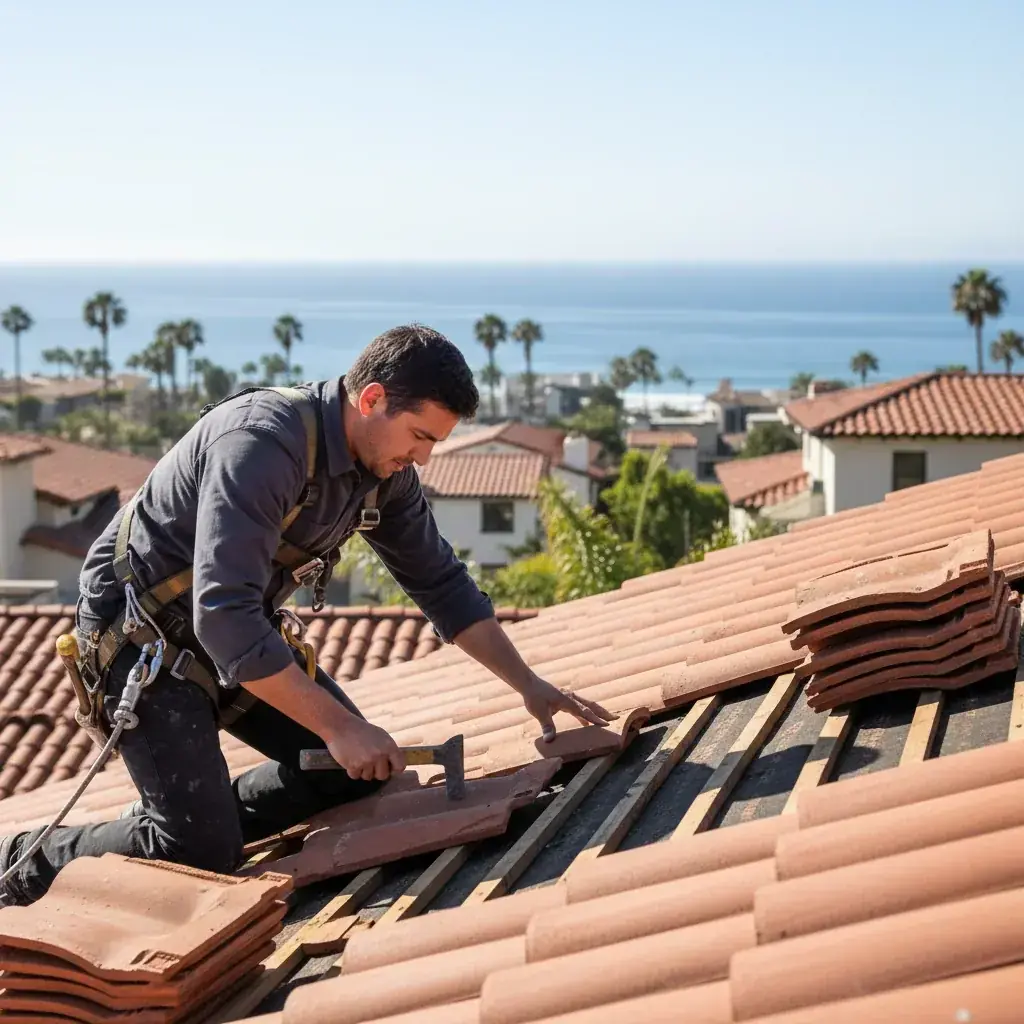
What a Poway replacement bid actually compares
Concrete tile is the common single-family field. On many of those roofs the tile still salvages and the underlayment is the leak path. That is a different bid from buying new tile.
Custom work in Poway Hills and higher-end Old Poway pockets can be clay profiles, natural slate, or copper standing seam. Those get priced per project because sourcing and architectural coordination move the number more than a living-area guess.
Equestrian lots through Old Poway and the eastern hills add barns, stables, and equipment buildings. Those should be itemized, not folded into the house line. Standing-seam metal is a common outbuilding conversation because of wind and maintenance. The matched contractor still has to specify the product, underlayment, and fastening for each building.
Services: tile roofing and roof replacement.
Why lift-and-relay comes up on older Poway tile
A large share of Poway’s single-family stock predates modern underlayment products. Confirm build year on your own records or the County assessor. We will not invent an ACS percentage for the city.
Concrete tile often lasts longer than the sheet beneath it. The first question on an original Old Poway or Green Valley tile roof is usually whether that sheet has been replaced, not which color the tile is. Waiting for an active leak can add deck repair. That is a condition call, not a “plan it in one to three years” promise from this brand.
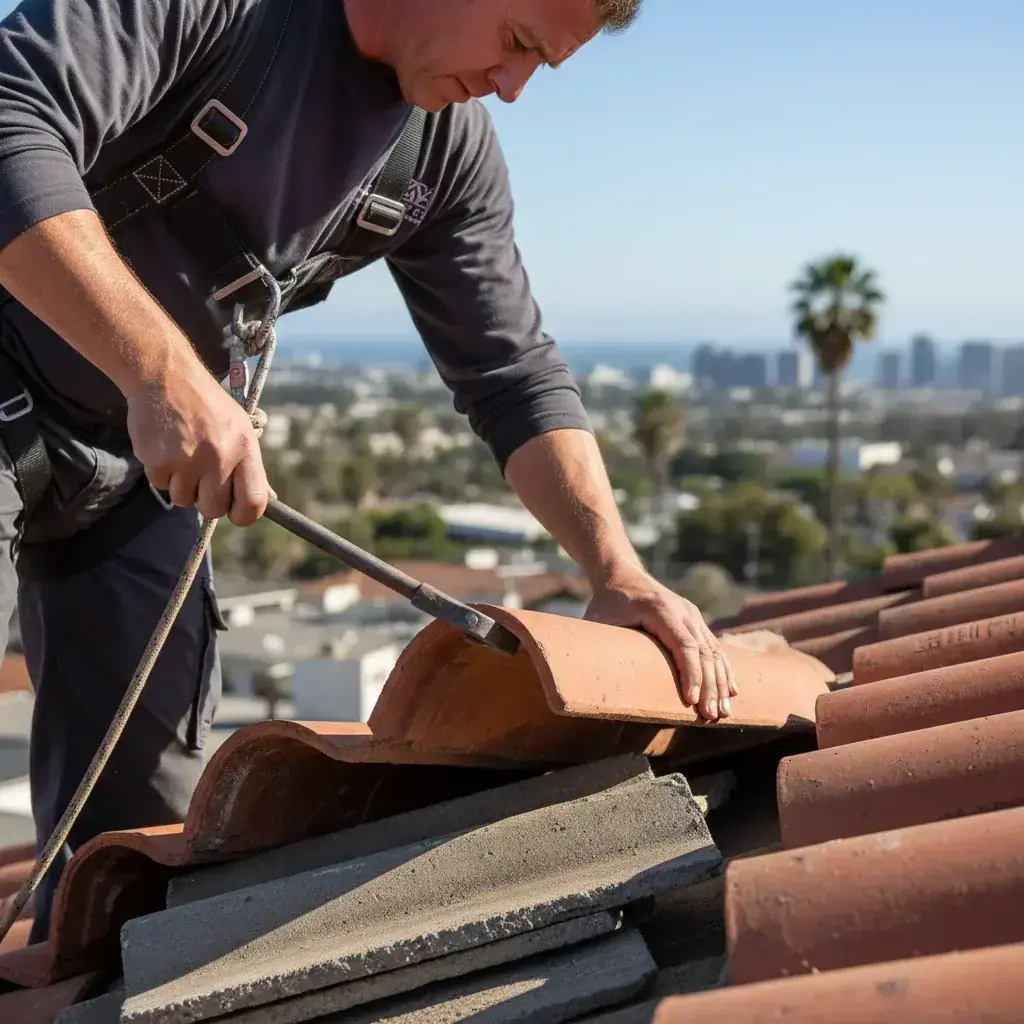
How lift-and-relay works, and why the columns differ
A crew lifts existing concrete tile, removes failed underlayment, installs new high-temperature synthetic underlayment and flashing, then resets the same tile. The new-tile material buy mostly drops out when the field is sound. Labor, access, waste from broken tile, and flashing still sit on the bid. We will not claim a percent savings versus full replacement.
Custom estates and equestrian property
Higher-end inventory, especially eastern hillside lots, can leave the production-tile conversation. Clay, slate, and copper need named products, lead times, and often designer or association coordination. Those numbers belong on a measured proposal.
If you have outbuildings, expect separate lines for each roof: residence, barn, stable, equipment building. This referral brand does not “handle” equestrian roofing. Independent C-39s in the match pool may bid those structures when the work is roofing. Confirm license classification for any non-roofing structure work.
Fire-zone mapping in Poway
Eastern Poway hills and parcels that back to open space can sit in CAL FIRE or utility high-fire mapping. Listed fire assemblies and ember-resistant ventilation are permit and insurer questions on those lots. Central and western Poway mapping can differ even a few streets over. Confirm the parcel on the CAL FIRE FHSZ viewer and with the City of Poway. Read current Chapter 7A text from the California Building Standards Commission if the AHJ points you there. Do not treat Class A as a citywide fact or Chapter 7A as automatic. Product context: wildfire-resistant roofing. We will not invent what a listed-assembly upgrade “typically adds” to a bid.
How to compare Poway bids
| Line | Why it matters here |
|---|---|
| Measured squares per structure | House vs barn vs stable |
| Salvage tile vs new tile, clay, slate, or metal | Stock type |
| Underlayment product | Waterproofing under tile |
| Fire-listed assembly | Mapped hillside lots |
| Access and story count | Custom lots |
| Deck sheet allowance | Older attics |
| Who pulls the City of Poway permit | Not the homeowner |
| HOA or architectural review | Heritage and planned streets |
| Manufacturer vs workmanship papers | Separate |
Neighboring inland cost pages for method, not copied totals: Rancho Bernardo and Scripps Ranch. Poway’s larger custom share and outbuildings change columns. They do not authorize a printed ZIP premium.
Frequently asked questions
How much does a roof replacement cost in Poway?
This marketplace cannot print a working number. Most production-tile conversations are salvage-plus-underlayment versus new tile. Custom clay, slate, copper, and outbuildings are per-project. Get line items on this address.
What is the difference between lift-and-relay and full tile replacement?
Lift-and-relay reuses sound existing concrete tile and replaces the failed underlayment. Full replacement removes the old tile and installs new. The inspector decides from field condition and matching stock, not from a blog.
My Old Poway or Green Valley home still has original tile. What should I expect?
Ask whether the underlayment has already been replaced, document attic staining, and get a salvage-versus-new-tile written fork. We will not invent a one-to-three-year deadline.
Can a matched roofer bid barns and stables?
Independent C-39s can bid roofing on those structures when it is roofing work. Ask for separate scopes. Confirm license class for anything that is not roofing.
Does Poway require fire-zone roofing?
Some eastern and open-space parcels do, via mapping and the permit. Central and western lots may not share that designation. Confirm the parcel. Listed fire-rated products still appear on many specs for insurance reasons. That is not a citywide Class A mandate we can declare.
When to call us
If you need an independent C-39 to inspect a Poway tile roof, a custom estate covering, or a set of outbuildings and write comparable line items, we make the match. We do not quote the job. Call (760) 750-5557.