TL;DR
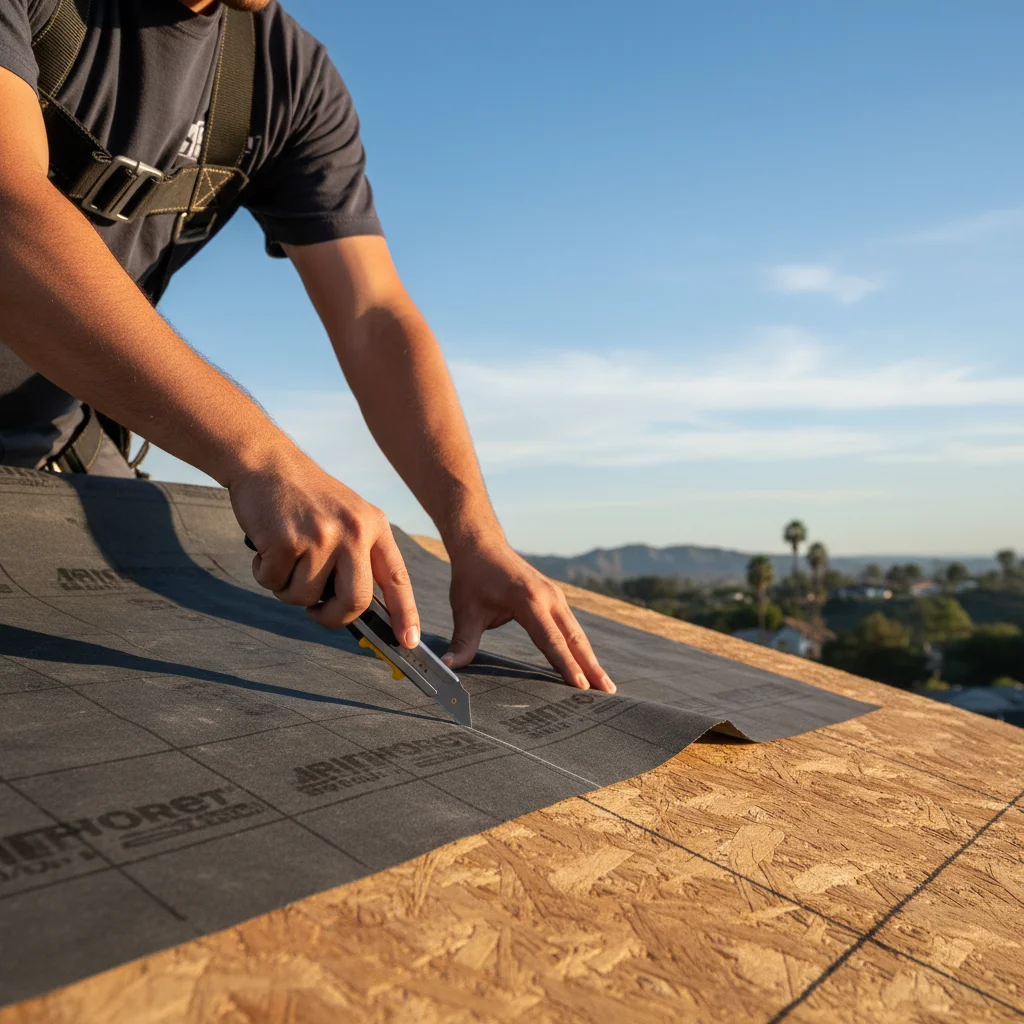
Shingles and tile shed water. They are not a perfect seal. Underlayment is the layer on the plywood or OSB that has to catch wind-driven rain, a cracked tile, or a tired pipe boot.
On a 2026 San Diego bid, 30-lb felt (ASTM D226 Type II) is still a legal floor on many steep-slope jobs. Synthetic is the usual careful default under shingles. Self-adhered (peel-and-stick) is the waterproofing under tile and at valleys, eaves, and penetrations. 15-lb felt as the field sheet is a skip.
Product-by-product spec: roof underlayment types. This page is the homeowner version: why it matters here, felt vs synthetic, coastal salt, and bid red flags.
We will not invent per-square or “3 to 5 percent upgrade” prices. Top Pro Roofing SD refers. We do not install. Call (760) 750-5557.
What the sheet is actually doing
It sits between the deck and the visible covering.
- Second water barrier when rain gets under a shingle, through a tile lap, or past tired flashing.
- Temporary weather plane while the covering is off.
- Slip and fastener plane so tile edges and nails do not chew the deck.
When a San Diego tile roof “fails,” the tile is often still fine. The felt or tired synthetic under it is not. That is why tile lift-and-relay exists. Failure signs: tile underlayment failure.
Fire rating is an assembly (covering, sheet, deck), not a magic roll of felt. If you need Class A, ask the contractor which listed assembly they are building. Do not assume any underlayment stamp equals the whole roof.
Felt vs synthetic, in plain terms
30-lb asphalt felt. Paper or fiberglass mat with asphalt. Cheap, familiar, still code-legal in many steep-slope assemblies. Tears more easily. Wrinkles when it takes on moisture. UV cooks it if it sits uncovered. Inland heat dries it brittle years before a polymer sheet would quit. Fine as a short-hold or a disclosed budget line. Weak as the thing you want to outlast the covering.
15-lb felt. Thinner, more seams, easier to tear. Seeing it as the field sheet on a shingle or tile reroof is a reason to get another bid.
Synthetic. Woven polypropylene or polyethylene, often with a walkable coating. Higher tear strength, lighter rolls, longer UV window (read that wrapper; brands differ). It is water-resistant, not the same as a self-adhered waterproof membrane. This is the usual field sheet under asphalt shingles on careful local bids.
High-temp synthetics and peel-and-stick under metal. Metal roofs run hot. Felt can dry out and can stick to the back of panels. Ask for a high-temperature listed sheet and a metal-specific detail, not “felt, same as shingles.” Metal covering path: metal roofing.
If two bids disagree on this line, that is often where the cheap number hides. Types, ASTM numbers, and ice-and-water at valleys: underlayment types.
Why the coast is harder on felt
From La Jolla through Imperial Beach, salt air plus UV is a long, slow cook. Asphalt in felt loses oils, goes brittle, and tears at old fastener holes. A small install nick becomes a split. The next wind-driven rain reaches the deck.
Polymer sheets do not take salt the same way. They still have to be installed dry, lapped, and fastened to the wrapper. They are not a substitute for flashing.
Coastal covering choice is separate: best roof material for coastal climates. Salt on the metal and mortar you can see: coastal salt and roofs.
Inland (El Cajon, Escondido, Ramona, East County), attic heat is the felt killer. South and west slopes age faster than a shaded north plane. Ask the inspector to talk about this attic, not a brochure life.
What to put on the bid instead of a vibe
Ask for:
- Product name and ASTM type (example: ASTM D226 Type II felt, or the synthetic’s ASTM)
- Where the field sheet stops and peel-and-stick starts (valleys, eaves, walls, penetrations, low-slope planes)
- UV exposure limit if the covering will not go on the same week
- Whether the sheet is required for a manufacturer system warranty on the shingles or tile
Vague “new underlayment” or “felt” lets someone swap a thinner roll after you sign. Named product is the control.
NRCA and manufacturer instructions are the trade references the installer should be following. You are not required to quote them. You are required to see a product ID.
Red flags
- 15-lb felt as the field sheet on a standard sloped reroof
- “Felt is just as good, you don’t need synthetic” with no climate reason
- Rolls left in the rain or in full sun for days before they go down
- No ice-and-water or peel-and-stick at valleys on a tile job
- A tile bid that treats the tile as the waterproofing and the sheet as optional
A careful C-39 will explain felt vs synthetic vs self-adhered for this covering and this exposure. Roof replacement is the project that makes this line permanent. Hiring record: CSLB guide.
When to call us
If quotes hide the sheet behind a lump sum, or the house is coastal or 15-plus years with stains in the attic, call (760) 750-5557. We match you with a licensed independent roofer who will name the underlayment on the proposal. You contract with that professional. We do not set prices.