Last updated: April 23, 2026
Commercial Roofing in Boulevard, CA.
Commercial Roofing for Boulevard businesses. We connect you with an independent local roofer from our San Diego County network. Commercial roofing runs on different rules: longer spans, tighter code, and uptime that a multi-day tear-off can disrupt. We connect restaurants, retail, office, medical, and light industrial businesses with licensed independent commercial roofers.
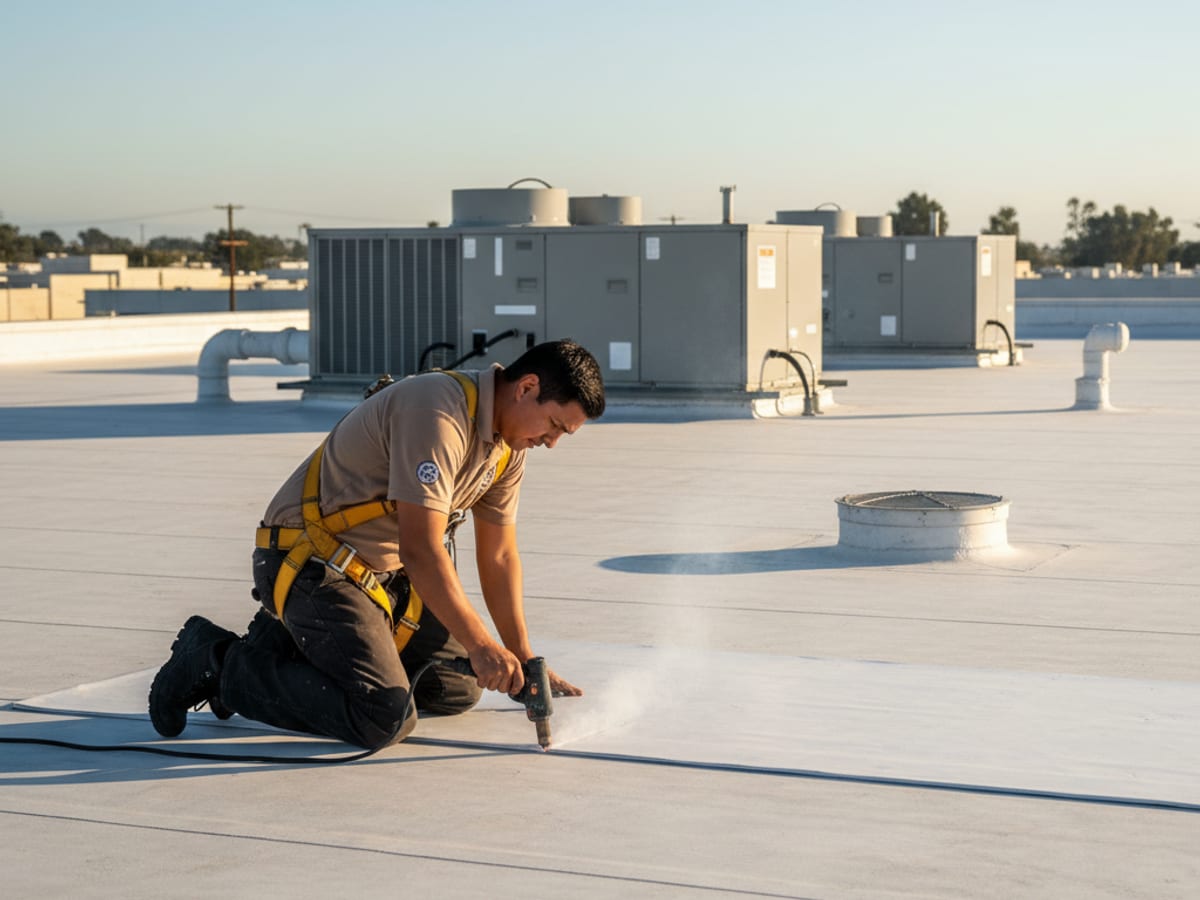
Why is commercial roofing different in Backcountry San Diego?
Mountain commercial is light: stores, small restaurants, and stations in Julian, Alpine, and Ramona. Ask for access and weather windows in the quote.
What's included in commercial roofing in Boulevard?
- TPO single-ply membrane (the volume commercial option)
- PVC single-ply (chemical-resistant, good for restaurants, commercial kitchens)
- Modified bitumen (torch-down and self-adhered)
- Built-up roofing (BUR) for historic commercial
- Spray polyurethane foam (SPF) roofing
- Silicone and acrylic coating systems for life extension
- Maintenance contracts with quarterly and annual inspections
- Emergency tarp and repair to keep operations running
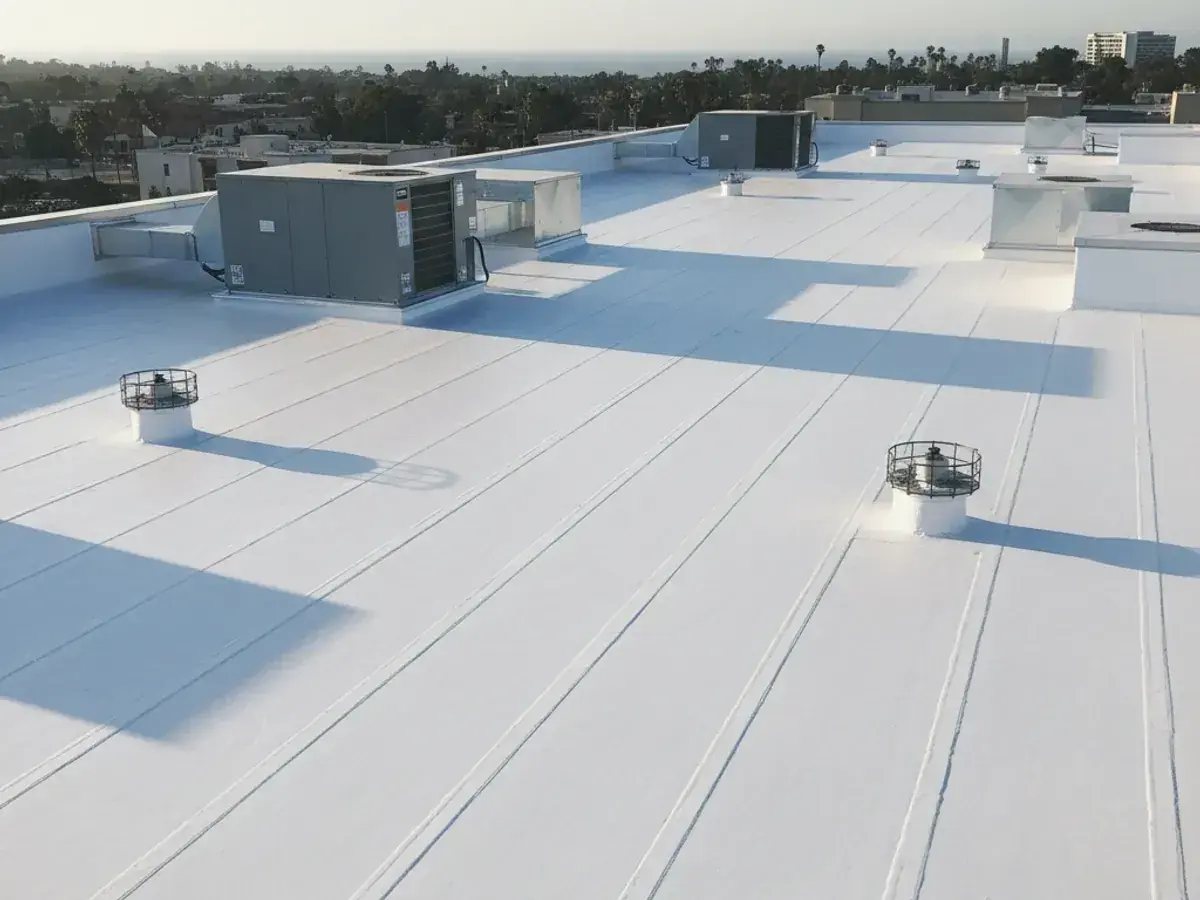
When does a Boulevard business need commercial roofing?
- Existing commercial flat roof is past end-of-life
- New tenant improvement or building expansion
- Ponding water, open seams, or visible membrane failure
- Interior ceiling staining or active leaks affecting operations
- Insurance or annual inspection flagged the roof
- Life extension via coating instead of full replacement
Commercial roofing in San Diego: what changes when the stakes are higher
Why commercial roofing is different from residential, and what that means for pricing
Commercial roofing is not residential roofing at larger scale. The differences are systematic. Code requirements are more complex: California Title 24 governs insulation, reflectance, and SRI of the roofing system. A commercial reroof that does not meet Title 24 will not pass inspection. Mechanical penetrations are heavier: HVAC units, exhaust fans, grease ducts, electrical conduit, gas lines, and access hatches. Each is a leak point and each needs flashing coordinated with other trades. Drainage design is structural: larger areas, drain sizing, overflow scuppers, and ponding prevention are code-required. Tenant and operations impact drives scheduling: a restaurant that cannot open during a multi-day tear-off has revenue at stake. The matched licensed independent roofer can quote after-hours, phased, or weekend work when that is what the building needs. Compare quotes by mobilization, penetration complexity, after-hours labor, and code compliance, not a single per-square-foot number. Confirm permit, warranty, and method in writing before you sign.
TPO vs. PVC vs. modified bitumen: choosing the right system for a San Diego commercial building
Each commercial membrane has a niche, and getting this wrong creates a maintenance problem that does not go away. TPO (thermoplastic polyolefin) is the default: white, heat-welded seams, good UV reflectance for Title 24 on most commercial, competitive pricing. Right for general commercial, office, retail, industrial, and warehouse. PVC is the right choice when chemical exposure is present: restaurant rooftops with grease exhaust, solvent fumes, commercial kitchens where exhaust vapor breaks down TPO. PVC resists that chemical degradation. Modified bitumen is the reliability choice when seam quality is the dominant concern. Multi-layer modified asphalt is harder to fail-install than heat-welded TPO, and it gives a redundant waterproofing layer that single-ply does not. Common on older commercial buildings and historic retrofits where the structure cannot handle BUR dead load. Spray polyurethane foam (SPF) can be sprayed as a continuous, self-flashing, insulating layer over existing sound roofing without tear-off, then top-coated (silicone or acrylic) against UV. It needs a skilled applicator and a maintained top coat. We match you with a licensed independent roofer. Confirm system, seam method, permit, and warranty in writing.
What do Boulevard business owners ask about commercial roofing?
How fast can a Boulevard roofer get out for commercial roofing?
That depends on the roofer you're matched with and their schedule. We connect Boulevard business owners with an independent local roofer from our network as soon as we hear from you.
What does commercial roofing cost in Boulevard?
Cost in Boulevard depends on this roof. Compare written bids from the matched C-39. We do not print a city rate.
How does Boulevard's climate affect this service?
Boulevard is a remote east-county border community on I-8, with wide daily temperature swings, winter freeze nights, desert winds, and severe fire risk. Standing-seam metal is common. Mountain commercial is light: stores, small restaurants, and stations in Julian, Alpine, and Ramona.
What is the difference between commercial roof repair, maintenance, and replacement?
Commercial roof repair fixes a specific failure: an open seam, a failed drain collar, a punctured membrane. Commercial roofing maintenance is the scheduled version, where a crew clears drains, checks seams and penetrations, and logs the roof's condition so small problems get caught before a tenant reports a leak. Ask that contractor how often they visit. Replacement is the call once the membrane is past its service life or repairs stop holding. Most commercial roofing services start with an inspection that tells you honestly which of the three you need.
Do you offer a commercial roof maintenance program?
Ask. Some commercial roofers sell scheduled maintenance; others do not. A useful visit covers drain and scupper clearing, seam and lap inspection, penetration checks, and a written condition report with photos. Confirm visit count, storm-check policy, and price in the contract.
Where we work in Boulevard
Need commercial roofing in Boulevard?
Call to get matched with an independent local roofer near you.