A concrete tile roof already carries about 10 pounds per square foot before a single solar panel goes up. Add a fully racked array and you’re adding another 2 to 4 pounds per square foot on top of that. Most homeowners assume that math is the problem. It rarely is.
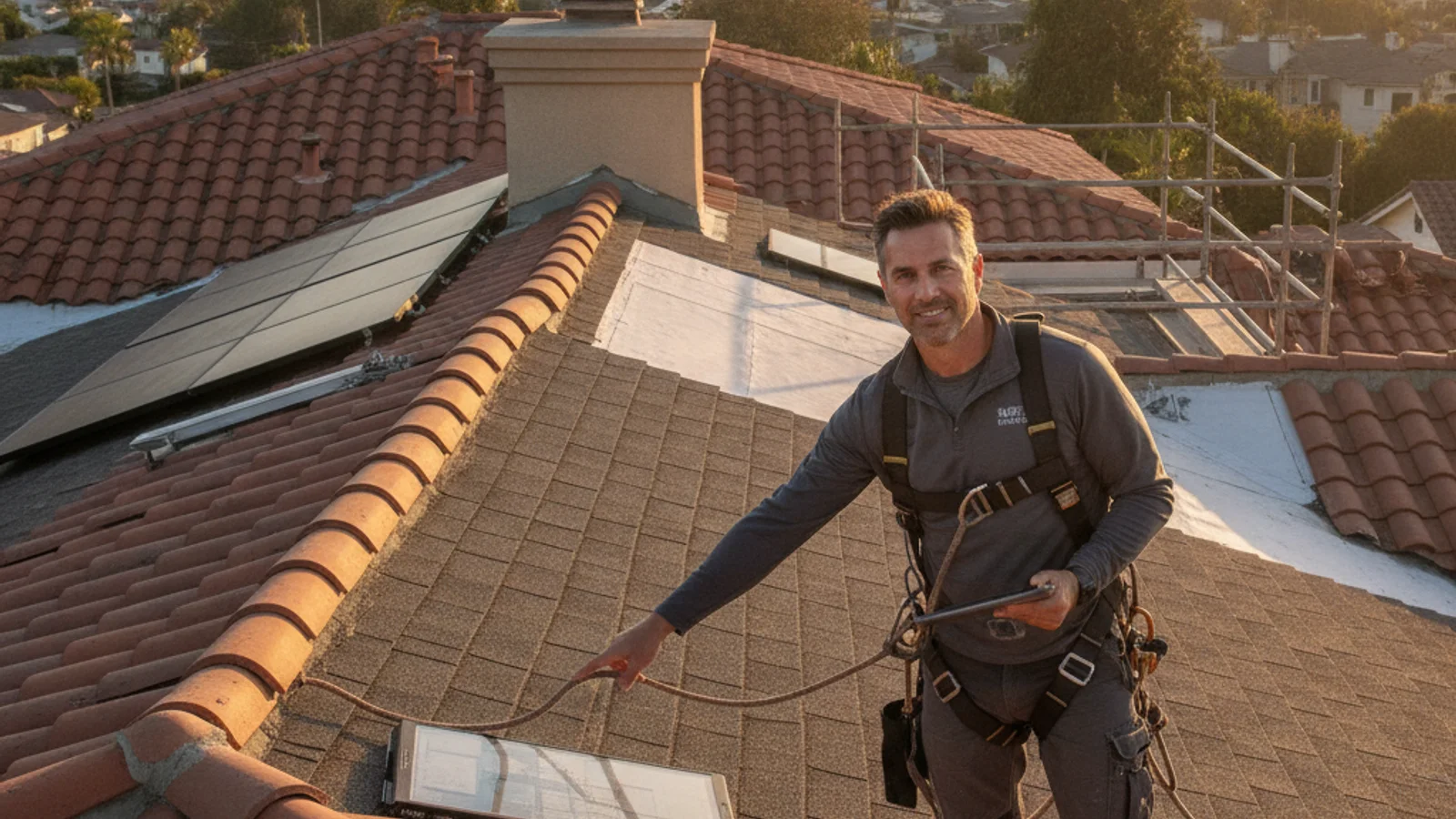
For most San Diego homes, the roof was built to carry far more than solar ever adds. The real question isn’t whether your rafters can hold the weight. It’s whether your roof’s age and underlayment can survive another 20 years of mounting hardware, penetrations, and San Diego sun before the panels have to come off for a reroof.
How much weight does a solar array actually add?
Break the numbers down and the concern usually shrinks fast. A standard concrete tile roof carries roughly 10.3 pounds per square foot in dead load, just sitting there before any equipment goes on. A fully installed solar array, including panels, racking, and mounting hardware, typically adds another 2.3 to 4 pounds per square foot. Combined, most homes land somewhere around 13 to 15 pounds per square foot total.
Most residential roof framing in San Diego County is built to carry around 20 pounds per square foot in live load, on top of the roof’s own dead weight. That number covers wind, foot traffic, and the occasional roofer standing up there during a repair. Solar panels fit inside that margin on the large majority of homes we inspect. A roof inspection confirms your specific numbers, since tile weight, rafter spacing, and roof age vary by home.
Where the real risk actually is
Total weight rarely fails a roof. Rafter and decking condition is where problems actually show up. Dry rot near the eaves, undersized rafters in older additions, and decking that’s thinner than current code all reduce how much a specific roof section can carry, regardless of what the total load math says.
Solar racking doesn’t spread weight evenly across the whole roof. Installers mount racking every few feet along the rafters, driving lag bolts through the tile and decking directly into the framing below. That creates concentrated point loads at a dozen or more specific spots, rather than one even weight across the surface. A rafter with rot or insect damage near one of those mounting points is the actual failure risk, not the array’s total weight.
Why roof age and underlayment matter more than the math
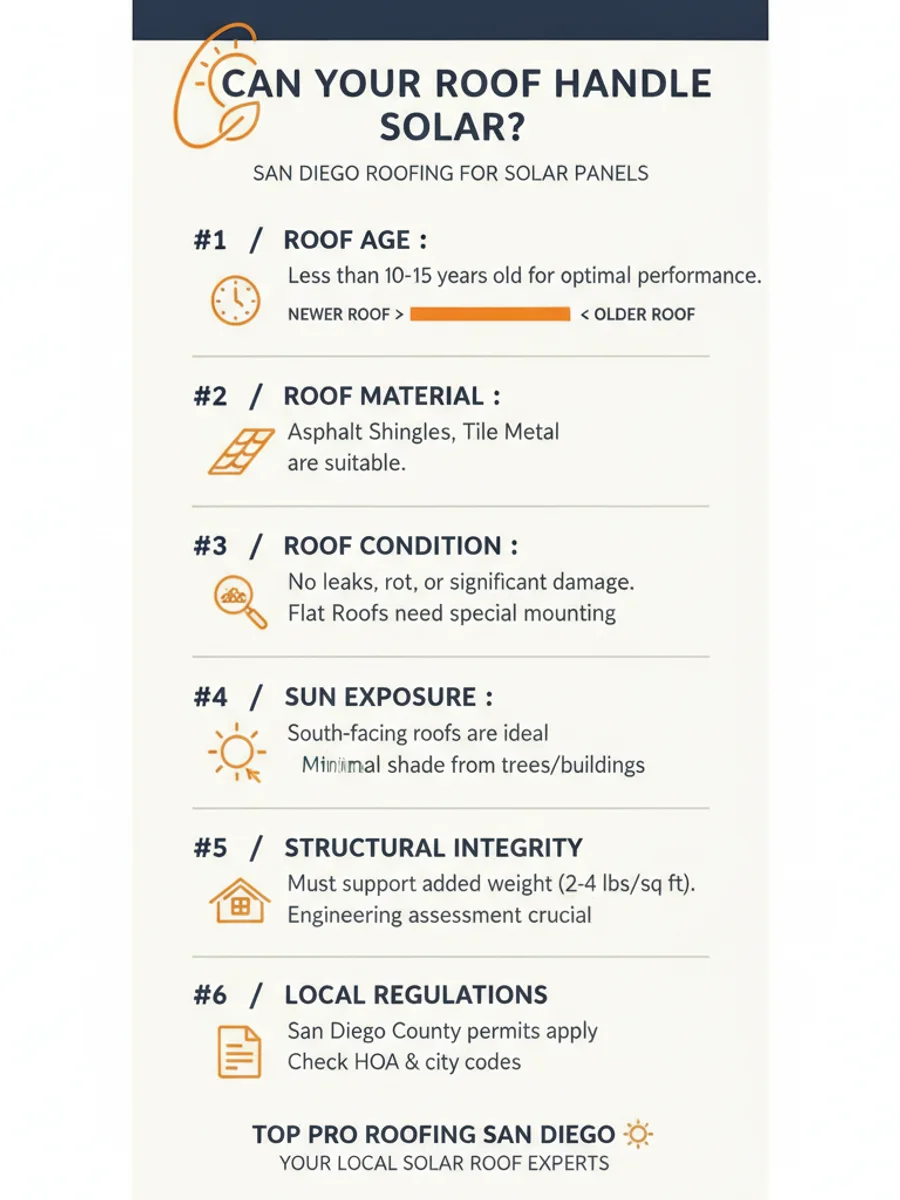
Underlayment under concrete tile typically holds up for 20 to 25 years before it starts failing at seams and penetrations. Solar panels don’t damage underlayment directly, but removing an installed array to redo the roof underneath adds real time and cost that most homeowners didn’t budget for. We break down those numbers in solar panel removal cost and roof replacement.
If your underlayment has more than 10 years of useful life left, panels can usually go on the existing roof without issue. If it’s within 5 to 10 years of the end of its life, most roofers recommend reroofing first, then installing solar on the new roof. Doing it in that order avoids paying twice for the same labor. We cover the full pre-installation checklist in preparing your roof for solar panels, and the installation process itself carries its own risks if it’s rushed, which we cover in do solar panels damage your roof.
Permits and engineer’s letters on older homes
San Diego jurisdictions generally require load calculations submitted with a solar permit application. On homes with older or non-standard framing, or additions where the original engineering isn’t on file, the permitting office may require a structural engineer’s letter before approving the installation. That step takes longer and costs more when a roof’s framing condition isn’t already documented.
If your roof needs tile replacement or repair before panels go up, that work needs to happen first, not after. Tile roofing repairs done before solar installation are far cheaper than removing and reinstalling an array later to fix the same problem underneath it.
Frequently Asked Questions
Do I need a structural engineer to install solar panels in San Diego? Not always. Most homes with standard, documented framing don’t need one. It’s typically required when framing can’t be verified as standard, or when a home has undocumented additions.
How much weight can a San Diego roof hold? Most residential framing is built for around 20 pounds per square foot in live load, on top of the roof’s own dead weight. Tile and solar together usually land well under that number.
Should I reroof before or after installing solar panels? If your underlayment has more than 10 years of life left, panels can usually go on now. If it’s closer to the end of its life, reroof first to avoid paying for removal and reinstallation later.
Do tile roofs need extra reinforcement for solar? Rarely. Tile roofs already carry more dead load than shingle roofs, so the framing underneath is typically sized for it. Rafter condition at the mounting points still needs to be checked.
What happens if my roof needs work after solar panels are already installed? The array usually has to come off and go back on, which adds labor cost on top of the roof work itself. That’s why a pre-installation inspection matters more than most homeowners expect.
Get a straight answer before you sign a solar contract
Weight is almost never what stops a San Diego roof from carrying solar. Roof age and underlayment condition are. A quick inspection tells you which situation you’re actually in before a solar company locks you into a contract. Call Top Pro Roofing SD at (760) 750-5557 and we’ll walk your roof with you.
Related reading: