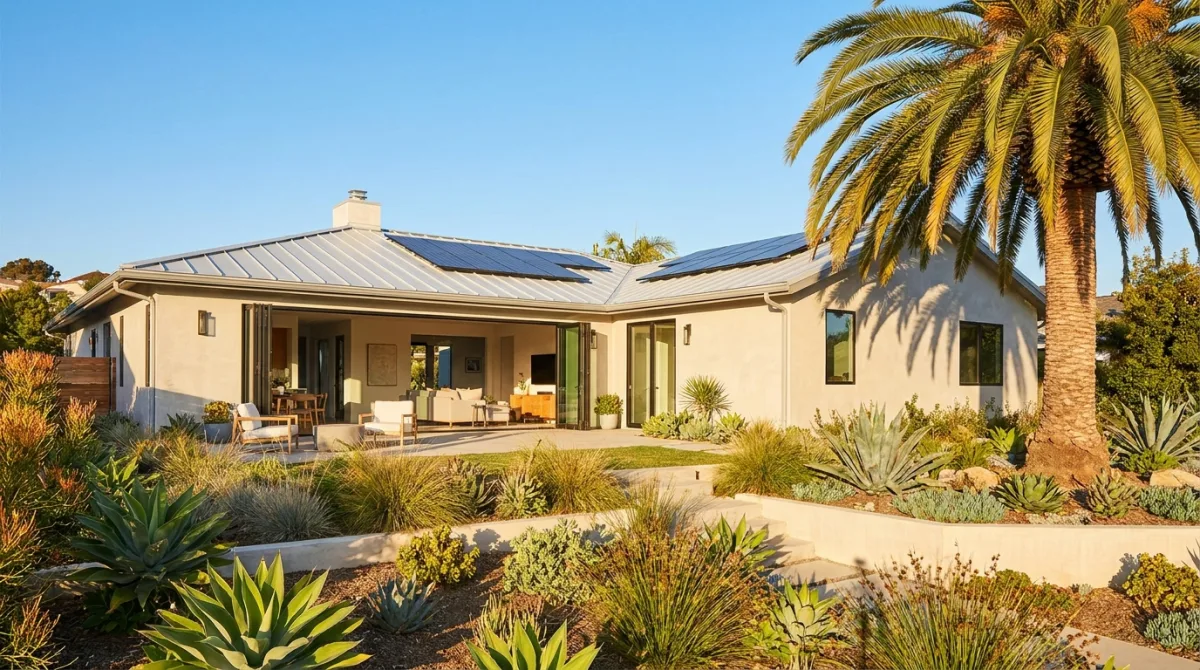
A new roof can lower cooling load when you leave a dark, worn covering for a cool-rated assembly. It is not a guaranteed percent off the SDG&E bill, and it is rarely the reason to reroof by itself. Age, leaks, and the permit path usually come first. Energy is a side effect you can specify, not a rebate we invent.
Top Pro Roofing SD refers licensed independent C-39 roofers. We do not install roofs, run energy models, or promise savings. Call (760) 750-5557. You contract with the matched roofer.
Cool-roof code path: Title 24 cool roofs in San Diego. Incentive programs change: cool roof rebates through SDG&E. Color as a heat-gain choice: roof color for a cool roof.
How a roof moves heat
The covering is one layer in a stack. Solar reflectance is how much sunlight bounces off the surface. Thermal emittance is how readily the surface sheds heat it did absorb. A rated cool roof is built to do both, within the product’s listed values.
Heat that gets past the surface still has to cross attic air, insulation, and the ducts. A cool covering on a sealed, unvented, or thinly insulated attic leaves most of that chain in place. Two houses with the same new shingle can feel different because the attics are different.
Coastal Del Mar and La Jolla run milder summers. Inland El Cajon, Santee, and Escondido run the air conditioner harder. The same reflectance product can matter more where the cooling season is longer. That is load, not a published savings percent.
We will not quote attic surface temperatures or bill reductions. ENERGY STAR and the California Energy Commission publish cool-roof and Title 24 material. Use those documents and a property-specific takeoff, not a blog table.
What actually changes the outcome
Product and color. Cool-rated asphalt uses reflective granules. Lighter listed colors generally reflect more than dark ones in the same line. Tile already has an air gap under the pieces, so the covering and the underlayment both matter. White or light TPO on a low-slope addition is a different assembly than a steep shingle roof. None of that is a license to invent a percent.
Ventilation. Intake at the eave and exhaust at the ridge (or a listed alternative) let attic air leave. A reflective roof over a dead attic still holds heat. Ask the C-39 to write the venting scope, not assume the old baffles survived the tear-off.
Insulation and air sealing. A reroof is a chance to look at the attic, not a requirement to re-insulate. Thin or missing insulation, and leaky ducts in a hot attic, often move the bill more than granule color. See attic insulation during a roof replacement. Sequence leaking covering first if water is already in the house.
Radiant barrier and underlayment. Some decks get a radiant barrier or a high-temp underlayment on a full tear-off. Those are line items on the proposal. They are not a second invented savings number.
Code. The California Energy Commission publishes Title 24. Confirm with the AHJ whether a listed cool-rated product applies when this reroof is permitted. The trigger, slope class, and listed CRRC values belong on the permit set. Do not treat Title 24 as a default, and do not copy a neighbor’s shingle SKU.
What a reroof will not do
It will not replace a failing air conditioner. It will not fix single-pane west windows. It will not pay for itself on energy alone for most houses, which is why leak and remaining-life questions should lead the decision.
Do not wait on a failing roof because an HVAC upgrade is still in the budget queue. Water damage is a different cost class. Efficiency work can follow once the covering is sound.
We will not invent a 2026 installed price here. Companion pages that discuss cost categories: new roof cost in San Diego. Replacement scope: roof replacement.
| Situation | What to ask on the proposal | Why it matters |
|---|---|---|
| Dark, worn covering, inland cooling | CRRC-listed cool product, climate zone on the permit | Heat gain is already high in East County summers |
| Coastal house, milder AC use | Same listing check, plus salt and flashing details | Comfort and code still apply even when bills are smaller |
| Low-slope or addition | Membrane color, slope, and Title 24 low-slope path | Low-slope rules are not the steep-slope shingle table |
| Thin attic insulation | Whether insulation or air sealing is in or out of scope | The roof cannot compensate for an empty attic |
| Existing solar | Sequence: covering life versus array life | See preparing a roof for solar |
Frequently asked questions
Does a new roof lower the electric bill?
It can, when the new covering is a listed cool roof and the attic and HVAC can use the cooler deck. There is no honest one-number percent for San Diego. Treat energy as a specified product choice on a roof you already need, not as the whole financial case.
How much can a cool roof save here?
We will not publish a savings range. Inland homes generally have more cooling hours than coastal homes. Actual dollars depend on SDG&E rates, thermostat habits, insulation, and equipment. Ask for a listed product, not a promised bill cut.
Do lighter roofs save more energy?
Listed solar reflectance is the number that matters, not the paint-chip name. Light colors often list higher reflectance. Confirm the CRRC rating for the exact SKU.
Does color or attic ventilation matter more?
They stack. A reflective covering over a poorly vented attic still traps heat. Write both into the scope when the attic is part of the job.
Will a new roof pay for itself in energy savings?
Usually not on energy alone. Stopping leaks, meeting the current code path, and protecting the deck are the primary reasons to reroof. Lower cooling load is a real physical effect. It is not a payback calculator we will invent.
When to call
If you are already planning a reroof and want the covering specified as a cool-rated system, start with a roof inspection. A matched C-39 can document the existing covering, attic access, and whether Title 24 or a rebate form applies at that address. Call (760) 750-5557.