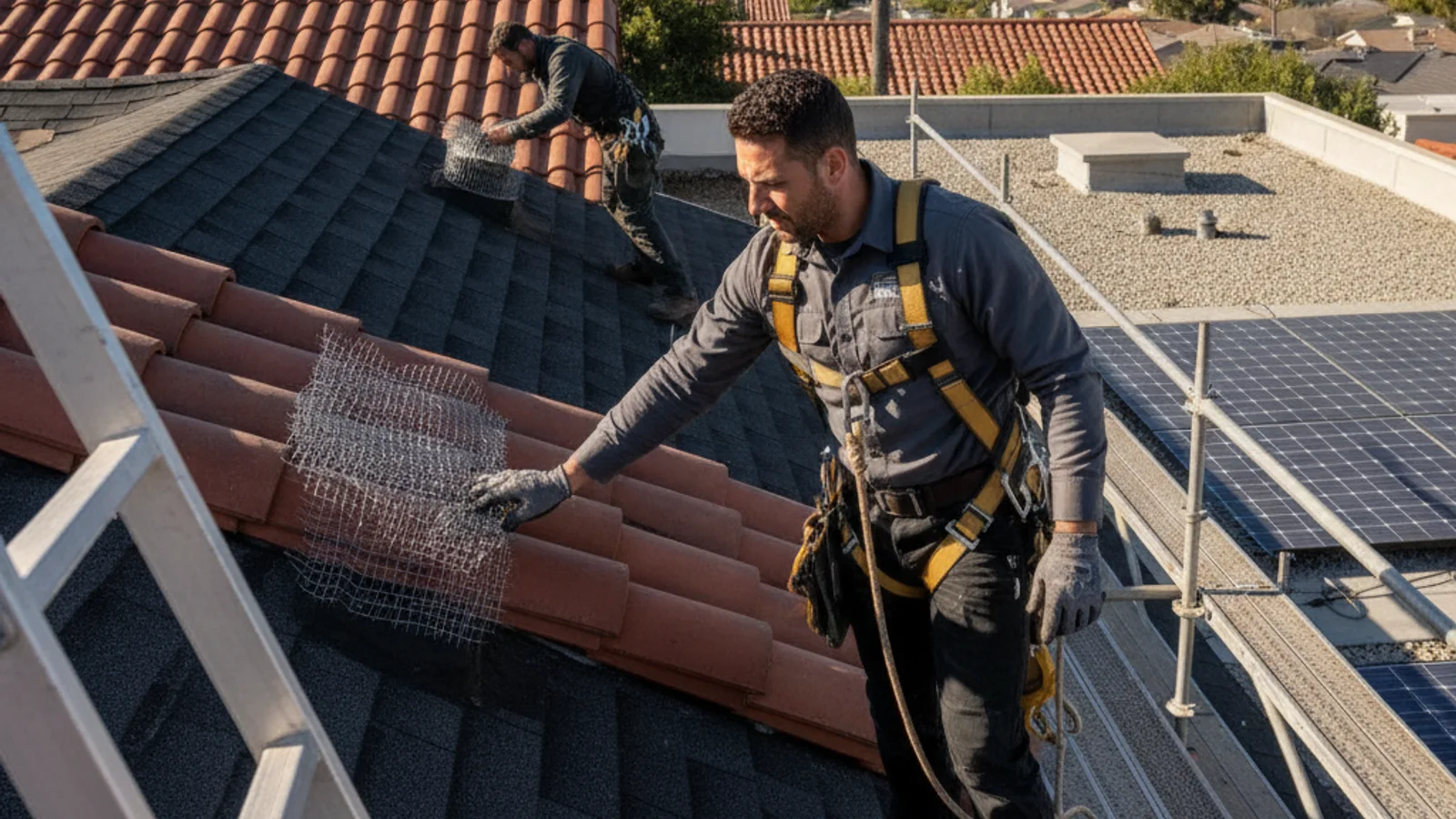
Roof rats get into San Diego homes through gaps in the roofline, and sealing those gaps is a roofing job, not just a pest-control one. A roof rat can squeeze through an opening about half an inch wide, roughly the size of a quarter, so the usual ways in are unscreened attic and gable vents, gaps where the eaves meet the wall, damaged soffit and fascia, and openings around plumbing vents and the chimney. Traps and bait handle the rats you already have. They do nothing about the hole that let them in. To keep roof rats out for good, you have to find every entry point on the roof, close it with materials a rat can’t chew through, and repair whatever got gnawed on the way in.
San Diego County is one of the worst roof rat regions in the state. The mild climate, the mature landscaping, and the fruit trees and palms in so many neighborhoods give black rats year-round food and cover, and they climb to nest high, which puts your attic and roof void right in their path. This guide covers how roof rats get in through the roof, the signs to watch for, the damage they do, and the roofing repairs that actually keep them out.
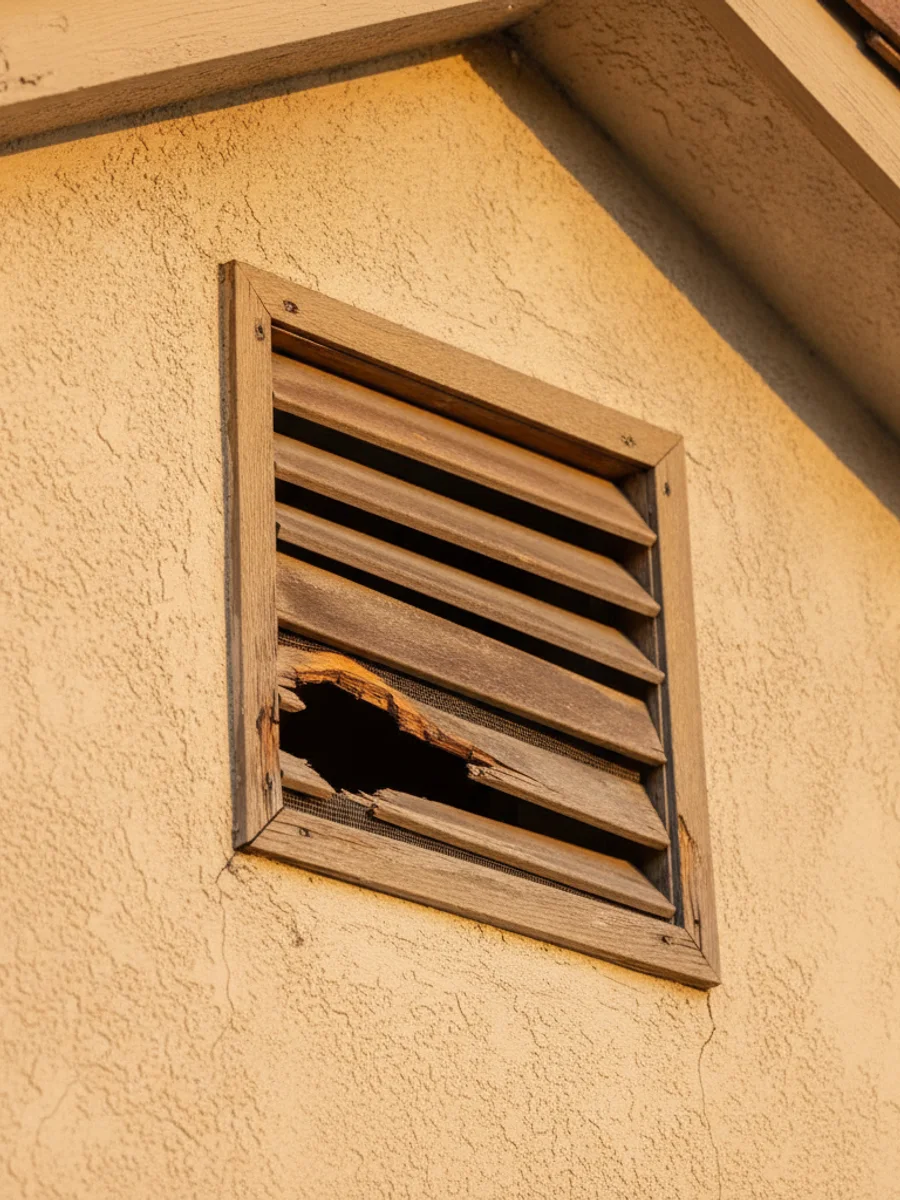
How do roof rats get into your roof in San Diego?
Roof rats are strong climbers, so they reach the roof and work along it looking for any gap. The common entry points are all up high. Unscreened or damaged attic, gable, and dormer vents are the biggest one, because a vent is already an open hole and the rat only has to get past the mesh. Next come the eaves, where the roof overhang meets the wall and gaps often open up as the wood ages. After that it’s damaged soffit and fascia, gaps around plumbing vent boots and the chimney, and the seam where a lower roof ties into a wall.
Overhanging tree branches make all of this easier. A branch within about six feet of the roof is a bridge, and roof rats use it. Trimming branches back from the house removes the on-ramp, but it doesn’t close the gaps they’ve already found. That part is roof work: screening the attic vents, closing the eave gaps, and repairing the chewed wood.
What are the signs of roof rats in your attic?
The first sign most San Diego homeowners notice is sound. Scratching, scurrying, or gnawing overhead after dark, especially in the ceiling or the attic, is the classic tell, because roof rats are most active at night. From there the physical signs are easy to spot once you know them:
- Droppings, dark and spindle-shaped, roughly half an inch long, scattered in the attic or along the top plates
- Gnaw marks on wood framing, stored items, and electrical wiring
- Greasy brown rub marks along beams, rafters, and the roofline where they travel the same paths
- Torn-up insulation pulled into loose nests
- A musty, ammonia-like smell in the attic from urine and nesting
If you find nests in the attic insulation, the problem is established and the insulation usually needs replacing along with the repairs.
What damage do roof rats do to a roof?
More than most people expect, because they don’t stop at nesting. Roof rats gnaw constantly to keep their teeth worn down, and in an attic that means the roof structure itself. They chew wood decking, rafters, and fascia, and they gnaw on electrical wiring, which is a real fire risk. They shred insulation for bedding, which drops its R-value and leaves droppings and urine through the material.
The part that turns a rat problem into a roofing problem is water. When rats chew through the underlayment, enlarge a vent opening, or gnaw at the wood around a roof penetration, they open the roof to leaks. What started as a pest issue becomes a ceiling stain after the next rain. That’s why sealing a roof-rat entry point isn’t only about the rats. It closes a hole that would eventually let water in too.
How do you keep roof rats out for good?
You exclude them, which means sealing every entry point with materials they can’t chew and repairing the damage they left. The order matters. Seal the roof while rats are still inside and you trap some in the attic, so exclusion comes after a pest company has removed the active population. The roofing side then looks like this:
- Start with a full roof inspection to map every gap, vent, and chewed spot from the outside and, where possible, the attic
- Screen or replace attic, gable, and dormer vents with galvanized metal or quarter-inch hardware cloth, not foam or plastic, which rats chew straight through
- Repair or replace damaged soffit, fascia, and roof decking so there’s solid wood again, not a gnawed opening
- Seal gaps at the eaves, around plumbing vent boots, and where roof planes meet walls with metal flashing and rodent-proof sealant
- Cap or screen the chimney and any open vent and flashing points
At Top Pro Roofing San Diego, we connect you with a vetted local roofer who handles the roof side of a rat problem: finding the entry points, sealing them with metal, and putting back the wood and vents the rats destroyed. Done right, exclusion is a one-time roof repair, not a yearly battle.
Does homeowners insurance cover roof rat damage?
Usually not. Most homeowners policies exclude damage caused by rodents and other pests, because insurers treat it as a preventable maintenance problem rather than a sudden accident. That means the chewed decking, soffit, wiring, and ruined insulation are typically an out-of-pocket repair. The one place a claim sometimes lands is sudden resulting damage, like a fire that starts from wiring a rat chewed, which a policy may cover even when it won’t pay for the chewing itself. Read your own policy language, and don’t count on coverage for the roof repairs.
Frequently asked questions
Can roof rats chew through a roof?
Yes, in the sense that matters. Roof rats gnaw through wood decking, fascia, and underlayment, and they enlarge small gaps into open entry points. They rarely chew through tile or metal roofing directly, so they go around it through the vents, eaves, and soffit instead.
How small a gap can a roof rat fit through?
About half an inch, roughly the size of a quarter. Any gap in the roofline that size or larger is a possible entry point, which is why sealing has to be thorough rather than patching the one hole you found.
Do I need a roofer or a pest company for roof rats?
Both, in order. A pest company removes the rats that are already inside. A roofer finds and seals the roof entry points and repairs the chewed soffit, fascia, decking, and vents, so the next generation can’t get back in.
What attracts roof rats to a San Diego roof?
Easy roof access and a warm, dry place to nest. Overhanging branches, fruit trees, and dense ivy give them a route up, and a quiet attic gives them shelter. Trimming trees back from the roof removes the bridge they climb.
Will sealing my roof stop roof rats from coming back?
Sealing every entry point with metal and hardware cloth is the most reliable long-term fix, but only after the existing rats are out and the chewed materials are repaired. Miss one gap and they’ll find it, so the inspection has to be complete.
If you’re hearing scratching in the ceiling or you’ve found droppings in the attic, the roof needs a close look before the damage and the leaks spread across San Diego County. We connect you with a vetted local roofer who inspects the roofline, seals the entry points, and repairs what the rats chewed. Call (760) 750-5557 for a same-day match.