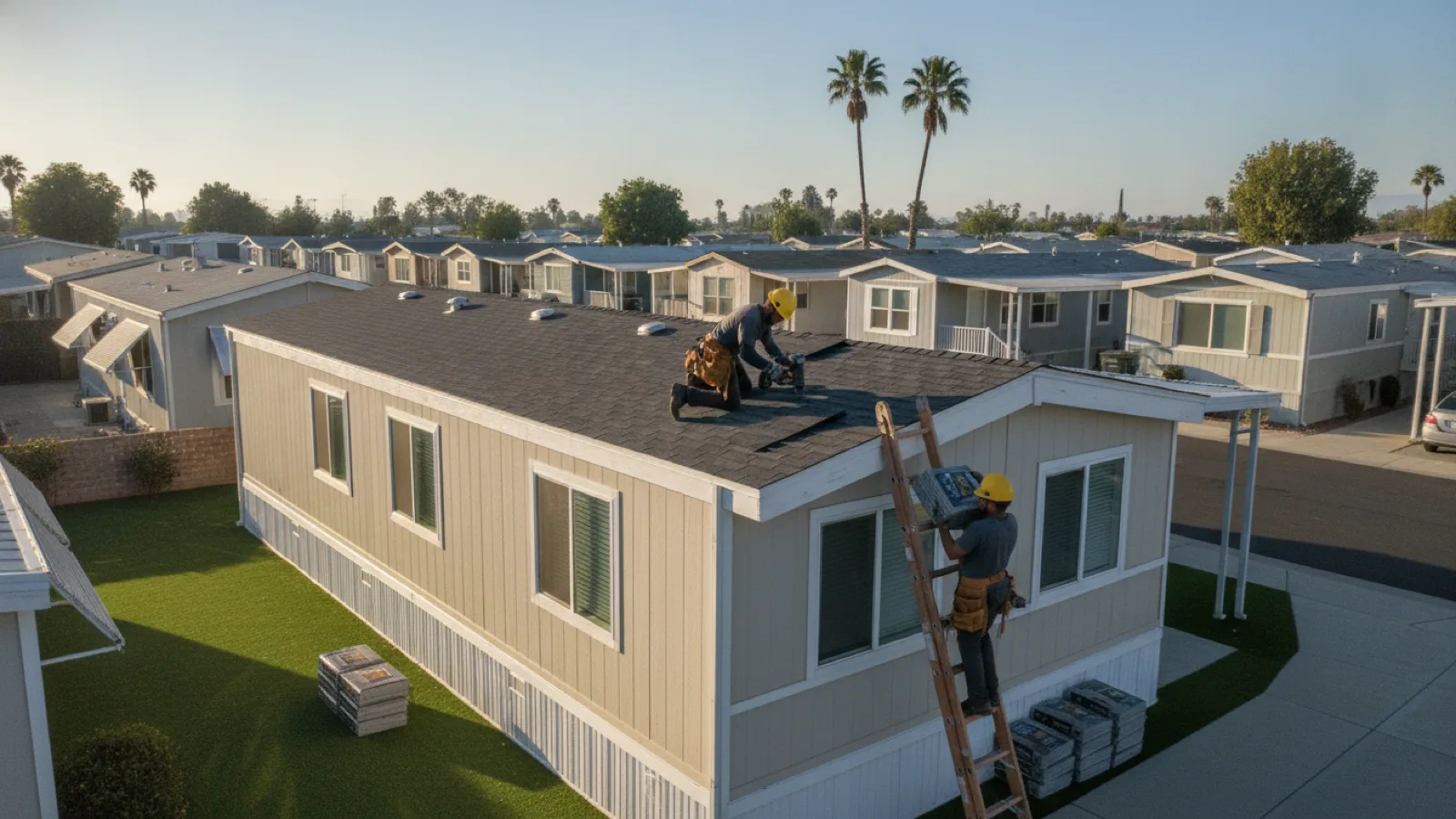
Mobile home roof repair in San Diego typically runs $300 to $1,500 for a patch or spot reseal, while a full roof-over replacement lands between $4,000 and $9,000 depending on size and material. The right call depends on whether you’re dealing with one active leak, a roof that’s simply worn out, or decking that’s already rotted underneath. This guide breaks down repair versus roof-over versus full tear-off, what a roof-over actually involves, the state permit California requires before any of it starts, and how coastal salt air versus inland heat changes the timeline.
San Diego County has one of the largest concentrations of mobile home parks in the state, spread across cities like Santee, El Cajon, Escondido, Oceanside, Chula Vista, San Marcos, and Lakeside. Most of those roofs fall into two camps: older bowed or flat metal roofs original to the factory build, and newer pitched shingle roof-overs installed sometime after the home landed on its lot. Knowing which camp yours is in, and what the state and the park require before work starts, keeps a small job from turning into a bigger one.
How does mobile home roof repair differ from a site-built home?
A mobile or manufactured home roof isn’t built like a site-built roof, and that changes how repairs work. Most factory roofs are close to flat or gently bowed metal, designed to be light enough to transport on a trailer chassis rather than to shed water the way a steep site-built roof does. That low slope behaves a lot like the flat roofs covered in our San Diego cost guide, where water sits longer after rain and small punctures turn into leaks faster than on a pitched composition shingle roof.
The structure underneath is different too. Mobile home roofs sit on lightweight trusses, and the ceiling below is often thin paneling with little room between it and the deck. A leak that would stain drywall on a site-built home can soak insulation and warp ceiling panels within days. That’s why roofers who work San Diego mobile home parks treat even a small leak as urgent, not a wait-and-see repair.
The other big difference is regulatory. Roof work on a site-built home goes through the city or county building department. Roof work on a mobile or manufactured home goes through the state instead, covered in detail below.
Repair, roof-over, or full replacement: which does your mobile home need?
Most mobile home roof problems fall into one of four categories, and the right fix depends on how far along the roof already is. Here’s how the options typically break down in San Diego, along with what each one usually costs:
| Option | Typical San Diego cost | Lifespan added | Best fit |
|---|---|---|---|
| Spot repair / patch | $300–$1,200 | 1–3 years | One isolated leak, roof otherwise sound |
| Roof coating | $1,500–$4,000 | 5–10 years | Metal roof is intact but aging, no active structural damage |
| Roof-over (TPO or pitched shingle) | $4,000–$9,000 | 20–30 years | Old roof is failing but the decking underneath is solid |
| Full tear-off replacement | $8,000–$15,000+ | 25–40 years | Decking is rotted, framing is compromised, or a roof-over isn’t allowed |
These ranges assume a single-section or double-section home; larger triple-wides run higher. Jobs land toward the low end when the roof was maintained along the way, and toward the high end when deferred maintenance caught up with the decking. A roof inspection that checks the deck, not just the surface, is what separates an honest quote from a guess. Start with a roof repair estimate for a single leak, or ask about full roof replacement if the decking’s already gone.
What is a roof-over, and when does it make sense?
A roof-over means building a new roof on top of the existing one instead of tearing the old roof off first. On a mobile home, that usually means framing a new pitched roof, or installing a new TPO membrane, over the original flat or bowed metal roof, then finishing the edges and vents to match. The old roof stays in place as the base, which is why a roof-over only works when the decking underneath hasn’t already failed.
The appeal is real. A roof-over avoids opening the home to weather during construction, it adds an air gap and often a layer of insulation that helps with San Diego’s summer heat, and it typically costs less than a full tear-off. A pitched roof-over also changes the profile of the home from flat to sloped, which sheds water instead of letting it pool, one of the most common failure points on older factory roofs.
The tradeoff is added weight and height. Not every home’s frame is rated for a full pitched roof-over, and not every park allows the roofline to change. A roofer needs to check both first. For more on how a roof-over compares to a full tear-off, see roof overlay vs. tear-off in California.
Do you need a permit for mobile home roof work in San Diego?
Yes, and it doesn’t go through the city. In California, mobile and manufactured homes are regulated by the state, not by local building departments, so roof work goes through the Department of Housing and Community Development (HCD) instead of the City of San Diego or the county. Before work starts, the contractor applies for an HCD alteration permit, and HCD reviews the plans before issuing it.
What triggers inspections varies by scope. Under HCD’s alteration guidelines, a full reroof, where the old covering is removed, requires a permit and inspections at the underlayment stage and again at final. A roof-over or new pitched roof requires a permit with engineered plans and its own inspections, since it changes the load on the structure. Applying an approved elastomeric coating to an existing metal roof is the one exception that skips this process.
Most national roofing guides miss this entirely, because most states don’t route manufactured home permits through a separate state housing agency the way California does. Ask any roofer bidding your job whether they’re pulling the HCD permit as part of the price. For the reroof permit process on a site-built San Diego home, see the San Diego roof permit process.
Does park management have to approve the roof work too?
Often yes, on top of the state permit. Most San Diego mobile home parks have their own rules about exterior changes, and a roof-over that raises the roofline or changes the home’s color falls under that. Some parks only require notification; others require written approval before a contractor can start, especially in age-restricted communities.
Skipping this step doesn’t just risk a fine. A park can issue a stop-work order even after HCD has approved the state permit, which stalls the job. Homeowners in parks across Santee, El Cajon, Escondido, and San Marcos should call the park office before scheduling anything, and a good roofer will ask about it before showing up with a crew.
Coastal salt air vs. inland heat: how location changes the wear
San Diego County spans two very different climates for a mobile home roof, and the difference shows up in how fast a roof wears out. Coastal parks near Oceanside and Imperial Beach deal with salt air that speeds up corrosion on exposed metal fasteners, seams, and flashing, especially on older roofs that haven’t been recoated in years. Rust at a fastener head is often the first sign of trouble on a coastal roof, well before the membrane itself fails.
Inland parks in El Cajon, Santee, and Lakeside face the opposite pressure. Long stretches of summer heat dry out roof coatings and accelerate UV breakdown on flat and TPO roofs, which shortens the interval between recoats compared to a coastal home. Neither environment is easier on a roof, they just fail differently, which is why it’s worth telling your roofer exactly where your park sits before they quote the job.
Frequently asked questions
How much does it cost to replace a mobile home roof in San Diego?
Most full roof-over replacements in San Diego run $4,000 to $9,000, while a full tear-off replacement with new decking runs $8,000 to $15,000 or more. The exact number depends on the home’s size, how much of the decking needs replacing, and whether you’re going with a TPO membrane or a full pitched shingle roof-over.
What is a mobile home roof-over?
A roof-over is a new roof built on top of the existing one instead of tearing the old roof off first. It’s common on mobile homes because it’s faster, cheaper than a full replacement, and it doesn’t open the home’s interior to weather during the job, as long as the decking underneath the old roof is still sound.
Do I need a permit to replace a mobile home roof in California?
Yes. Mobile and manufactured homes are regulated by the state, so roof work goes through California’s Department of Housing and Community Development instead of the city building department. The contractor applies for an HCD alteration permit before work starts, and HCD requires inspections at specific stages depending on the scope of the job.
How long does a mobile home roof-over last?
A well-installed roof-over typically lasts 20 to 30 years, similar to a comparable roof on a site-built home. How long it actually lasts in San Diego depends on the material, how well the seams and flashing were installed, and whether the home sits in a coastal park dealing with salt air or an inland park dealing with sustained summer heat.
Can a mobile home get a pitched roof instead of a flat one?
In most cases, yes, through a pitched roof-over, as long as the home’s frame can support the added weight and the park allows the change to the roofline. Converting from flat to pitched is one of the more effective long-term fixes for a mobile home that keeps developing leaks, since a pitched roof sheds water instead of letting it pool.
If your mobile home roof is leaking, aging out, or you’re weighing a roof-over against a full replacement, we connect you with roofers in the San Diego network who work mobile and manufactured homes and pull the HCD permit as part of the job. Call (760) 750-5557 for a free estimate anywhere in San Diego County.