Start with who has to accept the paper, not with a blog price. A roof certification is a signed document from a specific issuer, usually a C-39, about stated remaining life or condition. An inspection report is not the same thing. Top Pro Roofing SD does not certify roofs, issue remaining-life stamps, or set certification fees.
We connect San Diego County homeowners with licensed local roofers. We do not inspect, we do not sign certifications, and we give no warranties. Call (760) 750-5557. Ask the person who requested the certification (escrow, lender, or insurer) what wording they will accept. Then ask each provider what they charge for that deliverable on this roof.
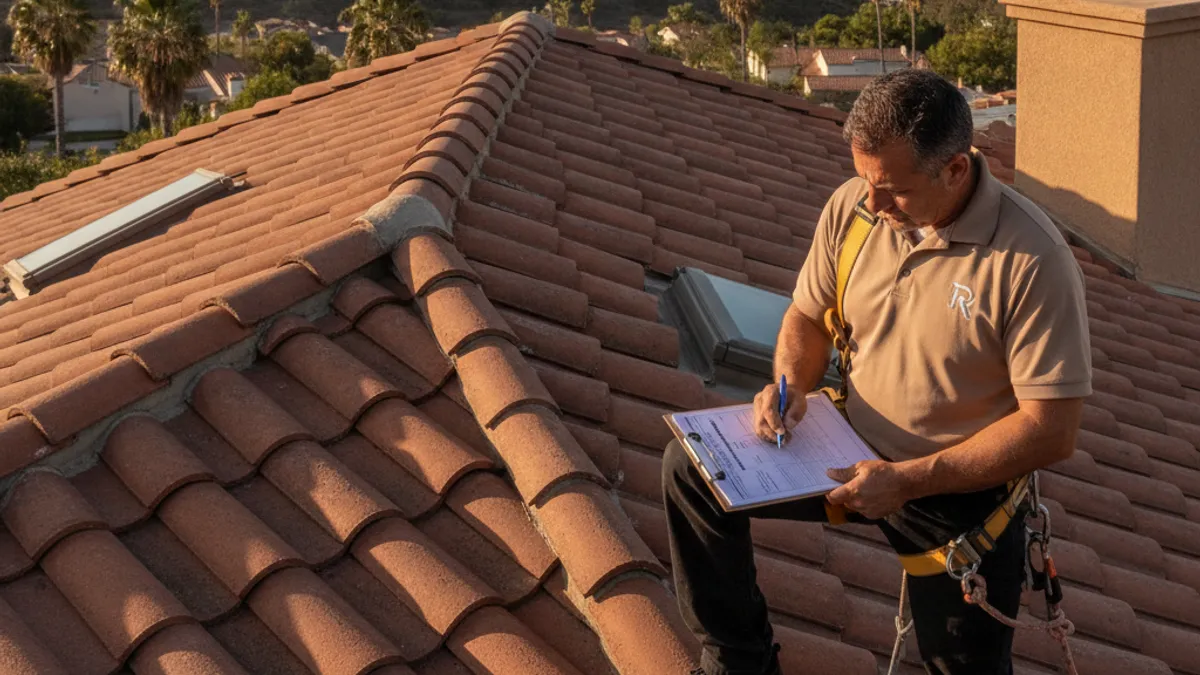
Certification versus inspection
A standard roof inspection is a condition report. Useful, with the limits of what was visible. It is not automatically a certification.
A certification is a separate signed statement. Its wording, purpose, and acceptance depend on the issuer and the recipient. There is no one universal California roof-certification form we can publish as binding on every escrow company or carrier. If someone asks for a “roof cert,” ask that recipient for current requirements. That is the real search behind most “roof certification cost San Diego” queries: who will take the paper, not who used the word certified.
How to compare providers: compare roof inspection services. Escrow-side questions: roof certification for a home sale. Inspection versus a sales estimate: roof inspection vs free estimate.
Get these answers in writing before you book:
- Does the quoted scope include a signed certification, or only a condition report?
- Who issues and signs it, and under which CSLB license?
- What property address and roof sections does it cover?
- Does the recipient require specific wording, photos, or attachments?
- What happens if the roof cannot be certified as requested?
- Are repairs and a return visit separate from the first fee?
Words such as “certified,” “approved,” and “inspected” are not substitutes for the document. Read findings, limitations, exclusions, and issuer details. A certification is not a warranty unless the issuer expressly provides one. This site gives none.
Why we will not publish a price table
We will not invent bands by shingle, tile, story count, or “bundled with a small repair.” Those tables are guesses. Tile takes longer to walk carefully than a simple composition field. Two-story access, steep pitch, multiple structures, and ponding flats take more time. Coastal complexity is about access and architecture, not a secret coastal certification surcharge we can quote.
A number noticeably below other written quotes for the same scope is a reason to ask whether they will walk the full roof, enter the attic if required, and sign what the recipient asked for. A high number may include repairs, drone work, or a second visit. Ask. Do not assume.
Verify any signer’s CSLB status at cslb.ca.gov. The document’s weight is the license behind the signature, not our referral.
What actually changes the fee on your house
Ask the provider to price these, not a county average:
- Roof type and how it is walked (composition vs tile vs low-slope)
- Story count, pitch, and access
- Attic or interior observations if the recipient wants them
- Multiple structures on one property
- Whether they must refuse to certify until repairs are done
- Whether a return visit after repairs is included
Insurance carriers writing California policies have gotten more particular about roof-condition documentation before binding coverage. Some requests look like a 4-point-style file (roof plus other systems). That is the carrier’s requirement. It is not a certification this brand issues. Confirm with the insurer what they will accept.
Timing it with a sale or a reroof
If a sale, refinance, or non-renewal is on the calendar, do not wait until a 30-day escrow to learn the roof will not certify as written. An earlier inspection (with or without a certification, depending on what you were asked for) gives you time to bid repairs on your schedule.
Many roofers will discuss a certification as a follow-on to an inspection they already walked. Ask whether that is one visit or two, and what is included. Do not treat a verbal “we’ll throw in the cert” as the signed document.
If repairs are required first, you typically get a repair quote, then a return visit. Those are separate unless the proposal says otherwise. Repair scopes without fake totals: roof repair cost. If replacement is on the table: roof replacement.
FAQ
Is a roof certification the same as a home inspection? No. A general home inspection covers the property at a broader level. A roof certification is roof-specific and is only as useful as the signed statement and the recipient who accepts it.
Does the cost include repairs found during the visit? Not by default. If the issuer will not certify until work is done, you should get a separate repair quote and a stated return-visit policy.
Can I get a certification without selling? Yes, if a licensed issuer will write one for insurance or your own file. Ask the carrier what they need. We still do not certify the roof.
Why do tile roofs often cost more to certify than shingle roofs? The walk takes longer. Individual tiles, slippage, and what is visible of underlayment take more time than a simple composition scan. That is time, not a published county rate.
Can Top Pro Roofing SD certify my roof? No. We are a referral marketplace. We do not hold the license that would make that signature meaningful, and we do not issue certifications.
When to call
If you were asked for a roof certification, get the recipient’s current requirements in writing, then we will connect you with a licensed local roofer who can say whether they will inspect, repair, and sign what that recipient asked for. Call (760) 750-5557. You contract with that roofer. We do not certify roofs.