Water on the ceiling after the first real rain, with field shingles that still look intact, is often flashing. Flashing is the metal (or boot) at chimneys, walls, valleys, and vents. It fails while the field still sheds.
Top Pro Roofing SD is a referral service. We do not install flashing, we do not publish repair fees, and we do not certify roofs. Call (760) 750-5557. We will introduce a CSLB-licensed C-39. You pay that contractor. Stay off wet tile and steep slopes.
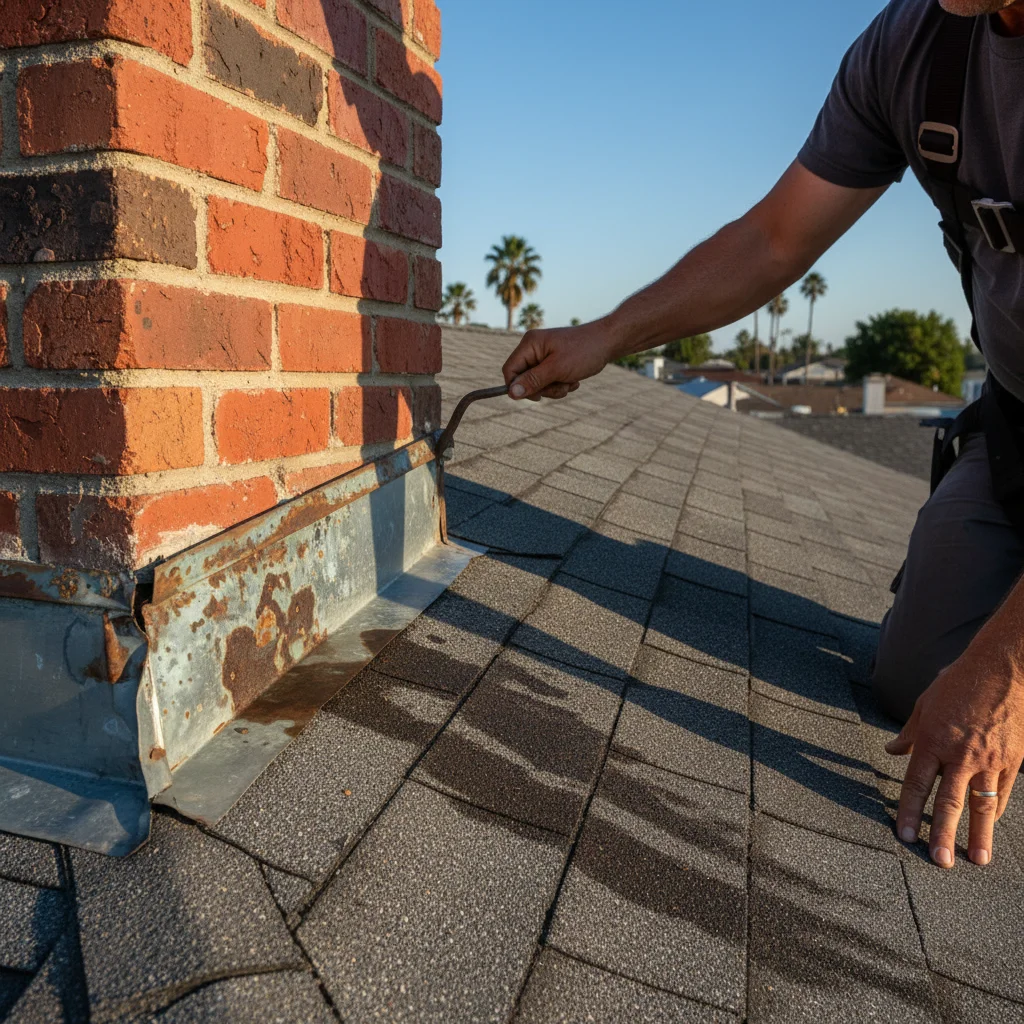
Fee factors, without a rate card: roof flashing repair cost. Service path: flashing, vent, and pipe boot repair.
Why flashing fails first
Flashing sits wherever the roof meets something else: chimney, dormer wall, valley, exhaust, pipe. Field covering is built to shed on a plane. Transitions are the hard geometry.
The metal is thin. It moves with heat. San Diego UV cooks sealant. Coastal salt in Ocean Beach, Pacific Beach, La Jolla, and Coronado speeds corrosion on galvanized steel. Inland heat still splits pipe boots. Nails can back out. Coastal roof salt and coastal material choices go deeper on the metal itself.
A 1980s or 1990s house can have original flashing under a later shingle overlay. The field is newer. The metal at the chimney is not. That mismatch is a common leak story.
Chimney, wall, valley, and vent fail differently
Chimney flashing
Base at the front, step flashing up the sides, counter-flashing in the mortar (or a surface-mounted detail the spec allows). Cracked mortar lets water behind the cap flashing into the deck. The fix is often new metal plus mortar work, not a bead on the outside.
Step flashing
L-shaped pieces woven with each course along a wall. A single continuous pan with caulk is a shortcut. Repair means opening courses and weaving individual pieces.
Valley flashing
Open valleys use a metal liner. Closed valleys weave covering. A rust hole or a nail through the liner dumps water on a concentrated path.
Vent and pipe boot
Each plumbing vent and many exhausts need a boot or collar. These fail often. Separate diagnosis: pipe boot leaks.
Signs the leak is flashing, not the field
It is local. Same stain near a chimney, sidewall, or valley. Field failures are harder to trace and often show in wind-driven rain.
Staining follows a line. Rust streaks from a flashing edge, or a ceiling line under a valley.
Covering looks intact. After a dry week, no missing shingle, but a stain after rain. From the ground or attic, look at every penetration. Do not lift tabs yourself on a steep or tile roof.
The opening has a name. Chimney, skylight, or vent. A leaking skylight is usually the collar, not the glass. Skylight leak repair.
Caulk is cracked. Proper weaving should not depend on caulk alone. Failed caulk is a warning, not a complete diagnosis.
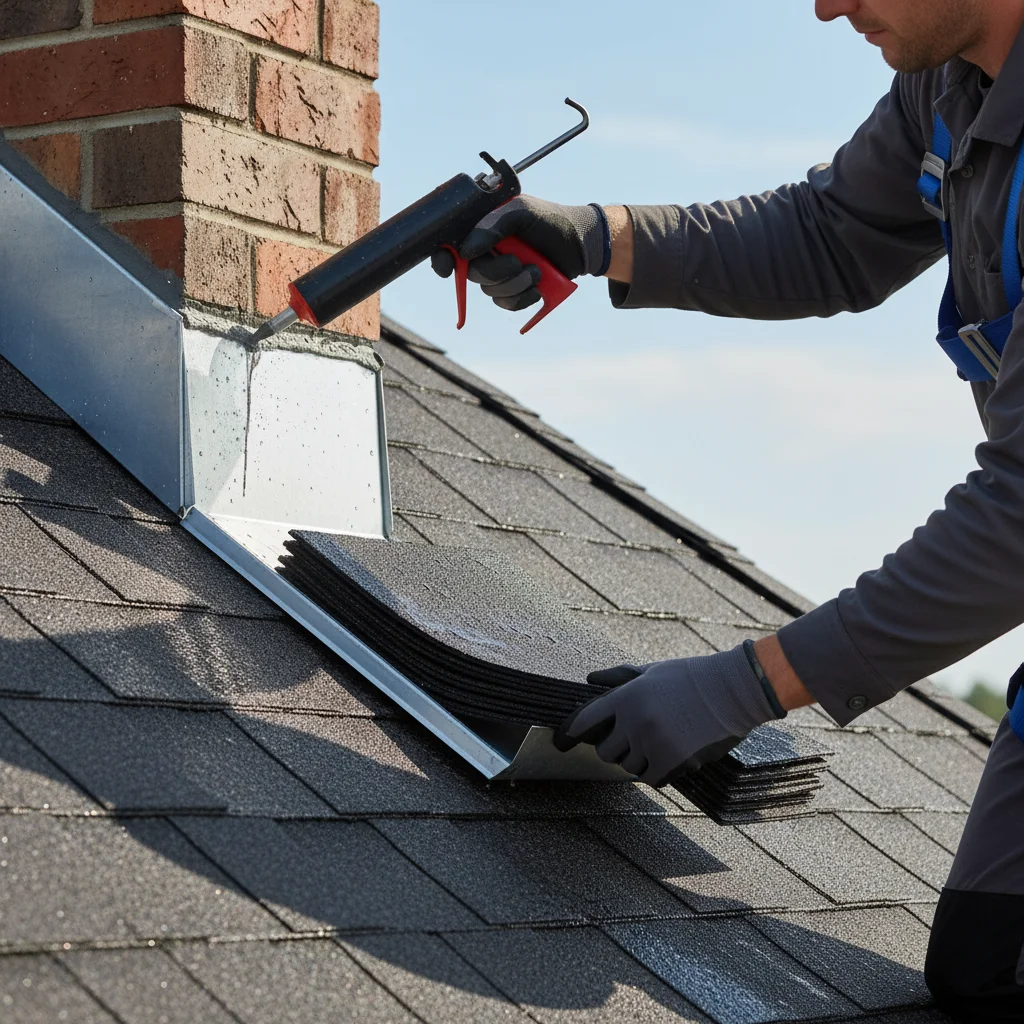
Repair vs replace, without a fake menu
Recaulk. Only if the metal is sound: no through-rust, no lifted laps, no backed-out nails. Caulk on rusted metal is a delay.
Spot replacement. One failed section, surrounding metal and covering still serviceable. The roofer opens enough covering to see the deck, replaces the pieces, and weaves back.
Full flashing replacement. Metal corroded through, original shortcut (no step flashing), or you are reroofing. The NRCA recommends replacing flashing with a reroof. New covering over aged metal is a leak callback waiting.
Repair vs reroof. If the field is also near the end, opening it twice is waste. Roof repair vs replace. Leak cost categories: roof leak repair cost. Tile lift-and-reset is a different labor conversation than asphalt: tile roof replacement cost.
Chimney, second-story, and woven step work is not a weekend caulk job. Some scopes need a permit. Inside the City of San Diego, start with Information Bulletin 123. Read the current live bulletin. This page will not restate exemption classes. Other cities have their own desks. Check the contractor: CSLB license lookup.
What a useful bid names instead of a blog price
This site does not publish chimney, step, valley, or boot dollar bands. Ask the written scope for:
- Flashing type and location (named elevation, chimney, wall run, valley, pipe size)
- Recaulk vs replace metal vs replace boot
- How much covering comes off, and whether it is reset or new
- Deck repairs if soft wood is found
- Mortar or counter-flashing work on masonry chimneys
- Material (galvanized, aluminum, stainless, copper, lead) and why
- Inclusions and exclusions: paint, interior drywall, tile breakage
Tile costs more labor because tiles lift and reset. Steep pitch and chimney height change access. Those are reasons two bids diverge, not numbers we invent.
When to call us
Call when a stain tracks to a chimney, wall, valley, or vent and you need a licensed C-39 to open the detail and write a flashing repair, not a tube of caulk from the driveway. Call (760) 750-5557 and we will connect you with a licensed independent local roofer.