A 4/12 pitch means the roof rises 4 inches for every 12 inches of horizontal run. That number decides which coverings the manufacturer will warrant, how slow the crew has to work, and whether a “flat” addition is even in the same product family as the main house.
San Diego’s mild rain load is why so many houses sit in a moderate pitch band. It is also why low-slope additions fail when someone puts shingles on them. Top Pro Roofing SD refers. We do not install. Call (760) 750-5557.
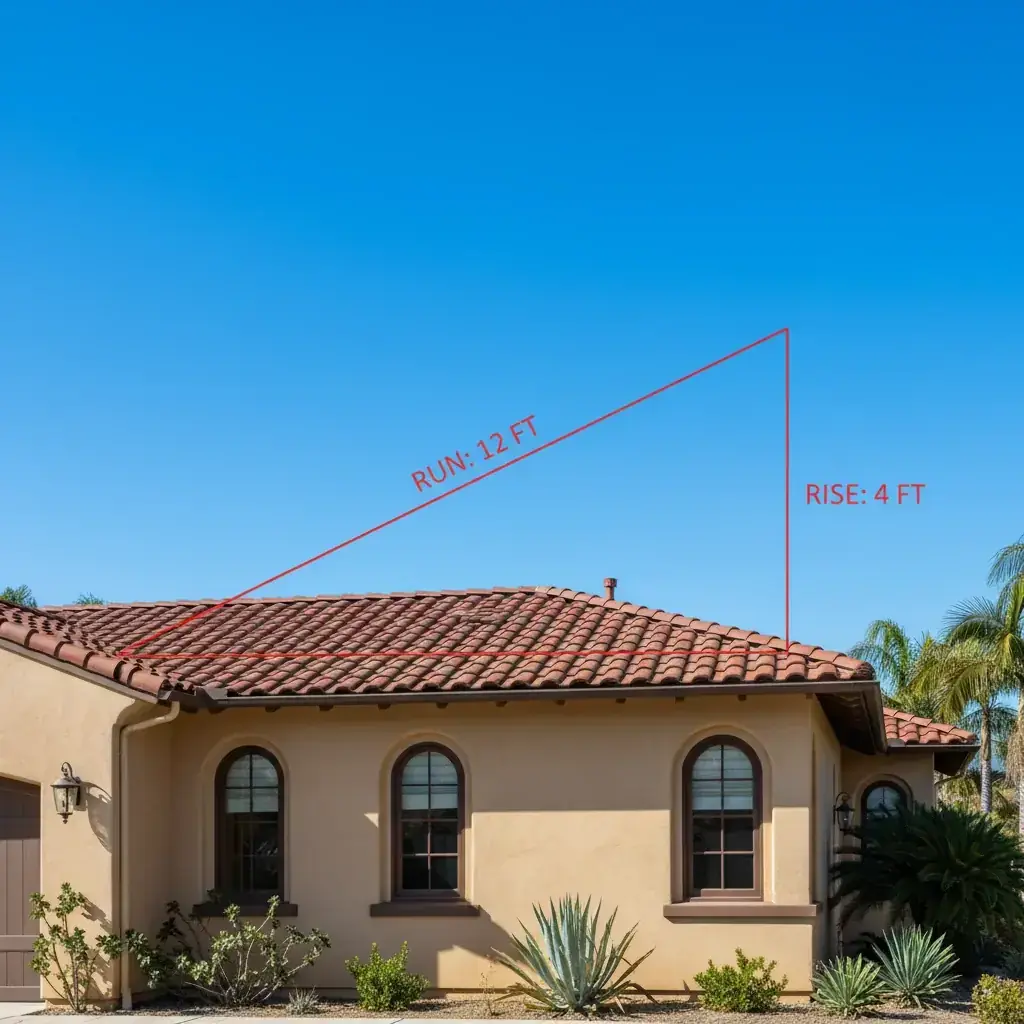
What roof pitch is and how it is measured
Pitch is rise over run, almost always written with 12 as the run: 2/12, 4/12, 6/12.
A quick attic check (only if the space is safe):
- Hold a level horizontal
- Mark 12 inches along the level
- Measure plumb from that mark down to the rafter
- That inch count is the pitch number
Roofers use a pitch gauge. The math is the same. NRCA and manufacturers treat low-slope as a different waterproofing problem than steep-slope. Exact cutoffs live in the product instructions and the code the AHJ uses. Do not take a blog’s 3/12 vs 9/12 split as your warranty line. Read the wrapper.
Slope (rise divided by run as a decimal) and pitch (the x/12 fraction) get used interchangeably on jobsites. In San Diego, if a C-39 says “slope,” they usually mean the same 4/12 you would measure.
Pitch is per plane. Hips, valleys, and dormers can carry different pitches on one house. A replacement bid should say so.
Common pitches on San Diego houses
Low slope: about 1/12 to 3/12. Mid-century modern, many commercial roofs, and a lot of additions. San Diego’s annual rainfall is low compared with the Pacific Northwest, so older builders often went nearly flat. Ranch stock in El Cajon, Lemon Grove, and older Mission Hills often lands at 2/12 or 3/12.
Moderate: about 4/12 to 6/12. Common on suburban houses from the 1970s on. Tract roofs in Santee, Poway, and Chula Vista often sit here. Steep enough to drain ordinary rain. Shallow enough that framing stayed cheap.
Steeper: 7/12 and up. Custom, some Craftsman, some Spanish Colonial revival in Kensington and Mission Hills. Water leaves fast and attics can be usable. Labor is slower. Safety gear is not optional.
Engineers here are not sizing for snow. That is why moderate pitches dominate. It is not permission to put shingles on a near-flat patio cover.
How pitch changes material and labor
Minimum slope is a manufacturer and code rule. Ignoring it voids warranties and leaks.
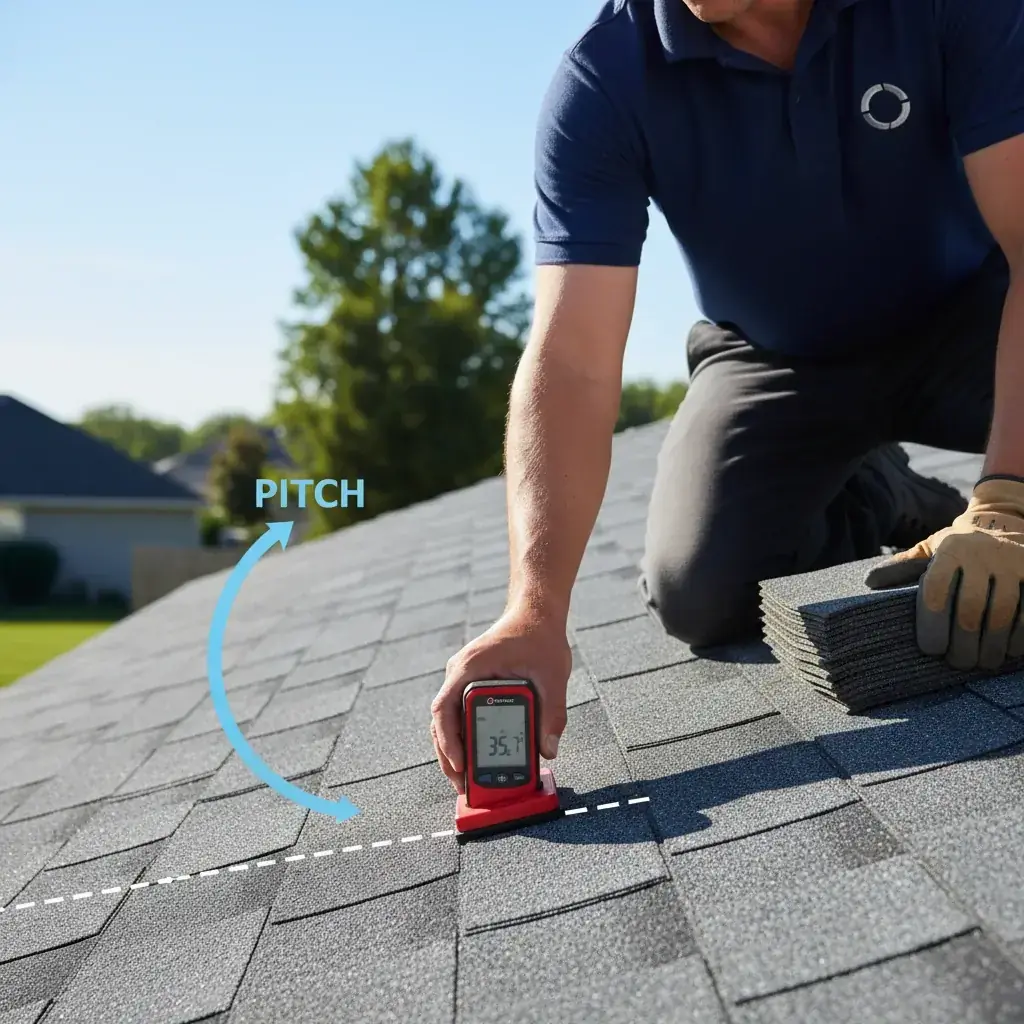
Ask for the published minimum, then match the product
Asphalt shingles. Many lines allow 2/12 only with a listed underlayment method. They perform more like the brochure at 4/12 and up. Confirm the exact line: asphalt shingle roofing.
Clay and concrete tile. Often a 3/12 floor, with 4/12 preferred for water to run under the barrel instead of sitting in the pan. Confirm the tile installation manual. Tile roofing.
Metal. Standing seam can go onto lower slopes when the seam height and underlayment are the listed system. Exposed-fastener panels usually need more slope. That is one reason metal shows up on mid-century flats. Cost conversation (no invented totals): metal roof cost.
TPO, PVC, and modified bitumen. These are the low-slope family. Under the shingle minimum, they are the covering, not a compromise.
Labor
Steeper roofs take more time per square: jacks, harnesses, slower footing. Two houses with the same footprint and different pitches are not the same bid. We will not invent a ranch-vs-custom dollar gap. Ask the matched roofer to show pitch on the takeoff.
Low-slope and flat: a different product
Below the shingle and tile minimums, lap joints are the wrong idea. Water does not run fast enough. Warranties will say so.
Common San Diego low-slope systems:
TPO. Heat-welded seams. White membranes are a common listed cool-roof choice under Title 24. Used on commercial and modern flat houses.
Modified bitumen. Asphalt sheets with polyester or fiberglass reinforcement. A known sun-and-patch system.
The failure mode is often drainage, not the brand name. Standing water that stays for days is ponding. It cooks membranes. See flat roof ponding.
A full low-slope replacement needs a permit from the City of San Diego or County PDS (or the city you actually sit in). Skip that and you own the problem at sale. Cost page without treating this article as a price list: flat roof replacement cost.
When changing pitch during a reroof is even a conversation
Most reroofs keep the existing geometry. Changing pitch means framing: new rafters or a rebuild. That is a different project.
Cases where it comes up:
A low-slope addition that has leaked through two coverings. Raising to a slope the next covering is actually listed for can be cheaper than a third failed membrane. Only if you are already opening the structure.
You want tile on a 2/12. The tile maker will not warrant that. Either raise the plane or pick a low-slope covering.
Finishing attic space. If you are already reframing, combining with the reroof can be efficient. It is still two trades’ worth of drawings.
Inherited unpermitted work. An old covering on the wrong slope is a problem you buy with the house. Confirm with the county building or city counter, not a prior owner’s story.
Ask the contractor to price framing separate from covering. A roof replacement that keeps the same pitch is the usual path. A geometry change should look like a geometry change on the bid.
If you do not know the pitch, or you leak at a flat addition, a roof inspection is how you get a gauge reading and a covering match, not a guess from the curb.
When to call us
If a quote added “pitch” money you do not understand, if you want tile on a low plane, or if a flat roof will not drain, get a second licensed set of eyes before you lock a covering. Wrong pitch at the start is how warranties die. Call (760) 750-5557 and we will connect you with a vetted local C-39.