Moisture beside an Encinitas skylight is a location, not a diagnosis. A licensed independent roofer should identify the likely entry path before proposing repair. Top Pro Roofing SD refers. We do not install. Call (760) 750-5557.
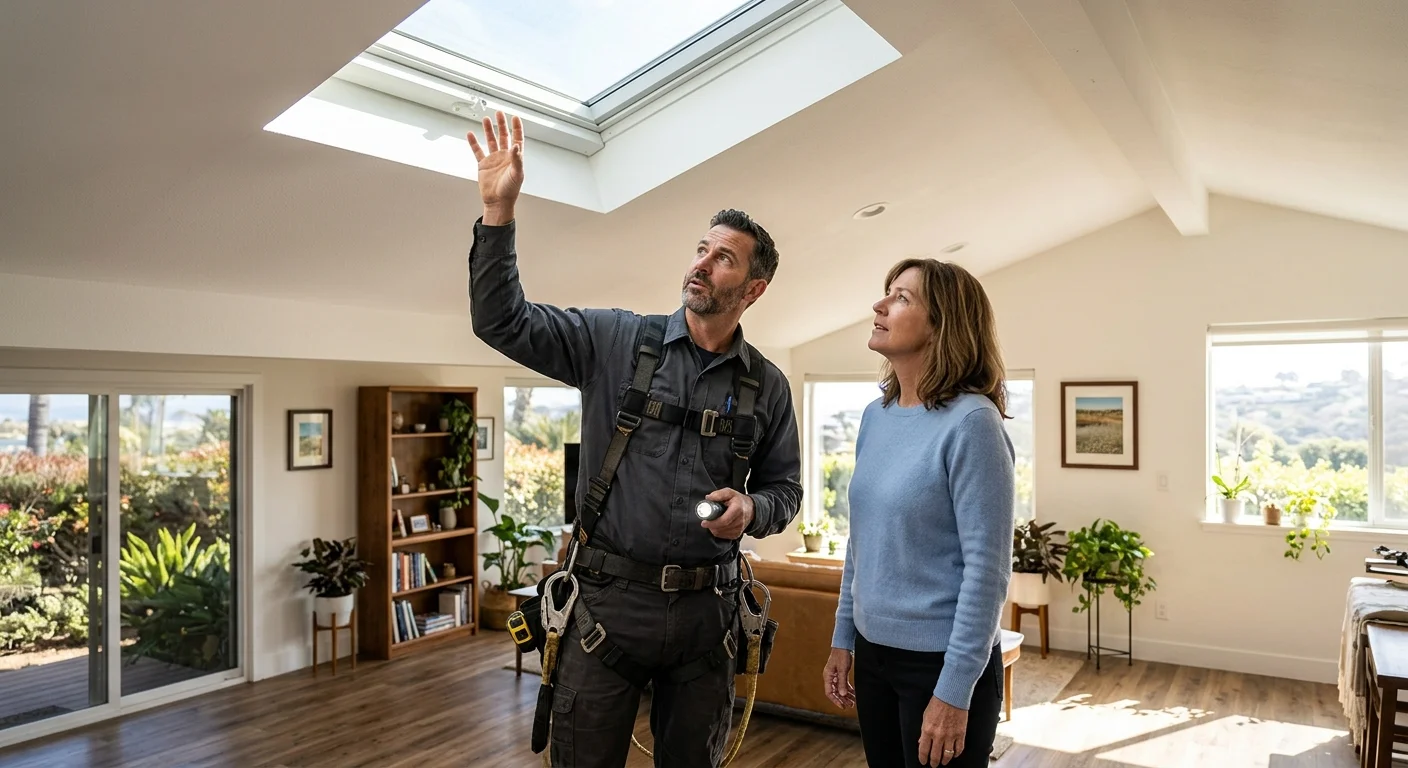
Encinitas sits on the North County coast. Marine layer, salt air, and tile or composition roofs all change what an inspector should look at. There is no Encinitas-only skylight code that replaces product instructions or the conditions on your house. For county context, see San Diego skylight leak repair.
Rain leak versus condensation on a coastal house
Ask when the moisture appears. Staining that shows up during or right after rain points toward exterior entry. Dampness that appears on cool, foggy mornings, with little or no rain, can be interior condensation on the glass or frame. Those two problems need different work.
A marine-layer morning can fog the interior of an older unit. That is not proof the curb flashing failed. A stain that tracks down the drywall after a southwest storm is a different record. Write both down: date, weather, and where water was seen.
Do not treat interior caulk, paint, or a stain cover as proof the exterior source was fixed. The proposal should connect the indoor mark to an outdoor finding, or say the source is still unconfirmed.
What the first Encinitas inspection should establish
Show the roofer every stain, drip point, and finish change. Note whether it is rain-timed or fog-timed. Ask them to photograph the unit, the surrounding roof, and each moisture location.
The report should say which parts were actually seen: glazing, frame, curb, flashing, nearby covering, and accessible interior. If a component could not be seen, the report should say so. An inaccessible area is not a confirmed finding.
Keep observation separate from conclusion. “Moisture is visible at the lower corner” is an observation. “Replace the skylight” is a conclusion that needs supporting evidence.
A focused roof inspection should leave you with answers to:
- Where was moisture observed?
- Which components were examined?
- What evidence supports the proposed source?
- What could not be confirmed?
- Is more investigation needed before work starts?
Do not rely on a proposal that only says “repair skylight leak.” That wording does not name the failed area.
Why the unit may not be the failed part
Water can travel along the deck and drop away from the hole. A wet mark near the opening does not identify the failed component by itself.
Ask the roofer to distinguish among glazing, frame, roof-to-skylight flashing, nearby covering, and concealed layers. The goal is a match between evidence and a proposed source, not a long list of guesses.
On Encinitas tile roofs, the tile is usually the wear surface. Water that gets past a cracked tile, a displaced bird stop, or an open valley can show up at the nearest skylight well. On shingle or metal, the interface between the flashing kit and the field covering is the usual conversation.
If the roofer proposes framing changes, a larger opening, or a new unit as a design upgrade, that is a different job than leak repair. Roof framing for a new skylight belongs in that separate discussion.
How roof material and salt air change the notes
California’s Contractors State License Board defines C-39 roofing to include tile, shingles, metal systems, membranes, and other waterproofing. Check the independent roofer at the CSLB license lookup. Review the trade at the C-39 classification.
On tile, ask what was visible around the curb without treating the tile surface as the whole story. On shingle, ask how the flashing kit ties into the surrounding courses. On metal or membrane, ask for the system type and the specific interface.
Coastal Encinitas, Leucadia, and Cardiff addresses see salt on metal flashings and fasteners. The proposal should name the metal and finish being specified, not “coastal hardware” as a slogan. Inland Encinitas lots still need an address-specific review. Do not accept a recycled county script with the city name swapped.
Product compatibility comes from identified product documents. This page does not pick a skylight brand or repair material for Encinitas homes.
Top Pro Roofing SD does not select products or perform the work. We connect Encinitas homeowners with licensed, independent local roofing professionals. You contract and pay that professional directly.
What the repair proposal should identify
A useful proposal connects four items: the symptom, the observed evidence, the diagnosed source, and the proposed scope. If one is missing, ask for it before you compare options.
It should name the skylight or roof area. It should say whether work concerns the unit, frame, flashing, surrounding covering, or another location. “Seal as needed” does not explain what was found.
Ask which manufacturer and product names apply when they are known. If the existing model could not be identified, that uncertainty should appear in writing.
Permit rules for this Encinitas repair are not confirmed in a countywide claim. If a proposal says a permit is required or exempt, ask the roofer to name the current Encinitas (or other) authority that supports that conclusion. Start with the city’s Development Services contact, then confirm in writing for this address.
Any warranty terms must come from the independent roofer or the product manufacturer. Top Pro Roofing SD does not set warranty terms.
For matching a professional who can evaluate the opening, see skylight installation and repair.
Which product documents should be checked
Ask the roofer to record any visible manufacturer, model, label, or marking. A document cannot settle compatibility unless it matches the unit or material being discussed.
Keep the product questions short:
- Was the existing manufacturer identified?
- Was a model or product line confirmed?
- Which document supports the proposed material?
- Does the proposal rely on an assumption about the existing unit?
- Who answers product questions before work starts?
If replacement is proposed, ask why repair was not selected. If repair is proposed, ask which observed condition it addresses.
Verify the independent roofer’s license through CSLB. License status belongs to that contractor, not to this referral service.
When to call us
Call when moisture near an Encinitas skylight needs a source-first inspection from a licensed roofing professional. Top Pro Roofing SD will match you with an independent local pro. You contract and pay that professional directly. Call (760) 750-5557 and we’ll connect you with a licensed local roofer.