A brown ring on the drywall under a skylight after rain is a roofing problem until a licensed roofer proves otherwise. Top Pro Roofing SD is a referral service. We do not climb, we do not warranty skylights, and we do not publish repair fees. Call (760) 750-5557. We will introduce a CSLB-licensed C-39. You contract with that roofer.
Do not walk a wet tile field in Encinitas or a steep shingle slope in El Cajon to “just look.” Use the attic, binoculars, or phone zoom from the ground.
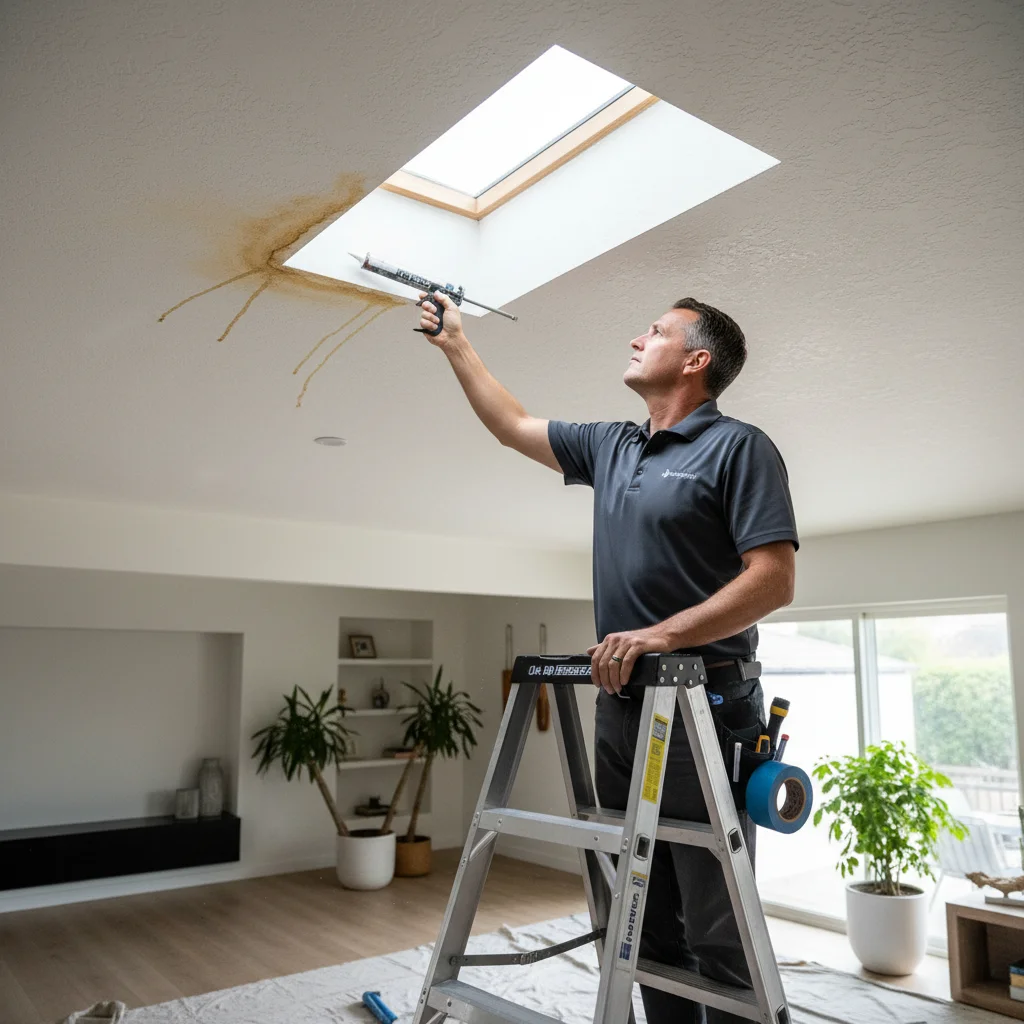
The four usual sources
The glass or acrylic is often fine. Water usually enters where the curb meets the roof, or where the frame was sealed.
1. Failed step flashing or saddle flashing
Flashing is the metal that wraps the curb into the covering. San Diego heat and winter rain cycle that metal. Sealant dries. Edges lift. One corner can stain a whole ceiling.
2. Dried butyl or silicone at the frame
Many installs use tape or a bead at the unit. UV cooks both. A 2010 unit has sealant that has already lived a long coastal or inland life. A recaulk on lifted metal is a delay, not a flashing repair.
3. Condensation mistaken for a leak
If the stain grows on cold nights without rain, look at interior glass drip first. That is ventilation, insulation, or a thermal-break issue more often than a roof hole. A roofer should still rule out the curb.
4. Cracked or crazed acrylic
Older acrylic domes yellow and craze. A hairline crack in the dome is a direct path. Original 1970s and 1980s domes in Clairemont, Mira Mesa, La Mesa, and Allied Gardens are common here. Glass fogging is a failed insulated unit. That is replacement, not caulk.
Nearby vents get blamed on skylights. Check pipe boot leaks before you pay for the wrong opening.
Flashing vs seal: what you can see from below
The repairs are different. The bid should pick one, or say both are still open.
More likely flashing
- Water during ordinary rain, not only wind-driven storms
- Daylight or a gap at a curb corner from the attic
- Stain heavier on one side of the opening
- Lifted or missing metal once someone is on the roof
More likely seal or unit
- Leak mainly in wind-driven rain
- Stain around the full perimeter
- Cracked, shrunk, or missing bead at the frame
- Fogged glass or a crazed dome
A useful first check: attic, lights off, during or right after rain. Moisture tracking one curb face usually points to that corner. Moisture at the frame edge is more often seal or unit.
A signed roof inspection is a condition record. It is not a certification from this brand. We do not certify roofs.
Repair vs replace without a fake year rule
Age helps, but the unit in front of you decides.
Repair is a fair conversation when
- Glass is clear and the frame is sound
- The failure is isolated flashing or a bead
- The manufacturer still sells a flashing kit for that covering
- The surrounding roof can accept new metal without a tear-off
Replacement is the conversation when
- Acrylic is yellow, crazed, or cracked
- Dual-pane glass is fogged
- The wood curb is soft or the frame is bent
- The same opening has already been patched more than once
- A reroof is already planned. Open the skylight on the same staging when you can.
Tile in Kensington, Point Loma, and Coronado is not a shingle swap. Tiles come off, the flashing has to match the profile, and they go back in order. Ask who on the crew actually works tile.
Like-for-like unit, kit, and deck language lives on skylight replacement cost in San Diego. New holes in the roof are skylight installation. We still will not invent a San Diego skylight price list.
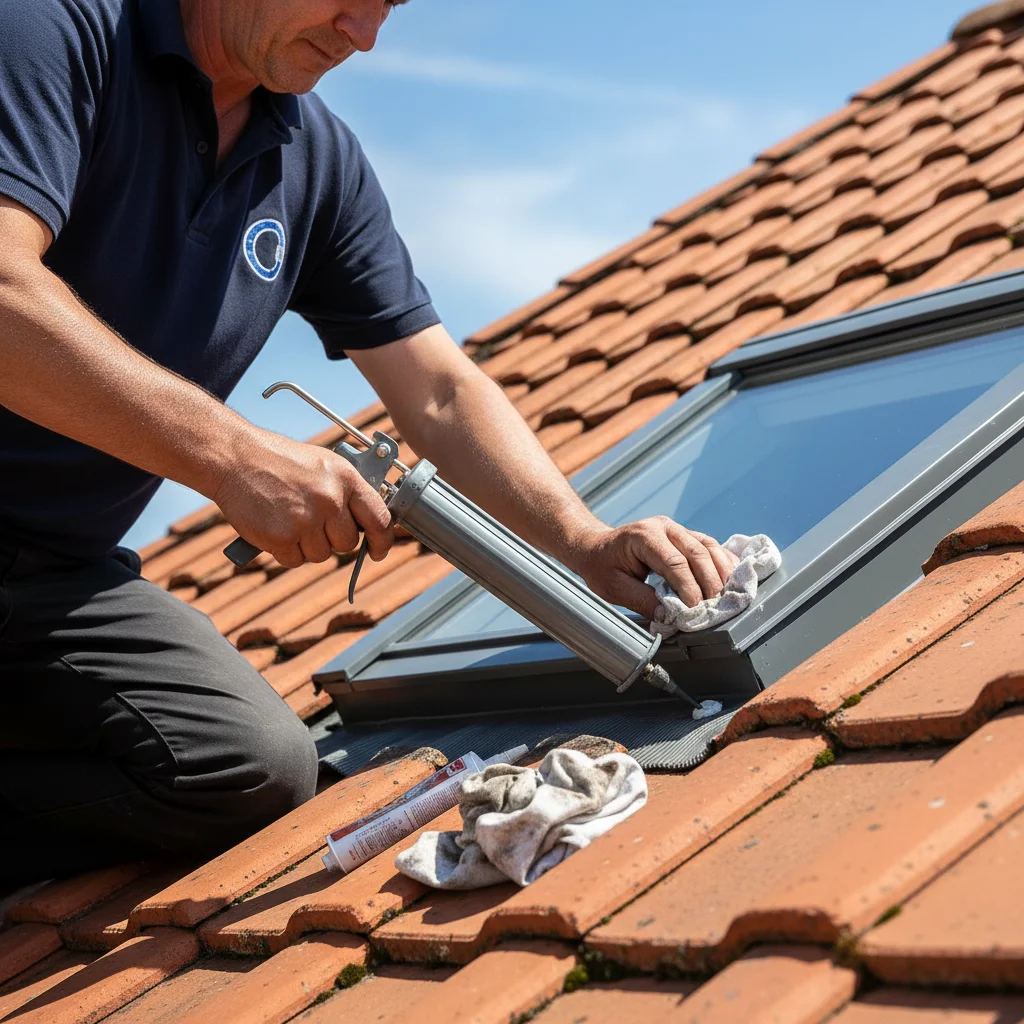
What belongs on the written bid
Ask the matched roofer to separate:
- Diagnosis: flashing, seal, curb, dome or glass, or still unknown
- Covering: composition, tile profile, metal, or low-slope
- Whether they will use a manufacturer flashing kit or site-bent metal
- Deck and curb wood once the unit is open, and how discoveries are priced
- Interior drywall and shaft as a separate line if you want it
- Who pulls any permit your city actually requires
A one-line “reseal skylight” number with no flashing plan is a reason to keep shopping. Verify the C-39 at CSLB.
Permit rules are local. Confirm with City of San Diego Development Services or County PDS for your address. Read the current counter text. Do not take a verbal “no permit needed” as the rule.
When the stain is old
A fresh leak is a wet ring. An old leak is soft or bowed drywall, a musty smell, bubbling paint, or staining that has walked away from the frame. Then the conversation includes sheathing, insulation, and the ceiling, not only metal at the curb.
Active water now: emergency roof repair is the referral path for a tarp and a same-visit assessment by the contractor you hire. What a full walk should cover: roof inspection checklist.
When to call
Stains, drip during rain, or attic daylight at the curb are enough to stop guessing. A handyman with a tube of silicone on failed flashing buys you weather, not a detail. Call (760) 750-5557. We connect you with a licensed local roofer. We do not repair the opening and we do not certify the roof.