TL;DR
Two TPO bids can name the same chemistry and still describe different roofs. Before you sign, every important roof area, drain, penetration, product SKU, exclusion, and closeout document should have a home on the page. “TPO roof” is not a spec.
Top Pro Roofing SD refers licensed C-39 roofers. We do not install commercial roofs and we do not issue warranties. Call (760) 750-5557.
We will not invent a price per square or a 20-year promise. Compare named assemblies. Category context: membrane roofing for building owners. Sequence of work: TPO installation in San Diego. Chemistry fork: TPO vs modified bitumen.
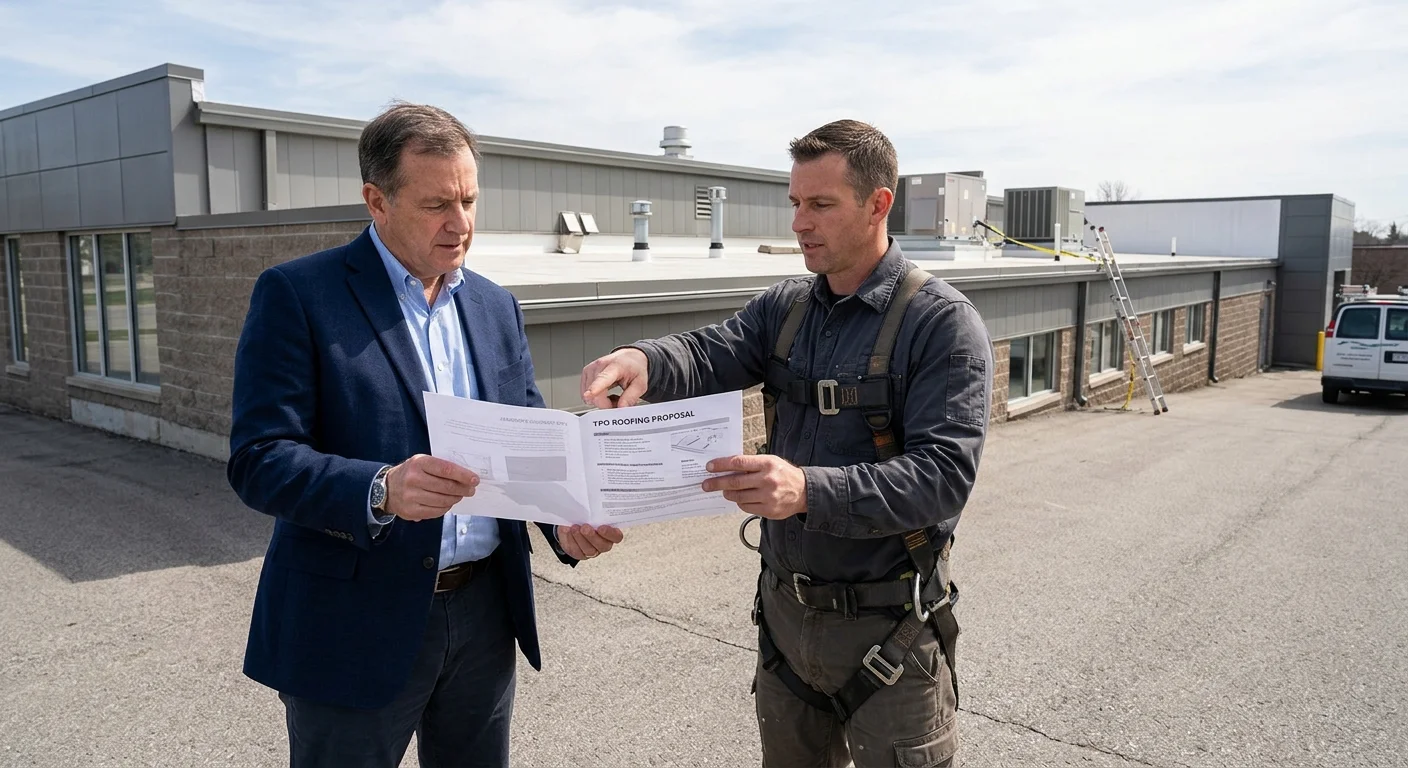
Document the existing roof before naming a system
A useful proposal starts with the roof that exists today. It should not jump to a TPO product without recording current conditions. Otherwise you cannot tell whether two roofers walked the same problems.
The property name and address belong on every proposal. Several roof sections need labels. Ask for a marked roof plan, labeled photos, or another simple key. You should be able to match every scope line to a place you can point at.
The condition summary should name the existing covering as observed. It should note patches, transitions, parapets, drains, and rooftop equipment. Areas that were not accessible need to be disclosed. So do conditions that stay unknown until tear-off.
Oceanside and the City of San Diego are different permitting authorities. The proposal should name the AHJ the roofer expects. If that is still a guess, the document should say so.
Inside the City of San Diego, structural changes can change the permit. City guidance covers framing, decking, sheathing, and supports. Commercial and multifamily roofing sits under California Building Code Chapter 15 plus local amendments. A proposal should not promise a permit outcome before the scope is known.
Ask the bidder to separate observed facts from assumptions. “Visible damage near drain A” is clearer than “repair roof as needed.” If further opening is recommended, the proposal should say where and how added work gets approved.
Identify the proposed TPO materials
“TPO roof” is not a complete material description. The proposal should name manufacturer and product line for the membrane, color, and mil thickness. It should attach or cite the product data used in the bid.
Name insulation, cover board, flashing membrane, edge metal, and system accessories the same way. If an item will be chosen later, mark it undecided. “All required materials” makes comparison impossible.
Substitutions belong in writing before they happen. The replacement must be identifiable enough to compare to the original data sheet.
State which roof areas get that system. Do not assume the field, parapets, canopies, and small adjoining roofs share one scope. Tie each area back to the plan.
For cool-roof claims, ask for the CRRC or manufacturer record for that SKU, then confirm Title 24 with the California Energy Commission and the AHJ. We will not reprint aged-reflectance or SRI cutoffs here. Tables move. A color name is not a listing.
Flat and low-slope service is how we connect owners with independent local professionals. Finish product choice, then compare proposals.
Show how drains and penetrations enter the scope
Commercial roofs are not one sheet. The written scope should account for every drain, scupper, overflow, curb, pipe, vent, conduit, hatch, skylight, equipment support, and wall transition seen on the inspection.
A roof plan is the clearest key. Each feature gets a label that matches the prose. Then say whether it stays, gets roofing work, needs another trade, or sits outside the contract.
Drainage deserves its own subsection. Identify every drain and scupper that was inspected. State whether drain bowls, clamping rings, downspout ties, or plumbing are included. If another trade must look, put that in writing.
Mechanical and electrical equipment should not be assumed “untouched” or “moved by someone.” Name owner, tenant, equipment vendor, or electrician responsibilities. Dates can wait. Ownership of the task cannot.
Photos help when penetrations look alike. Each photo should point to an area and a scope line. “Flash all penetrations” does not prove the bidder counted them. Abandoned curbs and dead equipment need an explicit remain / remove / change-order path. “Miscellaneous rooftop items” should not hide three trades.
For tenant buildings, disclose locked or equipment-blocked areas. That does not prove a hidden leak. It tells you which scope depends on later access.
Warehouses, retail, offices, and multifamily: commercial roofing. The matched professional should write this building, not paste a generic component list.
Separate preparation from excluded repairs
Preparation language is why two totals differ. One bid includes specific tear-off and substrate checks. Another makes them conditional. You need that before you compare numbers.
Define the condition expected before new roofing starts. Owner duties, tenant access, equipment moves, and other-contractor work belong in exclusions if they are not included.
Concealed deck damage may stay unknown until tear-off. That is fair when it is stated. The proposal should say how concealed work is documented and approved. Do not accept “additional repairs may be required” with no trigger, decision-maker, or written approval. The process can be described without inventing a damage price.
City of San Diego vs unincorporated County vs other cities: replacing framing, decking, sheathing, or supports can require a building permit. Confirm with the authority for that address.
Exclusions should be as specific as inclusions: structural, interior finishes, hazardous materials, plumbing, electrical, HVAC, solar, paint, work below the deck. Listing a category does not mean your project needs it. It stops you from assuming it is in the contract.
Protect, relocate, or assign every rooftop item. The proposal does not need to teach the trade. It needs to assign it.
Fair comparison columns: included, excluded, conditional, owner-provided, other trade. If a line will not fit, send it back before signing.
Confirm product and workmanship documents
The proposal should list what you get before, during, and after: product data, listings, inspection photos, permit records, closeout set.
Start with the membrane SKU. If the bid leans on a rating or approval, the record’s product name must match the bid.
Separate product warranties from workmanship warranties. Name the issuer, the governing PDF, exclusions, registration, transfer, and claims. Top Pro Roofing SD does not issue warranties. Coverage comes from the contractor or the manufacturer under their own paper.
Show the contracting party’s legal name and license number. California C-39 covers roofing, waterproofing, weatherproofing, and membrane materials. C-39s must keep workers’ compensation or a self-insurance certificate on file with the Contractors State License Board.
Look the license up at CSLB. Name on the proposal must match. Check status, complaints, and bond on that record, not a screenshot.
Ask which closeout documents are included: final product records, approved changes, photos, permits, warranty registration when applicable. Implied lists are not a closeout.
Finish by walking the proposal against the roof plan. Every area, drain, penetration, material, conditional repair, exclusion, and document should have a home.
When to call us
Call when a TPO proposal leaves areas, materials, drainage, or exclusions fuzzy. Call (760) 750-5557. We will connect you with a licensed local roofer. You contract with that roofer.