California insurers used to reserve 4-point inspections for Florida-style coastal risk. That’s changed. Carriers writing policies in San Diego County are now requesting them more often, especially on homes with roofs past 15 to 20 years old, before they’ll renew or write new coverage.
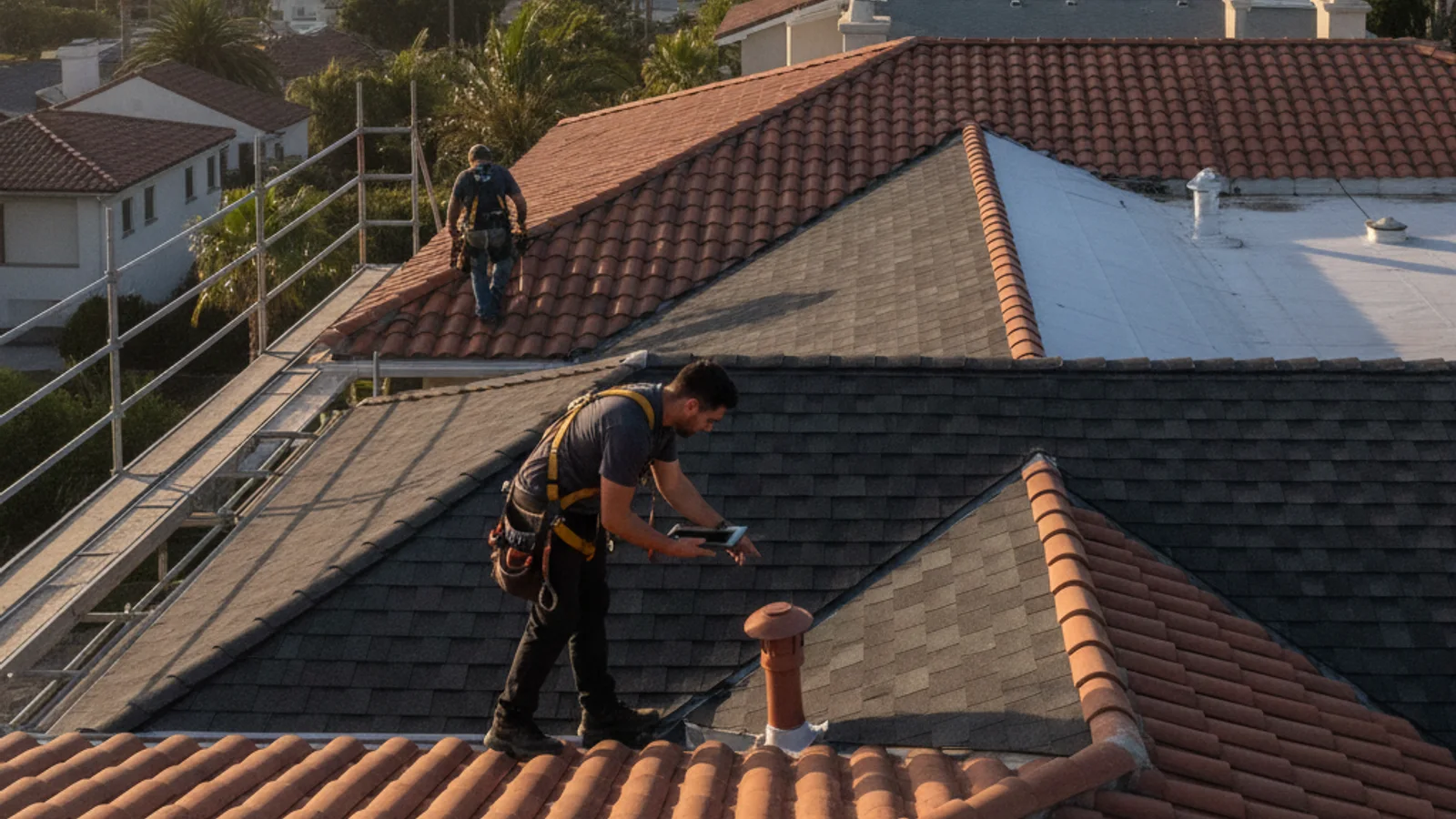
If your carrier has asked for one, or your agent mentioned it during renewal, here’s what the inspection actually checks, what the roof portion documents, and what happens if your roof doesn’t pass.
What a 4-point inspection actually checks
A 4-point inspection covers four systems: roof, electrical, plumbing, and HVAC. It’s not a full home inspection. Insurers use it to get a snapshot of remaining useful life on the systems most likely to cause a large claim, without paying for a complete property evaluation.
Each system gets its own section on the report, filled out by a licensed professional in that trade. The roof section has to be completed by someone qualified to evaluate roofing condition and age, which is where we come in for homeowners across San Diego County.
What the roof portion documents
The roof section of a 4-point inspection records the roofing material, the approximate age or year of installation, general condition, and any visible damage or evidence of past leaks. It also notes sagging, missing or displaced material, and whether flashing and penetrations look properly sealed.
Insurers use this section to estimate remaining useful life on the roof specifically. A roof documented as sound and well within its expected lifespan supports renewal. One documented with visible damage, sagging, or an age past typical thresholds usually triggers follow-up questions or a non-renewal notice.
California’s roof age rules insurers use
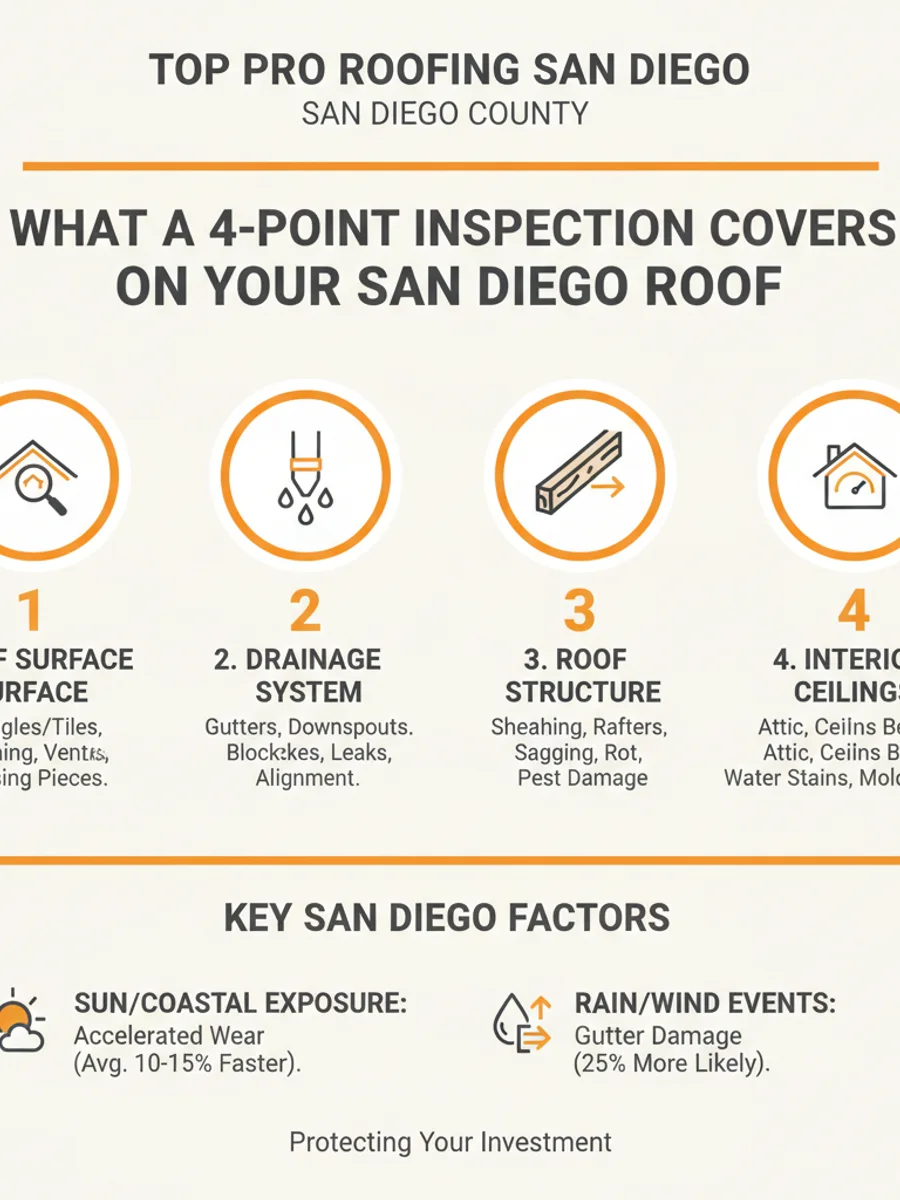
Most California carriers use rough age thresholds to flag roofs for closer review. Asphalt shingle roofs typically draw attention past 20 to 25 years. Tile and metal roofs generally have more runway, often accepted up to around 40 years given proper maintenance. Flat and low-slope roofs get the shortest leash, frequently flagged past 15 years because membrane materials wear faster under direct sun.
These aren’t hard legal limits, they’re underwriting guidelines that vary by carrier. But they explain why two homes with roofs in similar physical condition can get very different renewal outcomes based on material and age alone. We go deeper into how these thresholds are driving cancellations in insurance non-renewal and roof age in California.
Why this is happening now
California’s property insurance market has tightened sharply over the past several years, largely driven by wildfire risk statewide. Carriers pulling back on new business or non-renewing existing policies have gotten more aggressive about documenting exactly what they’re insuring before committing to another year of coverage. A roof past its expected lifespan represents a claim risk carriers are less willing to carry without a closer look, and the 4-point inspection is how they get that look cheaply. We cover the broader coverage question in does insurance cover roof replacement in California.
What happens if your roof doesn’t pass
A failed roof section doesn’t always mean a full reroof is required. Many homeowners just need targeted repairs, replacing cracked flashing, resealing penetrations, or swapping a handful of damaged shingles or tiles, to extend the roof’s documented remaining life enough to satisfy the carrier. The key is getting those repairs properly documented after the fact, so the inspection report reflects the corrected condition.
We complete the roof-specific section of the 4-point form directly, and when a roof needs work first, we handle the minimum repairs necessary to bind or renew coverage, then provide the documentation your agent or carrier needs. That’s usually faster and cheaper than a full replacement, and it’s the right call for a roof that still has real life left in it. A roof inspection is the first step either way, and our full roof inspection checklist covers everything we look at.
Frequently Asked Questions
What is a 4-point inspection? It’s a limited inspection covering four systems: roof, electrical, plumbing, and HVAC. Insurers use it to assess claim risk before writing or renewing a policy.
Who orders a 4-point inspection, the insurer or the homeowner? Usually the insurer requests it during underwriting or renewal, though homeowners can also order one proactively before shopping for a new policy.
How old can my roof be before insurance won’t renew in California? It depends on material. Asphalt shingle roofs commonly get flagged past 20 to 25 years, tile and metal around 40 years, and flat roofs past 15 years.
Does a 4-point inspection cost money? Yes, homeowners typically pay for the inspection, though the cost is usually far less than a full reroof and can prevent a non-renewal.
Can repairs fix a failed 4-point inspection without a full reroof? Often, yes. Targeted repairs to flashing, penetrations, or damaged material can extend a roof’s documented remaining life enough to satisfy most carriers.
Get your roof’s portion handled correctly
A 4-point inspection deadline doesn’t leave much room for guesswork. Call Top Pro Roofing SD at (760) 750-5557 and we’ll complete the roof section, flag anything that needs repair before your deadline, and get you documentation your carrier will accept.