The right gutter size isn’t automatic for every San Diego home. Choose the option a licensed independent pro supports with a written calculation covering your roof, outlets, downspouts, and discharge points. If a proposal only says “5-inch” or “6-inch,” the plan isn’t detailed enough to approve.
Top Pro Roofing SD refers homeowners to independent licensed contractors. We do not install gutters and we do not hold a C-39 license. Call (760) 750-5557. Verify the matched pro on the CSLB license check before you sign.
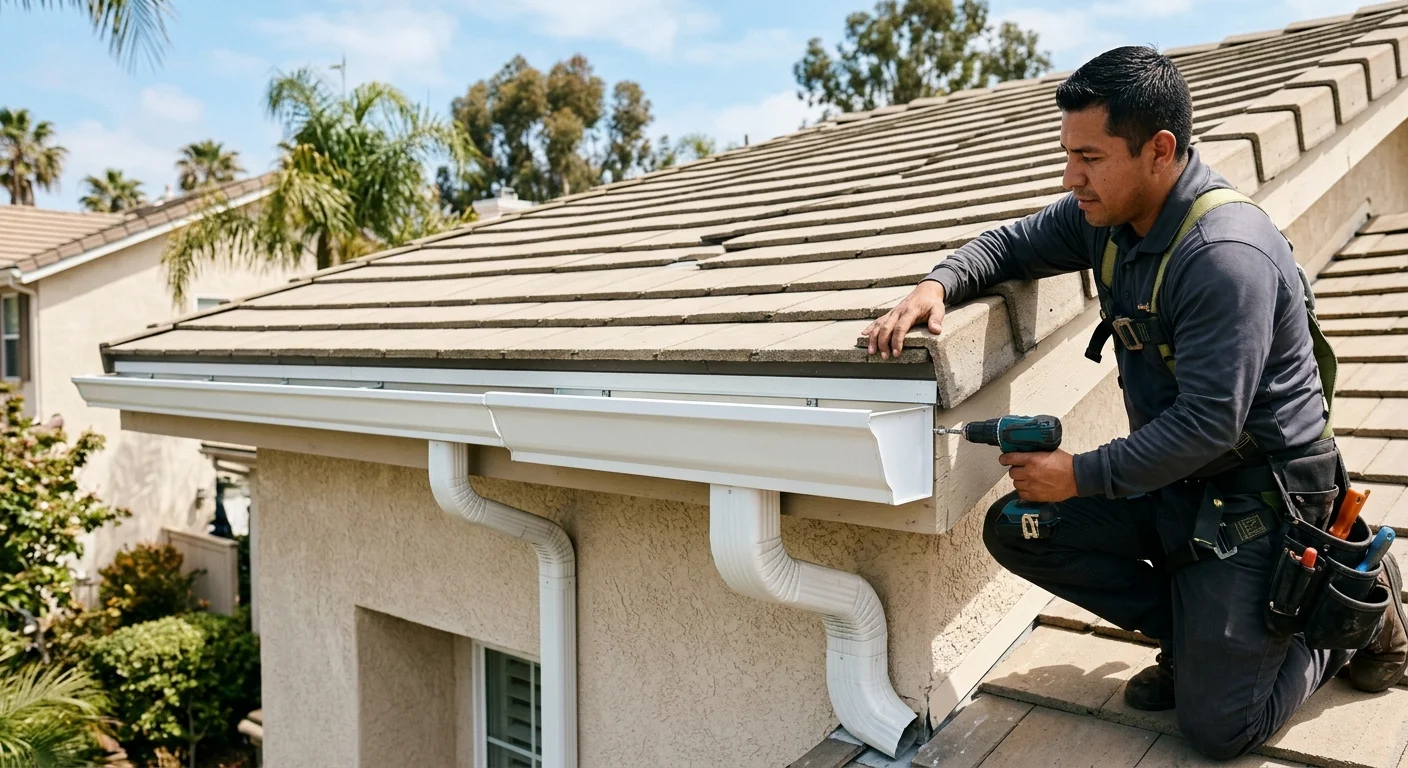
How 5-inch and 6-inch gutters differ
The labels identify two different nominal gutter profile sizes. They don’t describe the entire drainage plan. That plan also includes the selected profile, outlets, downspouts, connections, corners, fastening details, and discharge locations.
A 6-inch label alone doesn’t prove that a proposed system suits your house. Likewise, choosing 5-inch gutters because another nearby home has them skips the property-specific work. The useful comparison is between two complete plans for the same roof.
Ask the matched pro to show both options on the proposal. Each option should identify the gutter profile and compatible components. It should also show where every outlet and downspout will sit. If the options use different products, request the manufacturer’s written specifications for each one.
Appearance may matter, especially along a visible fascia. Ask to see a physical sample against the house when possible. Confirm the proposed color, profile, corner treatment, and downspout placement in writing. These details can affect how the finished system looks without answering whether it was sized correctly.
Don’t accept a capacity figure that can’t be traced to a written calculation or product document. We will not publish a universal gallon rating for either size. The matched professional should provide the project-specific basis for the recommendation.
Our gutter installation and repair service connects San Diego County homeowners with licensed, independent local pros. The homeowner contracts with and pays the selected professional directly.
Where roof area and pitch change the choice
A gutter proposal should show which roof surfaces feed each gutter run. Total house square footage doesn’t answer that question. A roof can have several planes sending water toward different edges, valleys, corners, or lower sections.
Ask the pro to mark those roof planes on a sketch. The calculation should state the area assigned to each run and the pitch input used. It should identify any location where multiple sections meet. You shouldn’t need to reconstruct the sizing logic from a single total.
No verified gutter-sizing formula appears in this site’s approved claims. That means we won’t publish a generic formula or present one as a San Diego rule. Ask the matched gutter pro for the written calculation, its rainfall basis, and the product data supporting the result.
San Diego rain is seasonal and varies by year and by neighborhood. Confirm current climate normals on NOAA’s published tables if you need a number. Coastal belts, inland valleys, and mountain sites are not one station.
That annual normal isn’t a gutter design rate. It shouldn’t be inserted into an online formula without professional support. A plan for coastal Carlsbad or La Jolla shouldn’t be copied onto an inland San Marcos property without checking the actual roof and calculation.
The same caution applies within one neighborhood. Additions, patio covers, roof replacements, and altered drainage paths can change the surfaces connected to a run. Ask the pro to size what exists at your address, not a typical home nearby.
Why downspout capacity matters too
Comparing gutter profiles without examining downspouts leaves the system unfinished on paper. The proposal should trace the planned water path from each roof edge through an outlet and downspout to its discharge point.
Ask for the outlet and downspout product specifications. Confirm their quantity, locations, and connection details. If two proposals recommend different gutter sizes but leave those items unspecified, you can’t make a useful capacity comparison.
Existing trouble spots offer practical evidence. Photograph any overflow, staining, standing water, loose joints, or damaged fascia you can observe during rain. Show the images to the matched pro. Don’t assume one symptom proves a particular cause. Several parts of the roof-edge system may need inspection.
Placement deserves close attention around entries, walkways, driveways, lower roofs, and exterior equipment. Ask where each downspout will end and how the proposed route fits the property. If the route crosses an awkward area, request another layout before approving the scope.
City requirements and unincorporated county requirements may differ. Ask the pro which authority applies to your address and how the planned discharge arrangement was checked. Downspout extensions are a separate question from trough size.
A clear proposal should also separate new work from reused components. If existing downspouts will remain, request their specifications and condition assessment. If those details can’t be confirmed, have the pro explain how that uncertainty affects the sizing recommendation.
What coastal debris and inland storms can expose
A coastal or inland label isn’t enough to select gutter size. Conditions vary from one property to another, even within Carlsbad, La Jolla, Del Mar, San Marcos, or Vista. The roof and its surroundings need a site-specific inspection.
At a coastal home, look at what has collected along the roof edge, inside accessible gutter sections, and near outlets. Record what you actually see. Don’t assume every coastal property has the same debris pattern. Nearby trees, roof shape, landscaping, and maintenance history must be evaluated at the address.
Use the same approach inland. After meaningful rainfall, note where water appears to leave the roof and where visible trouble develops. Photos can help a professional compare observed behavior with the proposed layout. Stay on the ground and avoid unsafe roof access.
Ask the matched pro to identify the rainfall reference and product specifications used for your written calculation. We will not invent neighborhood gutter capacities, storm-sizing figures, or a universal debris allowance.
Maintenance access belongs in that discussion. Ask how each gutter run and outlet will be inspected and cleaned. If guards are proposed, request the exact product information and ask how it changes access. Don’t accept a claim that a guard removes all maintenance unless the contractor supplies written support.
A 5-inch gutter service proposal in La Jolla should still address the complete property. So should a 6-inch gutter service proposal in Del Mar. The city name and profile size aren’t substitutes for a documented plan.
Questions to ask before approving the gutter plan
A good proposal lets you compare scope, assumptions, and components. It shouldn’t force you to choose based on one larger-looking number. Ask these questions before signing:
- Which gutter size do you recommend, and why?
- Which roof planes feed each gutter run?
- What roof area and pitch inputs did you use?
- Which rainfall reference supports the calculation?
- Can I review the written sizing calculation?
- What gutter, outlet, and downspout products are specified?
- Where will every outlet and downspout be placed?
- Where will each downspout discharge?
- Which existing components will remain?
- How did you assess their condition and compatibility?
- How will valleys, corners, and lower roof sections be handled?
- Does any permit, property approval, or association review apply?
- Which authority did you check for this address?
- What maintenance access will the finished layout provide?
- What work and materials are excluded from the proposal?
Get any warranty terms directly from the professional in writing. Top Pro Roofing SD doesn’t perform the work or provide a warranty. It connects homeowners with licensed, independent local roofers.
You can check the matched professional’s current license information through the California Contractors State License Board. Review the displayed license status and other public information before signing a contract.
We will not invent a San Diego market price for this comparison. For planning questions, review the gutter replacement cost guide and gutter repair cost guide, then confirm the current project price directly with the professional.
Compare proposals using the same scope. One may include downspouts, disposal, fascia work, or other items that another excludes. Ask each pro to clarify every difference in writing. That gives you a fairer comparison between the 5-inch and 6-inch plans.
When to call us
Call when your gutter choice needs a roof-specific calculation or licensed professional review. Top Pro Roofing SD will match you with an independent local pro who can inspect the property and document the proposed system. Call us at (760) 750-5557 and we’ll connect you with a licensed local contractor. Confirm that contractor on cslb.ca.gov before work starts.