TL;DR
Timberline HDZ is the usual San Diego reroof ask. Use a CRRC-listed cool / reflective HDZ SKU when Title 24 on that permit needs a listed steep-slope product, especially inland. Skip Royal Sovereign three-tab except to match a rental repair. Designer lines (Camelot II, Grand Sequoia, Glenwood, Slateline) are curb-appeal and weight upgrades, not a climate requirement.
Top Pro Roofing SD refers licensed C-39 roofers. We do not install, and we do not certify GAF Master Elite or register Golden Pledge. Call (760) 750-5557.
We will not invent per-square-foot install prices or a whole-roof total. Those belong on a named bid for your roof.
Brand-versus-brand: GAF vs. Owens Corning vs. CertainTeed. Climate shingle context: best roofing shingles for San Diego’s climate.
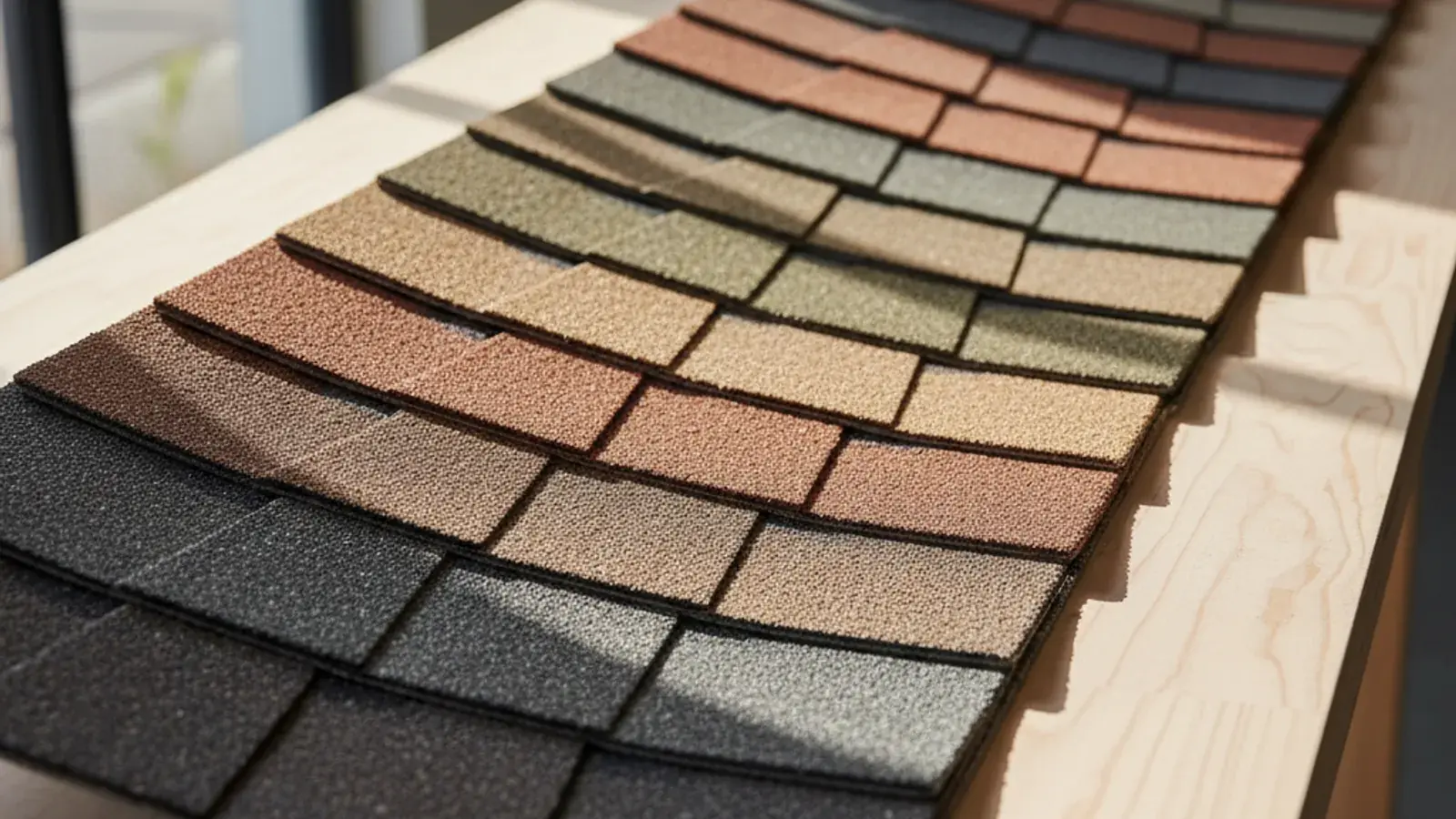
Which GAF shingle is best in San Diego?
Picking a GAF line here is three local problems, not a national “best shingle” list:
- UV and attic heat inland and in East County
- Marine-layer moisture west of I-5 (algae streaking on north slopes)
- Class A roof assemblies in mapped brush / WUI zones
Read the current GAF residential shingles page for the exact SKU names, wind numbers, and algae program. Those numbers assume the listed nailing pattern, accessories, and a cured seal strip. A bid that only says “GAF” is not a spec.
The lines San Diego bids actually name
GAF’s catalog is easier as three tiers. Confirm what is still in production on GAF’s site before you lock color.
Three-tab (Royal Sovereign). Flat strip shingle. Lightest look, shortest limited warranty in the GAF residential stack, weakest algae story. It still shows up when someone is matching an existing three-tab patch on a rental. Most owner-occupied reroofs skip it.
Architectural (Timberline HDZ and Timberline UHDZ). This is the heart of local GAF quotes. HDZ is the dimensional workhorse. UHDZ is the thicker sibling with a higher published wind number on current GAF sheets. For a typical San Diego house, one of these two is the answer unless HOA or architecture pushes a designer profile.
Designer (Camelot II, Grand Sequoia, Glenwood, Slateline). Heavier, more shadow line, meant to read as slate or shake from the street. Useful in neighborhoods where curb appeal is the job (Rancho Santa Fe, Point Loma, older La Jolla). Not required for salt or fire if the architectural line is installed as a Class A assembly.
HDZ RS / other reflective Timberline SKUs are a Title 24 listing question, not a separate “climate roof” brand. Confirm CRRC listing for the exact color: coolroofs.org. Code path: cool roof Title 24 in San Diego.
Timberline HDZ: why it is the default ask
If you want the short answer, it is Timberline HDZ, then confirm the SKU.
What the current GAF story actually sells:
- LayerLock nailing zone (wider target for the gun). Useful on Santa Ana days if the crew actually nails in that zone.
- StainGuard Plus algae language. Coastal and canyon houses get morning marine layer. North slopes streak. Read the years on the bag and the warranty PDF for that SKU. We will not reprint a year count that GAF can change.
- Class A when the underlayment and deck are part of a listed assembly. Fire zones care about the assembly, not the logo.
It is widely stocked at San Diego suppliers, which matters for a future color match. Stock is not a warranty.
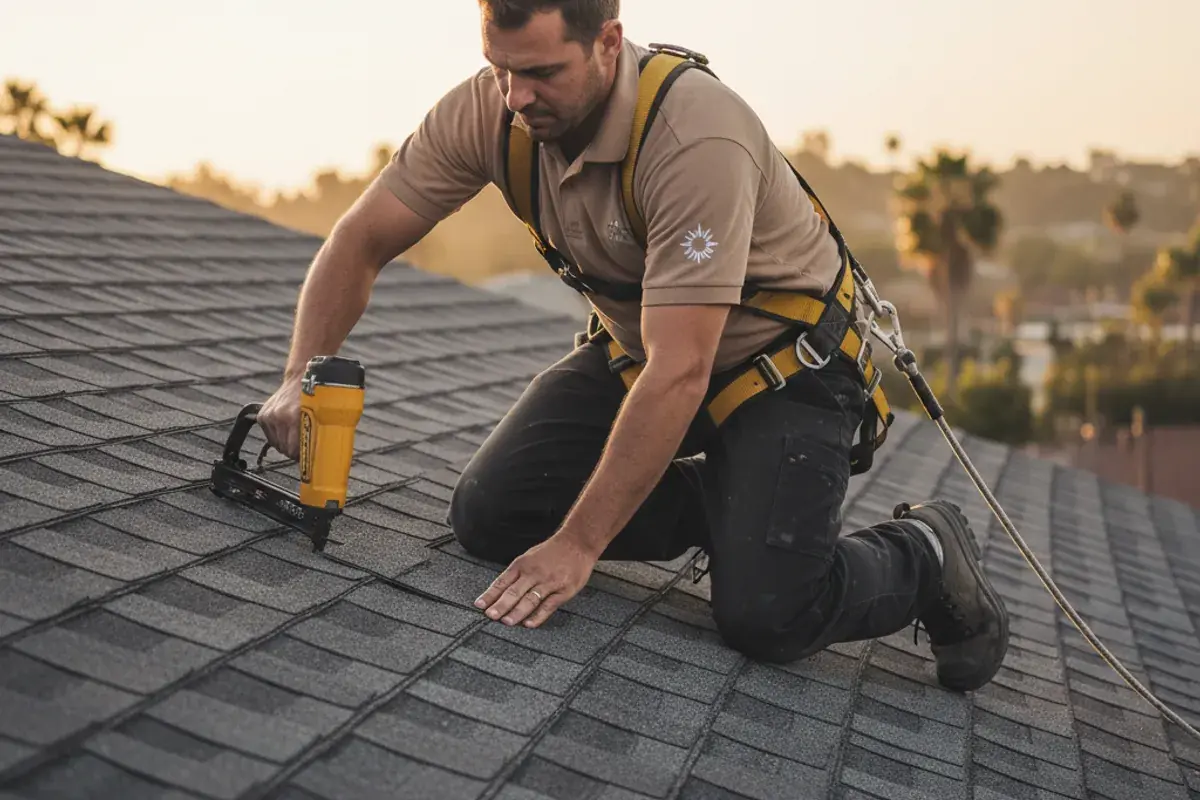
When UHDZ is the conversation, not HDZ
UHDZ is the same architectural family, built thicker, with a higher published wind rating on GAF’s current sheets. Ask for it in writing when:
- The house sits on an East County ridgeline (Alpine, Jamul, foothill streets) where Santa Ana flow is the weather story
- You want the longer non-prorated window that GAF ties to a certified installer and a full GAF accessory stack
The street look is slightly more dimensional. It is still not a designer shingle. Do not pay a “UHDZ upcharge” that is not named as a SKU on the bid.
Designer lines: looks and weight, not a climate tax
Camelot II: layered slate read. Fits Spanish and Mediterranean masses. Grand Sequoia: shake read without wood’s fire and maintenance problem. Slateline: closest GAF gets to a slate pattern at shingle weight. Glenwood: deep shadow, wood-shake profile.
All of these still need Class A assembly language and algae protection on the sheet. If you are weighing shingle against another material, use metal versus shingle in San Diego and best roof types for Southern California.
The GAF line is not the roof
GAF’s stronger warranties (the ones that mix labor and materials for a long window) are system warranties. They typically need a GAF-certified installer, GAF underlayment, starter, ridge cap, and leak barrier. Mix off-brand accessories and you usually drop to the basic limited material warranty, which is prorated and thinner. GAF sets who qualifies. This site does not.
Install quality still outranks the SKU. Nails in the reinforced zone, flashing at every penetration, and attic ventilation decide whether HDZ or UHDZ lasts. A designer shingle nailed wrong fails before a correct HDZ.
San Diego attics cook shingles from below if intake and ridge are wrong. Pair any GAF reroof with a ventilation check: roof ventilation and attic heat. A roof inspection before you buy tells you whether the existing vents are even in the game.
3-tab versus architectural as a category: asphalt shingle vs architectural. Replacement path: roof replacement.
Frequently asked questions
Which GAF shingle is best for a coastal San Diego home?
Timberline HDZ or UHDZ with the algae program that is on the current sheet. Encinitas, Cardiff, Ocean Beach, and other marine-layer streets streak. Salt is harder on flashing and fasteners than on the asphalt mat. Specify corrosion-resistant metals. See best roof material for coastal climates.
Is Timberline HDZ worth it over three-tab?
For almost every owner-occupied San Diego house, yes. HDZ has a better published wind story, a longer warranty path, stronger algae language, and a look that holds in resale photos. Three-tab is for matching an existing three-tab roof or a strict rental budget.
Do I need a GAF-certified contractor for the strong warranty?
Yes, if you want the enhanced GAF system PDF. A standard install is usually the basic limited material warranty. Ask the roofer whether they can register the coverage you were shown, and keep the PDF. We do not certify anyone.
What GAF shingle do I need in a San Diego fire zone?
You need a Class A roof assembly, which is material plus underlayment plus deck as listed. Architectural and designer GAF lines are sold into that world. Three-tab can also be assembled as Class A with the right underlayment, but it is the weaker long-term pick. Confirm mapped hazard and Chapter 7A with the AHJ: Cal Fire fire hazard severity zones.
How long do GAF shingles last in San Diego?
Manufacturer limited warranties are not a guaranteed calendar life. Heat, ventilation, and nailing change the outcome. Inland UV is harder than the coast on the asphalt. We will not invent a 25-to-30-year promise. Ask the installer what they will put in writing for that product on your roof.
When to call us
If you are choosing among GAF lines, get eyes on the existing roof, flashing metals, and attic ventilation before you lock a SKU. Call (760) 750-5557. We will connect you with a licensed local roofer. You contract with that roofer. Confirm GAF certification on GAF’s own contractor tools if the enhanced warranty is part of the deal.