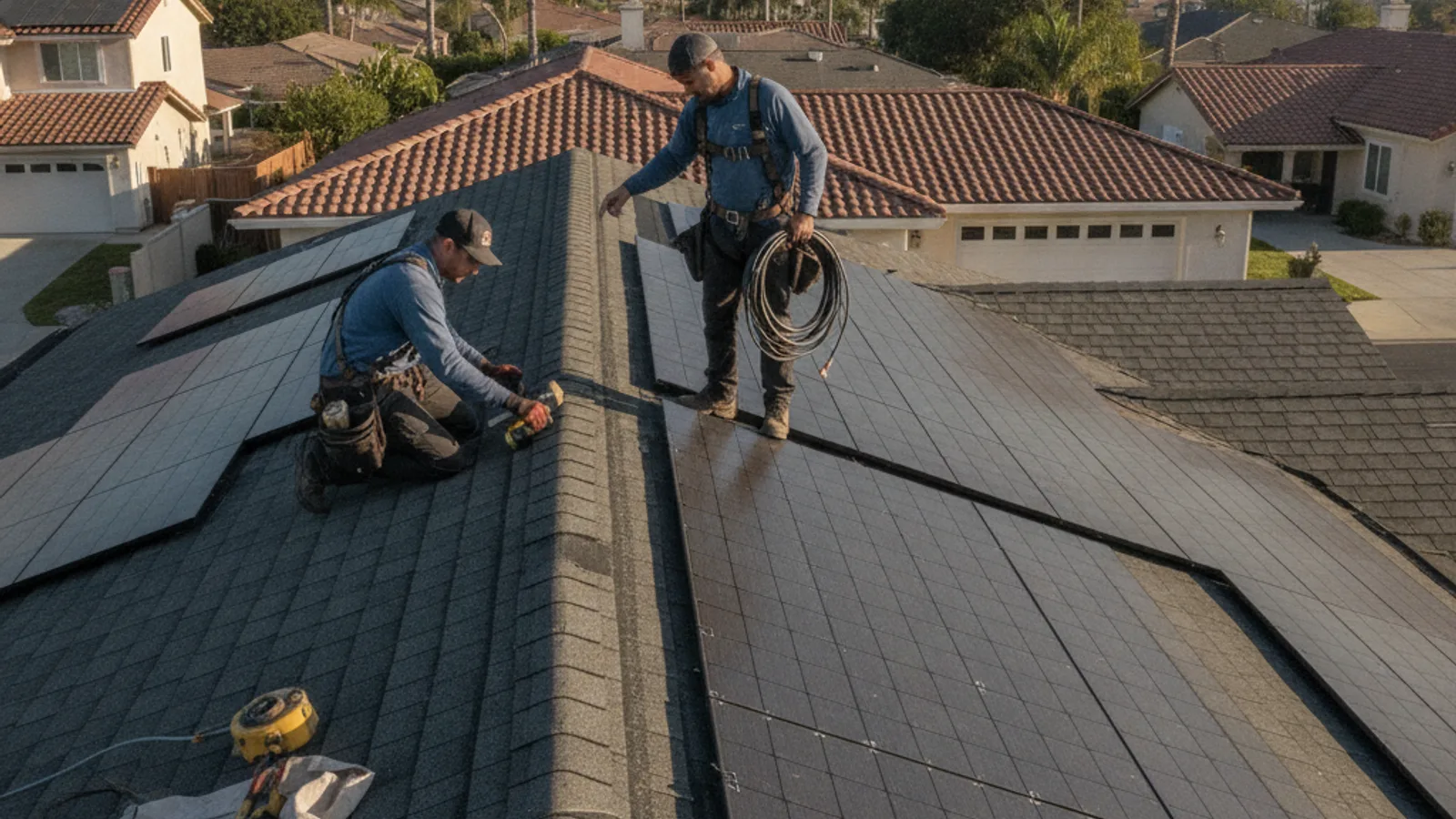
Solar shingles in San Diego cost $3.50 to $8.00 per watt installed in 2026, versus roughly $3.30 per watt for conventional solar panels. A full solar shingle roof typically lands between $40,000 and $75,000 before incentives. They usually only pencil out when your roof needs replacement anyway, because the shingle system replaces both the reroof bill and the panel bill in one project. If your roof has 15 or more good years left, panels win the math almost every time.
What do solar shingles in San Diego cost in 2026?
A solar shingle system for a typical San Diego home runs $40,000 to $75,000 installed, before any incentives. The two products homeowners actually see quoted here are Tesla Solar Roof and GAF Timberline Solar.
| System | Typical installed cost | Cost per watt |
|---|---|---|
| Tesla Solar Roof | $50,000 to $75,000 | $4.50 to $6.00 |
| GAF Timberline Solar | $40,000 to $60,000 | $3.75 to $4.50 |
| Conventional panels (no reroof) | $12,000 to $20,000 for a 4-6 kW system | around $3.30 |
| Panels plus new asphalt shingle roof | $27,000 to $42,000 combined | panels at $3.30 plus the reroof |
Those combined figures use real local reroof pricing. An architectural asphalt shingle replacement in San Diego runs $14,500 to $22,000 installed, and we break the full numbers down in our new roof cost guide for San Diego. The point of the table is simple. Solar shingles only compete when you compare them against buying a new roof and a solar system at the same time.
How do solar shingles compare to solar panels?
Panels beat shingles on price, output, and repairability. Shingles beat panels on looks and on being a single integrated project. That is the whole comparison in two sentences, and the details mostly reinforce it.
Rack-mounted panels are 30 to 50 percent cheaper per watt. They also produce more power per square foot, partly because panel cells are more efficient and partly because shingles sit flat on the deck with no air gap underneath, so they run hotter, and heat cuts output. San Diego’s mild coastal climate softens that penalty compared to inland desert cities, but it never erases it.
Repair is the difference nobody quotes. When a rack-mounted system fails, a solar tech swaps a panel or an inverter. When a solar shingle fails, the fix involves the roof itself, and only a small pool of certified installers in San Diego County can touch it without voiding the warranty. Several solar shingle lines launched over the past 15 years have already been discontinued, which left early buyers with orphaned warranties. Tesla and GAF both back their current products with 25-year warranties, but the repair network is still thin compared to the hundreds of outfits that service ordinary panels.
One thing the two options share: either way, the roof underneath has to be sound first. A professional roof inspection before you sign anything is the cheapest insurance in the whole project. We covered the structural side separately in can your roof handle solar panels.
When do solar shingles make sense in San Diego?
Solar shingles make sense when three things line up: your roof is due for replacement, you want solar, and you care how the roof looks. Miss any one of the three and a different option wins.
- Roof is due anyway. This is the big one. If you already face a $14,500 to $38,000 roof replacement, the solar shingle premium over a reroof-plus-panels package shrinks to a range some homeowners accept for the cleaner look.
- Aesthetics or HOA pressure. In design-conscious neighborhoods, low-profile black shingles read as a normal roof from the street. Rack-mounted arrays on the front slope are the thing HOA boards and coastal design reviews argue about.
- You’re staying put. Payback stretches well past a decade under current export rates. Owners planning to sell in five years rarely recover the premium.
When they don’t make sense: your roof is under 10 years old, your budget is the deciding factor, or you have a clay or concrete tile roof. Tearing off sound tile to install solar shingles throws away the county’s most durable roofing material. Inland homes in Poway, Escondido, and El Cajon see the strongest solar production in the county, and those same neighborhoods are where a standard asphalt shingle roof plus panels delivers the shortest payback.
What about NEM 3.0 and the federal credit?
The economics got harder for every solar product, shingles included. California’s Net Billing Tariff, commonly called NEM 3.0, took effect April 15, 2023 and cut export credits roughly 75 percent, with most San Diego homeowners now earning $0.05 to $0.08 per kWh for surplus power. That pushes new systems toward batteries and self-consumption, which adds cost to an already premium product. We explain what that shift did to existing owners in why people are getting rid of solar panels.
The federal residential clean energy credit ended in 2025, so 2026 buyers should not count on the old 30 percent credit. Only the power-generating portion of a solar roof ever qualified in the first place, never the roofing underneath. Confirm the current year’s rules with a tax pro before a salesperson builds a quote around incentives, and read is a new roof tax deductible for how the roofing side is actually treated.
Who installs and repairs solar shingle roofs in San Diego?
Certified installers only, and there are not many. Tesla routes Solar Roof work through its own crews and a short list of certified partners. GAF Timberline Solar is installed by GAF-certified roofing contractors, which at least means a roofer, not just an electrician, is standing on your deck. Either way the project is both a reroof and an electrical install, so it needs roofing and electrical permits and a final from the county or your city.
At Top Pro Roofing SD, we connect homeowners with roofers serving all of San Diego County, and the honest guidance we give is this: get the roof assessed first. If the deck, flashing, or underlayment isn’t ready, no solar product on top of it will end well. Call (760) 750-5557 for a free estimate on the roofing side of the decision, whether that turns out to be a straight replacement, a reroof built for panels, or prep work before a solar shingle install.
Frequently asked questions
How much do solar shingles cost in San Diego?
Between $40,000 and $75,000 installed for a typical home in 2026, or $3.50 to $8.00 per watt depending on the product and roof complexity. Tesla Solar Roof sits at the top of that range and GAF Timberline Solar near the bottom. Conventional panels run about $3.30 per watt by comparison.
Are solar shingles cheaper than a new roof plus solar panels?
No. A new architectural shingle roof plus a mid-size panel system runs roughly $27,000 to $42,000 combined in San Diego, while solar shingle systems start around $40,000 and climb from there. The gap narrows on complex roofs, but panels plus a reroof win on price in almost every quote.
Do solar shingles work on tile roofs?
No. Solar shingles replace the roofing material entirely, so a tile roof would be torn off first. Since clay and concrete tile are the longest-lived roofing materials in San Diego County, most roofers advise against removing sound tile. Rack-mounted panels engineered for tile are the standard approach instead.
How long do solar shingles last?
Tesla and GAF both warranty their current solar shingles for 25 years, covering power output and weatherization. The practical concern is not lifespan but serviceability. Repairs must go through certified installers, and the repair network in San Diego County is still small compared to conventional panel service.
Do solar shingles qualify for tax credits in 2026?
The federal residential clean energy credit ended in 2025, so no, not under the rules as they ended. Only the electricity-generating portion ever qualified, never the roofing function. Check the current year’s rules with a tax professional before signing, since incentive programs change and quotes sometimes lean on credits that no longer exist.
Should I replace my roof before going solar?
If the roof has less than 10 years of life left, yes, replace it first or fold it into the project. Removing and reinstalling panels later costs thousands and is the most avoidable expense in residential solar. A roof inspection settles the question for a few hundred dollars, and free estimates are standard for replacement work.