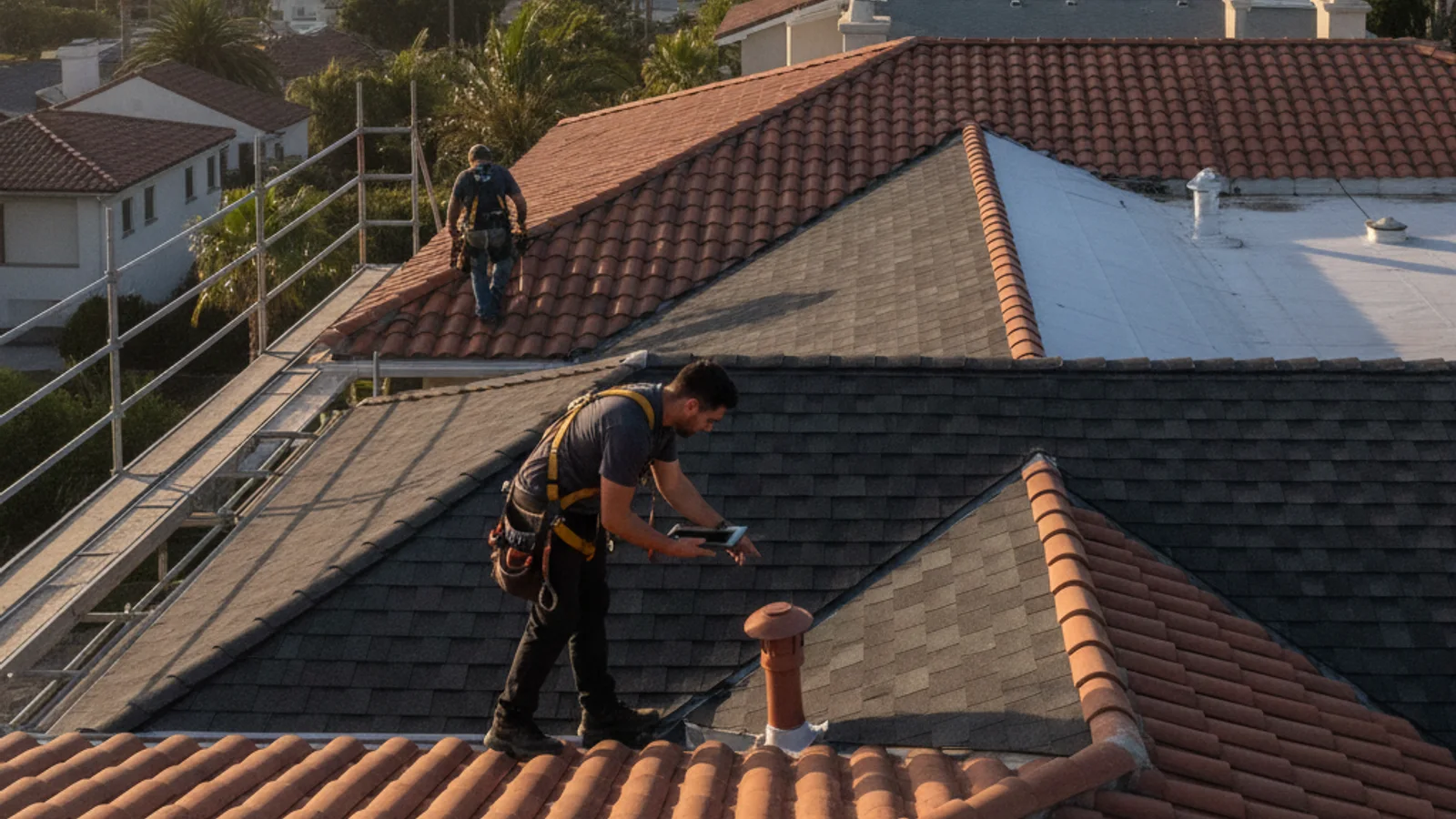
A new roof doesn’t happen overnight. The process from tear-off to final inspection typically spans 3 to 10 days depending on complexity, weather, and roof size. Understanding what’s involved helps you plan for disruptions, know what to ask your roofer, and recognize if the work is staying on schedule. Whether you’re getting roof replacement or working with local San Diego roofers, knowing the timeline sets expectations.
What Happens Before Installation Begins
Before the crew shows up, a few things happen behind the scenes. You’ll receive a detailed project timeline and scope, what services are included, what the final invoice covers, and any prep work you need to do (clearing gutters, moving outdoor furniture away from the home’s perimeter, covering AC units or pool equipment that might collect debris).
The roofing contractor should clarify permits. In San Diego County, the building permit requirements vary by city; some jurisdictions require permits for full roof replacements, others don’t. A responsible roofer pulls the permit and factors the timeline into the schedule (permitting itself can add 5 to 10 days).
Weather also shapes the start date. San Diego’s marine layer and coastal moisture mean early morning fog is normal, but heavy rain or Santa Ana wind events can delay work. A reputable roofer doesn’t start in conditions that risk safety or material damage, wind above 30 mph can make roofing unsafe, and rain obviously halts work mid-project.
Day 1: Tear-Off and Debris Management
The first day is the busiest and noisiest. The crew removes the old roof down to the deck (the wood structure underneath shingles or tile). They’ll also remove any underlayment, flashing, and gutters if those are part of the job.
Debris gets staged in a dumpster on your property or hauled away in trucks; either way, your street and yard will have equipment present. If you’re sensitive to noise, a full tear-off generates sustained sound for 6 to 8 hours, jackhammers on tile roofs are particularly loud. Expect dust, nails, and shingle fragments scattered across driveways and landscaping.
Once the old roof is gone, the crew inspects the deck for rot, water damage, or missing boards. This is the moment of truth: a roofer might discover structural issues hidden under the old roof. Rotted 2x6 joists, damaged plywood, or compromised framing adds time and cost because those materials have to be replaced before a new roof goes on.
On coastal San Diego properties, Coronado, Ocean Beach, Pacific Beach, La Jolla, salt spray and marine moisture accelerate wood decay. It’s not uncommon for a tear-off to reveal 2x4 purlins under tile that are soft and need replacement.
Days 2-3: Deck Repair and Underlayment Installation
If the deck is sound, the crew moves straight to underlayment. If repairs are needed, those happen first, replacing rotten boards, nailing down loose plywood, installing ice-and-water shield around valleys and eaves.
The underlayment (also called roofing felt or synthetic underlayment) creates a moisture barrier. It gets stapled or nailed to the deck and lapped properly so water runs downward, not underneath. San Diego’s fog and winter rains don’t bring heavy sustained precipitation, but even light moisture that sits can cause problems; proper underlayment installation is non-negotiable.
Modern roofing prefers synthetic underlayment (polyethylene or polypropylene) over traditional tar paper, it doesn’t degrade in UV light, breathes better in coastal humidity, and lasts longer. The underlayment work usually takes a partial day if the deck is in good shape, longer if repairs are extensive.
Days 3-5: Flashing Installation and New Roof Application
With the deck and underlayment in place, flashing gets installed. Flashing is metal (usually galvanized steel or aluminum, sometimes copper) that directs water away from penetrations, chimneys, vents, valleys (where two roof slopes meet), and eaves.
Flashing is one of the most common leak sources when poorly installed, so this step matters. It should overlap the underlayment correctly (water always flows downhill), be mechanically fastened or soldered, and sealed at its edges with roofing cement. A roofer who rushes flashing will cause problems within a season.
Next comes the roofing material itself. For asphalt shingles (the most common in San Diego), the crew nails bundles of shingles from eave to ridge, overlapping courses so water sheds downward. Each shingle typically gets 4 to 6 nails. The nails must hit the wood deck, not just the underlayment; missed nails cause shingles to blow away in wind.
For tile roofs (common in Coronado, Rancho Santa Fe, parts of Del Mar), installation is slower. Tile pieces are heavier, require more fastening, and need battens (horizontal wood strips) to hang on. A tile crew might cover 500 to 800 square feet per day; a shingle crew might cover 1,500 to 2,000 square feet per day.
Metal roofing installation is medium-speed, standing seam systems are screwed and sealed, and the crew is coordinating panel seams and creating clean lines.
Day 5-7: Finishing, Valleys, and Gutters
As the main roofing material goes down, the crew finishes details: ridge cap shingles along the roof’s peak, hip caps on hip roofs, gable trim at roof edges. Valleys get sealed with special flashing and roof cement to keep debris from collecting and water from finding a path underneath.
Gutters and downspouts (if being replaced) go in now. Gutter installation involves pitching the gutters slightly (typically 1/8 inch per 10 feet) so water drains toward downspouts. San Diego’s dry season means gutters aren’t under heavy load, but during winter rains and fire season ember showers, clogged gutters cause overflow and wood rot at fascia.
Days 7-10: Cleanup, Inspection, and Closeout
The final days involve cleanup. The crew performs a walk-around removing dropped nails and debris. Many good roofers use magnet sweepers on the ground and walkway to pull stray fasteners.
The property inspector (if a permit was pulled) comes by to sign off on the work. They’re checking that the new roof is installed per code, fasteners properly spaced, flashing installed, no gaps or damage.
You’ll also do a final walkthrough with the roofing contractor. This is the moment to ask about warranties, obtain the detailed invoice and receipt, and clarify what’s covered if a problem shows up in the next year or two.
Most reputable roofers offer a 5 to 10 year workmanship warranty (the contractor’s promise that the installation is done correctly) separate from the material manufacturer’s warranty (the shingle or tile maker’s promise that their product lasts 25, 50, or more years, depending on quality). Learn more about roof warranty details and what’s actually covered.
San Diego Climate Considerations
San Diego’s mild, dry winters are roofer-friendly, but the marine-layer fog and coastal salt spray demand specific material choices. Asphalt shingles hold up fine in the mild climate, but in coastal neighborhoods, salt-resistant flashing and fasteners prevent corrosion.
Tile roofs are classic in San Diego, but salt air accelerates deterioration of the mortar underneath if you have clay tiles. Modern concrete tiles and synthetic tiles designed for coastal exposure last longer in these environments.
Flat roofs (common on modern homes) face different challenges in San Diego: inadequate slope traps water during the rare heavy rain event. If you’re installing a flat roof, ensure the contractor slopes toward drains and uses proper materials for the coastal exposure.
Timeline Variations
A straightforward asphalt shingle replacement on a 2,000-square-foot home with a sound deck typically completes in 3 to 5 days. A metal roof, slate, or clay tile project, or a home with multiple penetrations and valleys, often stretches to 7 to 10 days. If deck work is needed, add 2 to 5 days.
San Diego’s reliable weather is a huge advantage. Projects rarely pause for rain, and the mild winters mean short daylight hours in January aren’t as limiting as they are back east.
What to Ask Your Roofer
Before the project starts:
- What’s the exact timeline and weather contingency?
- Will permits be pulled? If yes, does that add to the schedule?
- What happens if deck damage is found? (Can you approve additional work on the spot, or does it pause the project?)
- What cleanup is included? Will the crew do a magnet sweep?
- Are gutters included, or are they separate?
- What warranty applies after installation?
These conversations upfront prevent surprises and ensure the work meets expectations. Need help selecting a contractor? Our guide to choosing the right roofing contractor in San Diego walks you through vetting and comparing quotes.
Frequently Asked Questions
How long does a typical roof installation take in San Diego?
Three to five days for an asphalt shingle replacement on a standard single-story home. Tile, metal, or complex roofs, or homes with extensive deck repairs, often take 7 to 10 days. For pricing specifics, see our roof replacement cost guide.
What causes installation delays?
Weather (rare in San Diego, but heavy rain or extreme wind halts work), unexpected deck damage that requires repair, permit processing if the city requires approval, or material backorders if specialty items are needed.
Should I stay home during roof installation?
Not necessary for most of the day, but it’s helpful to be present during the walk-through beforehand and final inspection. During tear-off, debris falls and noise is significant, leaving for the day is reasonable.
How much disruption happens to landscaping?
Debris spreads 10 to 20 feet from the home’s perimeter. Driveway, patio, and lawn all collect shingle fragments, nails, and dust. Cleanup is part of the job, but small items (bits of shingle in garden beds) may require your own attention afterward.
Is a permit required for roof replacement in San Diego?
It depends on the city. Some San Diego jurisdictions require permits for any full roof replacement. Others waive permits for like-kind material (asphalt for asphalt). The contractor is responsible for knowing local rules and pulling the permit if needed.
Can roofing happen during San Diego’s rainy season?
Yes, roofers can work in light rain, though they typically don’t start during active rain. If rain is forecast, they’ll pause work to avoid water damage to the open deck. San Diego’s rare heavy rains (usually only a few days per winter) do cause occasional delays.