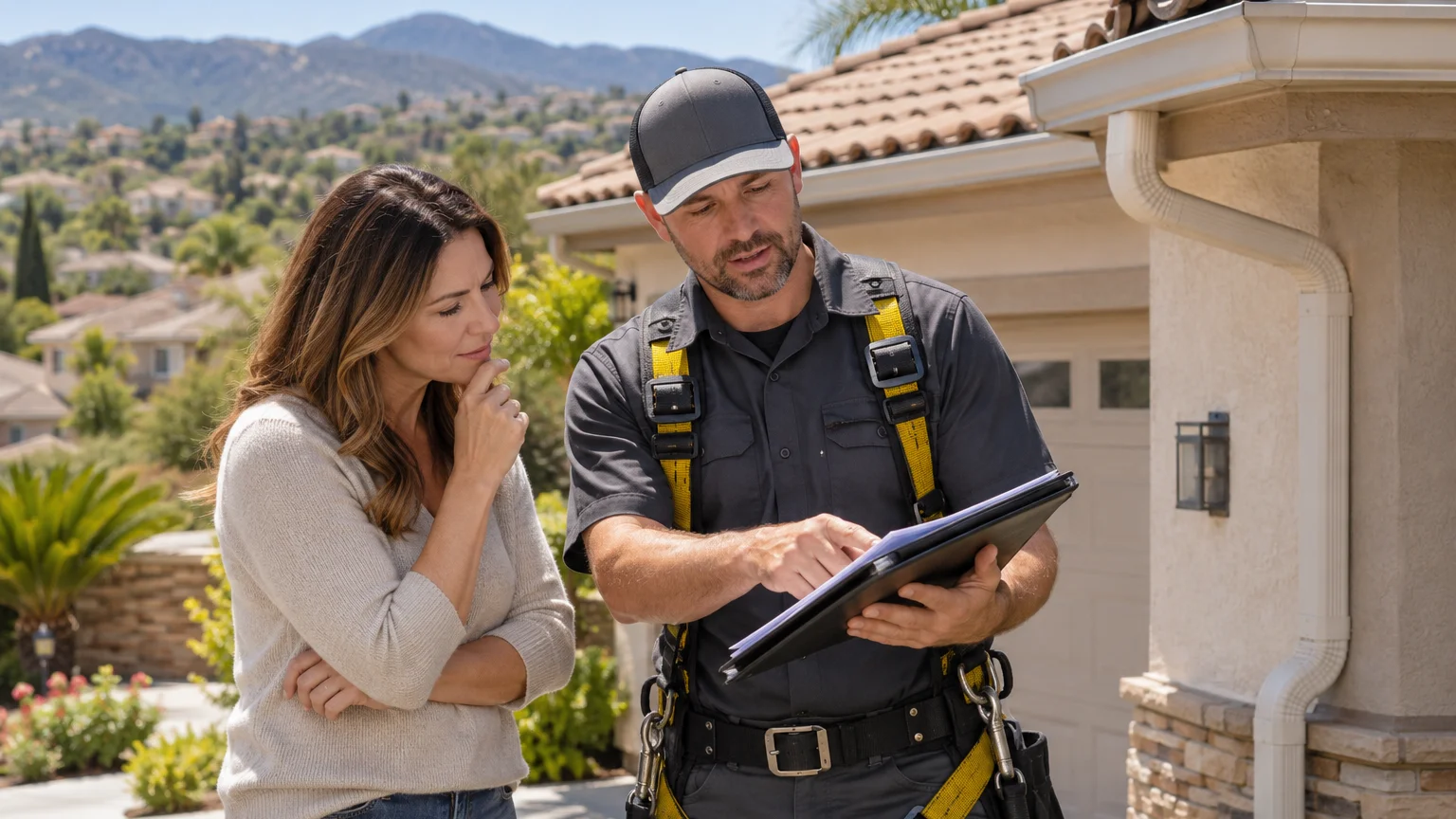
A Poway roof inspection should produce more than a verbal opinion. The written report should identify the roof, document visible conditions, explain access limits, and separate observed defects from proposed repairs.
Start with the reason for the inspection
The inspection’s purpose should appear near the report’s beginning. A homeowner investigating a ceiling stain needs different detail than a buyer reviewing a property. An owner planning maintenance may need another type of assessment.
Tell the Poway roof inspector why you ordered the visit. Common reasons include a suspected leak, visible material damage, a property transaction, or planning future work. The report should repeat that purpose accurately. It shouldn’t quietly turn a limited leak assessment into an opinion about the entire roof.
The scope matters just as much. Look for a plain description of what the inspector agreed to examine. It might cover exterior roof surfaces, accessible drainage components, penetrations, flashings, or visible interior areas. Don’t assume an attic, solar mounting point, concealed underlayment, or every roof plane was included. The report should say.
It should also identify the inspected property and inspection date. Roof type and visible materials should be described without guessing. If more than one roof system covers the property, each area needs its own location label.
A report isn’t automatically a roof certification. Certification terms, acceptance rules, and validity periods couldn’t be confirmed from the approved sources for this page. If a lender, insurer, buyer, or other party requested specific paperwork, get its written requirements before ordering the inspection.
Our broader roof inspection checklist for San Diego can help you prepare questions. For a matched local professional, review our roof inspection service page.
What the written report should document
A useful roof inspection report organizes observations by location. “Damaged flashing” isn’t enough. The reader needs to know which roof plane, penetration, wall connection, valley, or edge contains the finding.
The report should distinguish visible conditions from possible causes. A stain can be documented as an observation. Its source may remain uncertain without further investigation. Good wording preserves that difference instead of presenting a theory as a proven diagnosis.
Ask for these report elements:
- Property identification and inspection date
- The reason and agreed scope of the inspection
- Roof areas and materials that were visually reviewed
- Location-specific observations
- Photos tied to written findings
- Areas that weren’t accessed or couldn’t be evaluated
- Recommended next steps, when further review is needed
- The inspector’s name and business information
The report should describe condition, not merely assign a vague grade. Terms such as “poor” or “failed” need an explanation. Ask what was observed and where. If the inspector recommends repair or replacement, the report should connect that recommendation to documented findings.
Remaining-life estimates also deserve careful treatment. The approved claims ledger doesn’t establish standard service lives for shingles, tile, metal, or complete roof systems. Material warranties aren’t the same as measured remaining life. Any estimate should identify its basis, assumptions, and limits.
A report can also record when no visible problem was found in a specific area. That statement shouldn’t become a promise that concealed defects don’t exist. The scope and limitations still control what the inspection supports.
For a transaction, confirm that the receiving party accepts the report format. Don’t rely on an inspector’s general claim that every lender, insurer, or buyer will accept it.
How photos and limitations should be presented
Photos should help another person understand the written findings. Each useful image needs context. A close-up may show a crack or opening, but a wider image should establish its roof location.
Captions should match the report’s location labels. “Photo 6, rear roof plane near plumbing penetration” is clearer than “roof damage.” An arrow or marker can help, provided it doesn’t cover the condition being documented.
Image quality matters, but equipment names don’t prove report quality. A drone image, moisture reading, or thermal image may add information within an agreed scope. None should be presented as seeing through materials or proving a hidden condition unless the report explains what was measured and how the conclusion was reached.
The limitations section deserves close attention. It should identify inaccessible areas, obstructed surfaces, concealed components, weather-related limits, and portions excluded by agreement. If the roof wasn’t physically accessed, the report should say how it was viewed. If an attic wasn’t included or wasn’t accessible, that should also be clear.
A limitation isn’t automatically a problem with the report. It tells you how much confidence to place in each conclusion. Trouble starts when a report reaches beyond the areas actually observed.
Ask the inspector to separate these three ideas:
- What was directly observed
- What the observation may indicate
- What additional work could confirm the cause or extent
That structure makes the report easier to use. It also reduces confusion when a roofer later opens a concealed area and finds different conditions.
Before accepting the report, compare every major recommendation with its supporting photo and location. If they don’t connect, ask for clarification in writing.
Which Poway details need verification
A Poway address doesn’t settle every local question by itself. The report should identify which authority has jurisdiction over the property before making claims about permits, code compliance, or fire-area requirements.
This page’s approved sources don’t confirm a Poway-specific inspection ordinance, required report format, permit rule, or fire-zone designation. Those details shouldn’t be guessed from a ZIP code, neighborhood name, or another San Diego County city’s rules. Ask the inspector or proposed contractor to verify the current requirement with the authority responsible for the exact address.
That distinction matters because the verified reroof rules in the claims ledger apply to the City of San Diego. They shouldn’t be presented as Poway rules. The City of San Diego, another incorporated city, and an unincorporated county address aren’t interchangeable permit desks.
Wildland-Urban Interface requirements also depend on the property’s designation and applicable rules. California Building Code Chapter 7A governs exterior wildfire exposure in designated WUI areas, but this page can’t confirm that a particular Poway property falls within one. Verify the address before treating Chapter 7A as applicable.
The same care applies to climate-zone and energy-code conclusions. San Diego is identified as Climate Zone 7 in the approved ledger, but building-specific requirements still need confirmation. Ask the reviewing authority which current code cycle and provisions apply to the planned work.
If the report leads to licensed roofing work, check the contractor through the CSLB license lookup. California’s C-39 classification covers roofing, waterproofing, and weatherproofing work. Confirm the individual contractor’s current record rather than relying on a logo or verbal statement.
Our guide to choosing a Poway roofing contractor offers a practical review process after the inspection.
When repair proposals should remain separate
An inspection report and a repair proposal answer different questions. The report records observed conditions and explains its limits. A proposal defines the work a contractor offers to perform.
Keeping them separate makes comparisons easier. You can share the same findings with more than one qualified roofer without confusing the original observations with a particular sales recommendation. It also helps you spot when proposed work doesn’t match the documented location or condition.
The repair proposal should identify its own scope. Look for specific roof areas, materials, removal work, installation work, exclusions, and responsibility for concealed conditions. Prices, schedules, warranties, and permit handling belong in the contractor’s written proposal, not as assumptions added to the inspection report.
Top Pro Roofing SD doesn’t set contractor prices or provide warranties. The homeowner contracts with and pays the independent professional directly. Any warranty comes from that professional and should be reviewed in writing.
Don’t assume that every reported issue requires the same response. One finding may call for more investigation. Another may support a defined repair. A broad replacement recommendation should still trace back to documented conditions and an explained scope.
If water damage may involve an insurance claim, the California Department of Insurance advises homeowners to report damage, document it with photos or video, keep communication records, and preserve records of temporary repairs. Review the department’s residential insurance resources and your own policy. Claims processes vary by insurer.
When you’re ready to compare the inspection with proposed work, our roof repair service can connect you with a local professional. Ask that the proposal reference the report’s locations and photos.
When to call us
Call when a Poway inspection identifies roofing work or leaves a condition unresolved. Top Pro Roofing SD can match you with a licensed, independent local roofer who can review the report and discuss the next step.
Call us at (760) 750-5557 and we’ll connect you with a licensed local roofer.