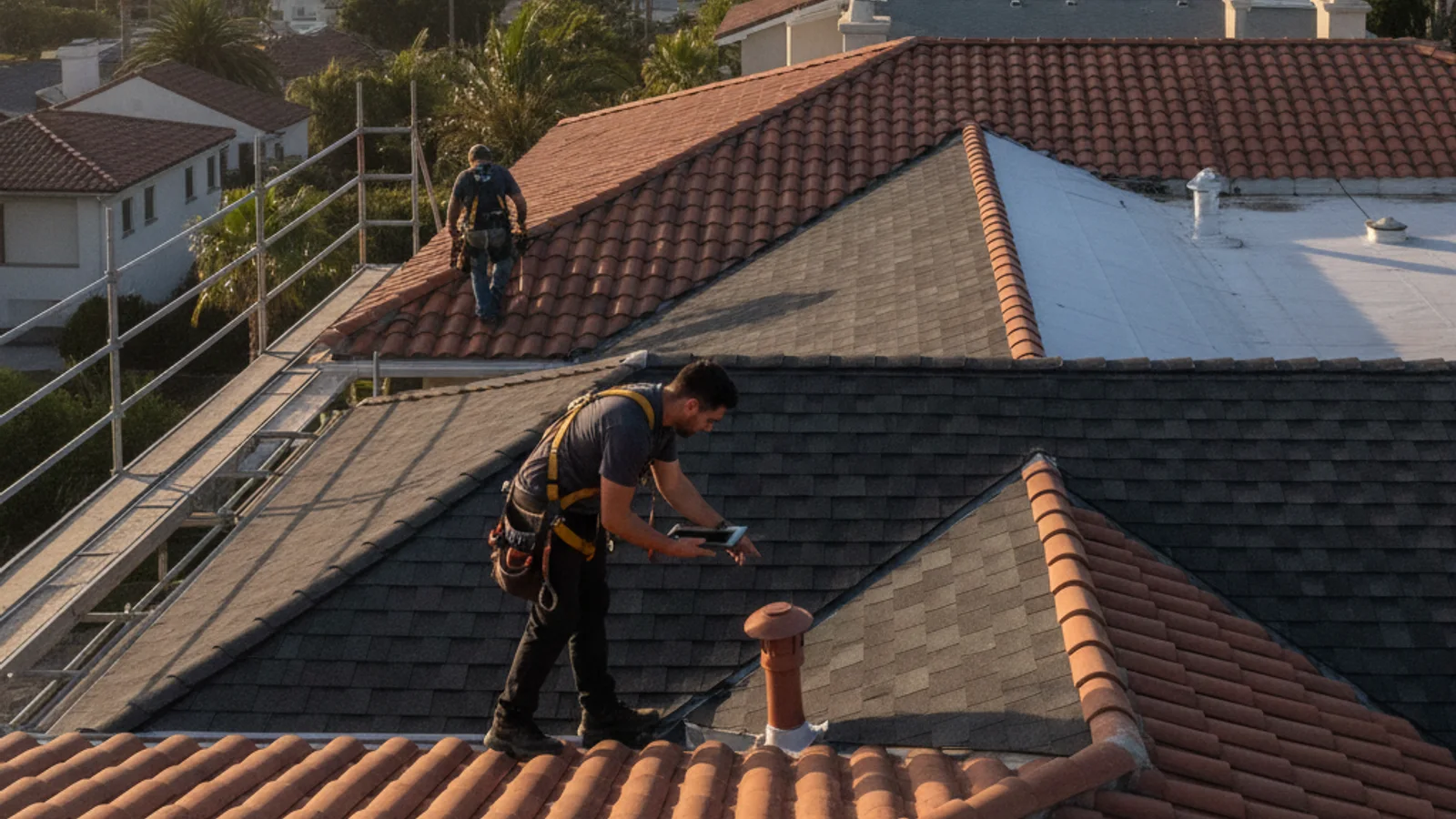
Most sagging roof repair in San Diego costs $1,500 to $9,000, depending on whether the sag comes from rotted decking or from the framing underneath it. A localized dip over rotted plywood sits at the low end. A ridge that’s dropped because the framing is undersized or damaged sits at the high end, and it usually gets fixed during a reroof. A sag is almost never a same-day emergency, but it’s also never cosmetic. It means something structural under the roofing has moved, and it doesn’t move back on its own.
Here’s how to read what the sag is telling you, what each fix costs in San Diego in 2026, and when a structural engineer needs to look before any roofer touches it.
Is a sagging roof an emergency?
Usually not. A sag that developed slowly over years can typically wait for a scheduled roof inspection, and most have been visible for a long time before anyone calls about them. San Diego roofs don’t carry snow load, which is what turns sagging roofs into collapses in other climates.
Three situations do deserve a same-week call. A sag that appeared suddenly or grew visibly in one season. A sag with an active leak over it, because water is still weakening whatever already failed. And a sag that showed up right after work in the attic, like a remodel or new equipment going in, because a cut truss or rafter keeps getting worse under load.
Why San Diego roofs sag
Almost every sagging roof here traces to one of four causes, and the age of the house narrows it down fast.
Tile weight on framing built for lighter roofing. This is the big San Diego-specific one. Thousands of local homes built before 1980 have 2x4 rafters set 24 inches apart, sized for wood shake or asphalt shingle. Many of those homes picked up concrete tile in the 70s through the 90s, which roughly triples the dead load. The framing carries it, but it deflects, and decades later the roof plane shows a wave. Our guide to the real disadvantages of tile roofs covers why this combination needs framing reinforcement.
Stacked roofing layers. California code allows two layers of shingles, and plenty of budget reroofs used that allowance. The second layer adds weight the framing was never asked to carry, and it hides the condition of everything underneath. Our overlay vs. tear-off breakdown explains why the cheap option ages badly.
Rotted decking. Coastal marine layer moisture, slow leaks, and blocked attic ventilation all rot plywood from the underside. Rotted decking sags in the spans between rafters, showing soft dips rather than one long wave. Older neighborhoods with 1920s to 1950s housing stock, like parts of El Cajon and the college area bungalow blocks, see this constantly.
Cut or damaged framing. Trusses lose most of their strength when someone cuts a web to fit ductwork or an attic ladder. Long-term leaks do the same job slower, rotting rafter ends where they meet the eave. If the sag lines up with a past leak or a past remodel, this is the first suspect.
What the shape of the sag tells you
The pattern of the dip is the first diagnostic, and you can read it from the street.
| What you see | What it usually means | Typical fix |
|---|---|---|
| Soft dips between rafters, wavy roof plane | Decking failure (rot or delamination) | Replace decking sheets during reroof |
| One long dip along the ridge line | Framing deflection or undersized rafters | Sister or reinforce framing |
| Sag at the eave or fascia line | Rotted rafter tails or fascia | Cut back and sister rafter tails |
| Dip in one concentrated spot | Localized damage: cut truss, broken rafter, point leak | Repair that member directly |
A roofer confirms the read from inside the attic. Daylight through the deck, moisture staining, and measurable deflection along a string line tell the rest of the story. This is exactly the kind of thing our free inspections exist for.
What sagging roof repair costs in San Diego (2026)
The repair cost follows the cause, not the size of the visible dip.
| Repair | Typical San Diego cost |
|---|---|
| Decking replacement during a reroof | $120 to $250 per 4x8 sheet |
| Moderate decking rot (10 to 20 sheets) | $1,500 to $5,000 added to the reroof |
| Rotted rafter tails at the eave | $100 to $300 per rafter tail |
| Localized framing repair (a few sistered members) | $1,500 to $4,000 |
| Full framing reinforcement for tile weight | $4,000 to $9,000 |
| Engineering calcs and structural plan review | Adds cost and 2 to 4 weeks before permit |
Two things keep these numbers honest. First, most sagging repairs happen during a roof replacement, because the roofing has to come off to reach the decking anyway, and paying for access twice never pencils out. Second, decking is priced per sheet as a contingency line in a good contract, which our decking replacement guide explains in detail. If a bid handles sagging with a vague allowance instead of unit pricing, keep shopping.
When you need a structural engineer first
Roofers repair roofs. Engineers size framing. If the sag comes from undersized or modified framing, San Diego’s permit process requires structural calculations from a licensed engineer before the repair permit issues, and plan review typically takes two to four weeks. The same rule applies any time a reroof moves to a heavier material, which is how many of these framing problems started. Our roof permit guide walks through when calcs are required.
A good roofer tells you this up front. The vetted San Diego roofers in the Top Pro Roofing SD network inspect the attic before quoting any sag repair, and when the framing itself is the problem they say so and bring the engineering requirement into the plan instead of roofing over it. The inspection is free anywhere in San Diego County.
How the repair actually gets done
The sequence matters more than the product. First comes the attic and roof inspection to pin the cause. Then the scope: which sheets, which rafters, whether the fix is local roof repair or part of a reroof. Structural work gets its engineering and permit next, because inspectors check framing repairs before they’re covered. Then the physical work: sistering new lumber alongside weakened rafters, replacing rotted decking sheet by sheet, and re-nailing to current code. The roofing goes back on last, and on pre-1980 homes keeping tile, the framing reinforcement happens in the same project as the tile work.
Done in that order, the dip doesn’t come back. Skipped steps are why some homes get reroofed twice and still sag.
Frequently asked questions
Can a sagging roof collapse?
In San Diego, almost never without warning. Collapse risk needs a load event, and we don’t get snow. The real risk is progressive: the sag grows, fasteners work loose, leaks start, and the eventual repair gets bigger every year it waits.
How much roof sag is acceptable?
None, structurally speaking. Framing deflects slightly under load by design, but a dip you can see from the ground is past design limits and worth an inspection. A string line across the ridge makes the amount measurable.
Does insurance cover a sagging roof?
Usually not. Sagging from age, wear, rot, or overloaded framing is excluded as deferred maintenance under most California policies. A sag from a sudden covered event, like a tree strike, is different. Our guide to what roof damage insurance actually covers covers the distinction.
Can you fix a sagging roof without replacing the roof?
Sometimes. A cut truss or a broken rafter can be sistered from inside the attic with no roofing work at all. But sags caused by decking rot or by tile weight need the roofing lifted or removed for access, so those repairs almost always pair with a reroof or a lift-and-relay.
How long does sagging roof repair take?
Attic-only framing repairs take one to two days. Repairs folded into a reroof add a day or two to the project. If engineering is involved, add two to four weeks of plan review before work starts.
The bottom line
A sagging roof is the framing or decking talking, and in San Diego the cause is usually tile weight, stacked layers, rot, or a past modification. Most fixes land between $1,500 and $9,000 and pair naturally with a reroof. Get the attic inspected before accepting any quote, insist on per-sheet decking pricing, and bring in engineering when the framing is the problem. Call Top Pro Roofing SD at (760) 750-5557 for a free inspection anywhere in San Diego County, and see our sagging roofline symptom guide if you’re still diagnosing what you’re looking at.