A useful leak visit in Imperial Beach connects the indoor stain to a named roof area, then writes what is known, what is still open, and what work is proposed. Salt fog, wind off the beach, and older cottage or low-slope stock change which metals and sheets fail first. They do not replace photos from this roof.
Top Pro Roofing SD is a referral marketplace. We do not repair roofs, set prices, or warrant work. If water is entering now, review emergency roof repair while you arrange an inspection. Call (760) 750-5557.
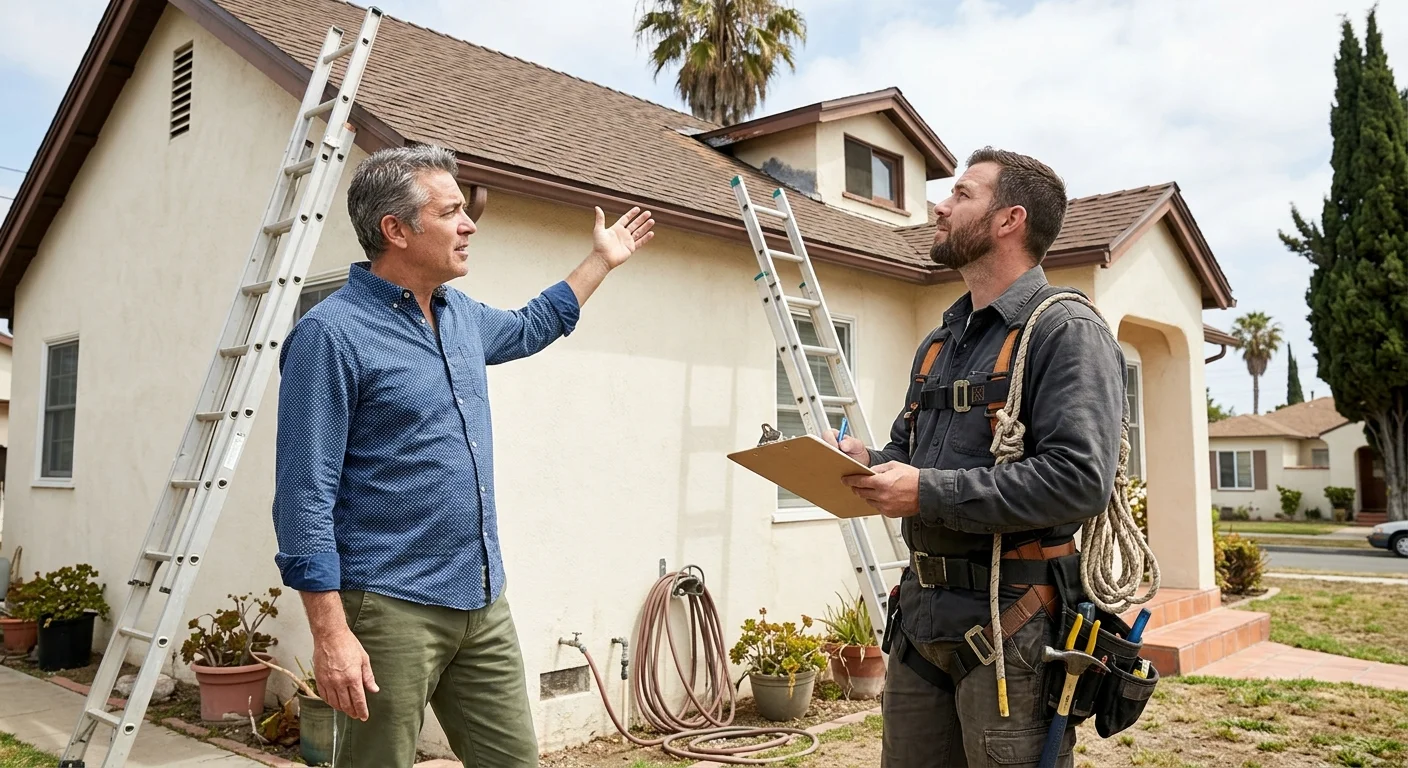
What the first inspection should establish
A ceiling mark is not a diagnosis. The C-39 should document indoor evidence and the roof area that may relate to it.
Expect answers to:
- Where moisture first showed
- Whether it showed during rain, afterward, or on a damp marine-layer morning
- Whether the mark has grown
- What covering, flashing, or drainage sits near that interior area
- Which penetrations, seams, or wall-roof joints were opened or photographed
- Whether the source is confirmed or still unconfirmed
- Whether tarps or earlier patches changed the area
Keep observations separate from guesses. Photos need a location note. A rusted fastener, open stucco-to-roof joint, or ponding on a low-slope plane should be described without overstating cause.
If you may file a claim, read the current live California Department of Insurance consumer guidance and your policy. This page will not restate notice windows, photo duties, or other claim holdings. Coverage still depends on the insurer and policy.
“Not yet confirmed” is a valid first-visit outcome.
Why the stain may not be the entry point
Treat the stain as a starting point. Water can travel along decking, a wall cavity, or a valley before it shows inside.
Ask the roofer to keep three ideas separate:
- Where moisture appeared indoors
- What was observed on the roof
- The evidence that connects those two places
That matters on beach cottages with mixed additions, and on buildings with a low-slope garage tied to a steeper main field. It also matters when several penetrations sit over the same room.
If one bid names flashing and another names the field, ask each for the photos behind that call. Contractor comparison method: roof leak repair near you in San Diego. Keep the discussion on this Imperial Beach address.
How Imperial Beach conditions enter the inspection
Use property evidence, not a city slogan. If a contractor says “coastal damage,” ask which metal, fastener, or sheet was photographed.
Typical Imperial Beach questions that still need photos:
- Galvanized flashing or nails rusting in salt fog
- Wind-driven rain at wall-roof joints and skylights on west-facing planes
- Sand, salt, and debris in scuppers or gutters on low-slope and parapet roofs
- Older cottage covering next to a later addition with a different underlayment
We do not have a verified Imperial Beach rainfall total or a special leak ordinance. Confirm current climate normals on NOAA’s published tables if you need a number. An airport figure does not describe this lot.
The inspection should still list, for this roof:
- Covering and roof form
- Parapets, walls, and transitions near the stain
- Penetrations and flashing in the search area
- Visible drainage
- Staining, openings, displacement, or failed patches
- Which building department serves the address (City of Imperial Beach, not the City of San Diego IB 123 path unless the contractor proves otherwise)
What the written repair scope should identify
Do not accept “fix leak” as a scope. The document should name the area, the component, and whether the source is confirmed or suspected.
Look for:
- Location and limits of work
- Observed condition that supports the work
- Materials involved
- What is included and what is excluded next door
- How concealed deck or framing damage would be priced if found
- Who confirms permits with the City of Imperial Beach
- Contractor name and CSLB license
- Payment terms and the contractor’s total (not a Top Pro price)
- Any warranty the independent contractor offers in writing
Top Pro Roofing SD does not set contractor prices, perform roofing, or provide warranties. You choose, contract with, and pay the professional directly. Verify the license at CSLB. Service routing: roof repair.
When broader roof work needs a separate decision
A leak patch and a reroof are different jobs. If the C-39 recommends work beyond the suspected entry, ask for separate photos and a separate scope.
Ask them to split:
- Work meant to stop the current entry
- Nearby conditions found while inspecting
- Broader work on other planes
California’s C-39 classification covers installing roofing products and repairing surfaces that seal, waterproof, and weatherproof structures. The professional who contracts for the work should hold that license. Top Pro Roofing SD does not.
Permit rules in our verified ledger are for the City of San Diego. They do not automatically govern Imperial Beach. Ask the contractor to confirm the City of Imperial Beach requirement for this scope before you approve extra work.
When to call us
Call when a leak needs diagnosis, damaged components need evaluation, or a proposed repair has grown into a reroof conversation. We connect you with a licensed local C-39. Call (760) 750-5557.