Rancho Peñasquitos was largely built out in the 1980s. Lots along Black Mountain Open Space collect canyon debris in valleys in a way interior tract streets do not. If the roof is leaking, start with cause, not a dollar guess. Top Pro Roofing SD is a referral service. We do not price patches or send a crew. Call (760) 750-5557 for a match with a licensed independent roofer.
The most common causes of leaks here
Aging original composition shingle. Many homes still carry three-tab or early architectural shingle from the 1980s boom. At that age, granule loss and brittle sealant strips show up on the first hard rain. County-wide failure points: what causes roof leaks in San Diego. Age is simply further along here than in newer inland tracts.
Canyon debris in valleys and gutters. Homes backing onto Black Mountain Open Space and the trail edges load valleys with leaf and brush. Blocked valleys push water sideways under laps. It looks like a new leak. It is often drainage.
Tile underlayment on hillside sections. Some streets are concrete tile, not shingle. The tile can outlast the felt or later underlayment under it. Signs: tile roof underlayment failure.
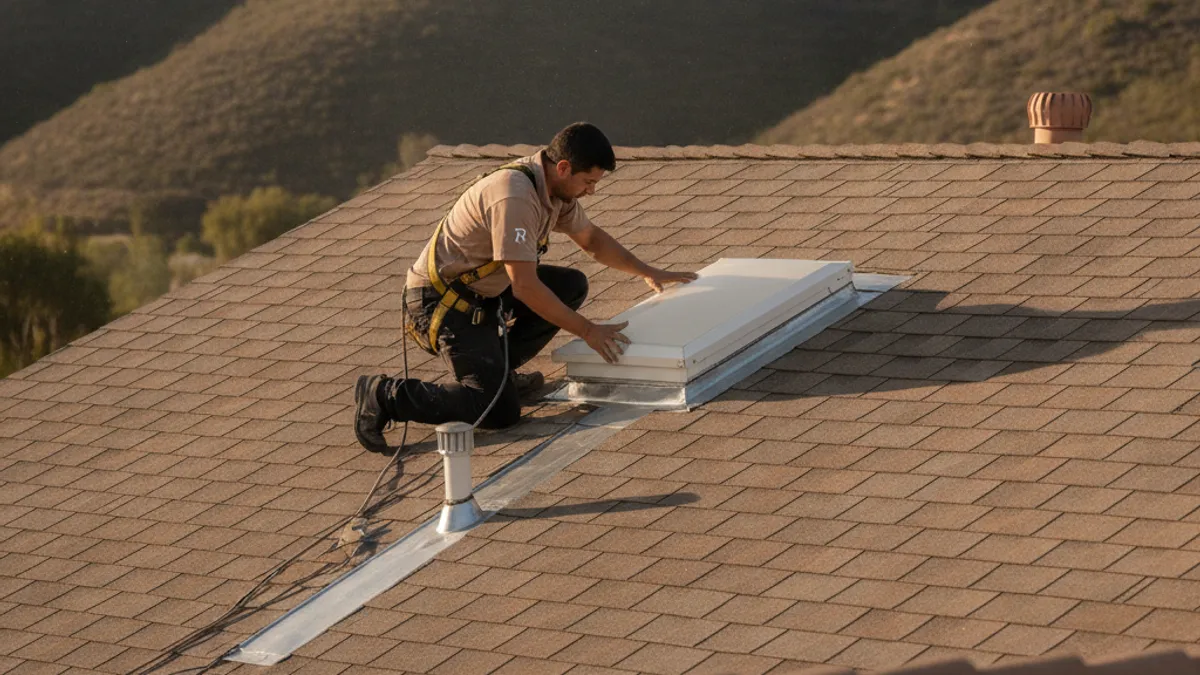
Flashing at later skylights and solar. Retrofits that were not integrated with the existing field fail at the mounts and flashings, not in the glass or the panel.
What to do first
Contain water with a bucket. If a ceiling bulge is heavy, a small puncture at the lowest point can relieve pressure before a larger section drops. Move furniture and electronics. If water is near an outlet or fixture, shut that circuit off at the breaker. Do not walk the roof yourself, especially tile. Untrained foot traffic cracks more tile than it finds.
What a repair quote should name (no invented prices)
We will not publish patch, valley-clean, flashing, or lift-and-relay dollar ranges. Those numbers are not measured on your house.
Ask the written quote to separate:
- Isolated shingle replacement and reseal
- Valley and gutter debris work versus a leak in the field
- Skylight or solar-mount reflash, including how much surrounding roofing is disturbed
- Tile underlayment work, and whether a broader lift-and-relay is possible once the area is open
- Hidden deck or dry-rot extras, with a stop-and-approve step
Community context: roofing in Rancho Peñasquitos. Rancho Peñasquitos is inside the City of San Diego. Start with Information Bulletin 123. Read the current live bulletin. This page will not restate exemption classes or layer limits. Ask the matched C-39 who pulls the permit if this scope needs one.
When a leak here is an emergency
Treat it as urgent if water is pouring, staining is spreading fast, or water is near wiring. During a storm, containment and a secured tarp matter more than waiting for a convenient appointment. Emergency roof repair is the service page. This brand does not promise arrival times.
Preventing the next leak on a canyon-adjacent lot
Lots on Black Mountain Open Space or other canyon edges need valley and gutter checks more often than a bare interior tract. Once before fall rain and once mid-season is a practical cadence. A valley that was clear in October can be packed by February.
If the roof is still original 1980s shingle, use a maintenance visit to ask remaining service life in writing. Granule loss and brittle sealant are planning signals. They are not a reason to invent a replacement price on this page. Seasonal checklist: annual roof maintenance.
FAQ
How old does a Rancho Peñasquitos roof get before it leaks regularly?
Original shingle fields often start leaking in earnest after decades of UV, not on a fixed year. Canyon debris shortens that if valleys stay blocked. Ask for a field inspection, not a calendar rule.
Is a leak near solar panels a solar problem or a roofing problem?
Usually roofing. Panels rarely leak. The flashing at mounting penetrations is the usual path.
Should I patch or replace if the roof is already over 35 years old?
If the leak is isolated and the rest of the field tests sound, a patch can buy time. If the same visit shows granule loss and brittle shingle across the field, one patch is often the first of several. Get that in writing.
Does canyon proximity increase leak risk?
Yes, mainly through debris, not a special wind code. Homes with mature trees or brush need valley and gutter work more often than interior lots.
For the city hub, see roofing in Rancho Peñasquitos.
When to call us
If the roof is leaking, or valleys on a canyon lot have not been cleared, call (760) 750-5557. We connect Rancho Peñasquitos homeowners with licensed, independent local roofers. You contract with the pro directly.