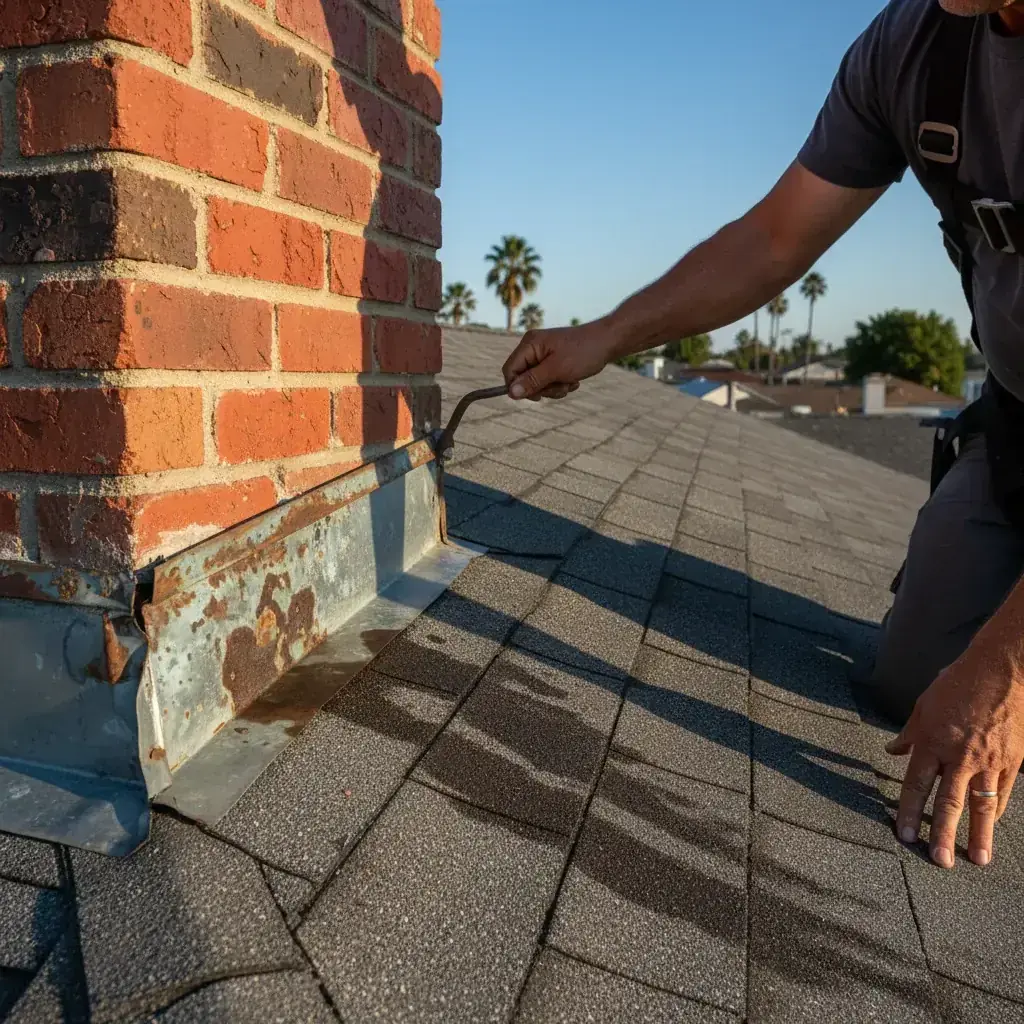
Your roof’s ridge is where the two slopes meet at the peak, and it’s one of the highest-stress points on your home. A ridge leak isn’t just water dripping into your attic; it’s a structural failure that can rot decking, destroy insulation, and feed mold within weeks. In San Diego’s coastal humidity and heat cycling, ridge leaks are more common than most homeowners realize.
This guide covers what causes ridge leaks, what they cost to fix, and why calling a roofer beats DIY every time.
What causes a roof ridge leak in San Diego
The ridge is where two slopes of shingles meet at the peak, sealed with a ridge cap (overlapping shingles or metal) and underlayment. Over time, four things fail it.
Shingle granule loss. The ridge cap takes the worst UV exposure on your roof. After 15–20 years, the granules wear off, exposing the asphalt beneath. Salt air accelerates this in coastal San Diego neighborhoods like Pacific Beach, Ocean Beach, and La Jolla. Once granules are gone, water penetrates the cap and runs down into the ridge valley.
Flashing separation. Some roofing systems use metal flashing at the ridge instead of capped shingles. This flashing is sealed with roofing cement and fasteners. Heat cycling (90 degrees in summer, 55 at night) causes metal and shingles to expand and contract at different rates. After a few cycles, the seal cracks and water finds its way through.
Improper installation. If the ridge cap was installed over wet substrate or in cold weather (below 50 degrees), the adhesive never bonded. High winds in San Diego can loosen poorly installed caps within months.
Structural movement. Foundation settling, inadequate attic bracing, or truss movement creates a gap between the two slopes at the ridge. Water pools in this gap and leaks through.
How to spot a roof ridge leak
Ridge leaks don’t always announce themselves. Check your attic after rain.
Staining near the ridge. Look at the rafters and decking right under the ridge line. Dark water stains spreading down both slopes (forming an X pattern) point to the ridge cap.
Mold or soft decking. Run your hand along the ridge decking if you can access it. Soft, crumbly, or moldy sections mean water has been pooling there for weeks.
Interior ceiling stains. You’ll notice brown or gray discoloration on your bedroom ceiling or hallway along the exterior wall that runs under the ridge. This means water is dripping through to the drywall below.
Attic smell. A musty smell after rain concentrated near the ridge area, especially in summer, is mold growing on wet wood.
Roof ridge repair cost in San Diego
Cost depends on what failed and how far the damage spread.
Simple ridge cap replacement: $400–$700. If only the shingles or metal cap failed and the underlayment is still intact, a roofer replaces just the cap. This takes a few hours and is the cheapest fix.
Ridge cap plus flashing repair: $700–$1,000. If flashing is separated, cracked, or rusted through, replacement costs more. The roofer removes the cap, inspects the flashing, replaces or repairs it, and installs a new cap.
Decking replacement: $1,200–$2,500. If water has rotted the roof decking or damaged the truss structure, the scope expands. The roofer removes the ridge cap, inspects decking along the ridge line, replaces rotted sections, and reinstalls everything. This requires removing more shingles and takes 1–2 days.
Labor runs $150–$300 per hour. Most ridge jobs take 3–6 hours, so labor alone is $450–$1,800. Materials (shingles, flashing, underlayment, cement) add $100–$400. Coastal San Diego roofers charge at the higher end due to labor costs and salt-air premiums.
Why DIY doesn’t work for ridge leaks
You might think you can patch it yourself. Here’s why that’s a costly mistake.
Working at the ridge requires walking a steep slope at your roof’s highest point. One slip ends you in the hospital or worse. Most DIY falls happen at the ridge where the roof peaks.
Even if you don’t fall, ridge sealing requires proper flashing technique, correct order of shingle installation, and roofing cement applied in the right conditions. Roofers use specialized tools (roofing hammers with magnets, roof brackets) that keep fasteners in place and prevent overshooting. A misplaced nail becomes another leak point. Roofing cement applied in full sun hardens before the cap sets, or in cool weather never hardens at all.
The roofers in the Top Pro Roofing SD network do this work every week. A small mistake costs you five times the repair price in follow-up water damage.
Ridge repair process
Here’s what a professional ridge repair looks like.
First, the roofer inspects the entire ridge from a ladder to understand the scope. They check for granule loss, flashing condition, and any visible decking damage. This inspection takes 30 minutes and costs $75–$150 (though many roofers waive it if you book the repair).
Next, they remove the ridge cap shingles carefully, prying them up without tearing the course below. Metal flashing (if present) comes out next. They examine the decking. If it’s soft or stained, they mark the damage area for replacement.
If decking is solid, they apply new underlayment over the ridge valley, install new flashing (or repair existing), and shingle a new ridge cap with roofing cement. If decking is rotten, they frame a patch, apply decking, underlayment, and then cap it.
The whole job takes 4–8 hours depending on decking condition. The roofer matches your existing shingles in color and style. If your shingles are discontinued, they’ll find the closest match.
Prevention: keep your ridge intact
Maintenance costs nothing compared to repair.
Clean your gutters twice a year. Clogged gutters back up water onto the roof, pushing it under shingles and through the ridge. Clean gutters in spring (April) and fall (October) in San Diego.
Check after storms. After Santa Ana winds or coastal storms, walk the perimeter with binoculars and look for lifted shingles, missing caps, or debris at the ridge. Sand and salt from ocean air accelerate wear.
Trim nearby trees. Branches that hang over the ridge drop leaves and debris that trap moisture. Cut them back so they’re at least 6 feet from the peak.
Address leaks immediately. If you spot a stain or smell mold, don’t wait. A small ridge leak becomes a $2,000 problem within a year of coastal San Diego moisture.
Frequently asked questions
How long does a ridge repair last?
A properly installed ridge cap lasts 15–20 years in San Diego. Coastal areas see faster wear due to salt air. Plan another repair around 2042 if you repair today.
Can I repair just part of the ridge, or does the whole ridge need replacing?
You can repair a specific section if damage is limited to one area. However, if your ridge is over 15 years old and you’re repairing one spot, the rest is probably failing soon. Discuss with your roofer whether a full replacement makes sense.
Will insurance cover a ridge leak repair?
Insurance rarely covers ridge leaks from age or wear. If the leak was caused by a specific event (a falling branch, wind damage), file a claim. The roofer can document whether the damage was event-related or age-related.
Is a ridge leak an emergency?
It depends on attic conditions. If your attic is well-ventilated, you have time to schedule in a week or two. If your attic is humid and you see mold growth, it’s urgent. Schedule within 48 hours.
What’s the difference between a ridge leak and a valley leak?
A valley is where two roof planes meet at an inside angle (like where your roof meets a dormer). A ridge is where they meet at an outside angle at the peak. Both leak for similar reasons, but ridge leaks are higher-priority because they affect the entire roof structure.
Get a ridge repair quote
Ridge leaks are painful but straightforward to fix. The vetted San Diego roofers in the Top Pro Roofing SD network can inspect your ridge, explain what’s wrong, and give you a firm price within 24 hours. Most ridge repairs happen within a week of your call.
Don’t let a ridge leak turn into attic rot. Reach out for your free inspection today.