Spray polyurethane foam (SPF) roofing and TPO are both low-slope options. They are not the same job as attic spray-foam insulation. SPF roofing is foam applied on the deck, then an elastomeric coating. TPO is a thermoplastic sheet with hot-air welded seams. Kitchen grease, ponding, recoats, and Title 24 listings decide more than a brand preference.
Top Pro Roofing SD refers licensed independent roofers. We do not spray foam and we do not weld TPO. Call (760) 750-5557. Confirm the license on the CSLB lookup. CSLB’s C-39 classification includes urethane foam among roofing and waterproofing materials.
Sheet-to-sheet: PVC vs TPO. Coatings: silicone vs acrylic. Services: flat and TPO, commercial roofing.
Keep attic foam off this page
Closed-cell foam in a rafter bay is insulation. SPF roofing is a covering. Mixing those searches is how a property manager gets an insulation bid for a leaking membrane. If the question is indoor R-value vs a new covering, start at roof vs attic insulation. This page is deck covering only.
How each system sheds water
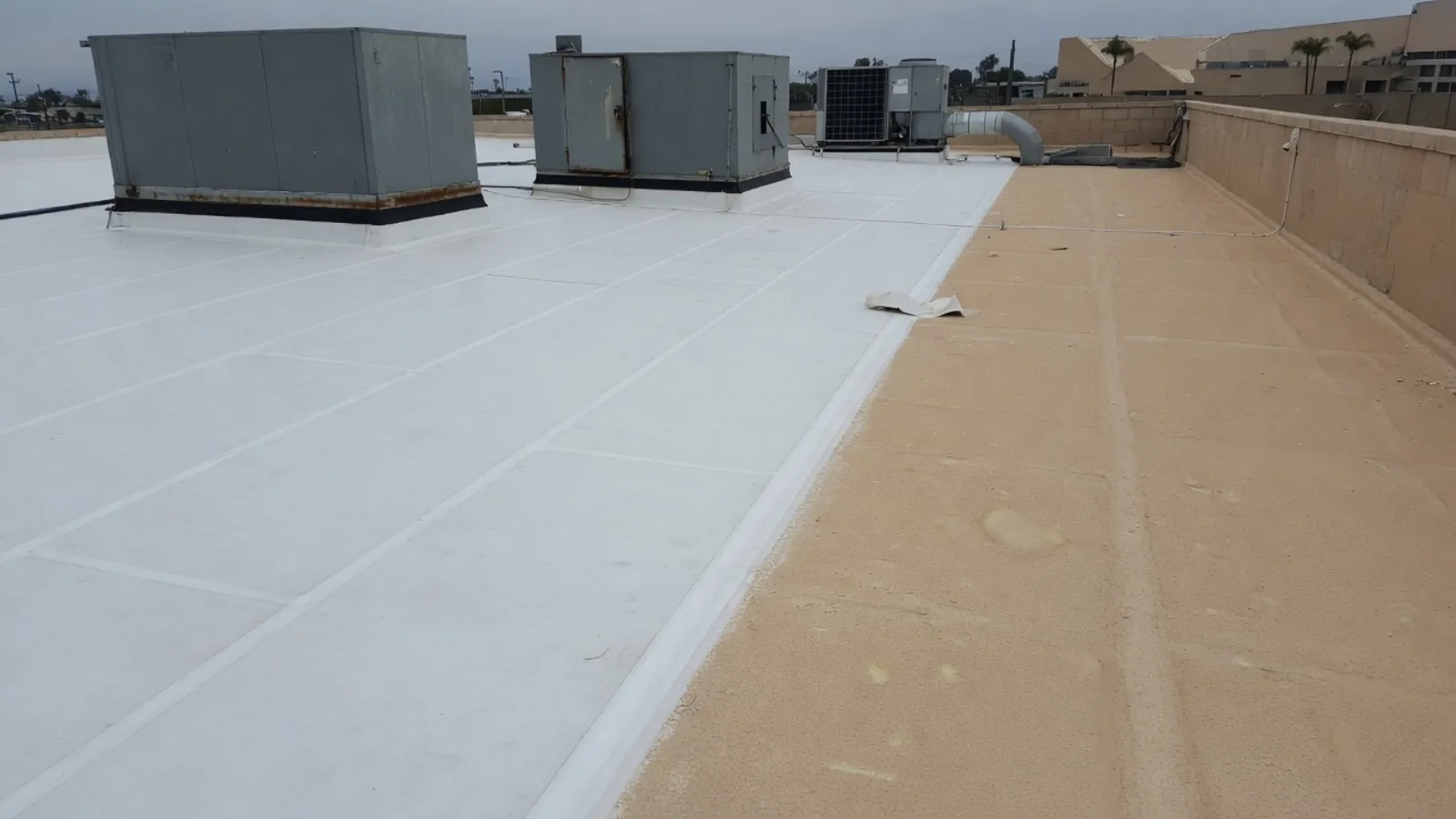
TPO. Insulation boards, cover board as specified, then a white sheet. Seams are welded. Drains, scuppers, and flashings are detailed in sheet and coated metal. A puncture is a patch. A bad weld is a seam repair. Ponding still ages any single-ply: flat roof ponding.
SPF roofing. Liquid foam is sprayed to a specified thickness, then coated (often acrylic or silicone). The foam is the insulation and the slope-build in one pass when the installer can feather toward drains. The coating is the weather surface. Hail, foot traffic, and UV eat the coating. Recoat intervals live on the coating manufacturer’s sheet. Bare foam that has yellowed or powdered is an open covering, not a finished roof.
We will not invent R-values, foam thickness, or per-square prices. Those belong on the written spec for that deck.
San Diego conditions that split the choice
Grease and chemicals. Restaurant and processing decks in Gaslamp, Convoy, and strip centers still follow chemical tables. PVC often wins grease on single-ply. SPF coatings vary. Ask the coating’s chemical table, the same way you would for TPO. Do not accept “foam handles everything.”
Title 24 cool roof on low-slope. San Diego is Climate Zone 7. Low-slope replacements in the listed zones need aged reflectance / emittance or SRI numbers from Section 4 of this site’s claims ledger (aged solar reflectance 0.63 and emittance 0.75, or SRI 75, unless the current energy code path at that address says otherwise). White TPO and a listed white coating on SPF can both be candidates. Ask for the CRRC product ID, not a color name.
Ponding and drains. SPF can add slope if the installer is building it. TPO cannot hide a dead drain. Either system fails if scuppers are blocked. Inland heat on a black or tan coating is a different load than a listed white sheet.
Existing covering. Recover vs tear-off is a deck and code question. City of San Diego IB 123 still governs covering renewal in the city. Other cities have their own desks.
What competing bids should name
- System (SPF plus named coating, or named TPO membrane and thickness).
- Insulation / foam thickness as specified, with drainage plan.
- Recoat or weld-repair path, and who holds the manufacturer paperwork.
- Chemical table if grease or exhaust exists.
- Title 24 path and CRRC IDs.
- Core cuts or moisture survey if the existing roof is staying underneath.
Call (760) 750-5557 to match a licensed independent low-slope roofer who will walk this deck before they pick foam or a sheet.