Many San Diego streets want the red tile look. A full clay or concrete reroof is a weight conversation the original framing may not have been built for. Stone-coated steel is a different product: stamped panels with a granular finish that can read as tile, shake, or shingle from the curb. It is still a metal system, with metal flashings and a metal installer. For tile ownership patterns, see tile roof replacement in San Diego.
Top Pro Roofing SD is a referral service. We match you with an independent C-39. We do not install metal, set prices, or stamp engineering. Call (760) 750-5557. We will not invent installed totals or a “cheaper than tile” dollar gap. Those belong on a measured proposal and, when required, on stamped drawings.
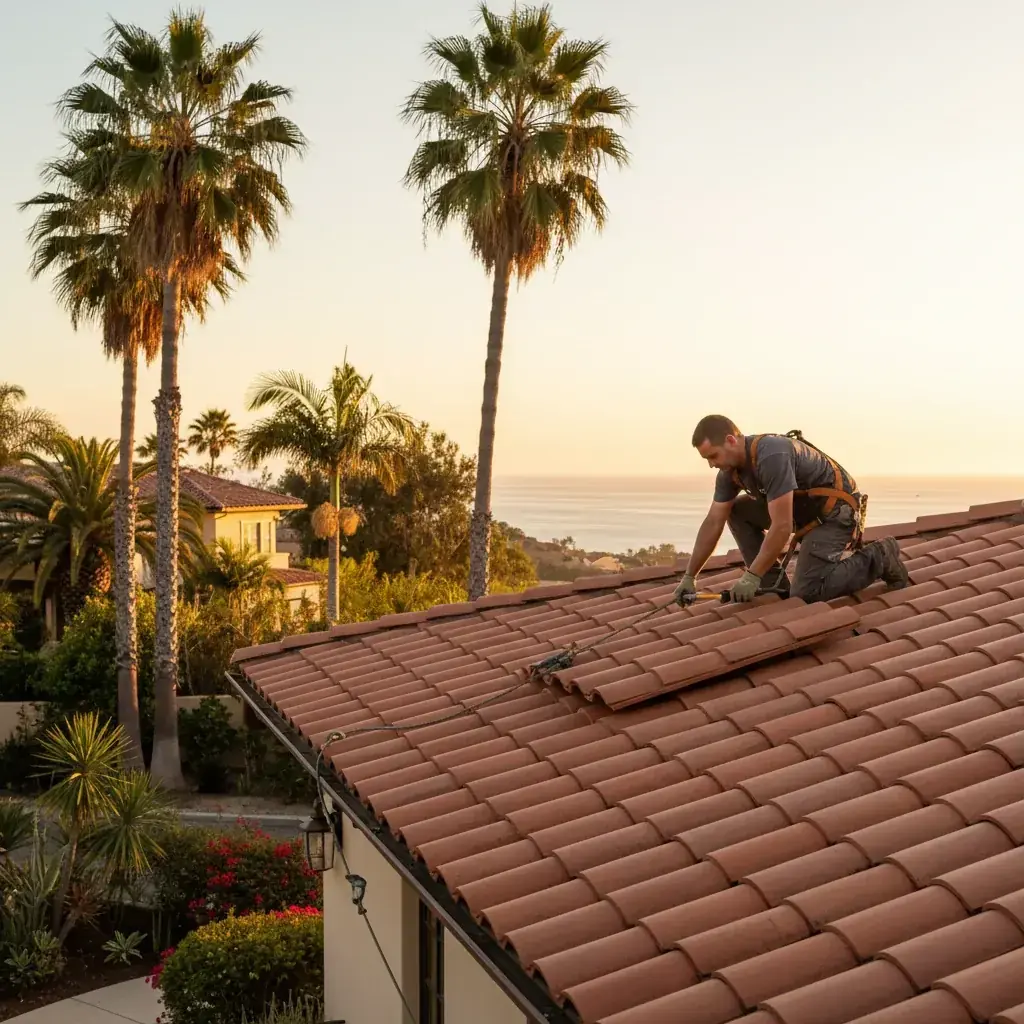
What stone-coated metal actually is
From the street it can look like barrel tile, shake, or slate. Under the granules it is coated steel, formed into a profile, with an interlocking panel layout. A stone coated steel roof is not a can of paint on a barn panel.
Typical layers on products sold in this market:
- Steel core. Gauge and grade belong on the spec. Ask for the listed thickness. Strength and noncombustibility come from the steel, not from the stone.
- Corrosion coating. Zinc-aluminum coatings (often sold as Galvalume) are common. Coastal San Diego still needs a finish and fastener spec written for salt. Coating name is not a lifetime rust waiver.
- Stone granules in a polymer bond. Color and texture come from the granules. They also shade the steel. Fade and granule-loss terms belong on the manufacturer’s written warranty, not on a year band we invent.
Panels interlock. Wind and water performance depend on that layout plus the underlayment, battens or direct-to-deck attachment, and trim the listing actually uses. Standing-seam metal is a different look and a different flashing language. Compare: standing seam vs stone-coated and metal roofs that look like shingles.
Why San Diego homes with old tile roofs consider it
The usual driver is weight. Clay and concrete are heavy coverings. Stone-coated steel is much lighter than a new tile field of the same area. We will not invent pounds per square or a percent savings. Put both products’ published weights on the same sheet. Inside the City of San Diego, start with Information Bulletin 123. Read the current bulletin. Ask the AHJ whether this covering swap needs structural verification. Tile-to-stone-coated is often a lighter swap, but the AHJ still has to agree.
The second driver is underlayment. Tile pieces can outlast the felt or older synthetics under them. When the membrane fails, water gets in while the street still sees “fine tile.” A lift-and-relay puts the old tile back over new underlayment. Some owners instead change systems. That is a cost, HOA, and framing decision, not an automatic upgrade. See tile roof lift and relay.
HOA and architecture still control the profile. Stone-coated exists because committees often want a tile roofline. Confirm the approved look before anyone orders terracotta steel.
How to compare it to clay tile and standing seam
Do not paste a national price cell into this comparison. Ask each bidder for the same roof map.
| Question | Stone-coated steel | Clay or concrete tile | Standing seam |
|---|---|---|---|
| Street look | Tile, shake, or shingle profile, granular | Real masonry units | Vertical ribs, modern or commercial |
| Weight / framing | Product weight in writing; often lighter than new tile | Heavy; conversions from shingle often need engineering | Light metal; still a listed assembly |
| Crew | Metal installer trained on that brand | Tile crew | Standing-seam specialist |
| HOA | Profile and color samples | Often the default in master plans | Frequently the harder sell |
| Fire / wind / impact | Ask for the listed Class A assembly, wind, and impact ratings for this product | Tile covering can be Class A; assembly still matters | Metal covering; listing still required |
Clay install is labor-heavy. Structural work, if required, can dominate a tile bid. Stone-coated can avoid that path when the listed weight stays under the AHJ’s trigger. It can still cost more than architectural shingle. Standing seam and stone-coated often sit in the same conversation as long-life metal. The split is usually aesthetics. Service overview: metal roofing.
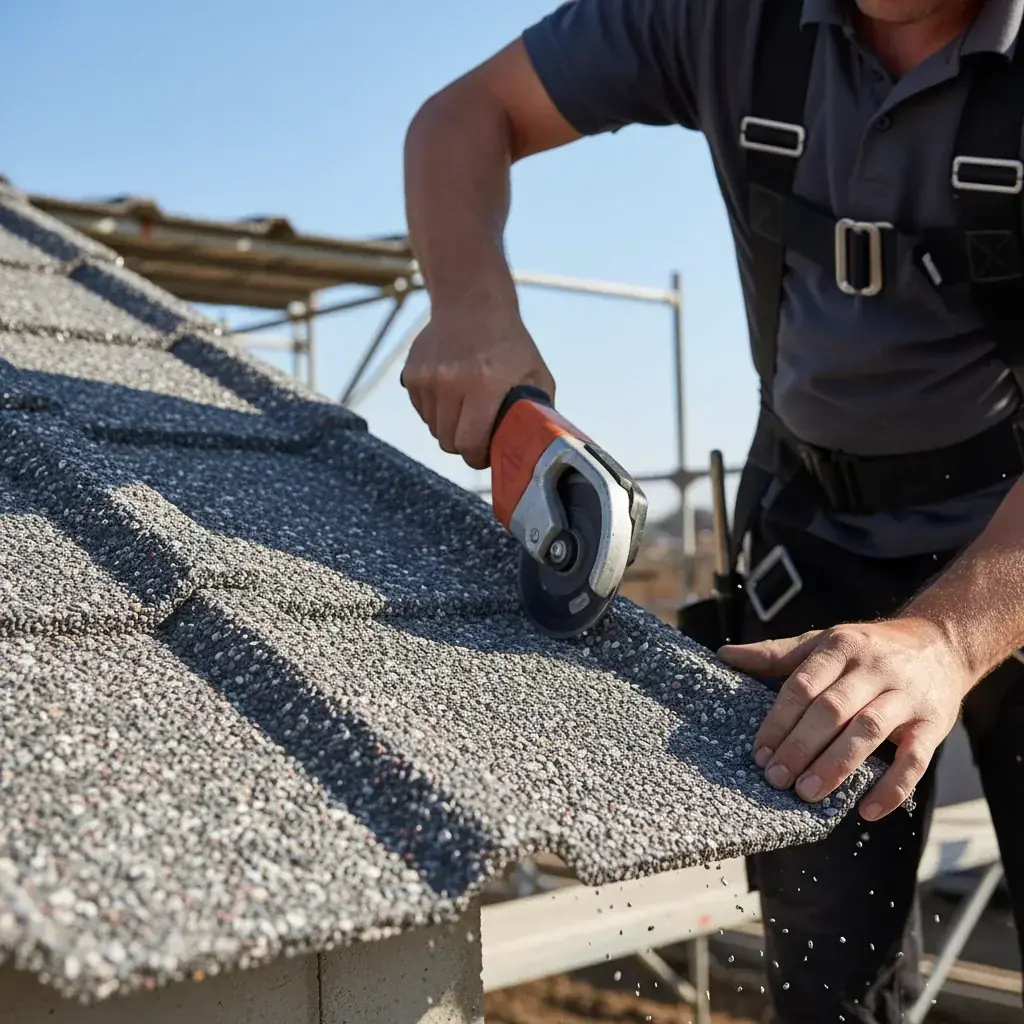
Wind, fire, and impact: read the listing
San Diego County roofs see Santa Ana winds, UV, and mapped wildfire risk in inland and canyon neighborhoods. Marketing copy is not the listing.
Fire. Many stone-coated steel systems are sold with a listed Class A assembly. Class A is the covering-and-underlayment listing, not a promise the house will survive a wildfire, and not a countywide fact. Embers still find vents, decks, and eaves. Ask for the current evaluation report for the exact product and underlayment. Confirm the parcel map with the AHJ.
Wind. Interlocking panels fastened on the specified pattern behave differently from mortar-set tile that can lift at the nose. Rated wind speed is a tested assembly number. We will not invent 120 mph as a countywide fact. Put the tested rating on the bid.
Impact. Class 4 impact ratings appear on some steel products. Hail is uncommon on the coast and more plausible inland. Falling fronds and limbs are the everyday test. Steel can dent without opening a hole. Clay can crack. Ask for the rating and for how dents are treated under the warranty.
Some colors and assemblies are listed as cool roofs. Confirm current ENERGY STAR or Title 24 status for the color you actually want: ENERGY STAR roof products. Look up the CEC climate zone for this address. Do not treat typical San Diego steep-slope work as a cool-roof default. Confirm with the California Energy Commission and the AHJ.
When stone-coated metal is the right (and wrong) call
It can be the right call when:
- You need a tile or shake look and the framing or HOA math does not support new clay or concrete.
- The lot is in a mapped fire or high-wind setting and the listed assembly is part of the hardening plan.
- Existing tile is not worth salvaging and you want one new metal system, not a relay of aged pieces.
It can be the wrong call when:
- First check has to stay in architectural shingle territory and the HOA allows it. See asphalt shingle replacement.
- You want a modern ribbed look. That is standing seam.
- The existing tiles are sound and only the underlayment failed. A lift-and-relay may be the job the house actually needs. Compare both proposals.
Do not call any covering a “forever roof.” Warranties have limits, and flashings and underlayment still age.
When to call us
Repair, relay, or a stone-coated reroof is a lot of variables. A C-39 who installs the brand you want should map the roof and put weights and listings on paper.
Call (760) 750-5557 and we will connect you with a vetted local roofer. Top Pro Roofing SD does not install the panels.