TL;DR
- Both are steel roofing systems. Standing seam is long vertical panels and concealed clips. Stone-coated steel is stamped to look like tile, shake, or shingle, with bonded granules.
- Architecture usually decides: North Park and La Jolla modern vs Encinitas or East County tile-look HOA streets.
- Both are in the lightweight-metal class vs clay or concrete tile. Use the product data sheet weight, not a blog’s pounds-per-square.
- Fire, wind, and impact ratings are listed assemblies. Ask for the evaluation report. Do not assume every panel is Class A or Class 4.
- We will not invent installed prices or a 50-year promise. Steel vs aluminum (the substrate) is a different page: aluminum vs steel.
Top Pro Roofing SD refers licensed C-39 roofers. We do not install metal. Call (760) 750-5557.
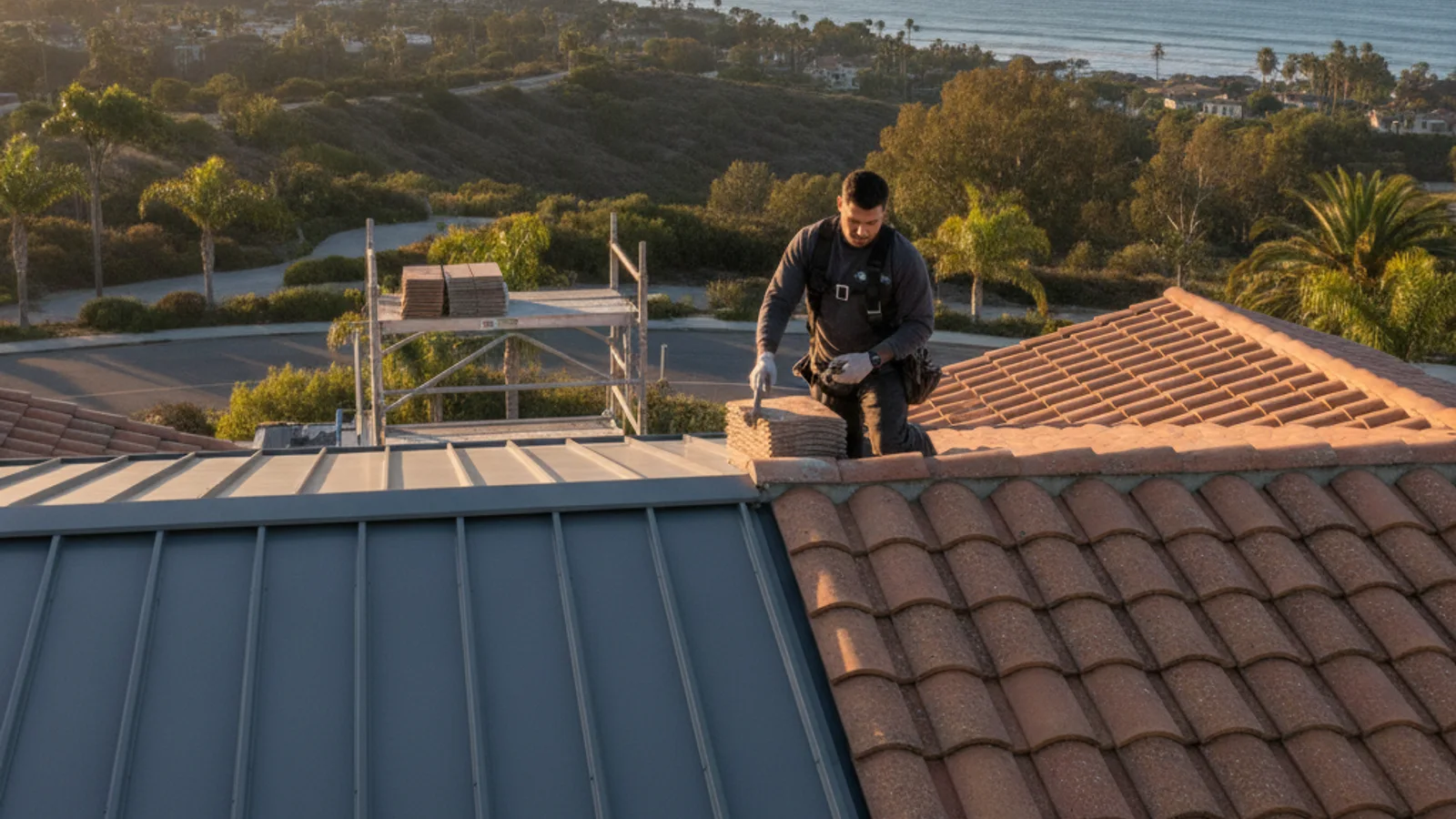
What actually separates the two
Standing seam. Panels run ridge to eave. Raised interlocking seams. Fasteners hidden on clips. The roof looks like metal on purpose: new construction in North Park, a coastal remodel in La Jolla. Gauges, finishes, and salt: standing seam guide.
Stone-coated steel. Same family of coated steel, stamped into a shingle, shake, or barrel-tile profile, then stone granules for color and texture. From the street it can read as clay or shake. That is the usual pick when an HOA wants a tile roofline and the framing cannot take real tile. Details: stone-coated metal.
Neither is a corrugated barn panel. Both still need the right substrate and paint system for salt. If you are on the water, read aluminum vs steel before you lock a steel core.
Cost: what to compare instead of a fake range
Both sit in the premium tier above architectural shingle. Real clay or concrete tile can pass them once you add framing. Standing seam labor climbs on hips, valleys, and custom flashing. Stone-coated interlocking panels are often more repetitive on a simple plane. Complexity can erase that.
We will not publish a 2,000 sq ft package price or a per-square-foot band. Itemize: panel spec, underlayment, tear-off, deck, flashing, penetrations, and any structural work. Then compare those lines. Metal vs shingle as a budget class: metal vs shingle cost.
Fire, wind, and impact: listings, not slogans
In Ramona, Alpine, Jamul, and Poway, ember performance often comes before color.
Fire. Many standing-seam and stone-coated assemblies are listed Class A. Class A is a tested assembly (panel, underlayment, deck), not a metal vibe. Ask for the listing that matches what will be on your house. WUI context: wildfire-resistant roofing.
Wind. Concealed clips (standing seam) and interlocking stone-coated panels are both designed for uplift. Rated wind is on the evaluation report. Santa Ana gusts punish exposed screws. That is a reason both beat a tired exposed-fastener panel, not a 120 mph guarantee from this page.
Impact. Some stone-coated products carry a high UL 2218 class. Granules also hide small dents. Smooth standing seam shows a dent. Branch drop under eucalyptus or pine is a cosmetic decision as much as a structural one. Read the sheet for the SKU on the bid.
Weight vs tile
Stone-coated steel’s reputation is “tile look without tile mass.” Standing seam is also light metal. The useful split is metal vs clay or concrete tile, not standing seam vs stone-coated. A C-39 (and an engineer if the existing roof is heavy tile or the framing is unknown) compares data-sheet weight to the structure. If you are deciding whether to stay in the tile family: concrete vs clay tile.
Which profile fits the house
Standing seam when the house is modern, mid-century, or a clean custom, and you want a flat, even color. It is also the usual pick for clamp-style solar mounts that grab the seam instead of drilling the pan. Confirm the clamp is approved for that panel and that the roof warranty allows it.
Stone-coated steel when the house is Spanish, Mission, or Mediterranean, or you are coming off aging tile and the HOA still wants that silhouette. It can meet a tile-look rule without tile weight. Confirm the HOA packet names “stone-coated” or “metal tile” and not “clay only.”
Coastal material tree beyond these two metals: best roof material for coastal climates.
Standing seam vs stone-coated at a glance
| Question | Standing seam | Stone-coated steel |
|---|---|---|
| Look | Vertical pans, visible metal | Tile, shake, or shingle profile |
| Fasteners | Concealed clips | Interlocking panels, maker-specific |
| Solar | Often seam clamps, fewer pan holes | Usually penetrations, sealed per spec |
| Dents | Visible on a smooth pan | Granules hide small hits |
| HOA tile look | Rarely satisfies a tile rule | Often the metal path that does |
| Weight class | Light metal | Light metal (still not tile) |
FAQ
Is one more durable than the other?
Durability is the core, coating, and install, not the profile name. Compare gauges, paint system, and the warranty exclusions, especially coastal distance.
Which installs for less?
Often stone-coated on a simple roof, often standing seam when flashing is custom. Get two itemized bids on the same tear-off and deck assumptions.
Can I put solar on either?
Yes, with different mounting. Standing seam can take non-penetrating clamps on the seam when the maker allows it. Stone-coated typically needs mounts through the panel and a seal detail. Either way, a C-46 handles the array. See solar removal for a reroof.
Does Class A metal change my insurance?
Some California carriers treat listed Class A metal differently in WUI. Discount and eligibility are the carrier’s, for that address. Ask them with the product listing in hand.
Is one louder in rain?
On a residential solid deck with underlayment, interior rain noise is close to other roofs. Isolated reports usually mean a room under a thin ceiling, not “metal is a drum.”
How do I choose?
Start with architecture and HOA. Then listing (fire), substrate (coast), solar plan, and two comparable bids. License: CSLB check.
When to call us
A roof assessment settles framing, HOA language, and which listed assembly fits. Call (760) 750-5557 and we will connect you with a vetted local roofer.