A barrel or S-tile roof is a field of tubes at the eave. Bird stops (eave closures) fill those openings so birds, rodents, bees, and wind-driven rain cannot walk into the batten space. When they are missing, cracked, or the wrong profile, the tile field can look fine from the street while the eave is a nest.
Top Pro Roofing SD refers licensed independent C-39 roofers. We do not install tile or pest closures. Call (760) 750-5557. Verify the license on the CSLB lookup.
This is not a lift-and-relay guide and not a mortar-ridge page. Field set method: mortar-set vs foam-set tile. Leak patterns: common causes of tile roof leaks. Service: tile roofing.
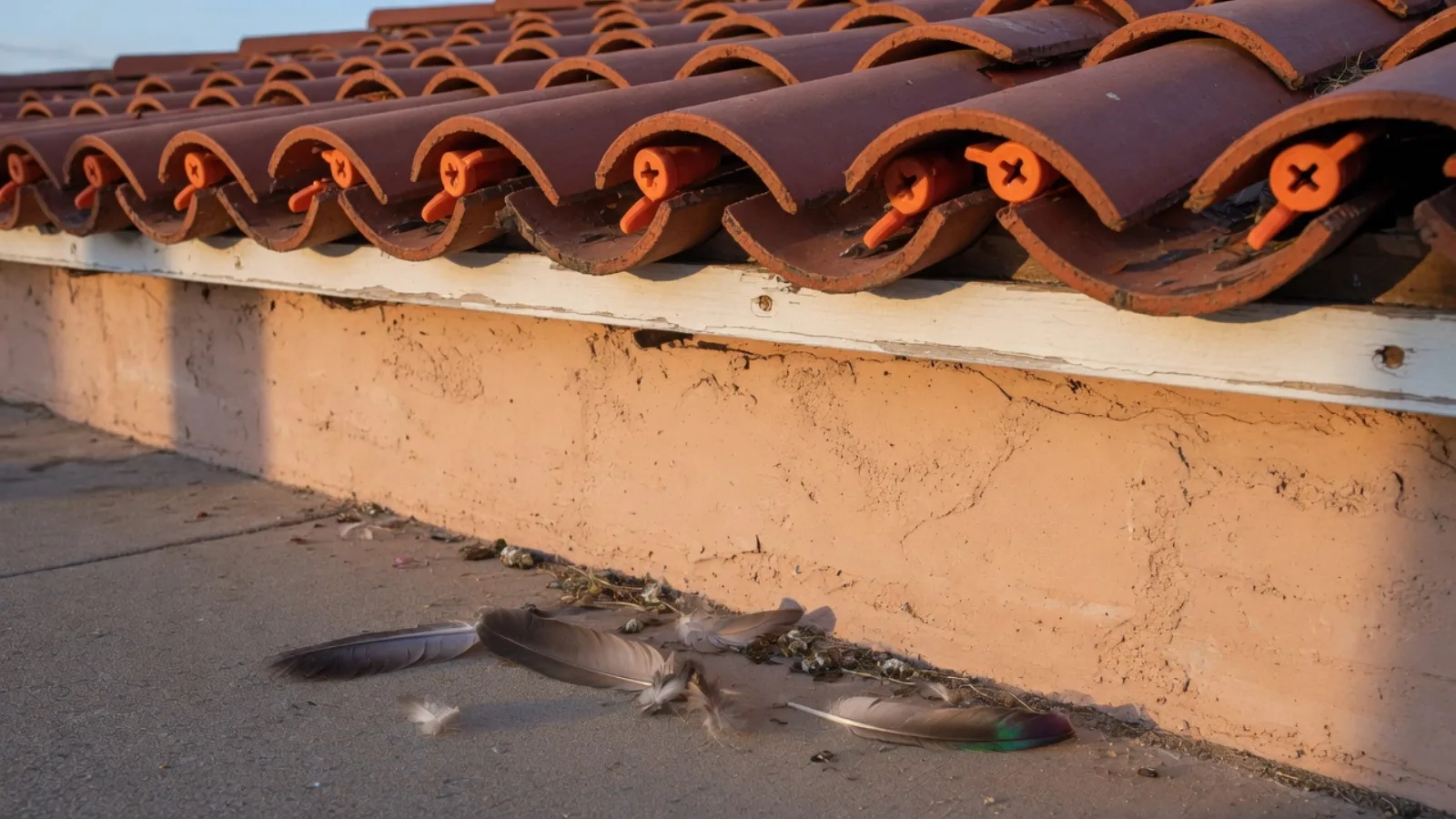
What a bird stop is doing
Spanish and Mission profiles leave a crescent opening under each barrel at the eave. Concrete S-tile does the same. Water is supposed to shed on the tile face. The underlayment and battens live in the space behind those openings.
A closure (plastic insert, mortar fill, metal grill, or a manufacturer eave piece) blocks that crescent. It is a pest and debris detail first. It is also a wind-driven-rain detail when a south or west eave takes a storm. It is not a substitute for underlayment.
Hip and ridge closures are a different part. Those keep weather out at the caps. Mixing “bird stop” and “ridge mortar” on a bid is how scopes get vague. Ask which edge.
How San Diego eaves fail this detail
Missing inserts after a reroof. Tile was reset, the old plastic was brittle, and nobody restocked the profile. You see open barrels from the driveway.
Wrong profile. A flat closure in a deep barrel leaves gaps. Birds do not need a large hole.
Cracked plastic in inland heat. Poway, Escondido, El Cajon, and Ramona cook south eaves. UV-brittle inserts snap. Pieces show up in the planter.
Mortar plugs that shrink. Some older clay roofs used mortar in the barrels. Mortar cracks. The hole returns, often with a stain on the fascia.
Pest evidence. Feathers, droppings on the walk, buzzing at the eave in spring. Pigeons and starlings use Mission-style barrels in older central neighborhoods (North Park, Kensington, Mission Hills) and along the coast where barrel tile is common.
Do not treat this as a wildlife-control brand. A C-39 closes the roofing opening. Active nests and protected species are a different conversation with the right agency. Ask the matched roofer what they found before anyone pulls a nest.
What the inspection should name
Ask for photos at the eave, looking up into the barrels, not only a street shot of the field.
- Profile of the tile (barrel, S, flat) and the closure product that fits it.
- How many openings are empty, cracked, or packed with debris.
- Whether battens, underlayment, or fascia are stained or chewed behind the openings.
- Whether the fix is insert replacement, mortar, a manufacturer eave metal, or a larger underlayment job.
- Hip and ridge as a separate line if those closures also failed.
A whole-roof relay is a different proposal. Bird-stop replacement on an otherwise sound field is a targeted eave job. Do not accept “seal eaves” with no product name.
Fire-hazard lots still need listed vents and ember details where Chapter 7A applies. An eave tile closure is not automatically a listed ember device. Ask the AHJ and the product sheet. Mapped-zone context: San Diego fire-code roof requirements.
What you do from the ground
Stay off the tile. Tile breaks under foot traffic. Photograph the eave from a ladder only if it is stable and you are not reaching over a two-story drop. Call (760) 750-5557 with the address, tile type if you know it, and whether you see open barrels, feathers, or stains on the fascia. The matched independent roofer quotes the closure, not a slogan.