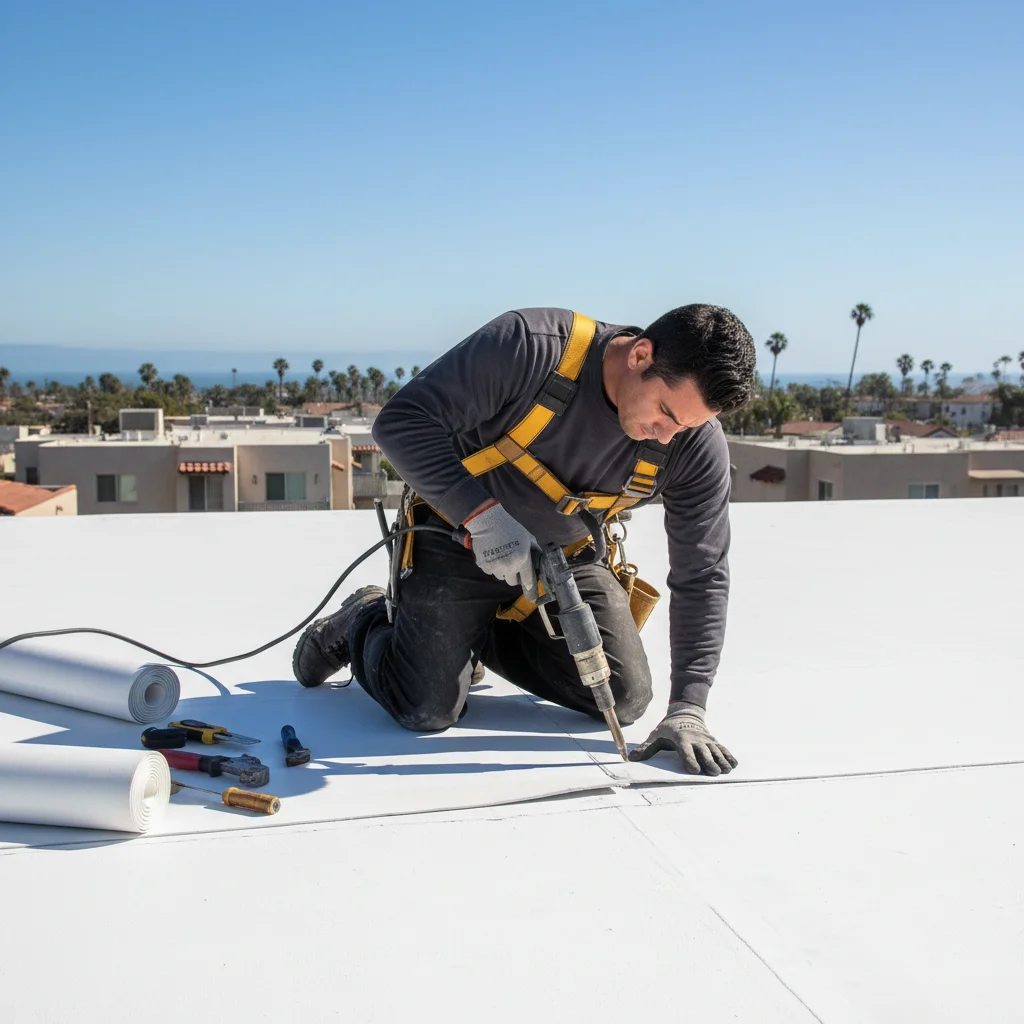
A ceiling stain on a National City flat roof is a symptom. The source is usually flashing at a curb, a failed seam, a clogged drain, or water that is still sitting two days after rain. Patch the stain and skip the walk, and the same leak returns.
Top Pro Roofing SD refers licensed independent C-39 roofers. We do not repair membranes, set prices, or speak for National City Development Services. Call (760) 750-5557. You contract with the matched roofer.
City housing and service context: roofing in National City. County process without invented totals: flat roof repair cost in San Diego. Ponding definition: ponding water on a San Diego flat roof.
What actually fails here
South Bay marine air reaches National City. Salt on metal flashing, gravel stops, and edge metal shows up before the field looks tired. Vents, skylights, HVAC curbs, and parapet copings are the usual first checks. A C-39 should look there before arguing about the membrane brand.
Ponding is next. Ask the inspector whether water still sits after the rain has stopped, versus a puddle that dries overnight. Standing water loads the deck and ages the membrane in that spot. Drains and scuppers clog with leaves and ballast. A sag in the structure is a different problem. Do not coat a pond and call it slope. Read the current adopted code and the membrane maker’s ponding notes rather than this blog.
Membrane damage is the third pattern. Punctures, open TPO or PVC welds, lifted modified-bitumen laps, and cracked built-up flood coats all leak. The indoor drip is often feet away from the hole. Wind can lift an edge that was already loose. On a rental, photograph before anyone mops, then decide whether the claim path applies. That is an insurance question, not a blog dollar amount.
Older multi-family along the SR-54 and 8th Street corridors often still carries built-up roofing. Repair on BUR is not the same method as a heat-welded TPO patch. Material choice when the field is spent: TPO versus modified bitumen.
Inspection before any patch
A proper flat roof repair starts with the whole surface, not the room with the bucket.
The walk should include:
- Field membrane, laps, and prior patches
- Every penetration, curb, and pitch pan
- Parapet walls, copings, and wall flashings
- Drains, scuppers, overflow, and the interior leader if there is one
- Soft spots that suggest wet insulation
- Interior stains mapped to the deck, not guessed from the hallway
The proposal should name the covering (TPO, PVC, modified bitumen, BUR, coating over an unknown system). A coating on mystery layers is its own risk. See elastomeric coating on a flat roof.
Once the source is named, the area has to be clean and dry. Sealant and patches do not bond to wet felt or dirty TPO. Method follows the product: heat-welded TPO or PVC, torch or cold process on modified bitumen, built-up repair in kind. Edge sealant has to be compatible with that membrane.
For apartments and mixed-use near Downtown National City, the written scope should also cover access, tenant notice, and who keeps the photos. We will not invent a six-to-ten-week calendar. Ask the contractor for a schedule that matches that building’s access rules.
Permits, cool-roof rules, and who confirms them
Small patches and flashing reseals often do not need a building permit. Work that replaces sheathing, changes structure, or reroofs a large share of the covering often does. That line is not ours to draw. National City Development Services has the final word for an address inside the city. Unincorporated parcels use the County of San Diego desk instead.
California Title 24 energy standards can apply to qualifying low-slope reroofs. Look up the CEC climate zone for this address. Confirm the cool-roof path for that permit with National City Development Services or the energy consultant. Do not copy a climate-zone number from this blog, and do not treat Title 24 as a default. Prescriptive reflectance and emittance values change by slope and edition. See cool roofs and Title 24. We will not invent a reflectance number here.
TPO product pages: TPO roofing.
Frequently asked questions
How much does flat roof repair cost in National City?
We will not publish a price band. Puncture patches, wet insulation, and a drainage rebuild are different jobs. Ask for a written scope on this roof. Background on what moves a quote is on the San Diego flat roof repair cost page. Top Pro Roofing SD does not set the independent roofer’s price.
How long does a flat roof repair take?
A named seam or puncture can be a short dry-weather visit. Wet insulation, deck replacement, or multi-building access takes longer. Ask for hours or days on the proposal. Do not treat a blog estimate as a schedule.
Can a flat roof be repaired in the rain?
Usually no. The surface has to be dry enough for the specified adhesive or weld. Temporary dry-in is a different product than a finished patch. A wet repair that fails is still a failed repair.
What are the warning signs?
Ceiling stains, blistered or open seams, cracked sealant at curbs, rusted edge metal, and water still on the deck 48 hours after rain. Any one of those is enough to request an inspection.
Do I need a permit?
Confirm with National City Development Services (or the county, if that is the AHJ). Do not assume a neighbor’s patch sets the rule for your building.
Why does salt air matter?
Bay-adjacent air carries salt that pits exposed metal. Flashing and fasteners often fail before the field membrane looks finished. That is a reason to inspect metal first, not a reason to skip the seams.
If you have a leak or standing water on a National City flat roof, call (760) 750-5557. We will connect you with a licensed local roofer who works low-slope systems.