The most expensive line on most San Diego composition reroofs is labor. The most expensive surprise is decking and framing rot found after tear-off. Those are different problems. A usable bid prices the first honestly and writes a rule for the second.
Top Pro Roofing SD is a referral service. We match homeowners with independent CSLB C-39 roofers. We do not install, set prices, or invent totals. Call (760) 750-5557. Compare written, itemized proposals. County overview: roof replacement cost. Material walkthrough: new roof cost in San Diego.
TL;DR
- Labor (tear-off plus install) is often the largest share on architectural shingle jobs because the covering is cheaper than tile or standing seam.
- On clay, concrete, and standing-seam metal, the product and specialty flashings can overtake labor.
- Permits, disposal, underlayment, flashings, and vents are real lines. They should not be a single “misc” lump.
- The surprise is usually plywood or skip-sheathing found wet or rotten. Demand a per-sheet allowance and overage rate in the original contract.
- Title 24 cool-roof rules, WUI Class A assemblies, and ventilation corrections change scope on older homes. Confirm them for the address. We will not invent adders.
Labor versus covering: which one wins depends on the job
Roofers price squares (100 square feet of roof surface), plus pitch, stories, access, tear-off layers, and waste. Heated floor area is not the roof.
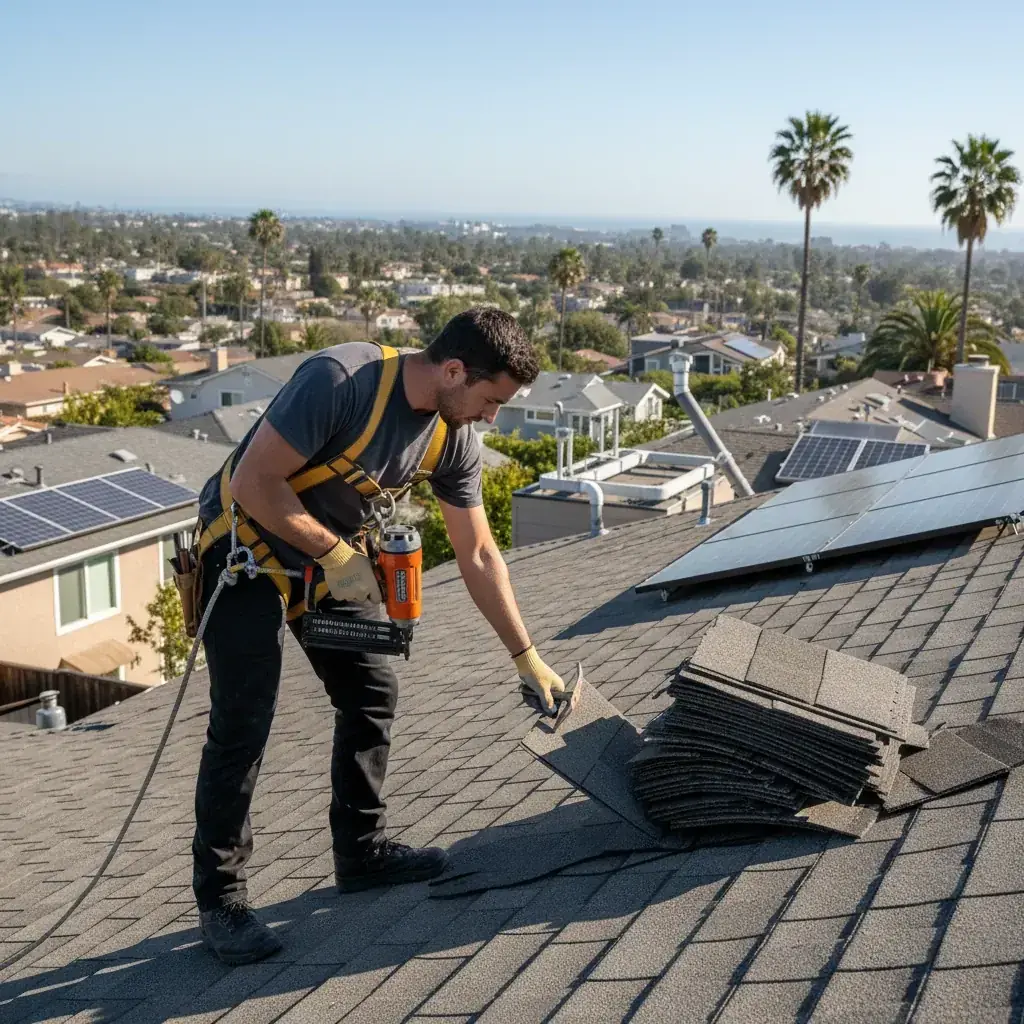
Composition shingle. The product is relatively inexpensive. Crew time, workers’ compensation (California class 5552 is a high-rate roofing class), and code steps (cool roof, drip edge, valley metal, ventilation) load the hour. Labor is often the biggest invoice line.
Tile and standing seam. The covering, flashings, and (for tile) structure or lift-and-relay can dominate. Labor share drops as a percentage even when the crew is more specialized.
Lift-and-relay. You pay to lift existing tile, replace underlayment, and reset tile. The “material” line may be felt and flashings, not a truck of new tile. See tile lift-and-relay.
California wage and insurance rules are why a bid far below two others is a red flag, not a bargain. Check the C-39: CSLB lookup. DIR class information: dir.ca.gov. We will not invent loaded hourly rates or a 40 percent labor split as if it were your house.
Shingle replacement detail: asphalt shingle replacement.
The surprise: decking after tear-off
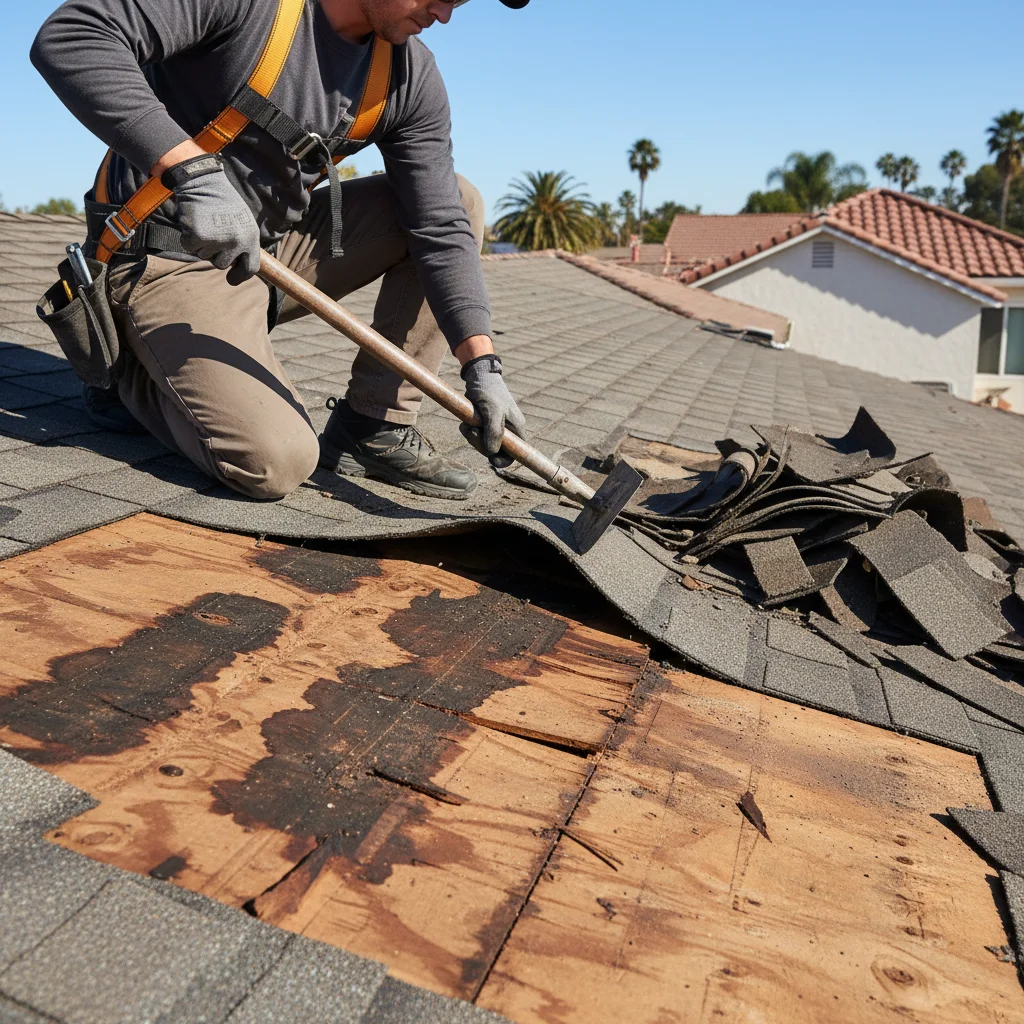
You cannot see most of the deck until the old covering is gone. Coastal salt, long chimney leaks, and 40-year felt leave plywood that comes up in pieces. Skip-sheathing on older houses is another discovery.
A clean contract names:
- How many sheets (or square feet) are included
- The unit rate for additional sheets
- What happens if rafter tails or framing need repair
- Who photographs the deck before new underlayment goes down
A bid that assumes zero rot on a 30-year Encinitas or Imperial Beach roof is guessing. A bid that buries unlimited decking in a high lump sum is also guessing, in the other direction. Details: roof decking replacement.
Permits and disposal are not “extra if they remember”
Ask the AHJ whether this reroof needs a permit. Do not treat it as a handshake job, and do not invent a countywide patch size that is permit-free. Fees differ by city and by project valuation. City of San Diego starts with Information Bulletin 123. Read the current bulletin. Chula Vista, Carlsbad, Oceanside, Escondido, Encinitas, El Cajon, Poway, and the unincorporated county each run their own counter. Ask for the permit as a pass-through with the jurisdiction named. Ask for the receipt. We will not invent a fee table.
Disposal scales with material. Tile tear-off is much heavier than composition. Ask for assumed tonnage and which landfill or transfer station. Process: roof permit process.
Code items that change the scope, not a blog adder
Title 24 cool roof. The California Energy Commission publishes the current energy standards. Look up the CEC climate zone for this address. Confirm with the AHJ whether a listed cool-roof product applies. Do not treat Title 24 or a climate-zone number as a countywide default. Slope and assembly still matter. See Title 24 cool roof. ENERGY STAR product listings: energystar.gov. We will not invent an underlayment adder.
WUI Class A. If the parcel sits in a designated wildland-urban interface or fire-hazard severity zone, ask the AHJ whether a listed Class A assembly and ember-resistant vents apply. Do not treat Class A as a countywide fact. See fire-code roof requirements.
Ventilation. California residential rules can size net free vent area to attic floor area. Read the current adopted text with the inspector. Undersized 1970s attics often need ridge, off-ridge, or soffit work at reroof. That is inspection, not an upsell.
AHJ area test. Crossing the building official’s or insurer’s area test in a named window can force a broader current-code reroof. Confirm the current trigger. Do not treat a percentage on this page as the rule. Related: 25 percent rule.
Where quotes hide the comparison
- Decking unit rate left blank or far above the other bids after you are committed.
- Permit as a round number with no city and no receipt.
- Disposal with no tonnage.
- Underlayment specified as synthetic, installed as cheap felt. Ask for brand and photos.
- Flashing reused. New step flashing, pipe boots, and valley metal should be explicit. Reused flashing is a common leak after a “cheap” reroof.
A comparable packet line-items tear-off, deck rule, underlayment (brand), flashing, covering (brand and profile), permit jurisdiction, disposal estimate, labor (crew and days), inspection, and who registers any manufacturer warranty. One number with no breakdown is not comparable.
Warranty registration is often no extra product cost, but it only exists if the installer is in that maker’s certified program. Confirm before you sign. Brands context: best roofing brands.
What is usually worth insisting on
New flashing rather than reuse.
Underlayment that matches the covering and climate (high-temp synthetic under tile and metal, listed cool-roof products where required).
A written deck rule.
Manufacturer system registration when you are buying that coverage.
What is usually not worth inflating the bid for (unless the house needs it)
A luxury shingle on a house you will sell shortly, if a listed architectural product already meets code and the HOA.
Impact-rated (Class 4) shingles solely because a national brochure mentions hail. San Diego hail is uncommon. Ask your carrier whether any discount exists before you pay for the rating.
Ridge-cap cosmetics that do not change the listing.
Those are judgment calls on a written scope, not prices we can invent.
How to decide what you are paying for
Do not compare neighbor gossip totals. Compare:
- Measured roof area and pitch, not floor area
- Tear-off versus overlay
- Deck allowance and unit rate
- Underlayment brand
- New versus reused flashing
- Permit as pass-through
- Disposal tonnage
- Whether the C-39 is the firm that will register the warranty
- Solar detach if an array is present (solar removal)
Repair versus replace: roof repair vs replace. Timing: best time to replace a roof.
FAQ
What is the biggest line on a typical San Diego reroof?
Labor on many composition jobs. Covering and flashings on many tile and metal jobs. Read the itemized bid. A blog percentage is not your invoice.
How bad can a decking surprise be?
From a few sheets at the chimney to a full re-sheath, plus framing if rafters are gone. The contract should say how that is priced before tear-off day.
How much is the permit?
Whatever that city charges for this valuation. Ask for the receipt. See permit process.
Is Title 24 optional if the old roof was not cool?
Not if the permit path requires a listed assembly. Confirm with the building official.
What is the cheapest line to query?
Disposal assumptions and permit pass-through. The larger money is still labor, covering, and decking.
What is the most expensive line to skip?
New flashing and a honest deck rule.
How we can help
We connect San Diego County homeowners with licensed independent roofers. Confirm any fee with the matched C-39. The professional you choose is who you pay. Call (760) 750-5557 or use contact. Service pages: roof replacement, roof repair.
Sources
- City of San Diego Development Services, Information Bulletin 123
- ENERGY STAR cool roof materials, energystar.gov/products
- California Department of Industrial Relations, workers’ compensation (class 5552 is the roofing classification; rates are employer-specific)
- CSLB C-39 license check, cslb.ca.gov