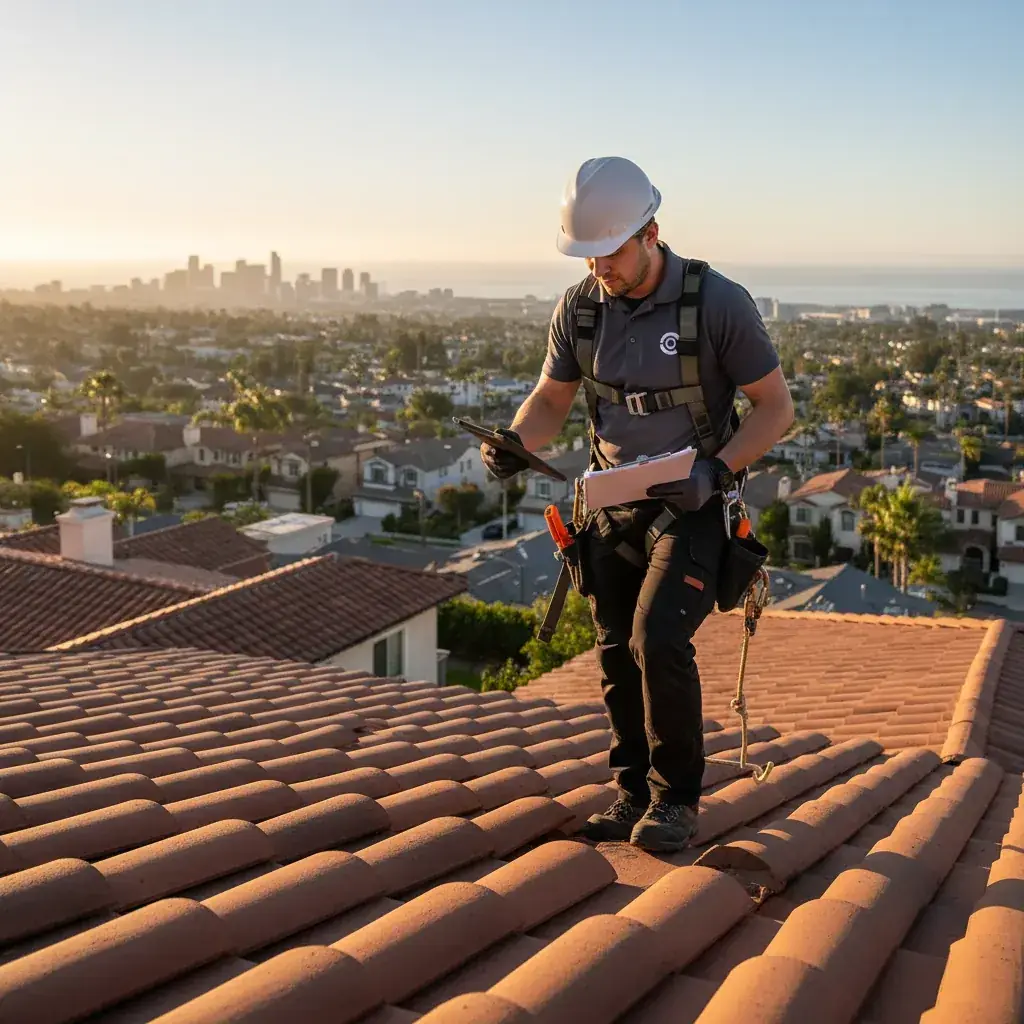
A San Diego roof inspection fee is a product choice, not a county table. A free estimate is a bid. A paid visual is a short condition note. A written report with photos is what escrow and carriers usually want. Drone and infrared are add-ons for roofs you cannot walk or for low-slope moisture you cannot see.
Top Pro Roofing SD is a referral service. We do not inspect roofs, we do not certify remaining life, and we do not publish inspection fees. Call (760) 750-5557. We will introduce a CSLB-licensed C-39 or a signed inspector. You pay that person. Ask for the fee and a sample report before they schedule.
Related: roof inspection vs free estimate, free roof inspection, roof inspection service.
What the fee is paying for
If you are buying, selling, answering an insurance letter, checking after a storm, or deciding whether to put solar on an aging roof, the useful question is which document you need. The invoice follows that choice.
| Product | What you usually get | Holds up in escrow or with a carrier | Best when |
|---|---|---|---|
| Free contractor estimate | Verbal notes or a quote | No | You already want a bid |
| Basic visual | Short write-up, a few photos | Rarely | You want a snapshot, not a file |
| Full written report | Photos, components, remaining-life opinion | That is the point | Buying, selling, claims |
| Roof certification letter | Short remaining-life statement | When the lender asked for that letter | Refinance or appraisal flag |
| Drone add-on | Aerial photos on steep or fragile roofs | Only with a written report behind it | Tile you should not walk |
| Infrared / moisture scan | Thermal map after the right weather window | For the moisture question, not for a whole-house letter | Flat or low-slope with hidden wet insulation |
A free estimate means the inspector did not bill you for that visit. Everything else is billed by that inspector for time, access gear, and writing. We will not invent San Diego dollar bands. If a page lists county-wide prices, treat it as marketing.
Free vs paid
They can look the same from the driveway. They answer different questions.
Free estimate. A sales visit. The estimator is there to find work and quote it. Useful when you already know you have a problem. Not a third-party record.
Paid inspection. You are buying documentation: date, name, photos, locations, severity, and an opinion you can hand to someone else. Motivation is still human, but the deliverable is a report, not a kitchen-table number.
Get the free one when you are shopping repair or replacement. Pay for the inspection when money or a closing rides on the answer.
The five products, without a fake menu
1. Free contractor estimate
Someone walks accessible areas for a short visit and hands you a quote. Sometimes a one-pager. Often a verbal rundown.
It is not impartial. Commission on a signed job is normal. That does not make the visit a scam. It does mean the paper is a bid.
Use it to compare C-39 takeoffs on the same scope. Do not use it as a buyer credit document.
2. Basic visual inspection
A paid visual is more time on the roof and a short written summary. The inspector should still look at the field, flashings, valleys, ridge caps, and obvious damage.
It is a snapshot. Fine if you are curious about age and obvious defects. Thin for a high-stakes transaction.
3. Full written report
This is the file for purchase, sale, and many claims. A complete report walks the roof system, not only the surface: deck feel, underlayment where tiles can be lifted, flashings, penetrations, valleys, ridge, attic, drainage.
It should include remaining-useful-life language as that inspector’s opinion, immediate repairs, and deferred items. Photos should match the text.
Who writes it in San Diego is usually a C-39 doing paid inspections as a separate line, a certified roof inspector, or a home inspector with a roof add-on. The first two are stronger for roof-only questions. Verify the license: CSLB license check.
4. Drone add-on
A drone is not a substitute for flashing feel, soft deck, or underlayment. It is a way to photograph steep clay in Rancho Santa Fe, high-pitch shingles in Scripps Ranch, or brittle field you would crack by walking.
Ask whether the report is hybrid: drone where walking is unsafe, boots where it is not. Drone-only is a screen, not an escrow package.
5. Infrared and moisture mapping
Useful mainly on flat and low-slope assemblies: built-up, modified bitumen, TPO, EPDM. Mid-century low-slope in Mission Hills and many commercial decks are the usual candidates.
After sunset, wet insulation can hold heat longer than dry. A trained operator maps that. It needs the right weather and the right roof type. It does not replace a walked flashing check on a steep tile house.
Match the product to the decision
Buying a home in San Diego County
Get a signed written roof report. A general home inspection roof paragraph is not the same document. Access, time, and training are limited.
Hire a C-39 or a roof inspector who will sign. Use the report to negotiate, budget, or walk. This brand does not certify the roof.
Refinancing or appraisal
Some lenders ask for a remaining-life letter, especially on older roofs or after an appraisal flag. That letter is shorter than a photo report. Ask the lender what form they need, then ask the inspector whether they issue that form.
After a storm
Santa Ana wind, inland hail in places like Ramona and Alpine, and winter atmospheric rivers can damage a roof that still looks fine from the street. If you plan to file, dated photos and a signed narrative help more than a later quote. IBHS publishes roof-damage documentation guidance. Claim language: what not to say to a roof insurance adjuster. Coverage triggers: does homeowners insurance cover roof leaks in California.
Claim already filed
If the adjuster’s finding does not match what you see, a full independent report is the usual second look. Carriers are not required to love it. They still read signed photos.
Annual check
The National Roofing Contractors Association recommends regular inspections, more often on commercial roofs. For most San Diego houses, a check after the rainy season and after any named wind event is the practical cadence. Age alone does not set a fee.
Before solar
Ask the module maker for the current warranty term. If the covering is near the end, you are paying to pull panels later. Pre-solar inspections answer whether the roof should be replaced first. Do solar panels damage your roof.
What a complete inspection actually covers
If someone spent a few minutes on shingles only, you got a covering glance.
Deck. Plywood or OSB under the underlayment. Soft spots underfoot are a rot signal. Most of the deck is not visible without openings.
Underlayment. On tile, a real check lifts representative tiles. San Diego tile often fails at felt or synthetic long before the tile itself. You cannot diagnose that from the ridge.
Flashings. Chimneys, skylights, pipes, HVAC, parapets. Most leaks start here, not in the field.
Valleys. High flow. Metal-lined or woven. Condition matters.
Ridge and hip caps. Often the first to lift in wind.
Attic. Intake and exhaust, staining on the underside of the deck, insulation, daylight through the roof. If the report skips the attic, it is incomplete.
Drainage. Gutters, downspouts, drip edge, scuppers. Water has to leave the roof and the foundation.
Buyer checklist: roof inspection checklist for San Diego homes.
Red flags in the report
Vague language. “Fair condition” is not a finding. You want remaining-life language, now items, and later items. Cost estimates inside the report are the inspector’s numbers, not this site’s.
No photos. Wide shots, close-ups, attic, flashing details. A text page with no images is a weak file.
No remaining-useful-life opinion. That sentence drives buy, sell, and budget decisions. If it is missing, ask for it.
The report ends as a sales close. Condition first. You choose the contractor. A referral from this site is an introduction, not a bundled sale inside the report.
Missing scope. No flashing, no attic, no tile lift on a tile roof.
A suspiciously clean report on an old covering. An aged asphalt roof in Chula Vista usually has something to photograph. If nothing is listed, ask what they actually walked.
Symptoms: signs you need a new roof. Diagnosis: what causes roof leaks. Lifespan context: how long a roof lasts in San Diego.
Who you hire
| Who | Strength | Weakness |
|---|---|---|
| C-39 free estimate | Knows the trade, can quote | Sales visit |
| C-39 paid inspection | Trade eyes, signed product | You pay for the document |
| Certified roof inspector | Roof-only method | Smaller local pool |
| Home inspector roof add-on | Bundled with the general inspection | Short time, generalist access |
| Insurance adjuster | Carrier-paid if a claim is open | Works for the carrier |
For most high-stakes files, a C-39 who sells inspections as a separate line is the practical pick. Check the license before they arrive.
FAQ
How long does it take? A basic visual is usually under two hours on site. A full report with attic access takes longer on site plus write-up time. A 20-minute visit is not a full inspection.
Do I need to be home? Exterior only, often no. Attic access needs someone to open the house. A walkthrough at the end is useful.
How often? After storms, before listing, before buying, before solar. On older roofs, a yearly look is common advice. The inspector should say what they recommend for your covering.
Will an inspection void a warranty? A careful lift-and-reset should not. If you are under a manufacturer program, ask the inspector to follow that method or coordinate with the warrantor.
Is drone-only enough? For a screen on an obviously tired roof, maybe. For a transaction or claim, you want someone on the roof where it is safe.
Does an inspection guarantee no future leak? No. It is a dated snapshot. Wind, a branch, or a failed boot can happen later.
Can I inspect it myself? Binoculars and an attic flashlight catch a lot. Remaining life, underlayment, and flashing integrity are professional calls. Stay off wet tile and steep slopes.
How to use the report
Buying. Take it to your agent. Focus on items that need attention soon. Later maintenance is normal ownership.
Selling. Get it before you list. Fix small items you choose to fix. Disclose the rest.
Claim. Read the current live California Department of Insurance consumer guidance and your policy, then submit photos and the signed narrative with the claim or have them ready for the adjuster. This page will not restate current California Department of Insurance and policy text holdings.
Maintenance. The repair list is your bid list. Active leaks first, then anything that will rot the deck, then cosmetics.
Replacement timing. Remaining-life language is a planning tool, not a calendar this brand sets.
When to call us
Call when you need a licensed local pro to say whether you want a free bid, a paid visual, a written report, drone photos, or infrared, and to quote that product in writing. Top Pro Roofing SD does not inspect, certify, or invoice the fee. Call (760) 750-5557 and we will connect you with a licensed local roofer.